GCP, Lisbon, Portugal
CRP WHEAT
(CIMMYT & ICARDA)
http://wheat.org/
Maarten van Ginkel
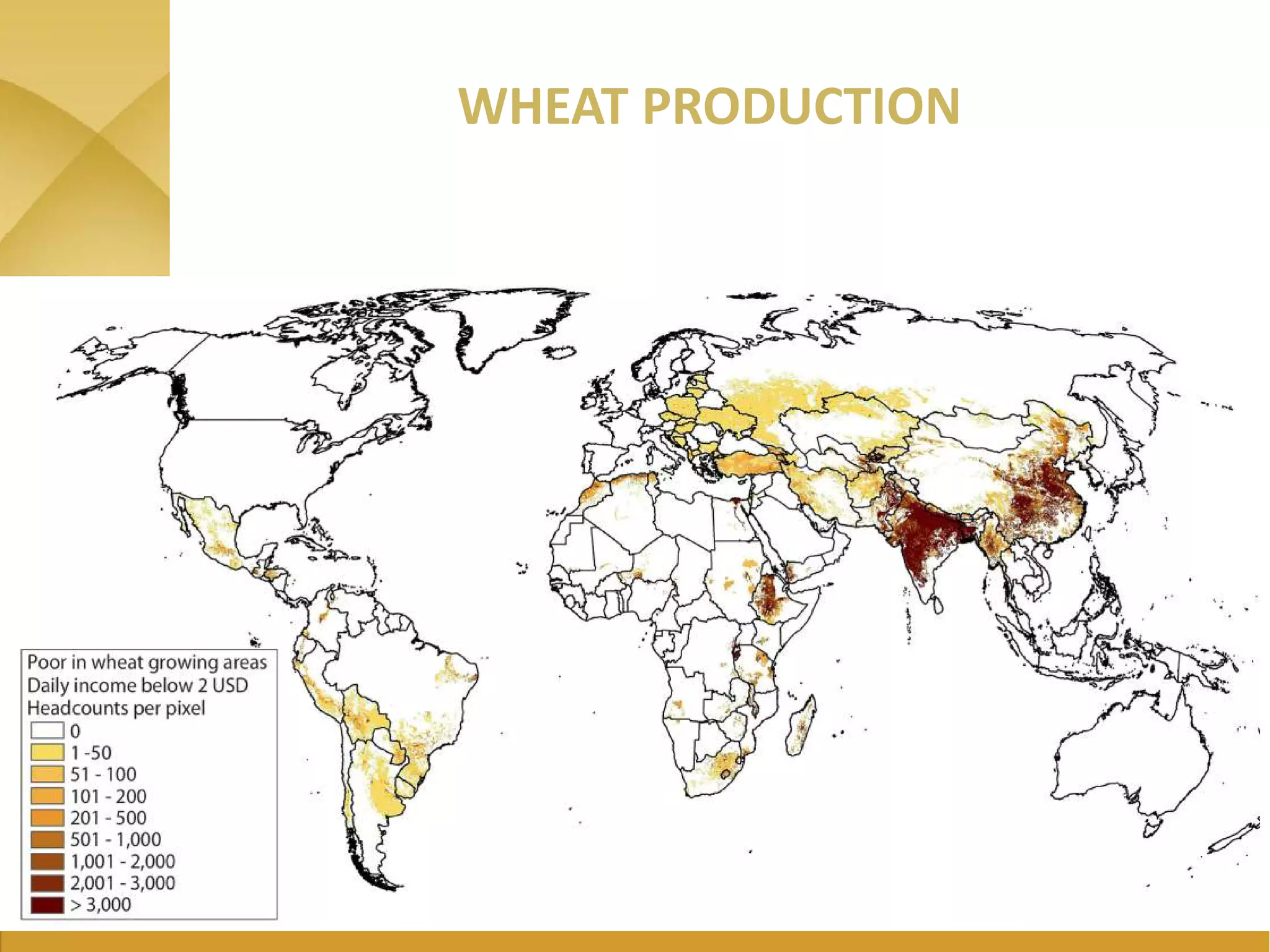
WHEAT PRODUCTION
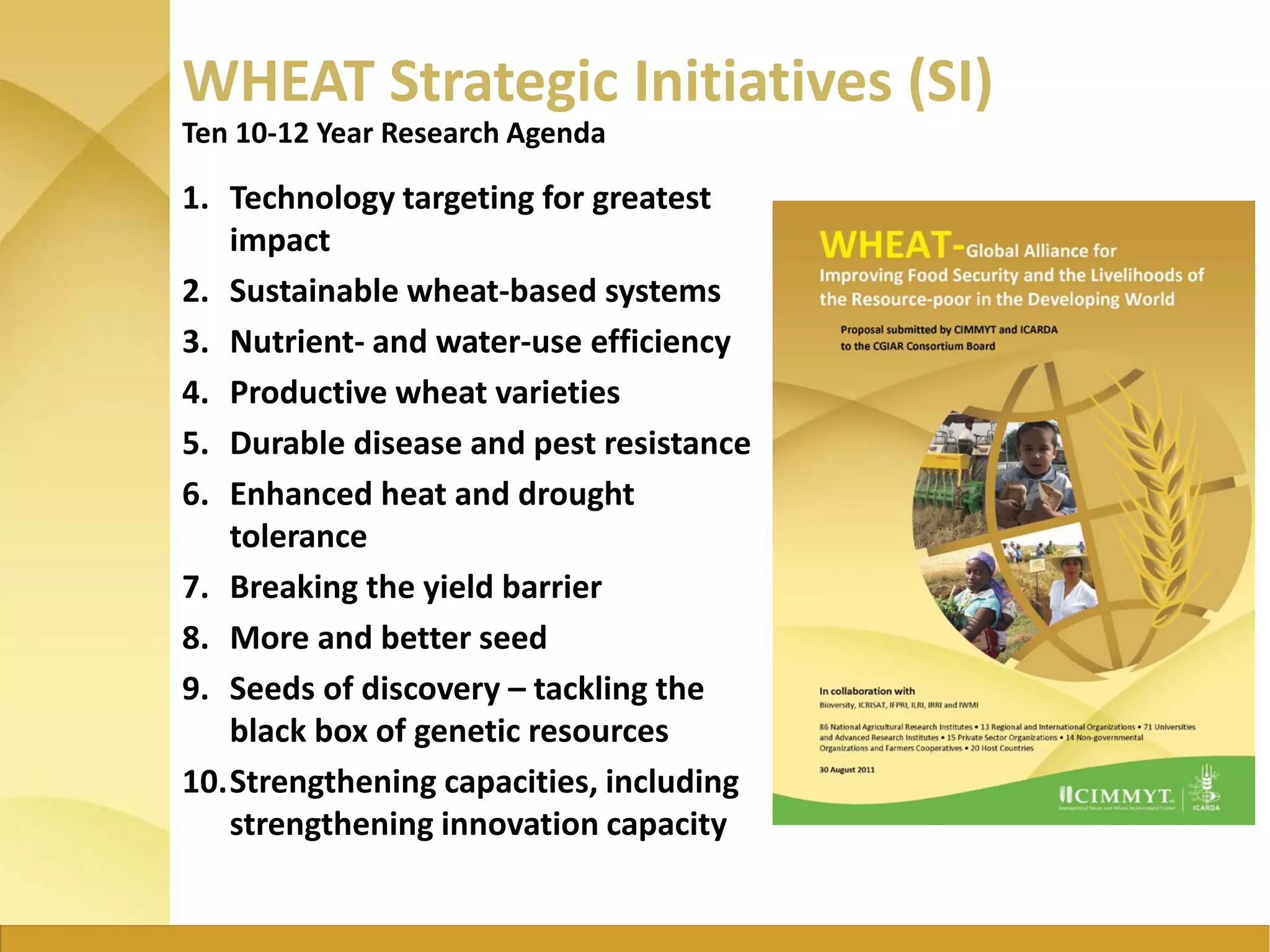
WHEAT Strategic Initiatives (SI)
1. Technology targeting for greatest
impact
2. Sustainable wheat-based systems
3. Nutrient- and water-use efficiency
4. Productive wheat varieties
5. Durable disease and pest resistance
6. Enhanced heat and drought
tolerance
7. Breaking the yield barrier
8. More and better seed
9. Seeds of discovery – tackling the
black box of genetic resources
10.Strengthening capacities, including
strengthening innovation capacity
Ten 10-12 Year Research Agenda
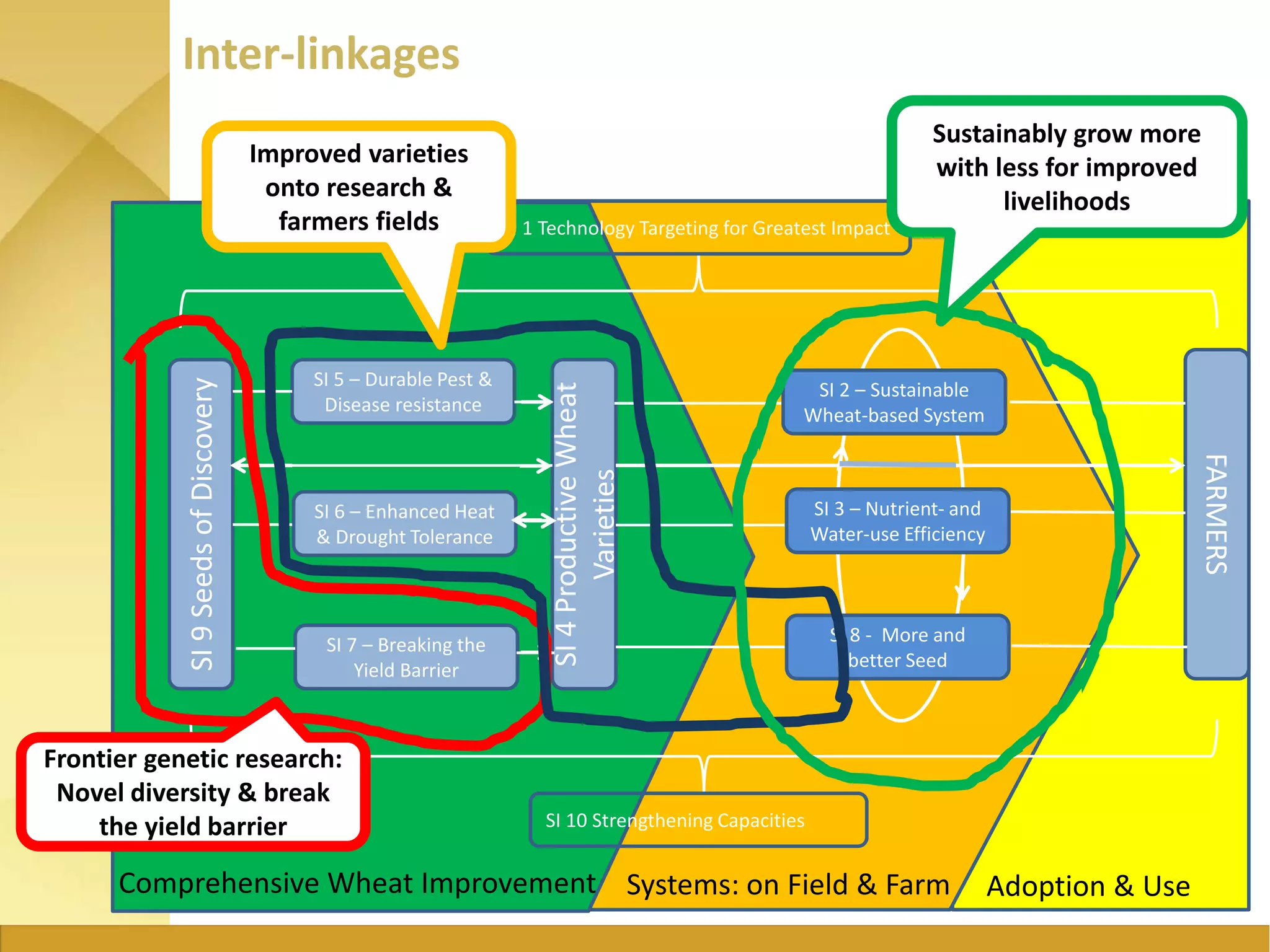
Inter-linkages
SI 5 – Durable Pest &
Disease resistance
SI 6 – Enhanced Heat
& Drought Tolerance
SI 7 – Breaking the
Yield Barrier
SI4ProductiveWheat
Varieties
SI9SeedsofDiscovery
FARMERS
SI 10 Strengthening Capacities
SI 1 Technology Targeting for Greatest Impact
Comprehensive Wheat Improvement Systems: on Field & Farm Adoption & Use
SI 2 – Sustainable
Wheat-based System
SI 3 – Nutrient- and
Water-use Efficiency
SI 8 - More and
better Seed
Sustainably grow more
with less for improved
livelihoods
Frontier genetic research:
Novel diversity & break
the yield barrier
Improved varieties
onto research &
farmers fields
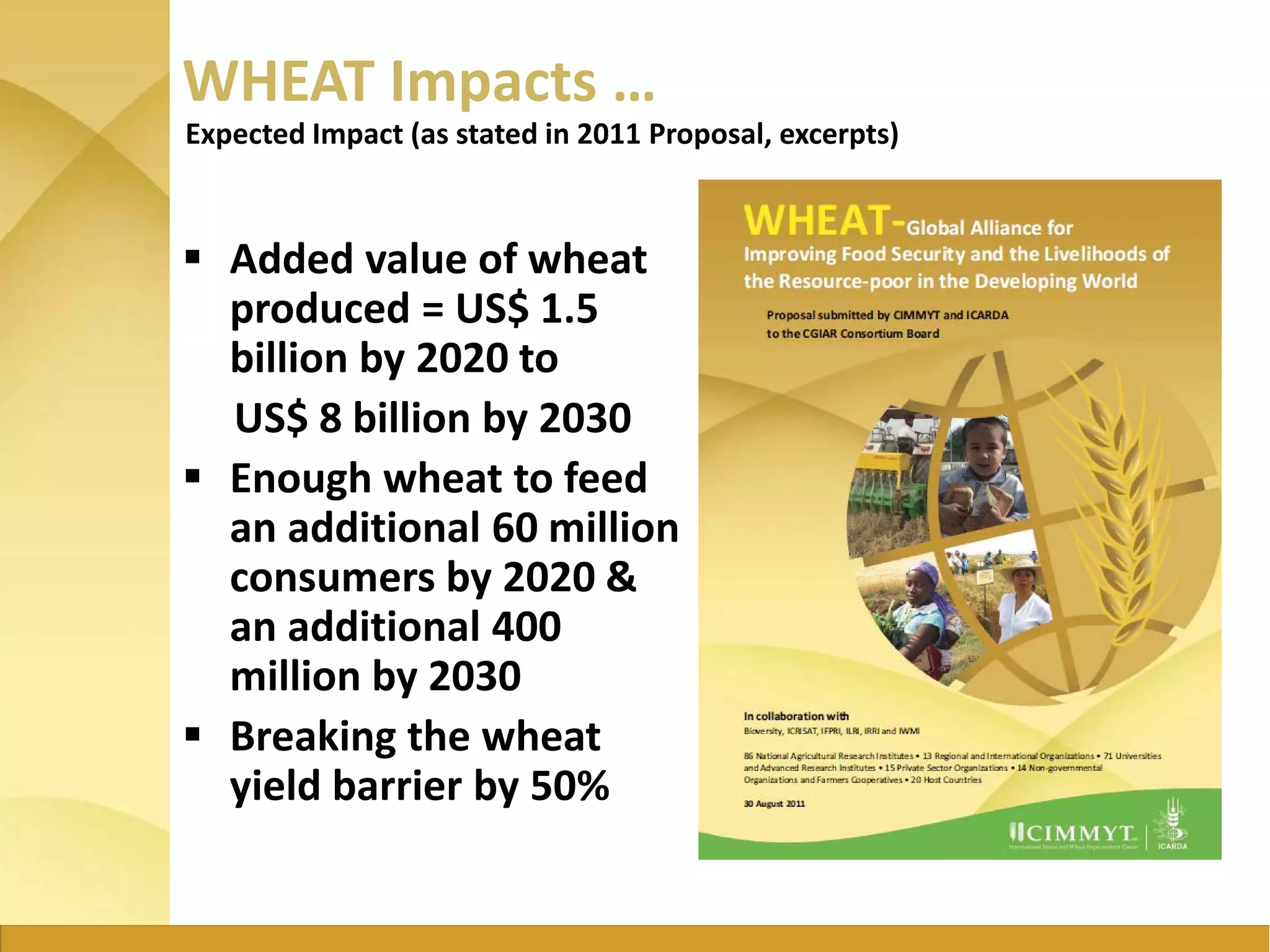
WHEAT Impacts …
 Added value of wheat
produced = US$ 1.5
billion by 2020 to
US$ 8 billion by 2030
 Enough wheat to feed
an additional 60 million
consumers by 2020 &
an additional 400
million by 2030
 Breaking the wheat
yield barrier by 50%
Expected Impact (as stated in 2011 Proposal, excerpts)
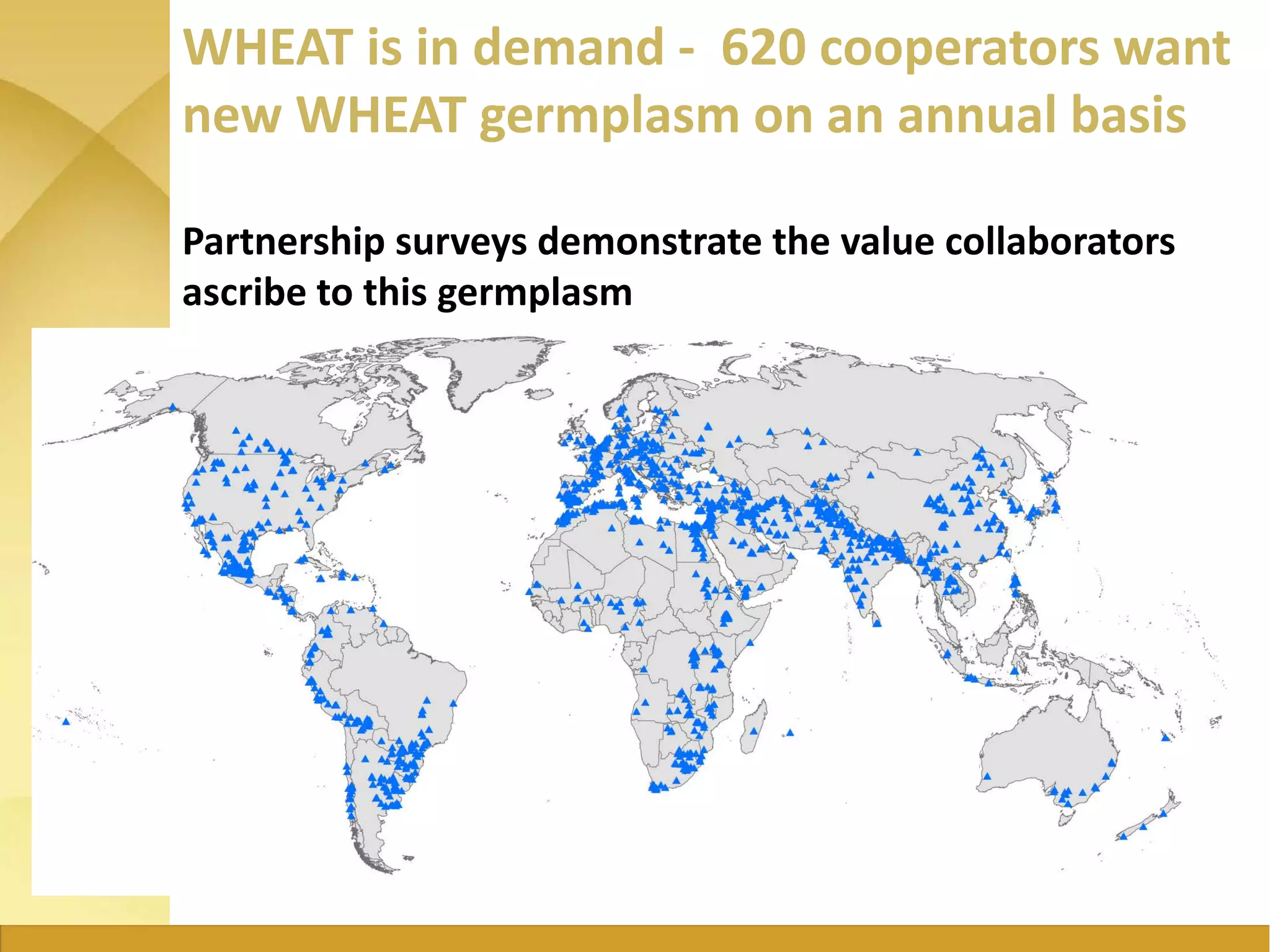
WHEAT is in demand - 620 cooperators want
new WHEAT germplasm on an annual basis
Partnership surveys demonstrate the value collaborators
ascribe to this germplasm
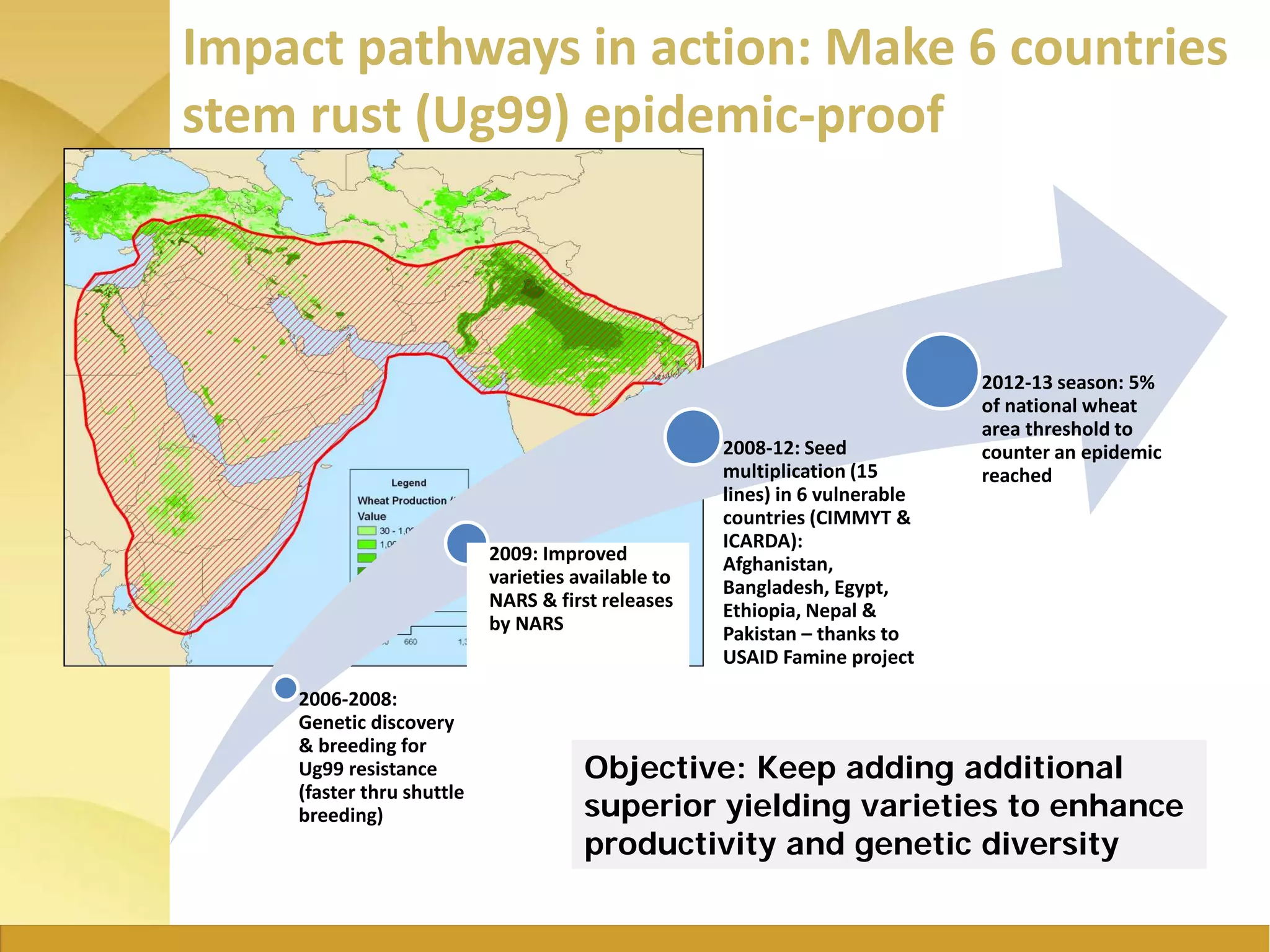
Impact pathways in action: Make 6 countries
stem rust (Ug99) epidemic-proof
2006-2008:
Genetic discovery
& breeding for
Ug99 resistance
(faster thru shuttle
breeding)
2009: Improved
varieties available to
NARS & first releases
by NARS
2008-12: Seed
multiplication (15
lines) in 6 vulnerable
countries (CIMMYT &
ICARDA):
Afghanistan,
Bangladesh, Egypt,
Ethiopia, Nepal &
Pakistan – thanks to
USAID Famine project
2012-13 season: 5%
of national wheat
area threshold to
counter an epidemic
reached
Objective: Keep adding additional
superior yielding varieties to enhance
productivity and genetic diversity
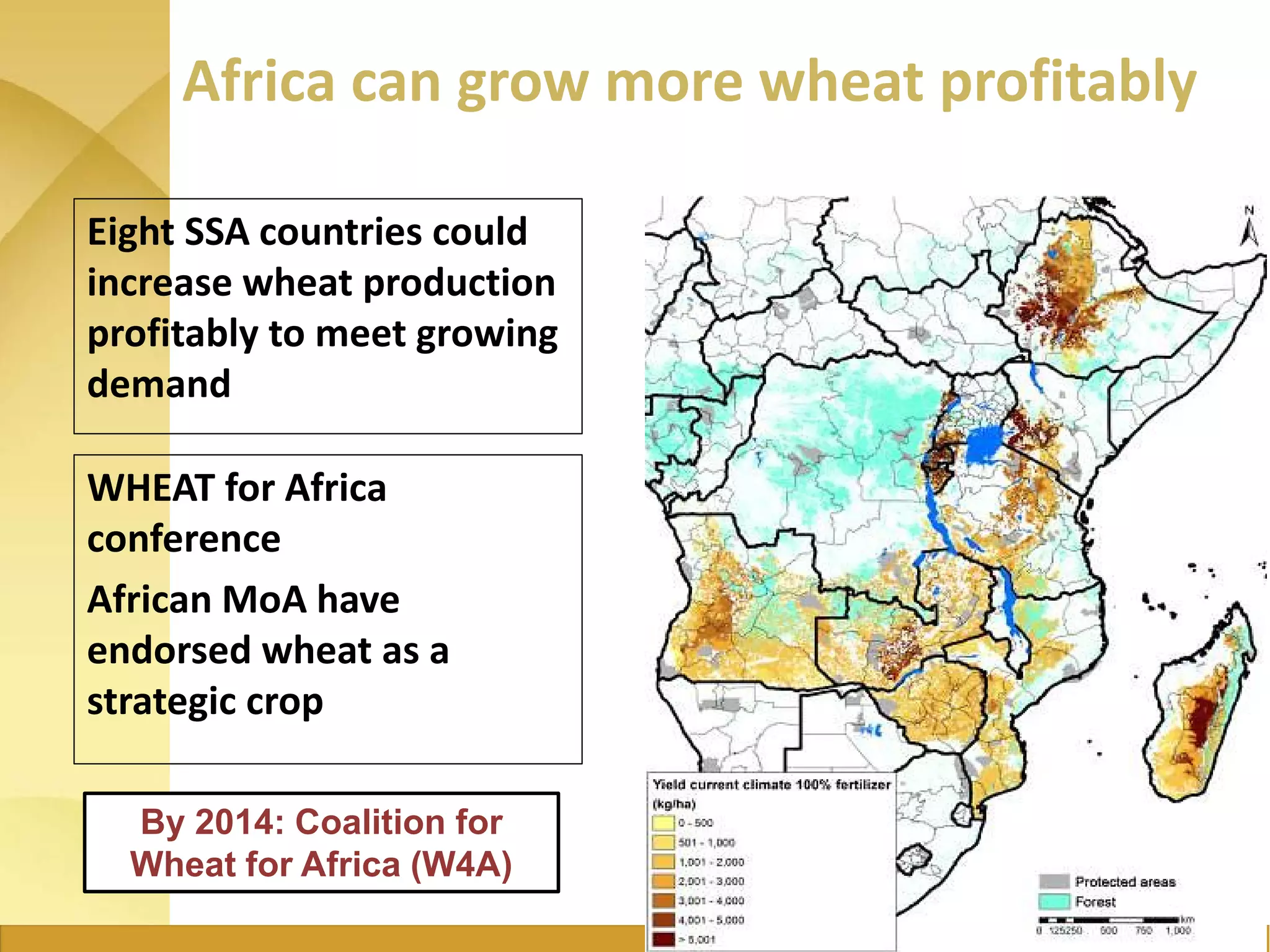
Africa can grow more wheat profitably
Eight SSA countries could
increase wheat production
profitably to meet growing
demand
WHEAT for Africa
conference
African MoA have
endorsed wheat as a
strategic crop
By 2014: Coalition for
Wheat for Africa (W4A)
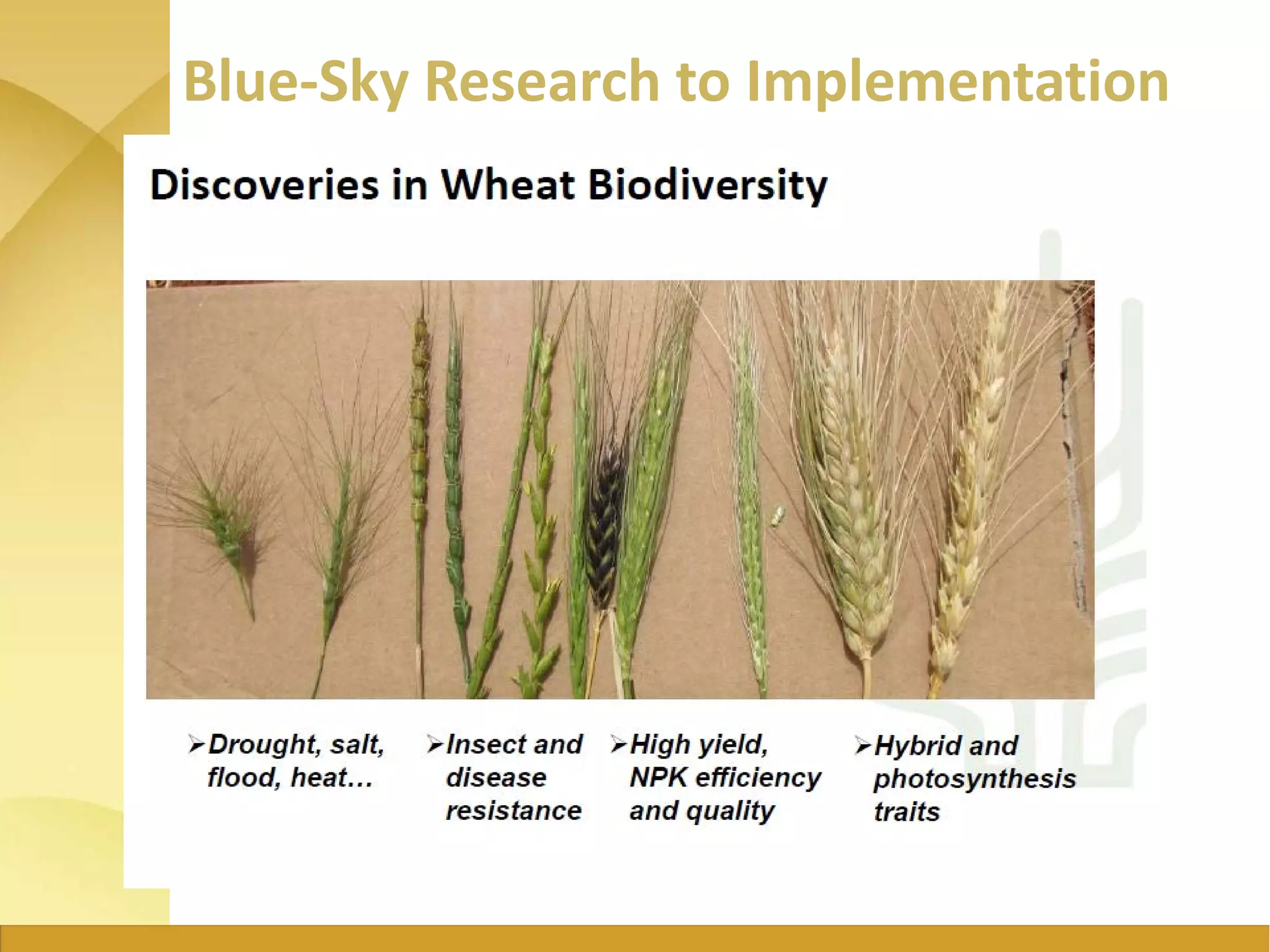
Blue-Sky Research to Implementation
The Measure of Success for WHEAT
 Food and Environment: Farming systems are more sustainable
and resilient, despite the impacts of climate change. Reduced
dependence on irrigation and use of increasingly expensive
fertilizers reduced.
 Environment: Increased productivity in developing countries.
 Poverty reduction and equity: Reduced poverty and
malnutrition especially among women and children. Greater
access to profitable and environmental friendly farming
approaches for women and young adults.
 Poverty reduction and equity: Better access to cutting-edge
technologies through innovative partnerships with advanced
research institutions and the private sector.
 Capacity: A new generation of scientists and other
professionals across the developing world working in
partnership with the CGIAR.
http://wheat.org/
Maarten van Ginkel
• Wheat is the globally most
widely-grown cereal crop
• WHEAT: more than 300 partners
• Open to working with other CRPs
• Needs breeding/genetics inputs

GRM 2013: CGIAR Research Program on wheat -- M van Ginkel

  • 1.
    GCP, Lisbon, Portugal CRPWHEAT (CIMMYT & ICARDA) http://wheat.org/ Maarten van Ginkel
  • 2.
  • 3.
    WHEAT Strategic Initiatives(SI) 1. Technology targeting for greatest impact 2. Sustainable wheat-based systems 3. Nutrient- and water-use efficiency 4. Productive wheat varieties 5. Durable disease and pest resistance 6. Enhanced heat and drought tolerance 7. Breaking the yield barrier 8. More and better seed 9. Seeds of discovery – tackling the black box of genetic resources 10.Strengthening capacities, including strengthening innovation capacity Ten 10-12 Year Research Agenda
  • 4.
    Inter-linkages SI 5 –Durable Pest & Disease resistance SI 6 – Enhanced Heat & Drought Tolerance SI 7 – Breaking the Yield Barrier SI4ProductiveWheat Varieties SI9SeedsofDiscovery FARMERS SI 10 Strengthening Capacities SI 1 Technology Targeting for Greatest Impact Comprehensive Wheat Improvement Systems: on Field & Farm Adoption & Use SI 2 – Sustainable Wheat-based System SI 3 – Nutrient- and Water-use Efficiency SI 8 - More and better Seed Sustainably grow more with less for improved livelihoods Frontier genetic research: Novel diversity & break the yield barrier Improved varieties onto research & farmers fields
  • 5.
    WHEAT Impacts … Added value of wheat produced = US$ 1.5 billion by 2020 to US$ 8 billion by 2030  Enough wheat to feed an additional 60 million consumers by 2020 & an additional 400 million by 2030  Breaking the wheat yield barrier by 50% Expected Impact (as stated in 2011 Proposal, excerpts)
  • 6.
    WHEAT is indemand - 620 cooperators want new WHEAT germplasm on an annual basis Partnership surveys demonstrate the value collaborators ascribe to this germplasm
  • 7.
    Impact pathways inaction: Make 6 countries stem rust (Ug99) epidemic-proof 2006-2008: Genetic discovery & breeding for Ug99 resistance (faster thru shuttle breeding) 2009: Improved varieties available to NARS & first releases by NARS 2008-12: Seed multiplication (15 lines) in 6 vulnerable countries (CIMMYT & ICARDA): Afghanistan, Bangladesh, Egypt, Ethiopia, Nepal & Pakistan – thanks to USAID Famine project 2012-13 season: 5% of national wheat area threshold to counter an epidemic reached Objective: Keep adding additional superior yielding varieties to enhance productivity and genetic diversity
  • 8.
    Africa can growmore wheat profitably Eight SSA countries could increase wheat production profitably to meet growing demand WHEAT for Africa conference African MoA have endorsed wheat as a strategic crop By 2014: Coalition for Wheat for Africa (W4A)
  • 9.
    Blue-Sky Research toImplementation
  • 10.
    The Measure ofSuccess for WHEAT  Food and Environment: Farming systems are more sustainable and resilient, despite the impacts of climate change. Reduced dependence on irrigation and use of increasingly expensive fertilizers reduced.  Environment: Increased productivity in developing countries.  Poverty reduction and equity: Reduced poverty and malnutrition especially among women and children. Greater access to profitable and environmental friendly farming approaches for women and young adults.  Poverty reduction and equity: Better access to cutting-edge technologies through innovative partnerships with advanced research institutions and the private sector.  Capacity: A new generation of scientists and other professionals across the developing world working in partnership with the CGIAR.
  • 11.
    http://wheat.org/ Maarten van Ginkel •Wheat is the globally most widely-grown cereal crop • WHEAT: more than 300 partners • Open to working with other CRPs • Needs breeding/genetics inputs

Editor's Notes

  • #3 Map shows 620 cooperators, who send back data to CIMMYT or ICARDA. Not all nursery sites are shown, as some points are national coordinators, who distribute germplasm to further sites. Cooperators who receive WHEAT germplasm, but do not send back data, are not shown.
  • #7 Map shows 620 cooperators, who send back data to CIMMYT or ICARDA. Not all nursery sites are shown, as some points are national coordinators, who distribute germplasm to further sites. Cooperators who receive WHEAT germplasm, but do not send back data, are not shown.
  • #8 Release of a new variety is usually slow and subject to tough criteria that vary from country to countryFunded by the USAID Famine Fund, six countries (Afghanistan, Bangladesh, Egypt, Ethiopia, Nepal & Pakistan) embraced a quicker production method and sowed 52 hectares with 11 varieties, producing nearly 145 tons of Ug99 resistant seed in the 2008-09 crop cycleIn parallel, Iran planted 34,000 hectares and produced 80,000 tons of Ug99 resistant wheat seedAll countries repeated this in 2009-10. The 7 countries combined have sown over 47,000 hectares, yielding 118,000 tons of improved seedBangladesh, Egypt, and Iran had enough Ug99-resistant seed in 2012 to sow at least 5% of their national wheat area (1 ha of wheat produces enough seed to sow 20 hectares, so 5% is safeguard threshold for replacing susceptible varieties in case of a Ug99 outbreak)
  • #9 *under 100% of the recommended levels of fertilizer use (kg/ha)