Download as PDF, PPTX
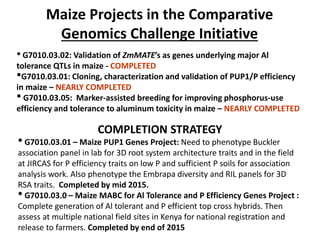
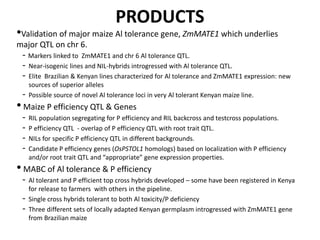
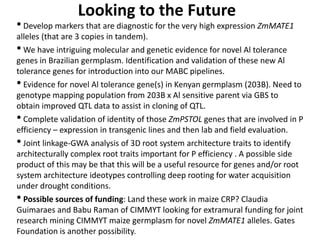

This document summarizes several maize projects focused on improving phosphorus use efficiency and tolerance to aluminum toxicity through marker-assisted breeding and gene discovery. Key activities include phenotyping maize panels to identify genes associated with root architecture traits and phosphorus efficiency, developing near-isogenic lines carrying tolerance genes, and generating hybrid varieties with improved tolerance for testing and release in Kenya. Looking ahead, the projects aim to validate additional aluminum tolerance genes, genotype novel sources of tolerance, and conduct joint studies of root architecture genes that may also improve drought tolerance.


