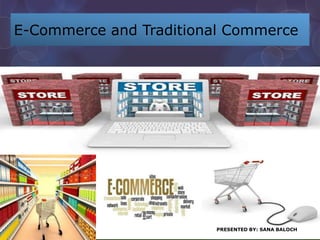
E-Commerce and Traditional Commerce
PRESENTED BY: SANA BALOCH
What is ecommerce?
 E-Commerce (Electronic commerce) is the buying and
selling of goods and services or the transmitting of funds
or data, over an electronic network, primarily internet
These business tractions occur either
 B2B
 B2C
 C2C
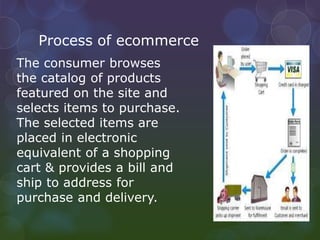
The consumer browses
the catalog of products
featured on the site and
selects items to purchase.
The selected items are
placed in electronic
equivalent of a shopping
cart & provides a bill and
ship to address for
purchase and delivery.
Process of ecommerce
History of Ecommerce
 1970
E-Commerce meant the facilitation of commercial
transactions electronically, using technology such as EDI
electronic data interchange and electronic funds transfer
allowing businesses to send commercial documents like
purchase orders or invoices electronically.
In 1980,s
 Growth and acceptance of credit cards
 ATM
 Telephone banking
 Airline reservation system
 In 1990s,
 Internet commercialized and users flocked to participate
in the form of dot-com or internet start-ups
In 2000s,
 Many European and American business companies
offered their services through the world wide web
What is traditional commerce
 Traditional commerce refers to practice of selling
products and services within a single industry and in
some case, within a specific geographical area.
Benefits to organizations
 Global reach
 Cost reduction
 Supply chain improvement
 customization
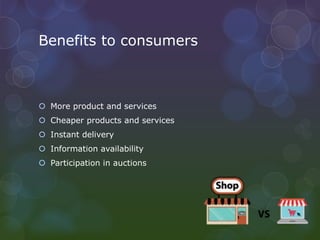
Benefits to consumers
 More product and services
 Cheaper products and services
 Instant delivery
 Information availability
 Participation in auctions
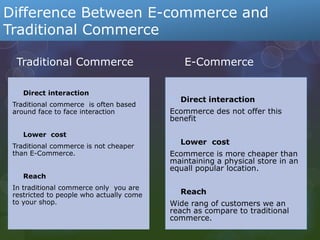
Difference Between E-commerce and
Traditional Commerce
 Direct interaction
Traditional commerce is often based
around face to face interaction
o Lower cost
Traditional commerce is not cheaper
than E-Commerce.
 Reach
In traditional commerce only you are
restricted to people who actually come
to your shop.
E-Commerce
 Direct interaction
Ecommerce des not offer this
benefit
 Lower cost
Ecommerce is more cheaper than
maintaining a physical store in an
equall popular location.
 Reach
Wide rang of customers we an
reach as compare to traditional
commerce.
Traditional Commerce
 Credit card fraud
The remote nature of Ecommerce
makes much more difficult to
detect fraud, which means stores
can lose money due to fraud
 Telephone communication
 Ads: printed,radio, t.v
 Payment cash,check
 customer takes product home
E-Commerce
 Credit card fraud
While there are chance of fraud
but can be minimized by physically
presence of buyer by checking of
ID Cards etc.
 E-mail communication
 Ads: online, radio, t.v
 Payment direct, fund transfer
 Delivery home 2-5 days
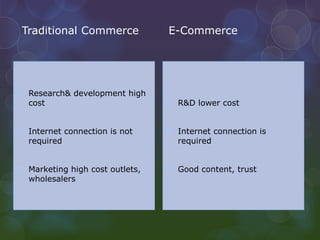
Traditional Commerce
 Research& development high
cost
 Internet connection is not
required
 Marketing high cost outlets,
wholesalers
E-Commerce
 R&D lower cost
 Internet connection is
required
 Good content, trust

E-COMMERECE V/S TRADITIONAL COMMERCE

  • 1.
    E-Commerce and TraditionalCommerce PRESENTED BY: SANA BALOCH
  • 2.
    What is ecommerce? E-Commerce (Electronic commerce) is the buying and selling of goods and services or the transmitting of funds or data, over an electronic network, primarily internet These business tractions occur either  B2B  B2C  C2C
  • 3.
    The consumer browses thecatalog of products featured on the site and selects items to purchase. The selected items are placed in electronic equivalent of a shopping cart & provides a bill and ship to address for purchase and delivery. Process of ecommerce
  • 4.
    History of Ecommerce 1970 E-Commerce meant the facilitation of commercial transactions electronically, using technology such as EDI electronic data interchange and electronic funds transfer allowing businesses to send commercial documents like purchase orders or invoices electronically.
  • 5.
    In 1980,s  Growthand acceptance of credit cards  ATM  Telephone banking  Airline reservation system  In 1990s,  Internet commercialized and users flocked to participate in the form of dot-com or internet start-ups
  • 6.
    In 2000s,  ManyEuropean and American business companies offered their services through the world wide web
  • 7.
    What is traditionalcommerce  Traditional commerce refers to practice of selling products and services within a single industry and in some case, within a specific geographical area.
  • 8.
    Benefits to organizations Global reach  Cost reduction  Supply chain improvement  customization
  • 9.
    Benefits to consumers More product and services  Cheaper products and services  Instant delivery  Information availability  Participation in auctions
  • 10.
    Difference Between E-commerceand Traditional Commerce Traditional Commerce  Direct interaction Traditional commerce is often based around face to face interaction o Lower cost Traditional commerce is not cheaper than E-Commerce.  Reach In traditional commerce only you are restricted to people who actually come to your shop. E-Commerce  Direct interaction Ecommerce des not offer this benefit  Lower cost Ecommerce is more cheaper than maintaining a physical store in an equall popular location.  Reach Wide rang of customers we an reach as compare to traditional commerce.
  • 11.
    Traditional Commerce  Creditcard fraud The remote nature of Ecommerce makes much more difficult to detect fraud, which means stores can lose money due to fraud  Telephone communication  Ads: printed,radio, t.v  Payment cash,check  customer takes product home E-Commerce  Credit card fraud While there are chance of fraud but can be minimized by physically presence of buyer by checking of ID Cards etc.  E-mail communication  Ads: online, radio, t.v  Payment direct, fund transfer  Delivery home 2-5 days
  • 12.
    Traditional Commerce  Research&development high cost  Internet connection is not required  Marketing high cost outlets, wholesalers E-Commerce  R&D lower cost  Internet connection is required  Good content, trust