LYMPHANGITIS
Definition
• Lymphangitis is the inflammation of the
lymph vessels.
• Lymph vessels are the part of lymphatic
system.
• Lymphatic system is the drainage system of
the body.
• And it is the part of immune system.
Causes of lymphangitis
• It is an acute non suppurative infection and
spreading inflammation of lymphatic of skin
and subcutaneous tissues,
• Mostly cause by beta hemolytic Streptococci ,
staphylococci, clostridium bacteria.
• It can also cause by virus and fungi.
• The most common cause of Lymphangitis is
Filariasis (Elephantiatsis).
•It can occur because of non infectious conditions like
cancers and tumors
•Lymphangitis is often a complication of skin infection
•Common causes includes
 Skin infection like cellulitis
 Puncture wound
 Bug bites and sting
Filariasis
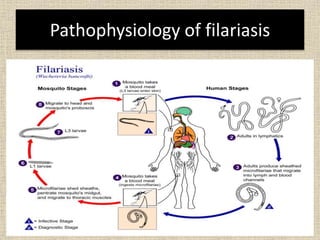
• Lumphatic filariasis is caused by the parasitic
worm Wuchereria bancrofti.
• The worm is enter the human body via
mosquito transmission.
• Mainly it is transmitted by the Culex
mosquito.
Pathophysiology of filariasis
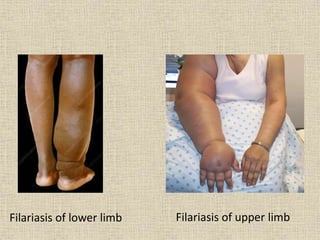
Filariasis of lower limb Filariasis of upper limb
Clinical features of filariasis
• Fever
• Chills
• Local pain
• Swelling of limbs, scrotum, breast, genital
• Lymphangitis
Investigations
• Complete blood count: there will be elevation
of WBC, platelet count and ESR.
• Skin biopsy: to identify the microfilariae in the
lymphatic tissue.
• Ultrasonography: is imaging modality of
choice to detect the worms in lymphatics.
Treatment
• Elevate the part.
• Antiparasitic drugs are prescribed –
diethylcarbamazine, ivermectin, albendazole,
doxycycline.
• Efficacy is great when combination of drugs
are used; Diethylcarbamazine in addition to
ivermectin or albendazole.
• Exercise and move affected limb regularly.
Risk factor of lymphangitis
Diabetes
Crohn’s disease
Chickenpox
HIV
A suppressed immune system
Sign and symptoms
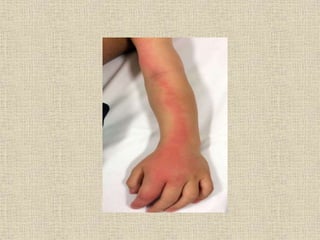
• Red streaks on skin
• On pressure area blanches
• Edema is seen
• Fever
• Chills
• Headache
• Tachycardia
• Lymph nodes are enlarged
• A slow healing wound
• Fatigue
• Features of toxaemia (headache,
nausea, visual changes, high bp,)
Groin lymph nodes are enlarged and tender in lower
limb lymphangitis.
In upper limb, as lymphatics are mainly located on the
dorsum of the hand, oedema and redness develops on
the dorsum.
Infection in thumb and index finger causes palpable
tender axillary nodes.
In little and ring finger cause palpable tender
epitrochlear node
And infection in the middle finger causes deltopectoral
nodes to enlarge.
Regional lymph nodes may suppurate to form an abscess.
Chronic lymphangitis occurs due to repeated attacks of acute
recurrent lymphangitis leading into acquired lymphoedema.
Investigations
• Clinical assessment: check the skin and swelling
of lymph nodes around the infected area.
• CBC: in CBC report we can see the increase in no.
of leukocytes due to presence of inflammation.
• Skin culture: to determine the presence of
pathogens like bacteria, fungi or viruses.
• Skin biopsy: to determine the cause of swollen
lymph nodes.
• Blood culture: to find out if infection has spread
to blood or not.
• Liver function test
• Renal function test
Treatment
• Elevate the infected part.
• Antibiotics like cephalexin, clindamycin and
cloxacillin is given.
• And sometimes amoxicillin is administer
through Iv.
• NSAIDS for pain relief.(Ibuprofen, Ketoprofen)
Role of physiotherapy
• To reduce the lymphedema
• And to keep the limb mobilize
• Appropriate exercise prescription
Thank you

Lymphangitis-1.pptx physiotherapy ppt general surgery

  • 1.
  • 2.
    Definition • Lymphangitis isthe inflammation of the lymph vessels. • Lymph vessels are the part of lymphatic system. • Lymphatic system is the drainage system of the body. • And it is the part of immune system.
  • 3.
    Causes of lymphangitis •It is an acute non suppurative infection and spreading inflammation of lymphatic of skin and subcutaneous tissues, • Mostly cause by beta hemolytic Streptococci , staphylococci, clostridium bacteria. • It can also cause by virus and fungi. • The most common cause of Lymphangitis is Filariasis (Elephantiatsis).
  • 4.
    •It can occurbecause of non infectious conditions like cancers and tumors •Lymphangitis is often a complication of skin infection •Common causes includes  Skin infection like cellulitis  Puncture wound  Bug bites and sting
  • 5.
    Filariasis • Lumphatic filariasisis caused by the parasitic worm Wuchereria bancrofti. • The worm is enter the human body via mosquito transmission. • Mainly it is transmitted by the Culex mosquito.
  • 6.
  • 7.
    Filariasis of lowerlimb Filariasis of upper limb
  • 8.
    Clinical features offilariasis • Fever • Chills • Local pain • Swelling of limbs, scrotum, breast, genital • Lymphangitis
  • 9.
    Investigations • Complete bloodcount: there will be elevation of WBC, platelet count and ESR. • Skin biopsy: to identify the microfilariae in the lymphatic tissue. • Ultrasonography: is imaging modality of choice to detect the worms in lymphatics.
  • 10.
    Treatment • Elevate thepart. • Antiparasitic drugs are prescribed – diethylcarbamazine, ivermectin, albendazole, doxycycline. • Efficacy is great when combination of drugs are used; Diethylcarbamazine in addition to ivermectin or albendazole. • Exercise and move affected limb regularly.
  • 11.
    Risk factor oflymphangitis Diabetes Crohn’s disease Chickenpox HIV A suppressed immune system
  • 12.
    Sign and symptoms •Red streaks on skin • On pressure area blanches • Edema is seen • Fever • Chills • Headache • Tachycardia • Lymph nodes are enlarged
  • 13.
    • A slowhealing wound • Fatigue • Features of toxaemia (headache, nausea, visual changes, high bp,)
  • 15.
    Groin lymph nodesare enlarged and tender in lower limb lymphangitis. In upper limb, as lymphatics are mainly located on the dorsum of the hand, oedema and redness develops on the dorsum. Infection in thumb and index finger causes palpable tender axillary nodes. In little and ring finger cause palpable tender epitrochlear node And infection in the middle finger causes deltopectoral nodes to enlarge.
  • 16.
    Regional lymph nodesmay suppurate to form an abscess. Chronic lymphangitis occurs due to repeated attacks of acute recurrent lymphangitis leading into acquired lymphoedema.
  • 17.
    Investigations • Clinical assessment:check the skin and swelling of lymph nodes around the infected area. • CBC: in CBC report we can see the increase in no. of leukocytes due to presence of inflammation. • Skin culture: to determine the presence of pathogens like bacteria, fungi or viruses. • Skin biopsy: to determine the cause of swollen lymph nodes. • Blood culture: to find out if infection has spread to blood or not.
  • 18.
    • Liver functiontest • Renal function test
  • 19.
    Treatment • Elevate theinfected part. • Antibiotics like cephalexin, clindamycin and cloxacillin is given. • And sometimes amoxicillin is administer through Iv. • NSAIDS for pain relief.(Ibuprofen, Ketoprofen)
  • 20.
    Role of physiotherapy •To reduce the lymphedema • And to keep the limb mobilize • Appropriate exercise prescription
  • 21.