Fibroadenoma is a benign breast tumor composed of both glandular and stromal tissue. It commonly occurs in young women between ages 15-25. While fibroadenomas are noncancerous and do not spread, some may increase in size over time. Diagnosis is usually made through mammography, ultrasound, or biopsy. Treatment options include surgical excision or observation with regular ultrasound screening, depending on the size and characteristics of the tumor.
Introduction
A fibroadenomais a benign, or
noncancerous, breast tumor. Unlike a breast
cancer, which grows larger over time and
can spread to other organs, a fibroadenoma
remains in the breast tissue.
Presently it is considered as a hyperplasia of
single lobule of the breast
4.
Fibroadenoma
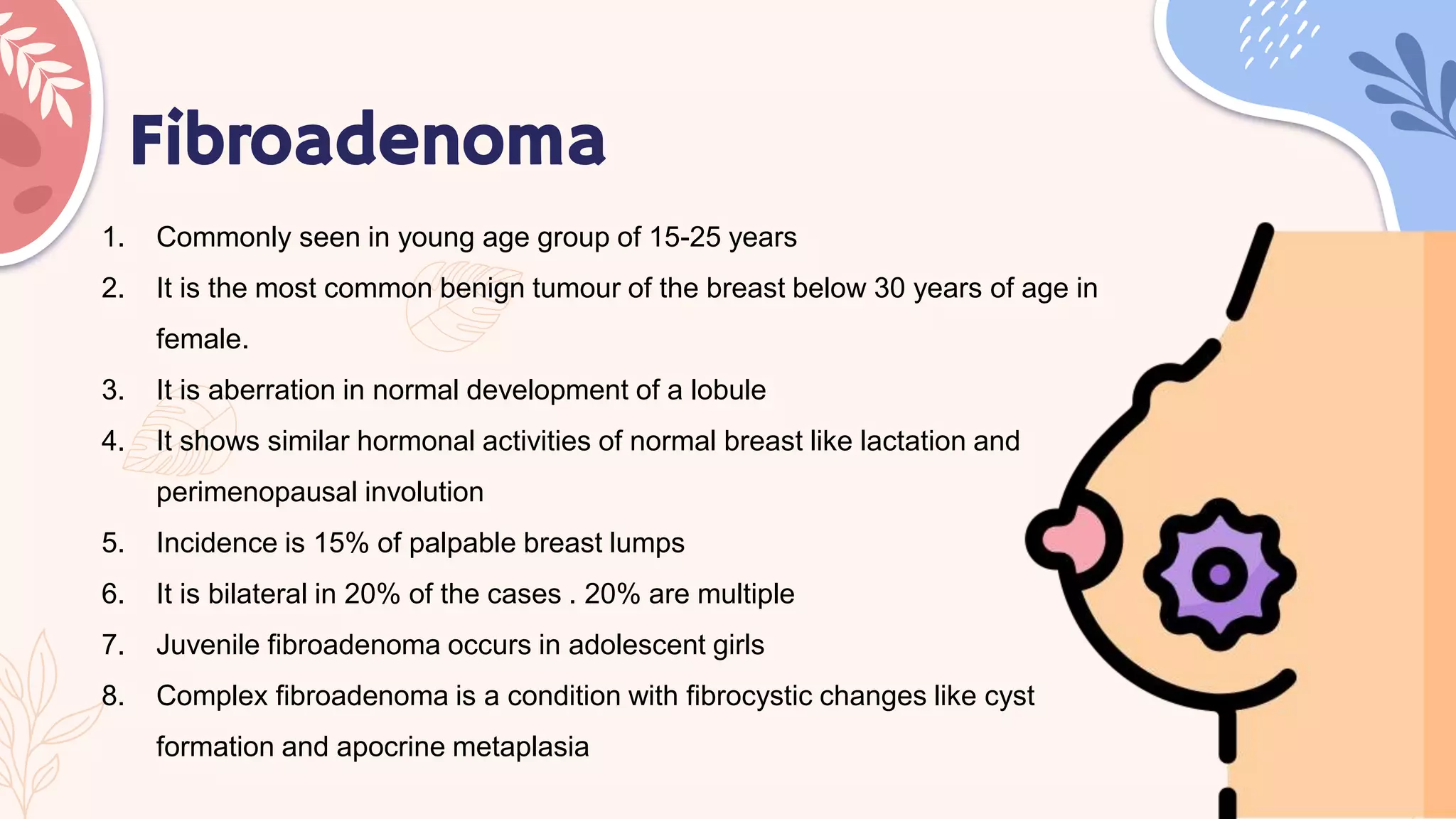
1. Commonly seenin young age group of 15-25 years
2. It is the most common benign tumour of the breast below 30 years of age in
female.
3. It is aberration in normal development of a lobule
4. It shows similar hormonal activities of normal breast like lactation and
perimenopausal involution
5. Incidence is 15% of palpable breast lumps
6. It is bilateral in 20% of the cases . 20% are multiple
7. Juvenile fibroadenoma occurs in adolescent girls
8. Complex fibroadenoma is a condition with fibrocystic changes like cyst
formation and apocrine metaplasia
5.
Fibroadenoma
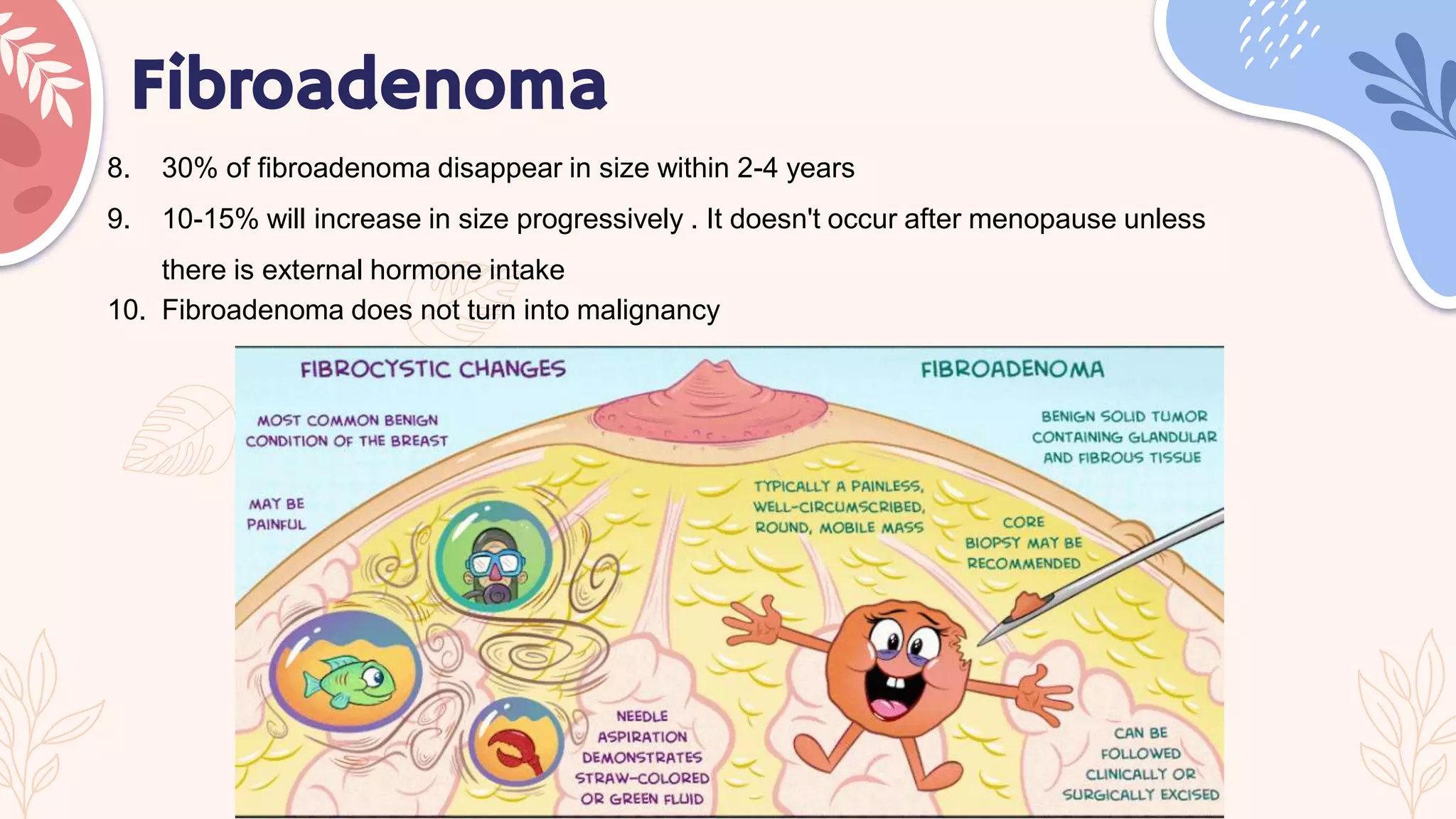
8. 30% offibroadenoma disappear in size within 2-4 years
9. 10-15% will increase in size progressively . It doesn't occur after menopause unless
there is external hormone intake
10. Fibroadenoma does not turn into malignancy
6.
TYPES – grossclassification
soft
giant
hard
Common after 30 years , more cellular often
bilateral
>5 cm in size – common in African region
Common below 30 years more fibrous
Clinical Features
• Presentsas a painless swelling
in one of the quadrants
• It is smooth
• Firm
• Non tender
• Well localised moves freely
within the breast tissue (mouse
in breast)
• Axillary lymph nodes are not
enlarged
9.
Investigations
• Mammography (welllocalised smooth irreugular shadow . It may
show popcorn calcification)
• FNAC or core biopsy
• Ultrasound (to confirm solid nature) well defined with smooth
outline
• MRI if necessary
10.
Treatment
Excision through acircumareolar ( webster’s) or
submammary incision (Gaillard Thomas incision) is done
under general anaesthesia
11.
Treatment
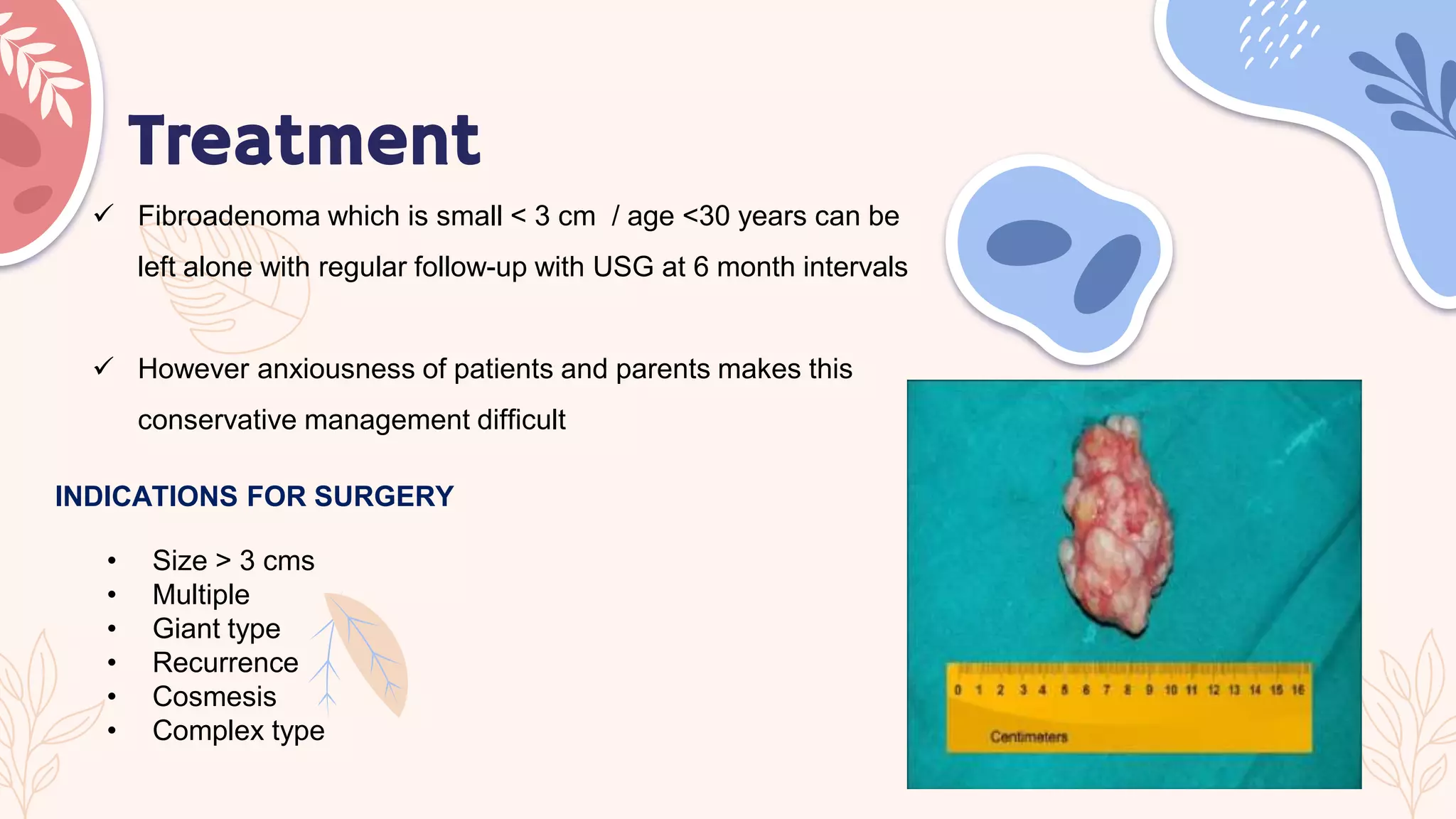
Fibroadenoma whichis small < 3 cm / age <30 years can be
left alone with regular follow-up with USG at 6 month intervals
However anxiousness of patients and parents makes this
conservative management difficult
INDICATIONS FOR SURGERY
• Size > 3 cms
• Multiple
• Giant type
• Recurrence
• Cosmesis
• Complex type