INTRODUCTION
DEFINITION
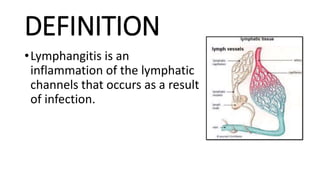
•Lymphangitis is an
inflammation of the lymphatic
channels that occurs as a result
of infection.
ETIOLOGY
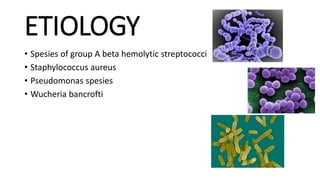
• Spesies of group A beta hemolytic streptococci
• Staphylococcus aureus
• Pseudomonas spesies
• Wucheria bancrofti
RISK FACTOR
•Diabetes
•Immunodeficiency
•Severe illness
•Chronic steroid use
PATHOGENESIS
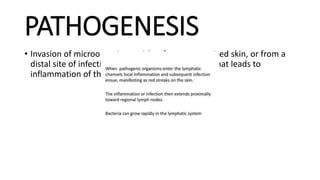
• Invasion of microorganisms either from traumatized skin, or from a
distal site of infection into the lymphatic vessels that leads to
inflammation of the vessel.
PATHOGENESIS
Spesies of group A beta
hemolytic streptococci
Staphylococcus aureus
Pseudomonas spesies
Wucheria bancrofti
Invasion microorganism from
traumatic skin
Enter lymphatic channel
Subsequent infection ensuse
Manifesting as red streaks on
the skin
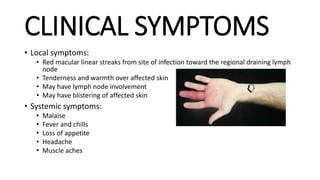
CLINICAL SYMPTOMS
• Local symptoms:
• Red macular linear streaks from site of infection toward the regional draining lymph
node
• Tenderness and warmth over affected skin
• May have lymph node involvement
• May have blistering of affected skin
• Systemic symptoms:
• Malaise
• Fever and chills
• Loss of appetite
• Headache
• Muscle aches
DIAGNOSIS
•Clinical symptoms
•Physical examination
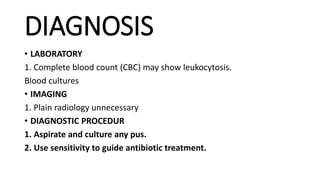
DIAGNOSIS
• LABORATORY
1. Complete blood count (CBC) may show leukocytosis.
Blood cultures
• IMAGING
1. Plain radiology unnecessary
• DIAGNOSTIC PROCEDUR
1. Aspirate and culture any pus.
2. Use sensitivity to guide antibiotic treatment.
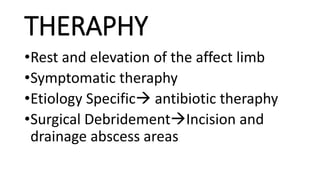
THERAPHY
•Rest and elevation of the affect limb
•Symptomatic theraphy
•Etiology Specific antibiotic theraphy
•Surgical DebridementIncision and
drainage abscess areas
PROGNOSIS
• Without appropriate anti microbal theraphy cellulitis may extend
along the channel; necrosis and ulceration may occur.
• Anti microbal regimens are effective in more than 90% cases
• Morbidity and mortality is related to the underlyng infection
LYMPHOEDEMA
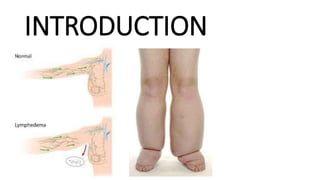
INTRODUCTION
DEFINITION
• Lymphedema is a condition in which protein rich fluid accumulates in
the tissues due to a failure of the lymphatic system.
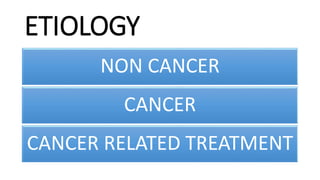
ETIOLOGY
NON CANCER
CANCER
CANCER RELATED TREATMENT
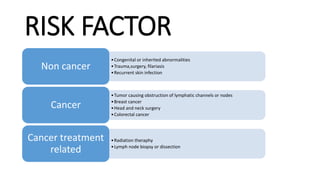
RISK FACTOR
•Congenital or inherited abnormalities
•Trauma,surgery, filariasis
•Recurrent skin infection
Non cancer
•Tumor causing obstruction of lymphatic channels or nodes
•Breast cancer
•Head and neck surgery
•Colorectal cancer
Cancer
•Radiation theraphy
•Lymph node biopsy or dissection
Cancer treatment
related
PATHOGENESIS
Non cancer
Cancer
Cancer related treatment
Inadequate lymphatic
outflow
Leads to lymphatic
hypertension and
decreased contraclity of
lymph
Lymphostatis,
accumulation of lymph,
interstisial fluid, protein
and glycosaminoglycans
Statis of lymph cause
accumulation of protein
and cellular metabolites
in the extracellular space
Water accumulation,
formation of edema and
increased interstitial
hydraulic pressure
CLASSIFICATION
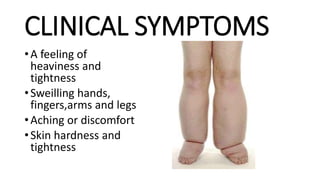
CLINICAL SYMPTOMS
•A feeling of
heaviness and
tightness
•Sweilling hands,
fingers,arms and legs
•Aching or discomfort
•Skin hardness and
tightness
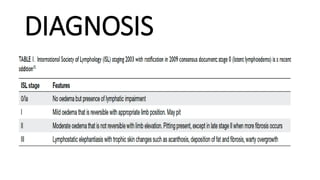
DIAGNOSIS
•Clinical symptoms
•Physical examination
DIAGNOSIS
DIAGNOSIS
LYMPHOSCINTIGRAPHY TEST
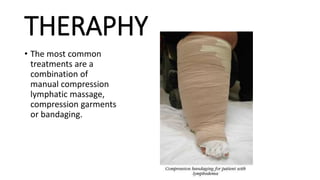
THERAPHY
• The most common
treatments are a
combination of
manual compression
lymphatic massage,
compression garments
or bandaging.
PROGNOSIS
• There is no cure for lymphedema, and it is a progressive condition.
The outlook will depend to some extent on the severity of symptoms

LYMPHANGITIS and lymphoedema.pptx

Editor's Notes

  • #11 Antibiotics (1)[A]: Dicloxacillin: Adults: 500 mg p.o. q6h Children: 50 mg/kg/d divided into q.i.d. dosing Nafcillin: Adults: 2 g IV q4h Children: 150 mg/kg/d divided into q.i.d. dosing Cephalexin: Adults: 500 mg p.o. q6h Children: 50 mg/kg/d p.o. divided into q.i.d. dosing Clindamycin (if penicillin or cephalosporin allergy): Adults: 150–300 mg p.o. q6–8h or 600 mg IV q8h Children: 8–20 mg/kg/d p.o. divided into t.i.d. or q.i.d. dosing; 20–40 mg/kg/d IV/IM divided into t.i.d. or q.i.d. dosing Acetaminophen or ibuprofen for pain and fever Second Line Trimethoprim-sulfamethoxazole (TMP-SMZ) good for areas with high rates of methicillin-resistant S. aureus [MRSA]): Adults: 160 mg TMP/800 SMZ mg p.o. q12h × 10–14 days Children >2 months of age: 10–20 mg/kg/d p.o. or IM divided into t.i.d. or q.i.d. doses × 14 days