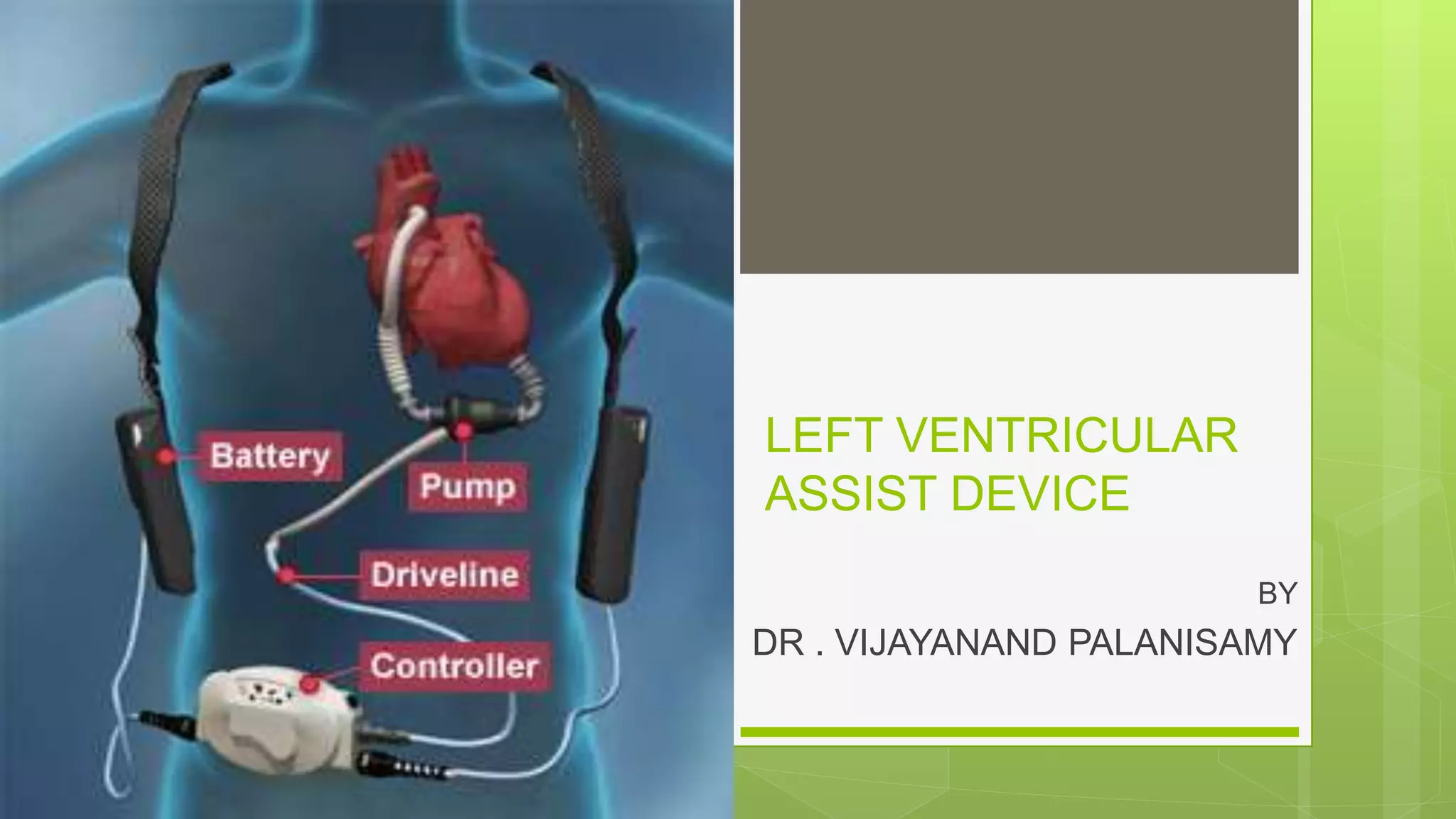




LEFT VENTRICULAR
ASSIST DEVICE
BY
DR . VIJAYANAND PALANISAMY
10.5%
9.7%
8.2%
6.4%
11.9%
53.3%
Hospitalization
$20.9
Lost Productivity/
Mortality*
$4.1
Home Healthcare
$3.8
Drugs/Other
Medical Durables
$3.2
Physicians/Other
Professionals
$2.5
Nursing Home
$4.7
Total Cost
$39.2 billion
Heart Disease and Stroke Statistics—
2010 Update: A Report From the AHA
Circulation, Feb 2010; 121: e46 - e215
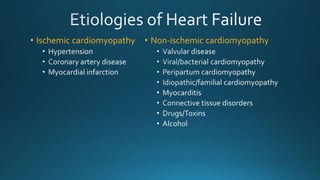
• Non-ischemic cardiomyopathy• Ischemic cardiomyopathy
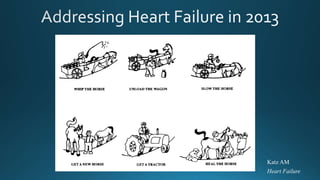
Katz AM
Heart Failure
Decreased end organ perfusion
• Renal function
• Liver function
• Pulmonary function
We need more support!




ANY
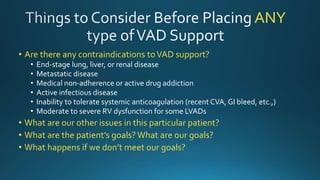
• Are there any contraindications toVAD support?
• End-stage lung, liver, or renal disease
• Metastatic disease
• Medical non-adherence or active drug addiction
• Active infectious disease
• Inability to tolerate systemic anticoagulation (recent CVA, GI bleed, etc.,)
• Moderate to severe RV dysfunction for some LVADs
• What are our other issues in this particular patient?
• What are the patient’s goals? What are our goals?
• What happens if we don’t meet our goals?
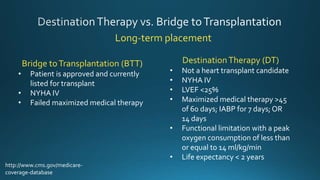
Long-term placement
DestinationTherapy (DT)
• Not a heart transplant candidate
• NYHA IV
• LVEF <25%
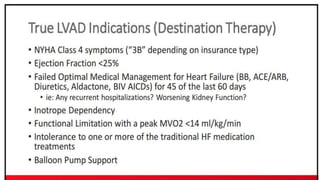
• Maximized medical therapy >45
of 60 days; IABP for 7 days; OR
14 days
• Functional limitation with a peak
oxygen consumption of less than
or equal to 14 ml/kg/min
• Life expectancy < 2 years
Bridge toTransplantation (BTT)
• Patient is approved and currently
listed for transplant
• NYHA IV
• Failed maximized medical therapy
http://www.cms.gov/medicare-
coverage-database
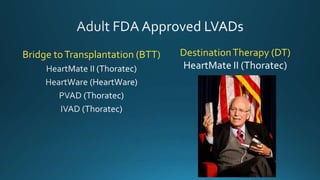
Bridge toTransplantation (BTT) DestinationTherapy (DT)
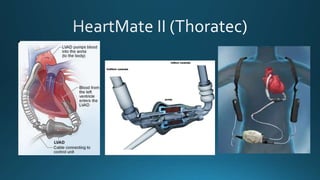
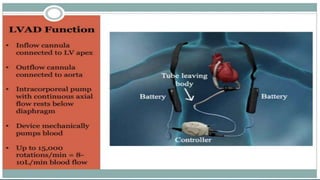
HeartMate II (Thoratec)
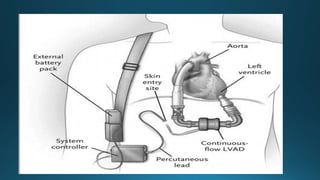
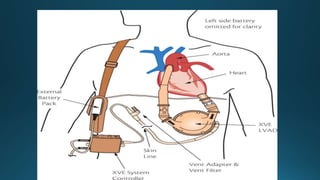
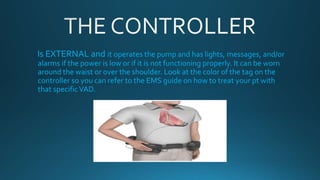
Is EXTERNAL and it operates the pump and has lights, messages, and/or
alarms if the power is low or if it is not functioning properly. It can be worn
around the waist or over the shoulder. Look at the color of the tag on the
controller so you can refer to the EMS guide on how to treat your pt with
that specificVAD.
DC adaptor
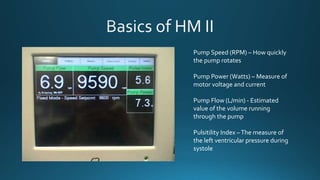
Pump Speed (RPM) – How quickly
the pump rotates
Pump Power (Watts) – Measure of
motor voltage and current
Pump Flow (L/min) - Estimated
value of the volume running
through the pump
Pulsitility Index –The measure of
the left ventricular pressure during
systole
VS
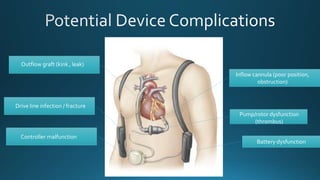
Inflow cannula (poor position,
obstruction)
Pump/rotor dysfunction
(thrombus)
Battery dysfunction
Outflow graft (kink , leak)
Drive line infection / fracture
Controller malfunction
Winston Churchill
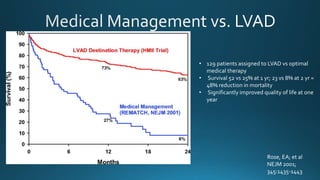
Rose, EA; et al
NEJM 2001;
345:1435-1443
• 129 patients assigned to LVAD vs optimal
medical therapy
• Survival 52 vs 25% at 1 yr; 23 vs 8% at 2 yr =
48% reduction in mortality
• Significantly improved quality of life at one
year
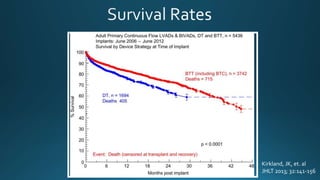
Kirkland, JK, et. al
JHLT 2013; 32:141-156
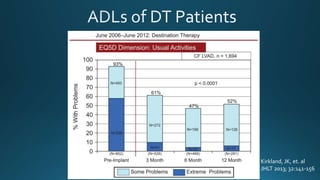
Kirkland, JK, et. al
JHLT 2013; 32:141-156
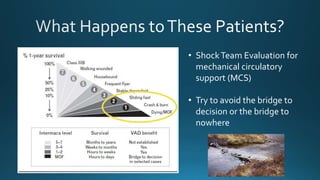
• ShockTeam Evaluation for
mechanical circulatory
support (MCS)
• Try to avoid the bridge to
decision or the bridge to
nowhere
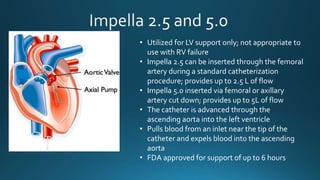
• Utilized for LV support only; not appropriate to
use with RV failure
• Impella 2.5 can be inserted through the femoral
artery during a standard catheterization
procedure; provides up to 2.5 L of flow
• Impella 5.0 inserted via femoral or axillary
artery cut down; provides up to 5L of flow
• The catheter is advanced through the
ascending aorta into the left ventricle
• Pulls blood from an inlet near the tip of the
catheter and expels blood into the ascending
aorta
• FDA approved for support of up to 6 hours
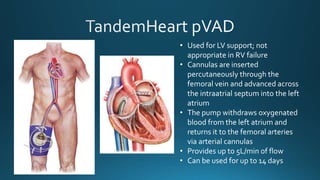
• Used for LV support; not
appropriate in RV failure
• Cannulas are inserted
percutaneously through the
femoral vein and advanced across
the intraatrial septum into the left
atrium
• The pump withdraws oxygenated
blood from the left atrium and
returns it to the femoral arteries
via arterial cannulas
• Provides up to 5L/min of flow
• Can be used for up to 14 days
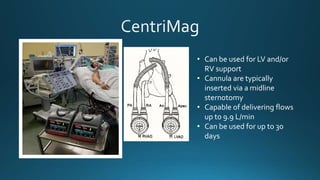
• Can be used for LV and/or
RV support
• Cannula are typically
inserted via a midline
sternotomy
• Capable of delivering flows
up to 9.9 L/min
• Can be used for up to 30
days
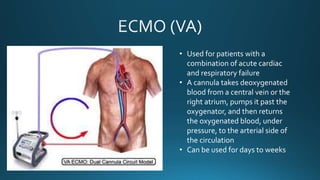
• Used for patients with a
combination of acute cardiac
and respiratory failure
• A cannula takes deoxygenated
blood from a central vein or the
right atrium, pumps it past the
oxygenator, and then returns
the oxygenated blood, under
pressure, to the arterial side of
the circulation
• Can be used for days to weeks
Lvad   vijayanand
Lvad   vijayanand
Lvad   vijayanand
Lvad   vijayanand

Lvad vijayanand

  • 1.
    LEFT VENTRICULAR ASSIST DEVICE BY DR. VIJAYANAND PALANISAMY
  • 3.
    10.5% 9.7% 8.2% 6.4% 11.9% 53.3% Hospitalization $20.9 Lost Productivity/ Mortality* $4.1 Home Healthcare $3.8 Drugs/Other MedicalDurables $3.2 Physicians/Other Professionals $2.5 Nursing Home $4.7 Total Cost $39.2 billion Heart Disease and Stroke Statistics— 2010 Update: A Report From the AHA Circulation, Feb 2010; 121: e46 - e215
  • 4.
    • Non-ischemic cardiomyopathy•Ischemic cardiomyopathy
  • 9.
  • 10.
    Decreased end organperfusion • Renal function • Liver function • Pulmonary function We need more support!
  • 11.
  • 12.
  • 14.
    ANY • Are thereany contraindications toVAD support? • End-stage lung, liver, or renal disease • Metastatic disease • Medical non-adherence or active drug addiction • Active infectious disease • Inability to tolerate systemic anticoagulation (recent CVA, GI bleed, etc.,) • Moderate to severe RV dysfunction for some LVADs • What are our other issues in this particular patient? • What are the patient’s goals? What are our goals? • What happens if we don’t meet our goals?
  • 15.
    Long-term placement DestinationTherapy (DT) •Not a heart transplant candidate • NYHA IV • LVEF <25% • Maximized medical therapy >45 of 60 days; IABP for 7 days; OR 14 days • Functional limitation with a peak oxygen consumption of less than or equal to 14 ml/kg/min • Life expectancy < 2 years Bridge toTransplantation (BTT) • Patient is approved and currently listed for transplant • NYHA IV • Failed maximized medical therapy http://www.cms.gov/medicare- coverage-database
  • 16.
    Bridge toTransplantation (BTT)DestinationTherapy (DT) HeartMate II (Thoratec)
  • 22.
    Is EXTERNAL andit operates the pump and has lights, messages, and/or alarms if the power is low or if it is not functioning properly. It can be worn around the waist or over the shoulder. Look at the color of the tag on the controller so you can refer to the EMS guide on how to treat your pt with that specificVAD.
  • 23.
  • 27.
    Pump Speed (RPM)– How quickly the pump rotates Pump Power (Watts) – Measure of motor voltage and current Pump Flow (L/min) - Estimated value of the volume running through the pump Pulsitility Index –The measure of the left ventricular pressure during systole
  • 28.
  • 30.
    Inflow cannula (poorposition, obstruction) Pump/rotor dysfunction (thrombus) Battery dysfunction Outflow graft (kink , leak) Drive line infection / fracture Controller malfunction
  • 32.
  • 33.
    Rose, EA; etal NEJM 2001; 345:1435-1443 • 129 patients assigned to LVAD vs optimal medical therapy • Survival 52 vs 25% at 1 yr; 23 vs 8% at 2 yr = 48% reduction in mortality • Significantly improved quality of life at one year
  • 34.
    Kirkland, JK, et.al JHLT 2013; 32:141-156
  • 35.
    Kirkland, JK, et.al JHLT 2013; 32:141-156
  • 36.
    • ShockTeam Evaluationfor mechanical circulatory support (MCS) • Try to avoid the bridge to decision or the bridge to nowhere
  • 38.
    • Utilized forLV support only; not appropriate to use with RV failure • Impella 2.5 can be inserted through the femoral artery during a standard catheterization procedure; provides up to 2.5 L of flow • Impella 5.0 inserted via femoral or axillary artery cut down; provides up to 5L of flow • The catheter is advanced through the ascending aorta into the left ventricle • Pulls blood from an inlet near the tip of the catheter and expels blood into the ascending aorta • FDA approved for support of up to 6 hours
  • 39.
    • Used forLV support; not appropriate in RV failure • Cannulas are inserted percutaneously through the femoral vein and advanced across the intraatrial septum into the left atrium • The pump withdraws oxygenated blood from the left atrium and returns it to the femoral arteries via arterial cannulas • Provides up to 5L/min of flow • Can be used for up to 14 days
  • 40.
    • Can beused for LV and/or RV support • Cannula are typically inserted via a midline sternotomy • Capable of delivering flows up to 9.9 L/min • Can be used for up to 30 days
  • 41.
    • Used forpatients with a combination of acute cardiac and respiratory failure • A cannula takes deoxygenated blood from a central vein or the right atrium, pumps it past the oxygenator, and then returns the oxygenated blood, under pressure, to the arterial side of the circulation • Can be used for days to weeks