DEFINITION
• GI bleeding can be categorized into upper and lower in origin.
The ligament of Treitz is commonly used as the point to
differentiate the two. Bleeds proximal to the ligament are upper
GI bleeds, and distal bleeds are lower GI bleeds.
• Lower gastrointestinal bleeding (LGIB) refers to blood loss of
recent onset originating from a site distal to the ligament of
Treitz
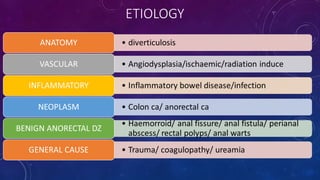
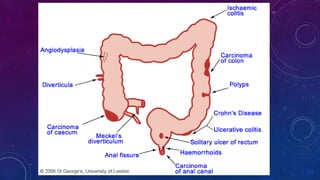
ETIOLOGY
PRESENTATION
Lower GI bleeding typically presents with :
1.Hematochezia (which can range from bright-red
blood to old clots)
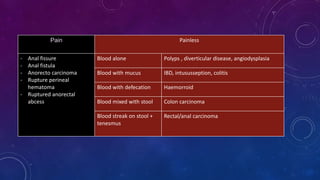
Pain Painless
- Anal fissure
- Anal fistula
- Anorecto carcinoma
- Rupture perineal
hematoma
- Ruptured anorectal
abcess
Blood alone Polyps , diverticular disease, angiodysplasia
Blood with mucus IBD, intususseption, colitis
Blood with defecation Haemorroid
Blood mixed with stool Colon carcinoma
Blood streak on stool +
tenesmus
Rectal/anal carcinoma
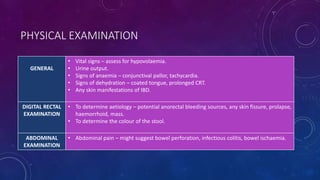
PHYSICAL EXAMINATION
GENERAL
• Vital signs – assess for hypovolaemia.
• Urine output.
• Signs of anaemia – conjunctival pallor, tachycardia.
• Signs of dehydration – coated tongue, prolonged CRT.
• Any skin manifestations of IBD.
DIGITAL RECTAL
EXAMINATION
• To determine aetiology – potential anorectal bleeding sources, any skin fissure, prolapse,
haemorrhoid, mass.
• To determine the colour of the stool.
ABDOMINAL
EXAMINATION
• Abdominal pain – might suggest bowel perforation, infectious colitis, bowel ischaemia.
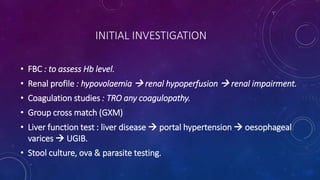
INITIAL INVESTIGATION
• FBC : to assess Hb level.
• Renal profile : hypovolaemia  renal hypoperfusion  renal impairment.
• Coagulation studies : TRO any coagulopathy.
• Group cross match (GXM)
• Liver function test : liver disease  portal hypertension  oesophageal
varices  UGIB.
• Stool culture, ova & parasite testing.
MANAGMENT
i. Initial assessment & haemodynamic resuscitation.
ii. Colonoscopy – localisation of the bleeding site.
iii. Therapeutic intervention – to stop bleeding at the site.
INITIAL ASSESSMENT.
• Includes thorough history, physical examination & lab tests.
• Triaging those with high risk features  requiring monitoring in an intensive care setting.
- hemodynamic instability at presentation (tachycardia, hypotension, and syncope).
- ongoing bleeding (gross blood on initial digital rectal examination and recurrent hematochezia).
- comorbid illnesses, age >60 years.
- a history of diverticulosis or angioectasia.
- an elevated creatinine, and anemia
• General supportive measures.
 Receive supplemental oxygen by nasal prong.
 2 large-bore IV access.
 Keep nil by mouth in event urgent upper endoscopy needed.
HAEMODYNAMIC RESUSCITATION
• Patients with hemodynamic instability/suspected ongoing bleeding  IV fluid
resuscitation.
• Packed RBCs should be transfused if
• Hb <7g/dl – young patients without any comorbid illness.
• Hb <9 g/dl – patients with massive bleeding, significant comorbid illness
(especially cardiovascular ischemia), or a possible delay in receiving therapeutic
interventions.
• Patients with active bleeding & hypovolemic despite normal Hb.
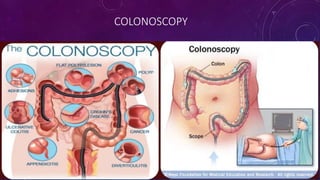
COLONOSCOPY
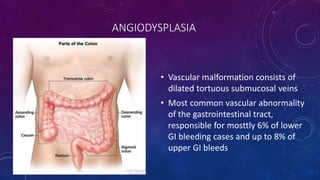
ANGIODYSPLASIA
• Vascular malformation consists of
dilated tortuous submucosal veins
• Most common vascular abnormality
of the gastrointestinal tract,
responsible for mosttly 6% of lower
GI bleeding cases and up to 8% of
upper GI bleeds
• Can occur at a multiple sites
within the GI tract,
including :
• Colon
• Small intestine
• Stomach and duodenum
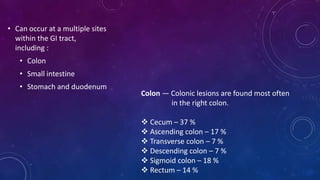
Colon — Colonic lesions are found most often
in the right colon.
 Cecum – 37 %
 Ascending colon – 17 %
 Transverse colon – 7 %
 Descending colon – 7 %
 Sigmoid colon – 18 %
 Rectum – 14 %
INVESTIGATION
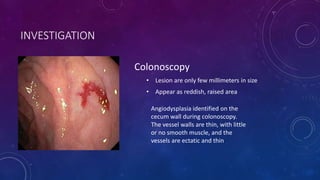
Colonoscopy
• Lesion are only few millimeters in size
• Appear as reddish, raised area
Angiodysplasia identified on the
cecum wall during colonoscopy.
The vessel walls are thin, with little
or no smooth muscle, and the
vessels are ectatic and thin
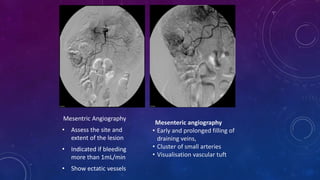
Mesentric Angiography
• Assess the site and
extent of the lesion
• Indicated if bleeding
more than 1mL/min
• Show ectatic vessels
Mesenteric angiography
• Early and prolonged filling of
draining veins,
• Cluster of small arteries
• Visualisation vascular tuft
MANAGMENT
1. Stabilize the unstable circulation
2. Bleeding localized by colonoscopy
3. Cauterization
• By argon laser during colonoscopy after the site of bleeding confirmed
2. Surgical procedure
• If the segment of colon involved is not clear or there is massive bleeding, subtotal
colectomy may be necessary
HAEMORRHOIDS
• DEFINITION
 Symptomatic anal cushions
 Haemorrhoids venous cushions are normal structures of anorectum and universally present
in all person unless previous intervention has taken place
 It is a common anal pathology but many patients are embarrassed to seek attention
ETIOLOGY
• Straining and constipation
• Pregnancy
• Obesity
• Prolong sitting
• Portal hypertension
• And anorectal varices
• Chronic diarrhea
• Familial
• Colon malignancy
• Loss of rectal muscle tone
• Spinal cord injury
• Rectal surgery
• High socioeconomic status
• Episiotomy
• Anal intercourse
• IBD
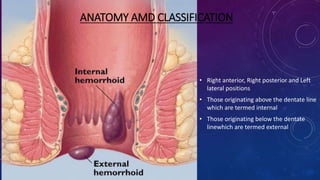
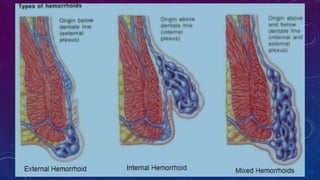
• Right anterior, Right posterior and Left
lateral positions
• Those originating above the dentate line
which are termed internal
• Those originating below the dentate
linewhich are termed external
ANATOMY AMD CLASSIFICATION
DIFFERENCES
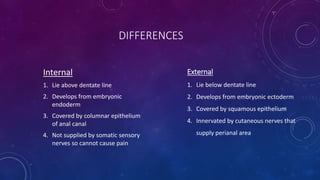
Internal
1. Lie above dentate line
2. Develops from embryonic
endoderm
3. Covered by columnar epithelium
of anal canal
4. Not supplied by somatic sensory
nerves so cannot cause pain
External
1. Lie below dentate line
2. Develops from embryonic ectoderm
3. Covered by squamous epithelium
4. Innervated by cutaneous nerves that
supply perianal area
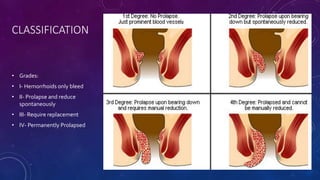
CLASSIFICATION
• Grades:
• I- Hemorrhoids only bleed
• II- Prolapse and reduce
spontaneously
• III- Require replacement
• IV- Permanently Prolapsed
SYMPTOMS
• Rectal Bleeding
• Bright red blood in stool
Dripping in the toilet
On wiping after defecation
• Pain during bowel movements
• Anal Itching
• Rectal Prolapse (while walking, lifting weights)
• Thrombus
• Extreme pain, bleeding and occasionally signs of systemic illness in case of
strangulation
PHYSICAL EXAMINATIONS AND INVESTIGATIONS
• PR Done in Sim’s position
• ANOSCOPY
• PROCTOSCOPY
• COAGULATION PROFILE
• FBC
• FLEXIBLE SIGMOIDOSCOPY
TREATMENT
Treat only symptomatic haemorrhoids :
1. Conservative
2. Nonsurgical
3. Surgical
CONSERVATIVE
• TOC in grade 1 interbal and nonthrombosed external haemorroids
• Warm baths ( sitz bath)
• High fibre diet
• Adequate fluid intake
• Stool softeners
• Topical analgesics
• Proper anal hygiene
NONSURGICAL
• To destroy internal haemorrhoids
• Rubber band ligation
• Sclerotherapy
• Coagulation
• Electrocautery, electrotherapy
• Cryotherapy
• Lase therapy and radion wave ablation
SURGICAL
• Haemorrhoidectomy
1) Grade III & IV haemorroids with severe symptoms
2) Consevative and nonbsurgical method fails
3) Patient preference
4) Presence of anorectal conditions requiring surgery : Fistula,Fissure,large skin tags
5) Fibrosed Haemorroids
6) Intero-external haemorrhoids when external haemorroids is well defined
DIVERTICULOSIS
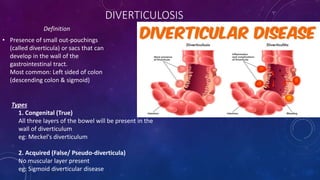
Definition
• Presence of small out-pouchings
(called diverticula) or sacs that can
develop in the wall of the
gastrointestinal tract.
Most common: Left sided of colon
(descending colon & sigmoid)
Types
1. Congenital (True)
All three layers of the bowel will be present in the
wall of diverticulum
eg: Meckel's diverticulum
2. Acquired (False/ Pseudo-diverticula)
No muscular layer present
eg: Sigmoid diverticular disease
Aetiology
• Older age (between 50 and 70)
• Diet in low fibre
• Most common: sigmoid colon
Pathophysiology
caused by an increase in intraluminal pressure  which leads to mucosal extrusion through the weakest
points of the muscular layer of the bowel where the blood vessels penetrate the bowel wall
CLINICAL FEATURES
1. Mainly asymptomatic
2. Mild intermittent lower abdominal pain shifts to left iliac fossa & become more constant pain
3. Colicky pain if large bowel becomes obstructed
4. Loss of appetite
5. Change in bowel habits
6. Distension and flatulence
7. Increased frequency of micturition
COMPLICATIONS
Uncomplicated Diverticulitis (Inflammtion)
• Present as persistent lower abdominal pain usually at left iliac fossa
• May accompanied by diarrhea or constipation
Complicated Diverticulitis (Perforation)
• Often leads to pericolic abscess, generalized peritonitis, fistulas between the
colon and adjacent structures
• Distension, flatulence and heaviness sensation
• Acute: persistent LIF pain, fever, malaise, may be accompanied by diarrhea or
constipation and urinary symptoms
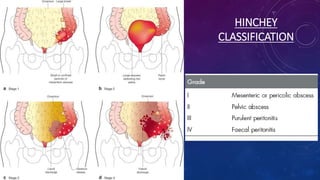
• Hinchey Classification
HINCHEY
CLASSIFICATION
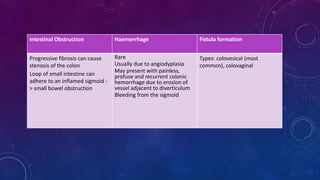
Intestinal Obstruction Haemorrhage Fistula formation
Progressive fibrosis can cause
stenosis of the colon
Loop of small intestine can
adhere to an inflamed sigmoid -
> small bowel obstruction
Rare
Usually due to angiodyplasia
May present with painless,
profuse and recurrent colonic
hemorrhage due to erosion of
vessel adjacent to diverticulum
Bleeding from the sigmoid
Types: colovesical (most
common), colovaginal
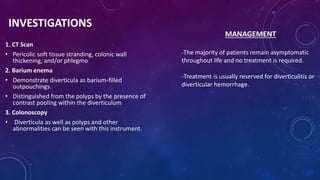
INVESTIGATIONS
1. CT Scan
• Pericolic soft tissue stranding, colonic wall
thickening, and/or phlegmo
2. Barium enema
• Demonstrate diverticula as barium-filled
outpouchings.
• Distinguished from the polyps by the presence of
contrast pooling within the diverticulum
3. Colonoscopy
• Diverticula as well as polyps and other
abnormalities can be seen with this instrument.
MANAGEMENT
-The majority of patients remain asymptomatic
throughout life and no treatment is required.
-Treatment is usually reserved for diverticulitis or
diverticular hemorrhage.
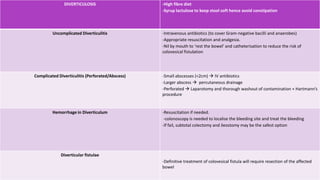
DIVERTICULOSIS -High fibre diet
-Syrup lactulose to keep stool soft hence avoid constipation
Uncomplicated Diverticulitis -Intravenous antibiotics (to cover Gram-negative bacilli and anaerobes)
-Appropriate resuscitation and analgesia.
-Nil by mouth to ‘rest the bowel’ and catheterisation to reduce the risk of
colovesical fistulation
Complicated Diverticulitis (Perforated/Abscess) -Small abscesses (<2cm)  IV antibiotics
-Larger abscess  percutaneous drainage
-Perforated  Laparotomy and thorough washout of contamination + Hartmann’s
procedure
Hemorrhage in Diverticulum -Resuscitation if needed.
-colonoscopy is needed to localise the bleeding site and treat the bleeding
-If fail, subtotal colectomy and ileostomy may be the safest option
Diverticular fistulae
-Definitive treatment of colovesical fistula will require resection of the affected
bowel
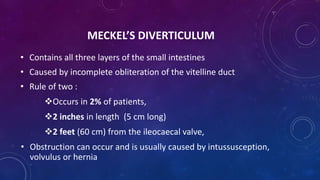
HARTMANN’S PROCEDURE
Surgical resection of the rectosigmoid colon with closure of the
anorectal stump and formation of an end colostomy
MECKEL’S DIVERTICULUM
• Contains all three layers of the small intestines
• Caused by incomplete obliteration of the vitelline duct
• Rule of two :
Occurs in 2% of patients,
2 inches in length (5 cm long)
2 feet (60 cm) from the ileocaecal valve,
• Obstruction can occur and is usually caused by intussusception,
volvulus or hernia
ANAL CANCER
1. Rare
2. Squamous cell carcinoma is the common one
3. Those arising below dentate line are usually squamous cell carcinoma while above are
adenocarcinoma
4. High incidence in :
• Female
• Human papillomavirus (HPV) infection
• Genital warts infection
• Human immunodeficiency virus (HIV)
• Multiple sexual partner
• Cigarette smoking
• Receptive anal intercourse
CLINICAL FEATURES
• Bleeding
• Pain
• Presence of mass
• Pruritus ani
• Fecal incontinence
ANAL CANCER
1. Rare
2. Squamous cell carcinoma is the common one
3. Those arising below dentate line are usually squamous cell carcinoma while above are
adenocarcinoma
4. High incidence in :
• Female
• Human papillomavirus (HPV) infection
• Genital warts infection
• Human immunodeficiency virus (HIV)
• Multiple sexual partner
• Cigarette smoking
• Receptive anal intercourse
CLINICAL FEATURES
• Bleeding
• Pain
• Presence of mass
• Pruritus ani
• Fecal incontinence
MANAGEMENT
Depends on histological type
Squamous Cell Carcinoma
1. Concurrent chemotherapy (5-fluoroucil + mitomycin) & radiotherapy -
for non metastatic anal cancer
2. If failed & disease become progressive : proceed to surgical method
• Wide local incision with 1cm margin of normal tissue
• Abdominoperineal resection with colostomy (if tumour >50% of
anal canal)
Adenocarcinoma
1. Surgical - Abdominoperineal resection (APR)
2. Chemoradiotherapy as adjunct pre and post operative
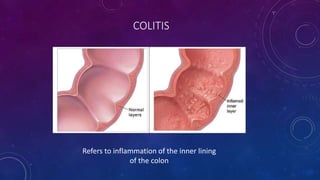
COLITIS
Refers to inflammation of the inner lining
of the colon
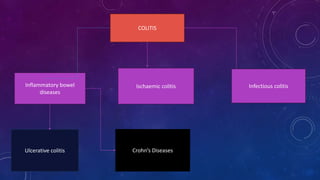
COLITIS
Inflammatory bowel
diseases
Ischaemic colitis Infectious colitis
Ulcerative colitis Crohn’s Diseases
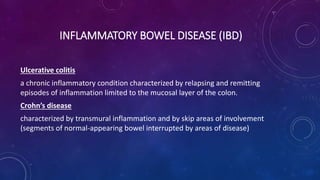
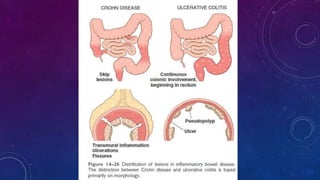
Ulcerative colitis
a chronic inflammatory condition characterized by relapsing and remitting
episodes of inflammation limited to the mucosal layer of the colon.
Crohn’s disease
characterized by transmural inflammation and by skip areas of involvement
(segments of normal-appearing bowel interrupted by areas of disease)
INFLAMMATORY BOWEL DISEASE (IBD)
ULCERATIVE COLITIS
• First symptoms: Watery or bloody diarrhoea. (lasted for weeks to months)
• May associated with rectal discharge of mucus that is either blood-stained or purulent.
• Colicky abdominal pain, urgency, tenesmus.
• Systemic symptoms: fever, fatigue, and weight loss as well as anemic symptoms due to chronic blood
loss.
• Physical examination:
• Anaemic signs
• Abdominal tenderness
• rectal examination may reveal evidence of blood.
EXTRAINTESTINAL MANIFESTATIONS
• Musculoskeletal : Arthritis (large joints)
• Eye : Uveitis and episcleritis (most common)
• Skin : erythema nodosum & pyoderma gangrenosum
• Hepatobiliary : primary sclerosing cholangitis, fatty liver, autoimmune liver
disease
• Hematopoietic/coagulation : high risk for venous & arterial
thromboembolism
INVESTIGATION
• Lab findings :
• FBC: ↓Hb (anemia),
• ESR: Increase
• BUSE: electrolyte abnormalities due to chronic diarrhoea and dehydration.
• LFT: hypoalbuminaemia – due to poor nutritional intake
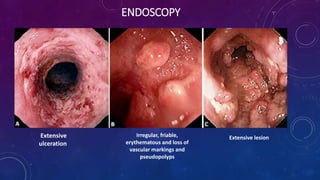
ENDOSCOPY
Extensive
ulceration
Irregular, friable,
erythematous and loss of
vascular markings and
pseudopolyps
Extensive lesion
BIOPSY
• Crypt abscesses
• Crypt branching
• Crypt atrophy
• Epithelial cell abnormalities
• Inflammatory features of ulcerative colitis include increased lamina propria
cellularity, basal plasmacytosis, basal lymphoid aggregates, and lamina propria
eosinophils
*Although none of these features are specific for ulcerative colitis, the presence of
two or more histologic features is highly suggestive of ulcerative colitis
CROHN’S DISEASE
• Patients can have symptoms for many years prior to diagnosis.
• The cardinal symptoms of CD include abdominal pain, diarrhea (with or without gross bleeding), fatigue, and
weight loss.
• Oral : aphthous ulcers or pain in the mouth and gums.
• Esophageal : odynophagia or dysphagia
• Gastroduodenal : nausea or postprandial vomiting
• Fistulas : Transmural bowel inflammation is associated with the development of sinus tracts. Sinus tracts that
penetrate the serosa can give rise to fistulas.
• Perianal disease : These include perianal pain and drainage from large skin tags, anal fissures, perirectal
abscesses, and anorectal fistulas.
• Malabsorption.
• Extraintestinal manifestations.
INVESTIGATION
1. Full blood count (anemia, increase white cell count)
2. ESR & CRP
3. Renal profile (electrolyte abnormalities)
4. Serum Vitamin B12 and Vitamin D (deficient)
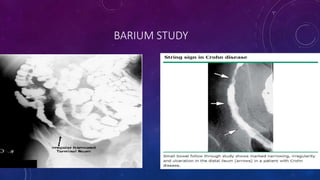
5. Barium study
6. Colonoscopy
BARIUM STUDY
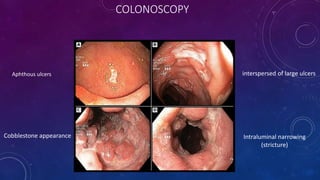
COLONOSCOPY
Aphthous ulcers interspersed of large ulcers
Cobblestone appearance Intraluminal narrowing
(stricture)
MANAGEMENT
• Ulcerative colitis
1) Multidisciplinary approach
2) Maintenance therapy : corticosteroids and 5-Aminosalycylic acid
3) Mild : oral prednisolone or rectal steroids 20-40mg/day for 3-4 weeks.
4) Moderate : oral prednisolone 40mg/day, 2times/day steroid enema, and 5- ASA
5) Severe : medical emergency  surgical intervention
Crohn’s disease
1. Steroids with Aminosalicylates (5-ASA -if colonic involvement)
2. Antibiotics (Metronidazole and ciprofloxacin) – those with abscess
3. Immunomodulatory agents (Azathioprine & 6-mercaptopurine (6-
MP) )
A. Nutritional support
B. Lifestyle advice : Increase physical activity & Dietary advice
THANK YOU

Lower Gastrointestinal Bleed.pptx 1234567

  • 2.
    DEFINITION • GI bleedingcan be categorized into upper and lower in origin. The ligament of Treitz is commonly used as the point to differentiate the two. Bleeds proximal to the ligament are upper GI bleeds, and distal bleeds are lower GI bleeds. • Lower gastrointestinal bleeding (LGIB) refers to blood loss of recent onset originating from a site distal to the ligament of Treitz
  • 3.
  • 5.
    PRESENTATION Lower GI bleedingtypically presents with : 1.Hematochezia (which can range from bright-red blood to old clots)
  • 6.
    Pain Painless - Analfissure - Anal fistula - Anorecto carcinoma - Rupture perineal hematoma - Ruptured anorectal abcess Blood alone Polyps , diverticular disease, angiodysplasia Blood with mucus IBD, intususseption, colitis Blood with defecation Haemorroid Blood mixed with stool Colon carcinoma Blood streak on stool + tenesmus Rectal/anal carcinoma
  • 7.
    PHYSICAL EXAMINATION GENERAL • Vitalsigns – assess for hypovolaemia. • Urine output. • Signs of anaemia – conjunctival pallor, tachycardia. • Signs of dehydration – coated tongue, prolonged CRT. • Any skin manifestations of IBD. DIGITAL RECTAL EXAMINATION • To determine aetiology – potential anorectal bleeding sources, any skin fissure, prolapse, haemorrhoid, mass. • To determine the colour of the stool. ABDOMINAL EXAMINATION • Abdominal pain – might suggest bowel perforation, infectious colitis, bowel ischaemia.
  • 8.
    INITIAL INVESTIGATION • FBC: to assess Hb level. • Renal profile : hypovolaemia  renal hypoperfusion  renal impairment. • Coagulation studies : TRO any coagulopathy. • Group cross match (GXM) • Liver function test : liver disease  portal hypertension  oesophageal varices  UGIB. • Stool culture, ova & parasite testing.
  • 9.
    MANAGMENT i. Initial assessment& haemodynamic resuscitation. ii. Colonoscopy – localisation of the bleeding site. iii. Therapeutic intervention – to stop bleeding at the site.
  • 10.
    INITIAL ASSESSMENT. • Includesthorough history, physical examination & lab tests. • Triaging those with high risk features  requiring monitoring in an intensive care setting. - hemodynamic instability at presentation (tachycardia, hypotension, and syncope). - ongoing bleeding (gross blood on initial digital rectal examination and recurrent hematochezia). - comorbid illnesses, age >60 years. - a history of diverticulosis or angioectasia. - an elevated creatinine, and anemia • General supportive measures.  Receive supplemental oxygen by nasal prong.  2 large-bore IV access.  Keep nil by mouth in event urgent upper endoscopy needed.
  • 11.
    HAEMODYNAMIC RESUSCITATION • Patientswith hemodynamic instability/suspected ongoing bleeding  IV fluid resuscitation. • Packed RBCs should be transfused if • Hb <7g/dl – young patients without any comorbid illness. • Hb <9 g/dl – patients with massive bleeding, significant comorbid illness (especially cardiovascular ischemia), or a possible delay in receiving therapeutic interventions. • Patients with active bleeding & hypovolemic despite normal Hb.
  • 12.
  • 13.
    ANGIODYSPLASIA • Vascular malformationconsists of dilated tortuous submucosal veins • Most common vascular abnormality of the gastrointestinal tract, responsible for mosttly 6% of lower GI bleeding cases and up to 8% of upper GI bleeds
  • 14.
    • Can occurat a multiple sites within the GI tract, including : • Colon • Small intestine • Stomach and duodenum Colon — Colonic lesions are found most often in the right colon.  Cecum – 37 %  Ascending colon – 17 %  Transverse colon – 7 %  Descending colon – 7 %  Sigmoid colon – 18 %  Rectum – 14 %
  • 15.
    INVESTIGATION Colonoscopy • Lesion areonly few millimeters in size • Appear as reddish, raised area Angiodysplasia identified on the cecum wall during colonoscopy. The vessel walls are thin, with little or no smooth muscle, and the vessels are ectatic and thin
  • 16.
    Mesentric Angiography • Assessthe site and extent of the lesion • Indicated if bleeding more than 1mL/min • Show ectatic vessels Mesenteric angiography • Early and prolonged filling of draining veins, • Cluster of small arteries • Visualisation vascular tuft
  • 17.
    MANAGMENT 1. Stabilize theunstable circulation 2. Bleeding localized by colonoscopy 3. Cauterization • By argon laser during colonoscopy after the site of bleeding confirmed 2. Surgical procedure • If the segment of colon involved is not clear or there is massive bleeding, subtotal colectomy may be necessary
  • 18.
    HAEMORRHOIDS • DEFINITION  Symptomaticanal cushions  Haemorrhoids venous cushions are normal structures of anorectum and universally present in all person unless previous intervention has taken place  It is a common anal pathology but many patients are embarrassed to seek attention
  • 19.
    ETIOLOGY • Straining andconstipation • Pregnancy • Obesity • Prolong sitting • Portal hypertension • And anorectal varices • Chronic diarrhea • Familial • Colon malignancy • Loss of rectal muscle tone • Spinal cord injury • Rectal surgery • High socioeconomic status • Episiotomy • Anal intercourse • IBD
  • 20.
    • Right anterior,Right posterior and Left lateral positions • Those originating above the dentate line which are termed internal • Those originating below the dentate linewhich are termed external ANATOMY AMD CLASSIFICATION
  • 21.
    DIFFERENCES Internal 1. Lie abovedentate line 2. Develops from embryonic endoderm 3. Covered by columnar epithelium of anal canal 4. Not supplied by somatic sensory nerves so cannot cause pain External 1. Lie below dentate line 2. Develops from embryonic ectoderm 3. Covered by squamous epithelium 4. Innervated by cutaneous nerves that supply perianal area
  • 23.
    CLASSIFICATION • Grades: • I-Hemorrhoids only bleed • II- Prolapse and reduce spontaneously • III- Require replacement • IV- Permanently Prolapsed
  • 24.
    SYMPTOMS • Rectal Bleeding •Bright red blood in stool Dripping in the toilet On wiping after defecation • Pain during bowel movements • Anal Itching • Rectal Prolapse (while walking, lifting weights) • Thrombus • Extreme pain, bleeding and occasionally signs of systemic illness in case of strangulation
  • 25.
    PHYSICAL EXAMINATIONS ANDINVESTIGATIONS • PR Done in Sim’s position • ANOSCOPY • PROCTOSCOPY • COAGULATION PROFILE • FBC • FLEXIBLE SIGMOIDOSCOPY
  • 26.
    TREATMENT Treat only symptomatichaemorrhoids : 1. Conservative 2. Nonsurgical 3. Surgical
  • 27.
    CONSERVATIVE • TOC ingrade 1 interbal and nonthrombosed external haemorroids • Warm baths ( sitz bath) • High fibre diet • Adequate fluid intake • Stool softeners • Topical analgesics • Proper anal hygiene
  • 28.
    NONSURGICAL • To destroyinternal haemorrhoids • Rubber band ligation • Sclerotherapy • Coagulation • Electrocautery, electrotherapy • Cryotherapy • Lase therapy and radion wave ablation
  • 29.
    SURGICAL • Haemorrhoidectomy 1) GradeIII & IV haemorroids with severe symptoms 2) Consevative and nonbsurgical method fails 3) Patient preference 4) Presence of anorectal conditions requiring surgery : Fistula,Fissure,large skin tags 5) Fibrosed Haemorroids 6) Intero-external haemorrhoids when external haemorroids is well defined
  • 30.
    DIVERTICULOSIS Definition • Presence ofsmall out-pouchings (called diverticula) or sacs that can develop in the wall of the gastrointestinal tract. Most common: Left sided of colon (descending colon & sigmoid) Types 1. Congenital (True) All three layers of the bowel will be present in the wall of diverticulum eg: Meckel's diverticulum 2. Acquired (False/ Pseudo-diverticula) No muscular layer present eg: Sigmoid diverticular disease
  • 31.
    Aetiology • Older age(between 50 and 70) • Diet in low fibre • Most common: sigmoid colon Pathophysiology caused by an increase in intraluminal pressure  which leads to mucosal extrusion through the weakest points of the muscular layer of the bowel where the blood vessels penetrate the bowel wall
  • 32.
    CLINICAL FEATURES 1. Mainlyasymptomatic 2. Mild intermittent lower abdominal pain shifts to left iliac fossa & become more constant pain 3. Colicky pain if large bowel becomes obstructed 4. Loss of appetite 5. Change in bowel habits 6. Distension and flatulence 7. Increased frequency of micturition
  • 33.
    COMPLICATIONS Uncomplicated Diverticulitis (Inflammtion) •Present as persistent lower abdominal pain usually at left iliac fossa • May accompanied by diarrhea or constipation Complicated Diverticulitis (Perforation) • Often leads to pericolic abscess, generalized peritonitis, fistulas between the colon and adjacent structures • Distension, flatulence and heaviness sensation • Acute: persistent LIF pain, fever, malaise, may be accompanied by diarrhea or constipation and urinary symptoms • Hinchey Classification
  • 34.
  • 35.
    Intestinal Obstruction HaemorrhageFistula formation Progressive fibrosis can cause stenosis of the colon Loop of small intestine can adhere to an inflamed sigmoid - > small bowel obstruction Rare Usually due to angiodyplasia May present with painless, profuse and recurrent colonic hemorrhage due to erosion of vessel adjacent to diverticulum Bleeding from the sigmoid Types: colovesical (most common), colovaginal
  • 36.
    INVESTIGATIONS 1. CT Scan •Pericolic soft tissue stranding, colonic wall thickening, and/or phlegmo 2. Barium enema • Demonstrate diverticula as barium-filled outpouchings. • Distinguished from the polyps by the presence of contrast pooling within the diverticulum 3. Colonoscopy • Diverticula as well as polyps and other abnormalities can be seen with this instrument. MANAGEMENT -The majority of patients remain asymptomatic throughout life and no treatment is required. -Treatment is usually reserved for diverticulitis or diverticular hemorrhage.
  • 37.
    DIVERTICULOSIS -High fibrediet -Syrup lactulose to keep stool soft hence avoid constipation Uncomplicated Diverticulitis -Intravenous antibiotics (to cover Gram-negative bacilli and anaerobes) -Appropriate resuscitation and analgesia. -Nil by mouth to ‘rest the bowel’ and catheterisation to reduce the risk of colovesical fistulation Complicated Diverticulitis (Perforated/Abscess) -Small abscesses (<2cm)  IV antibiotics -Larger abscess  percutaneous drainage -Perforated  Laparotomy and thorough washout of contamination + Hartmann’s procedure Hemorrhage in Diverticulum -Resuscitation if needed. -colonoscopy is needed to localise the bleeding site and treat the bleeding -If fail, subtotal colectomy and ileostomy may be the safest option Diverticular fistulae -Definitive treatment of colovesical fistula will require resection of the affected bowel
  • 38.
    HARTMANN’S PROCEDURE Surgical resectionof the rectosigmoid colon with closure of the anorectal stump and formation of an end colostomy
  • 39.
    MECKEL’S DIVERTICULUM • Containsall three layers of the small intestines • Caused by incomplete obliteration of the vitelline duct • Rule of two : Occurs in 2% of patients, 2 inches in length (5 cm long) 2 feet (60 cm) from the ileocaecal valve, • Obstruction can occur and is usually caused by intussusception, volvulus or hernia
  • 40.
    ANAL CANCER 1. Rare 2.Squamous cell carcinoma is the common one 3. Those arising below dentate line are usually squamous cell carcinoma while above are adenocarcinoma 4. High incidence in : • Female • Human papillomavirus (HPV) infection • Genital warts infection • Human immunodeficiency virus (HIV) • Multiple sexual partner • Cigarette smoking • Receptive anal intercourse
  • 41.
    CLINICAL FEATURES • Bleeding •Pain • Presence of mass • Pruritus ani • Fecal incontinence
  • 42.
    ANAL CANCER 1. Rare 2.Squamous cell carcinoma is the common one 3. Those arising below dentate line are usually squamous cell carcinoma while above are adenocarcinoma 4. High incidence in : • Female • Human papillomavirus (HPV) infection • Genital warts infection • Human immunodeficiency virus (HIV) • Multiple sexual partner • Cigarette smoking • Receptive anal intercourse
  • 43.
    CLINICAL FEATURES • Bleeding •Pain • Presence of mass • Pruritus ani • Fecal incontinence
  • 44.
    MANAGEMENT Depends on histologicaltype Squamous Cell Carcinoma 1. Concurrent chemotherapy (5-fluoroucil + mitomycin) & radiotherapy - for non metastatic anal cancer 2. If failed & disease become progressive : proceed to surgical method • Wide local incision with 1cm margin of normal tissue • Abdominoperineal resection with colostomy (if tumour >50% of anal canal) Adenocarcinoma 1. Surgical - Abdominoperineal resection (APR) 2. Chemoradiotherapy as adjunct pre and post operative
  • 45.
    COLITIS Refers to inflammationof the inner lining of the colon
  • 46.
    COLITIS Inflammatory bowel diseases Ischaemic colitisInfectious colitis Ulcerative colitis Crohn’s Diseases
  • 47.
    Ulcerative colitis a chronicinflammatory condition characterized by relapsing and remitting episodes of inflammation limited to the mucosal layer of the colon. Crohn’s disease characterized by transmural inflammation and by skip areas of involvement (segments of normal-appearing bowel interrupted by areas of disease) INFLAMMATORY BOWEL DISEASE (IBD)
  • 49.
    ULCERATIVE COLITIS • Firstsymptoms: Watery or bloody diarrhoea. (lasted for weeks to months) • May associated with rectal discharge of mucus that is either blood-stained or purulent. • Colicky abdominal pain, urgency, tenesmus. • Systemic symptoms: fever, fatigue, and weight loss as well as anemic symptoms due to chronic blood loss. • Physical examination: • Anaemic signs • Abdominal tenderness • rectal examination may reveal evidence of blood.
  • 50.
    EXTRAINTESTINAL MANIFESTATIONS • Musculoskeletal: Arthritis (large joints) • Eye : Uveitis and episcleritis (most common) • Skin : erythema nodosum & pyoderma gangrenosum • Hepatobiliary : primary sclerosing cholangitis, fatty liver, autoimmune liver disease • Hematopoietic/coagulation : high risk for venous & arterial thromboembolism
  • 51.
    INVESTIGATION • Lab findings: • FBC: ↓Hb (anemia), • ESR: Increase • BUSE: electrolyte abnormalities due to chronic diarrhoea and dehydration. • LFT: hypoalbuminaemia – due to poor nutritional intake
  • 52.
    ENDOSCOPY Extensive ulceration Irregular, friable, erythematous andloss of vascular markings and pseudopolyps Extensive lesion
  • 53.
    BIOPSY • Crypt abscesses •Crypt branching • Crypt atrophy • Epithelial cell abnormalities • Inflammatory features of ulcerative colitis include increased lamina propria cellularity, basal plasmacytosis, basal lymphoid aggregates, and lamina propria eosinophils *Although none of these features are specific for ulcerative colitis, the presence of two or more histologic features is highly suggestive of ulcerative colitis
  • 54.
    CROHN’S DISEASE • Patientscan have symptoms for many years prior to diagnosis. • The cardinal symptoms of CD include abdominal pain, diarrhea (with or without gross bleeding), fatigue, and weight loss. • Oral : aphthous ulcers or pain in the mouth and gums. • Esophageal : odynophagia or dysphagia • Gastroduodenal : nausea or postprandial vomiting • Fistulas : Transmural bowel inflammation is associated with the development of sinus tracts. Sinus tracts that penetrate the serosa can give rise to fistulas. • Perianal disease : These include perianal pain and drainage from large skin tags, anal fissures, perirectal abscesses, and anorectal fistulas. • Malabsorption. • Extraintestinal manifestations.
  • 55.
    INVESTIGATION 1. Full bloodcount (anemia, increase white cell count) 2. ESR & CRP 3. Renal profile (electrolyte abnormalities) 4. Serum Vitamin B12 and Vitamin D (deficient) 5. Barium study 6. Colonoscopy
  • 56.
  • 57.
    COLONOSCOPY Aphthous ulcers interspersedof large ulcers Cobblestone appearance Intraluminal narrowing (stricture)
  • 58.
    MANAGEMENT • Ulcerative colitis 1)Multidisciplinary approach 2) Maintenance therapy : corticosteroids and 5-Aminosalycylic acid 3) Mild : oral prednisolone or rectal steroids 20-40mg/day for 3-4 weeks. 4) Moderate : oral prednisolone 40mg/day, 2times/day steroid enema, and 5- ASA 5) Severe : medical emergency  surgical intervention
  • 59.
    Crohn’s disease 1. Steroidswith Aminosalicylates (5-ASA -if colonic involvement) 2. Antibiotics (Metronidazole and ciprofloxacin) – those with abscess 3. Immunomodulatory agents (Azathioprine & 6-mercaptopurine (6- MP) ) A. Nutritional support B. Lifestyle advice : Increase physical activity & Dietary advice
  • 60.