
Long Term Effects of Exercise Shuvam Roy 5 th  semester Medical College
Two types of training Strength training Endurance training
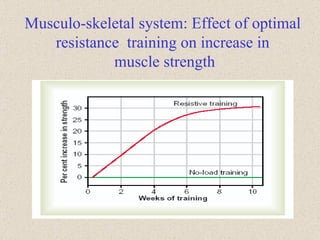
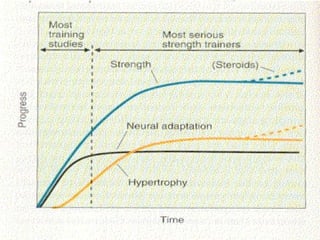
Musculo-skeletal system: Effect of optimal resistance  training on increase in muscle strength
 
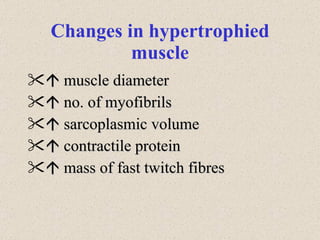
Changes in hypertrophied muscle    muscle diameter    no. of myofibrils    sarcoplasmic volume    contractile protein    mass of fast twitch fibres
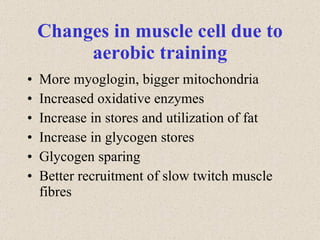
Changes in muscle cell due to aerobic training More myoglogin, bigger mitochondria Increased oxidative enzymes Increase in stores and utilization of fat Increase in glycogen stores Glycogen sparing Better recruitment of slow twitch muscle fibres
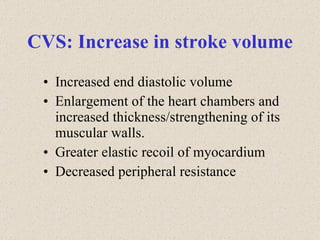
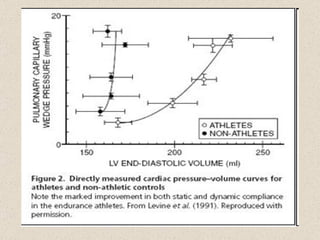
CVS: Increase in stroke volume Increased end diastolic volume Enlargement of the heart chambers and increased thickness/strengthening of its muscular walls. Greater elastic recoil of myocardium Decreased peripheral resistance
 
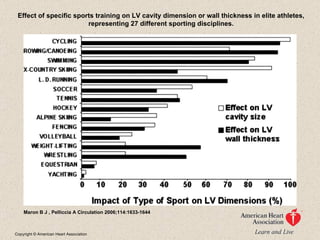
Effect of specific sports training on LV cavity dimension or wall thickness in elite athletes, representing 27 different sporting disciplines. Maron B J , Pelliccia A Circulation 2006;114:1633-1644 Copyright © American Heart Association
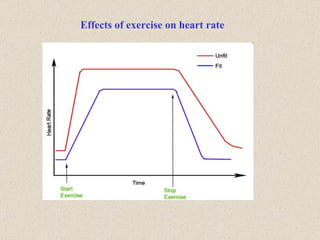
Effects of exercise on heart rate
CVS: Cardiac output Maximal cardiac output is increased Cardiac output in submaximal exercise is decreased
CVS: Blood pressure Blood pressure at rest is decreased Less increase in SBP due to exercise Decreased myocardial oxygen consumption
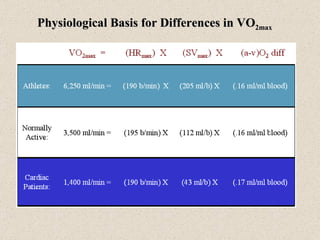
Physiological Basis for Differences in VO 2max
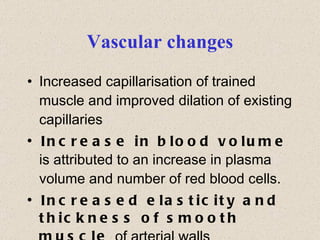
Vascular changes Increased capillarisation of trained muscle and improved dilation of existing capillaries Increase in blood volume   is attributed to an increase in plasma volume and number of red blood cells. Increased elasticity and thickness of smooth muscle   of arterial walls
Respiratory system Ventilatory equivalent of oxygen is decreased in submaximal exercise Maximum exercise ventilation is increased Respiratory rate at rest is decreased
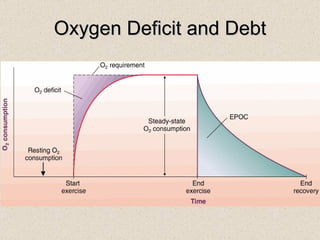
Oxygen Deficit and Debt
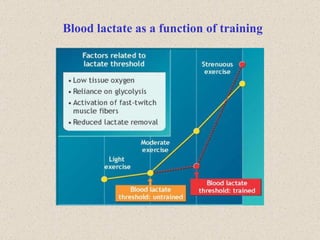
Blood lactate as a function of training
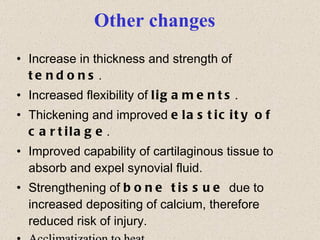
Other changes Increase in thickness and strength of  tendons . Increased flexibility of  ligaments . Thickening and improved  elasticity of cartilage . Improved capability of cartilaginous tissue to absorb and expel synovial fluid. Strengthening of  bone tissue  due to increased depositing of calcium, therefore reduced risk of injury. Acclimatization to heat
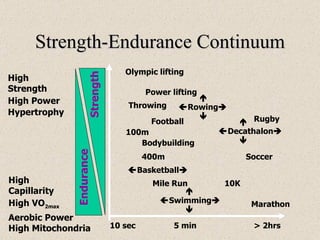
Strength-Endurance Continuum High  Strength High Power Hypertrophy Olympic lifting Power lifting Throwing   Rowing   Football 100m   Decathalon     Swimming   Marathon  Basketball  High  Capillarity High VO 2max Aerobic Power High Mitochondria Bodybuilding Rugby 400m Mile Run Soccer 10K 10 sec 5 min > 2hrs Endurance Strength
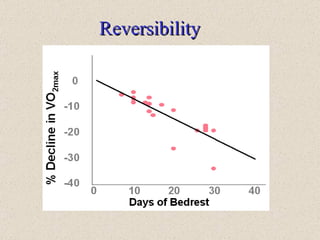
Reversibility
Exercise prolongs life Lowered blood pressure Lowered blood cholesterol and LDL Raised HDL Reduction of obesity Greater cardiac and respiratory reserve Greater strength of bones and joints
Thank you

Long term effects of exercise shubham

  • 1.
    Long Term Effectsof Exercise Shuvam Roy 5 th semester Medical College
  • 2.
    Two types oftraining Strength training Endurance training
  • 3.
    Musculo-skeletal system: Effectof optimal resistance training on increase in muscle strength
  • 4.
  • 5.
    Changes in hypertrophiedmuscle  muscle diameter  no. of myofibrils  sarcoplasmic volume  contractile protein  mass of fast twitch fibres
  • 6.
    Changes in musclecell due to aerobic training More myoglogin, bigger mitochondria Increased oxidative enzymes Increase in stores and utilization of fat Increase in glycogen stores Glycogen sparing Better recruitment of slow twitch muscle fibres
  • 7.
    CVS: Increase instroke volume Increased end diastolic volume Enlargement of the heart chambers and increased thickness/strengthening of its muscular walls. Greater elastic recoil of myocardium Decreased peripheral resistance
  • 8.
  • 9.
    Effect of specificsports training on LV cavity dimension or wall thickness in elite athletes, representing 27 different sporting disciplines. Maron B J , Pelliccia A Circulation 2006;114:1633-1644 Copyright © American Heart Association
  • 10.
    Effects of exerciseon heart rate
  • 11.
    CVS: Cardiac outputMaximal cardiac output is increased Cardiac output in submaximal exercise is decreased
  • 12.
    CVS: Blood pressureBlood pressure at rest is decreased Less increase in SBP due to exercise Decreased myocardial oxygen consumption
  • 13.
    Physiological Basis forDifferences in VO 2max
  • 14.
    Vascular changes Increasedcapillarisation of trained muscle and improved dilation of existing capillaries Increase in blood volume is attributed to an increase in plasma volume and number of red blood cells. Increased elasticity and thickness of smooth muscle of arterial walls
  • 15.
    Respiratory system Ventilatoryequivalent of oxygen is decreased in submaximal exercise Maximum exercise ventilation is increased Respiratory rate at rest is decreased
  • 16.
  • 17.
    Blood lactate asa function of training
  • 18.
    Other changes Increasein thickness and strength of tendons . Increased flexibility of ligaments . Thickening and improved elasticity of cartilage . Improved capability of cartilaginous tissue to absorb and expel synovial fluid. Strengthening of bone tissue due to increased depositing of calcium, therefore reduced risk of injury. Acclimatization to heat
  • 19.
    Strength-Endurance Continuum High Strength High Power Hypertrophy Olympic lifting Power lifting Throwing   Rowing   Football 100m   Decathalon     Swimming   Marathon  Basketball  High Capillarity High VO 2max Aerobic Power High Mitochondria Bodybuilding Rugby 400m Mile Run Soccer 10K 10 sec 5 min > 2hrs Endurance Strength
  • 20.
  • 21.
    Exercise prolongs lifeLowered blood pressure Lowered blood cholesterol and LDL Raised HDL Reduction of obesity Greater cardiac and respiratory reserve Greater strength of bones and joints
  • 22.

Editor's Notes

  • #10 Figure 2. Effect of specific sports training on LV cavity dimension or wall thickness in elite athletes, representing 27 different sporting disciplines. X-Country indicates cross-country; L.D. Running, long-distance running.