Physiological Responses to ExerciseThere are physiological changes that occur to your body in response to the demands of exercise. Acute effects are those responses that occur while you are exercising and in the recovery period. Chronic effects are long term adaptations that take at least 6 weeks to occur.
Acute responces of exercise on the body (Immediate)Increased Heart Rate Increased Respiration RateIncreased Stroke VolumeIncreased Cardiac Output-QIncreased VO2Increased Tidal VolumeIncreased Systolic Blood PressureIncreased Blood to working muscles
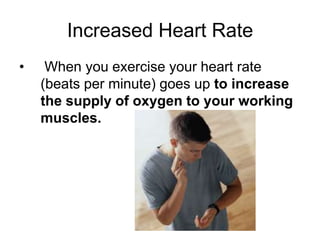
Increased Heart Rate When you exercise your heart rate (beats per minute) goes up to increase the supply of oxygen to your working muscles.
Increased Respiration RateRespiratory rate is the number of breaths taken in one minute. During exercise amounts of carbon dioxide increases as it is a waste product and the respiratory rate goes up to increase oxygen and decrease carbon dioxide.
Increased Stroke VolumeStroke volume is the amount of blood pumped out of your left ventricle with each beat of the heart. This goes up to increase oxygen supply to working muscles.
Increased Cardiac Output-QCardiac output is the amount of blood pumped out of the left ventricle in 1 minute.Q=stroke volume x heart rate.Q=SV x HR
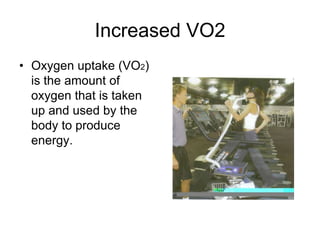
Increased VO2Oxygen uptake (VO2) is the amount of oxygen that is taken up and used by the body to produce energy.
Increased Tidal VolumeTidal volume is the size of each breath and this increases with exercise as the body tries to increase oxygen flow to the blood.
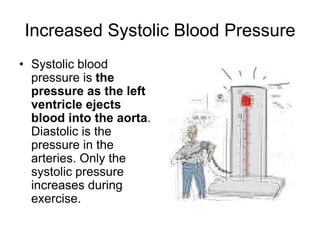
Increased Systolic Blood PressureSystolic blood pressure is the pressure as the left ventricle ejects blood into the aorta. Diastolic is the pressure in the arteries. Only the systolic pressure increases during exercise.
Increased Blood to working musclesDue to increased need for O2 during exercise blood is distributed more where it is required in working muscles.
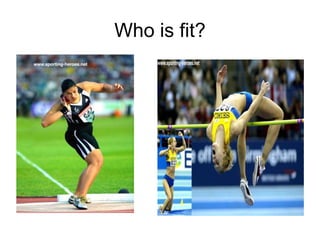
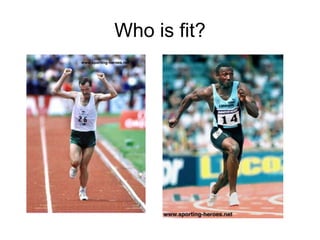
FitnessGenerally:“Fitness is a measure of the body’s ability to complete activities necessary for everyday life effectively and efficiently” (Hodgson, 2001)In the Sporting Context: “ … is a person’s physiological capability to perform a specific physical task or set of tasks”(Sherriff, 2001)
Who is fit?
Who is fit?
Who is fit?
AdaptationPhysiological gain will occur only with regular exerciseAdaptation depends on challenging the physical capability beyond a minimum threshold level (Overload)
Physiological effects to ExerciseThere are physiological changes that occur to your body in response to the demands of exercise. Acute effects are those responses that occur while you are exercising and in the recovery period. Chronic effects are long term adaptations that take at least 6 weeks to occur.
Chronic effects of exercise on the body - AdaptationsIncreased O2 carrying capacity of bloodIncreased blood supply as increased capillariesIncreased number of blood vesselsLungs can take in and distribute more O2Increased heart size (Cardiac hypertrophy)Decreased resting heart rateIncreased Stroke volume at restMore glycogen stored in muscleIncreased muscle size and strength
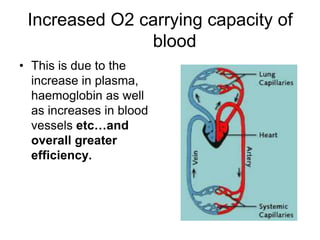
Increased O2 carrying capacity of bloodThis is due to the increase in plasma, haemoglobin as well as increases in blood vessels etc…and overall greater efficiency.
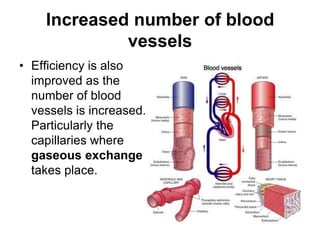
Increased number of blood vesselsEfficiency is also improved as the number of blood vessels is increased. Particularly the capillaries where gaseous exchange takes place.
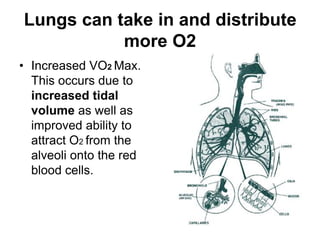
Lungs can take in and distribute more O2Increased VO2 Max. This occurs due to increased tidal volume as well as improved ability to attract O2 from the alveoli onto the red blood cells.
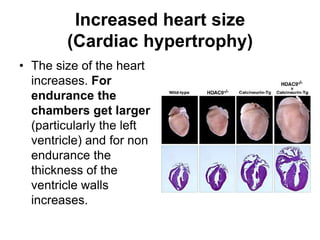
Increased heart size (Cardiac hypertrophy)The size of the heart increases. For endurance the chambers get larger (particularly the left ventricle) and for non endurance the thickness of the ventricle walls increases.
Decreased resting heart rateYour resting heart rate decreases with fitness due to greater efficiency of systems.
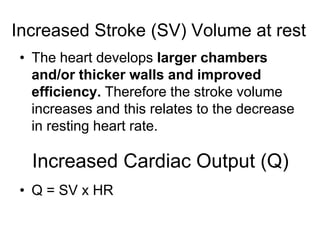
Increased Stroke (SV) Volume at restThe heart develops larger chambers and/or thicker walls and improved efficiency. Therefore the stroke volume increases and this relates to the decrease in resting heart rate.Increased Cardiac Output (Q)Q = SV x HR
More glycogen stored in muscleGreater amounts of fuel are stored for use in endurance events. (For non-endurance ATP and CP stores are increased.
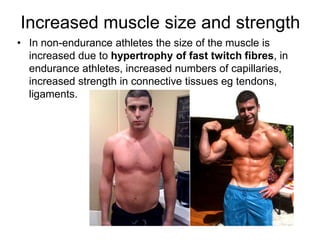
Increased muscle size and strengthIn non-endurance athletes the size of the muscle is increased due to hypertrophy of fast twitch fibres, in endurance athletes, increased numbers of capillaries, increased strength in connective tissues eg tendons, ligaments.

Training adaptations

  • 1.
    Physiological Responses toExerciseThere are physiological changes that occur to your body in response to the demands of exercise. Acute effects are those responses that occur while you are exercising and in the recovery period. Chronic effects are long term adaptations that take at least 6 weeks to occur.
  • 2.
    Acute responces ofexercise on the body (Immediate)Increased Heart Rate Increased Respiration RateIncreased Stroke VolumeIncreased Cardiac Output-QIncreased VO2Increased Tidal VolumeIncreased Systolic Blood PressureIncreased Blood to working muscles
  • 3.
    Increased Heart RateWhen you exercise your heart rate (beats per minute) goes up to increase the supply of oxygen to your working muscles.
  • 4.
    Increased Respiration RateRespiratoryrate is the number of breaths taken in one minute. During exercise amounts of carbon dioxide increases as it is a waste product and the respiratory rate goes up to increase oxygen and decrease carbon dioxide.
  • 5.
    Increased Stroke VolumeStrokevolume is the amount of blood pumped out of your left ventricle with each beat of the heart. This goes up to increase oxygen supply to working muscles.
  • 6.
    Increased Cardiac Output-QCardiacoutput is the amount of blood pumped out of the left ventricle in 1 minute.Q=stroke volume x heart rate.Q=SV x HR
  • 7.
    Increased VO2Oxygen uptake(VO2) is the amount of oxygen that is taken up and used by the body to produce energy.
  • 8.
    Increased Tidal VolumeTidalvolume is the size of each breath and this increases with exercise as the body tries to increase oxygen flow to the blood.
  • 9.
    Increased Systolic BloodPressureSystolic blood pressure is the pressure as the left ventricle ejects blood into the aorta. Diastolic is the pressure in the arteries. Only the systolic pressure increases during exercise.
  • 10.
    Increased Blood toworking musclesDue to increased need for O2 during exercise blood is distributed more where it is required in working muscles.
  • 11.
    FitnessGenerally:“Fitness is ameasure of the body’s ability to complete activities necessary for everyday life effectively and efficiently” (Hodgson, 2001)In the Sporting Context: “ … is a person’s physiological capability to perform a specific physical task or set of tasks”(Sherriff, 2001)
  • 12.
  • 13.
  • 14.
  • 15.
    AdaptationPhysiological gain willoccur only with regular exerciseAdaptation depends on challenging the physical capability beyond a minimum threshold level (Overload)
  • 16.
    Physiological effects toExerciseThere are physiological changes that occur to your body in response to the demands of exercise. Acute effects are those responses that occur while you are exercising and in the recovery period. Chronic effects are long term adaptations that take at least 6 weeks to occur.
  • 17.
    Chronic effects ofexercise on the body - AdaptationsIncreased O2 carrying capacity of bloodIncreased blood supply as increased capillariesIncreased number of blood vesselsLungs can take in and distribute more O2Increased heart size (Cardiac hypertrophy)Decreased resting heart rateIncreased Stroke volume at restMore glycogen stored in muscleIncreased muscle size and strength
  • 18.
    Increased O2 carryingcapacity of bloodThis is due to the increase in plasma, haemoglobin as well as increases in blood vessels etc…and overall greater efficiency.
  • 19.
    Increased number ofblood vesselsEfficiency is also improved as the number of blood vessels is increased. Particularly the capillaries where gaseous exchange takes place.
  • 20.
    Lungs can takein and distribute more O2Increased VO2 Max. This occurs due to increased tidal volume as well as improved ability to attract O2 from the alveoli onto the red blood cells.
  • 21.
    Increased heart size(Cardiac hypertrophy)The size of the heart increases. For endurance the chambers get larger (particularly the left ventricle) and for non endurance the thickness of the ventricle walls increases.
  • 22.
    Decreased resting heartrateYour resting heart rate decreases with fitness due to greater efficiency of systems.
  • 23.
    Increased Stroke (SV)Volume at restThe heart develops larger chambers and/or thicker walls and improved efficiency. Therefore the stroke volume increases and this relates to the decrease in resting heart rate.Increased Cardiac Output (Q)Q = SV x HR
  • 24.
    More glycogen storedin muscleGreater amounts of fuel are stored for use in endurance events. (For non-endurance ATP and CP stores are increased.
  • 25.
    Increased muscle sizeand strengthIn non-endurance athletes the size of the muscle is increased due to hypertrophy of fast twitch fibres, in endurance athletes, increased numbers of capillaries, increased strength in connective tissues eg tendons, ligaments.