
Overtraining Chiran M 3 rd  Year Student Medical College, Kolkata
The challenge provide continuous training stimulus with adequate variety, recovery, progression to  facilitate optimum performance at the right time  minimise injury Training Progressive overload to displace homeostasis and create stimulus for adaptation  and  Improved performance The body will adapt to the stress of exercise with increased fitness if the stress is above a minimum threshold intensity Adaptation
Optimal Training Load Progressive overload —progressive increase in training load as body adapts Training volume —duration and frequency Training intensity —force of muscle action and stress on the muscular and cardiovascular systems    Resistance training (high intensity and low volume)    Aerobic training (high volume and lower intensity)
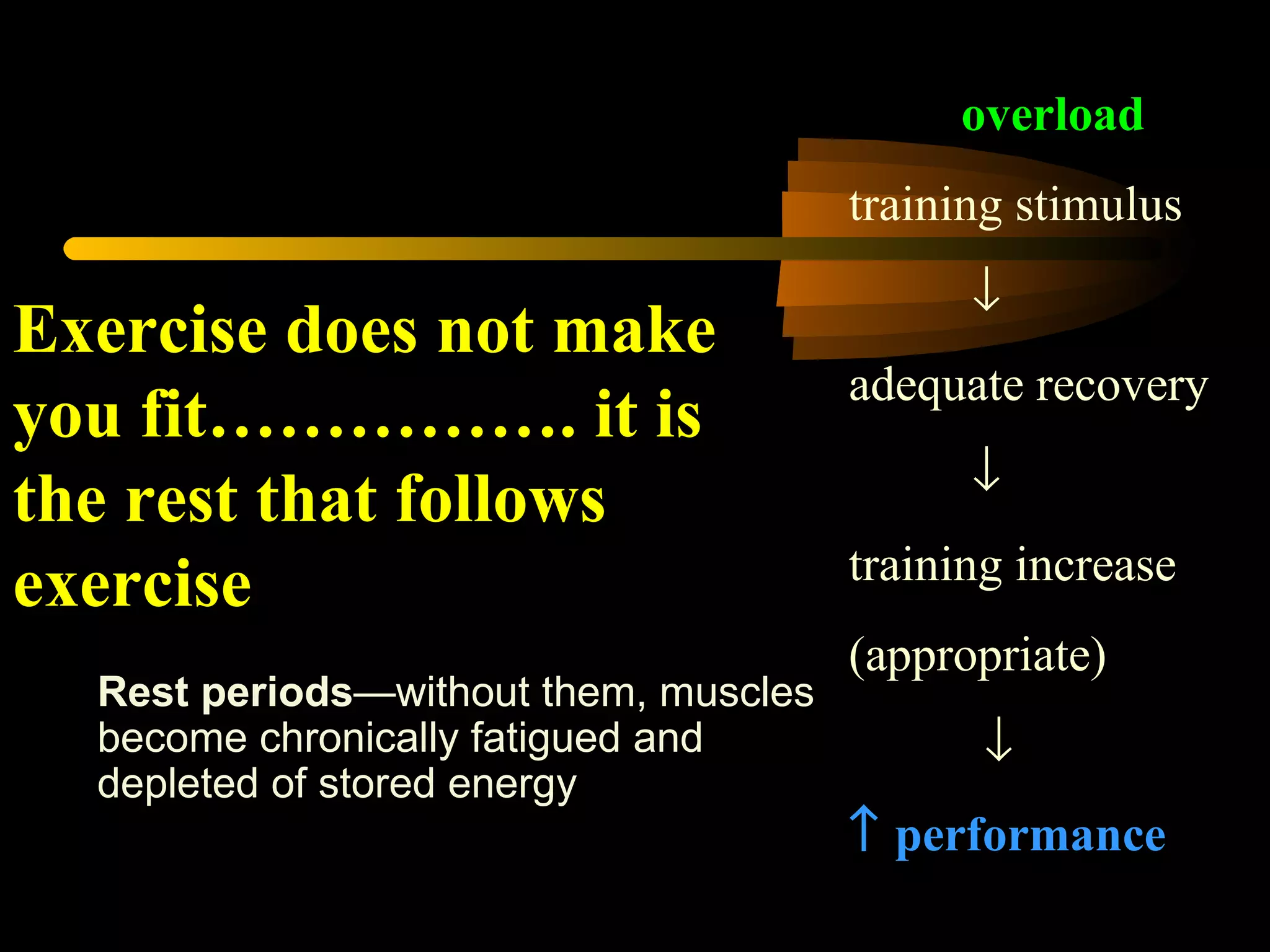
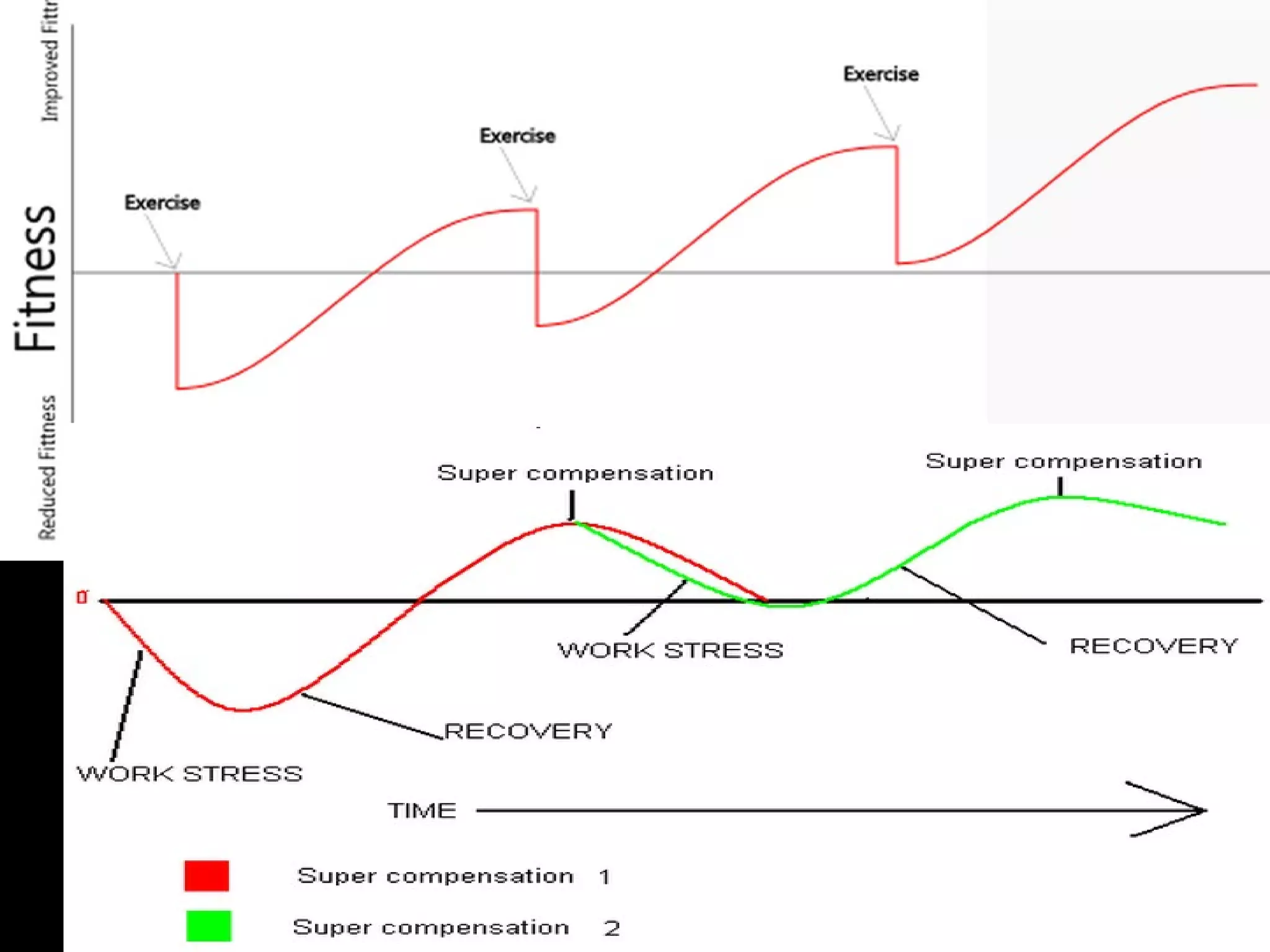
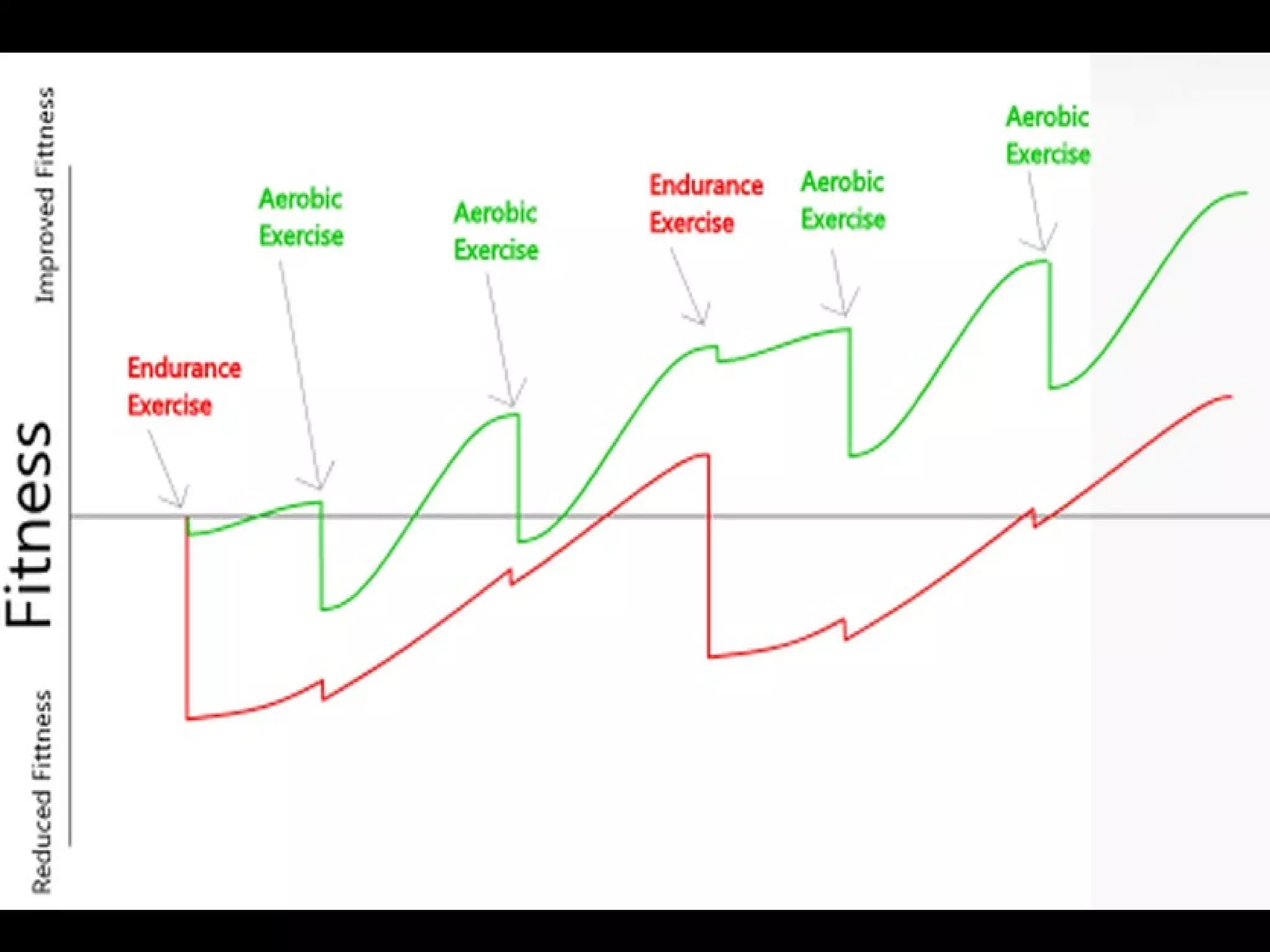
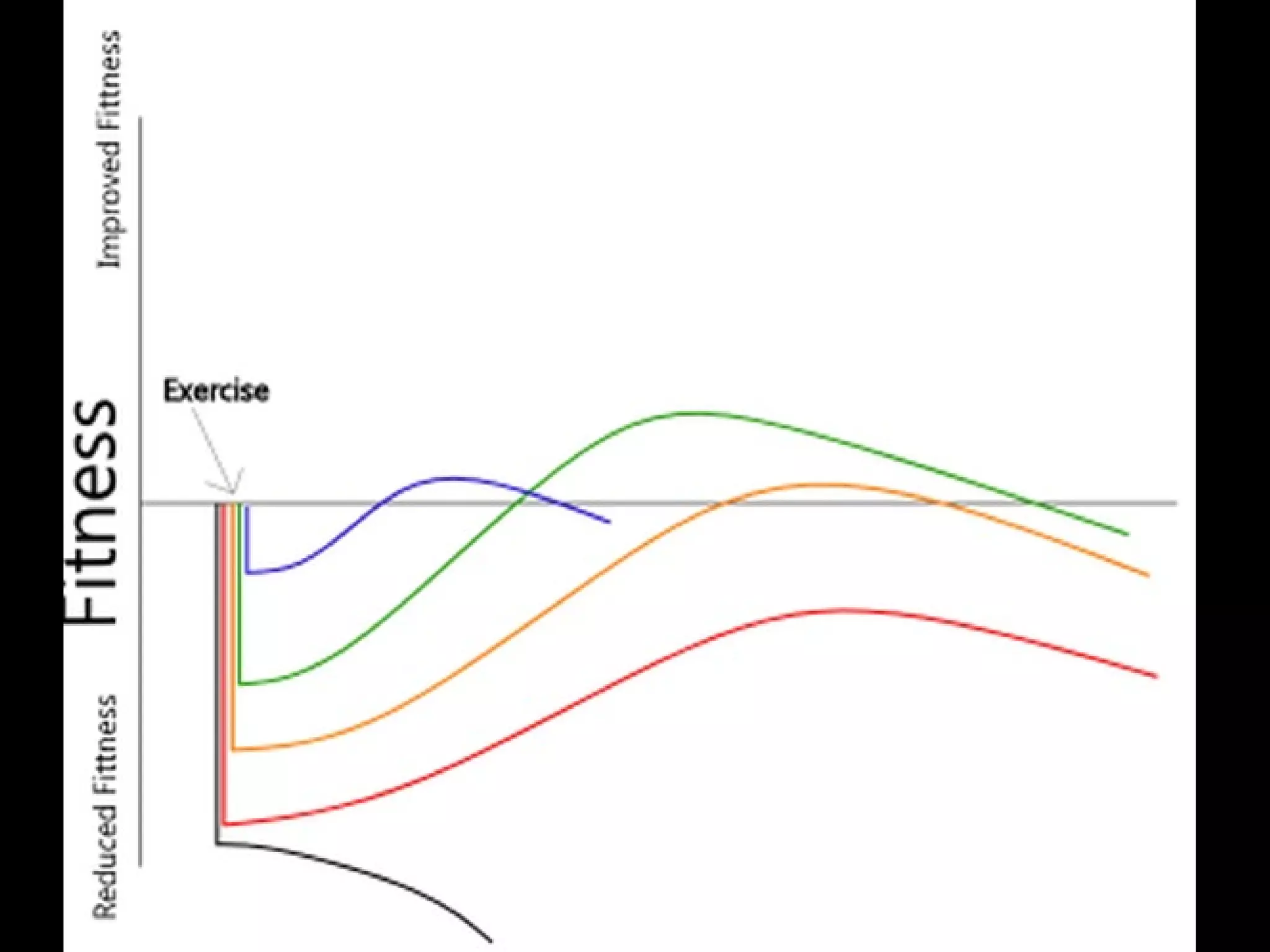
Exercise does not make you fit……………. it is the rest that follows exercise overload training stimulus  adequate recovery    training increase (appropriate)      performance Rest periods —without them, muscles become chronically fatigued and depleted of stored energy
Recovery Rest and sleep (HGH release=> promotes Recovery) Relaxation and emotional support Stretching and active rest
 
 
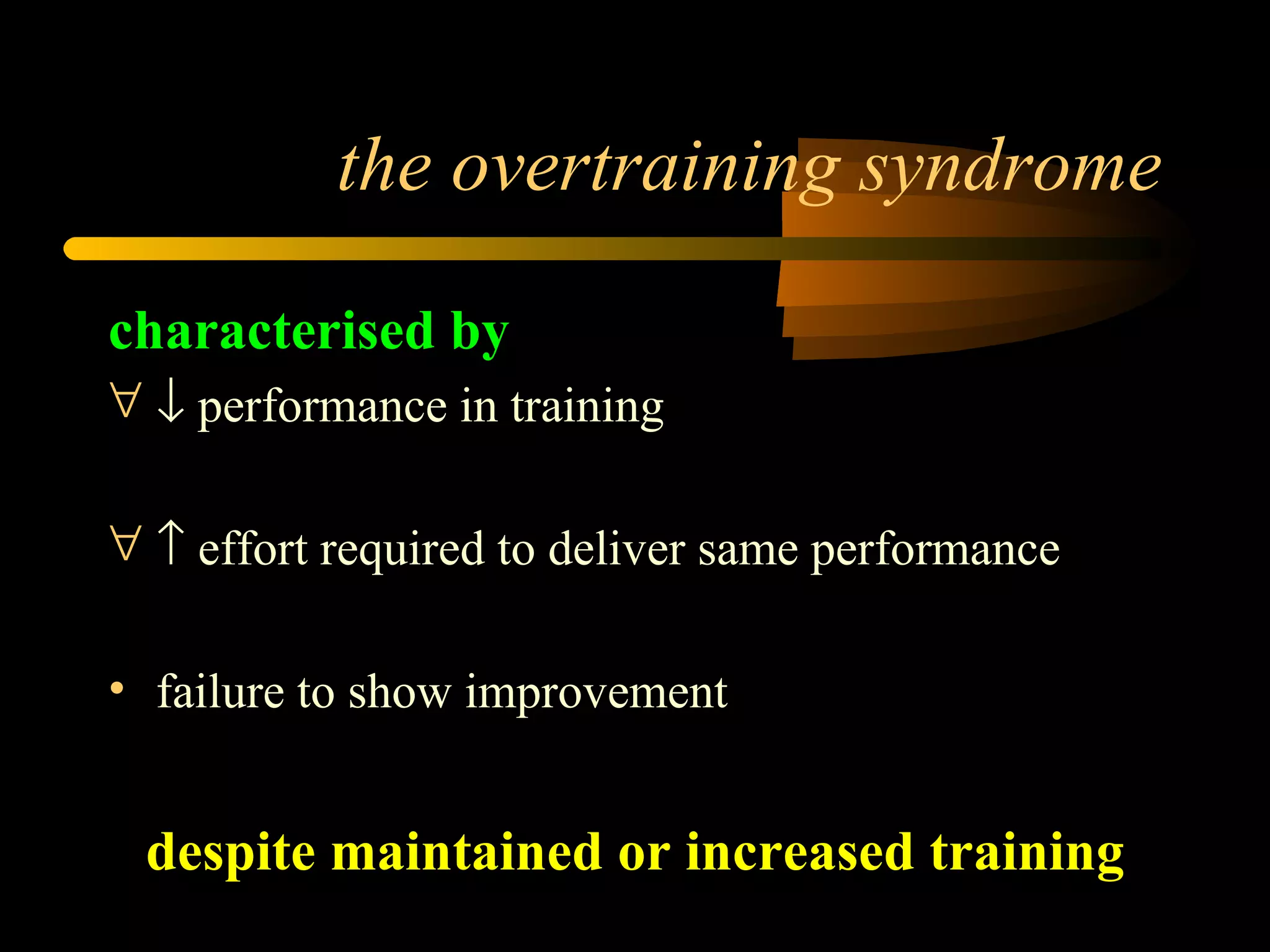
the overtraining syndrome characterised by    performance in training    effort required to deliver same performance failure to show improvement despite maintained or increased training
 
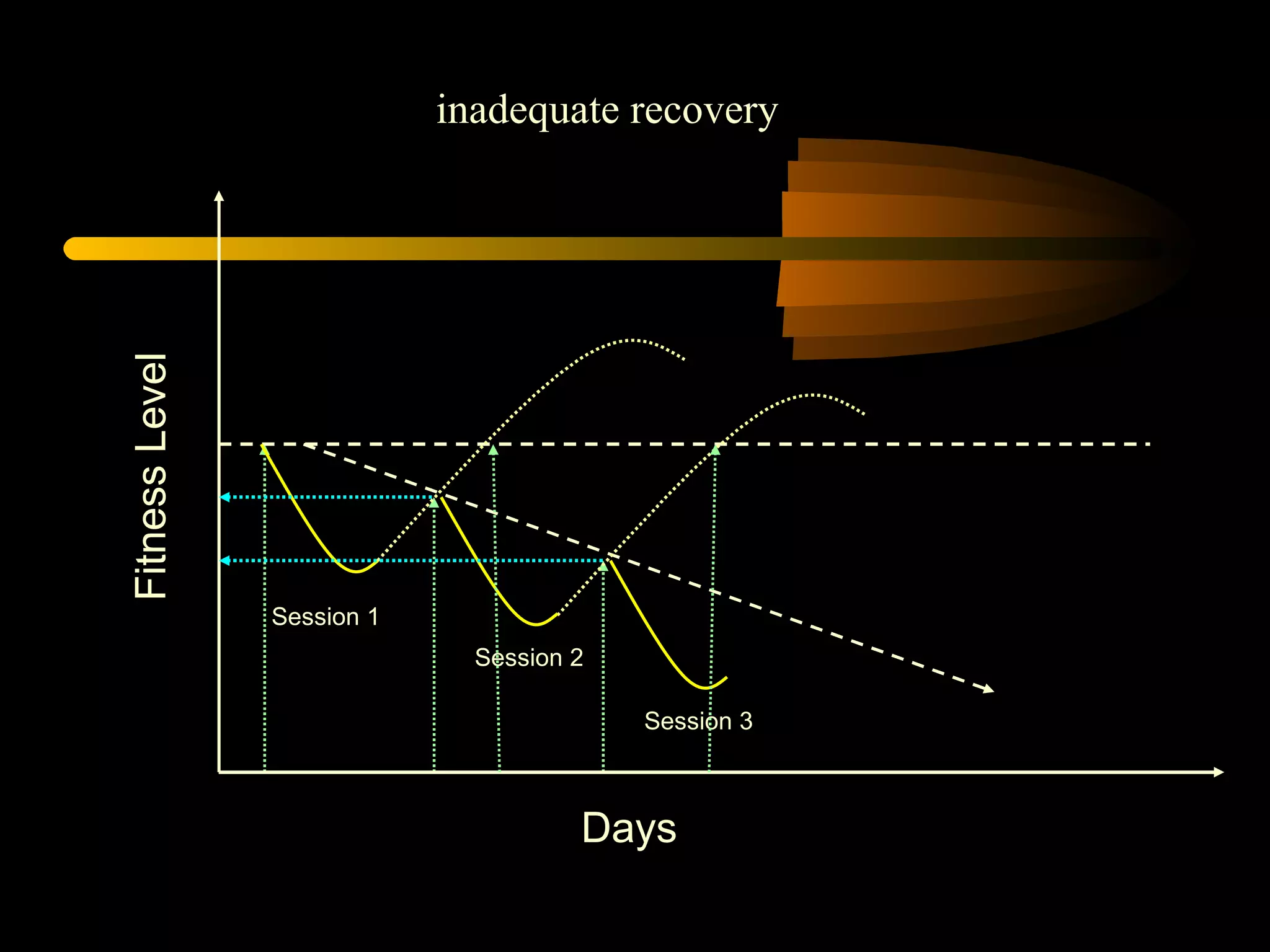
Session 1 Session 2 Session 3 Fitness Level Days inadequate recovery
 
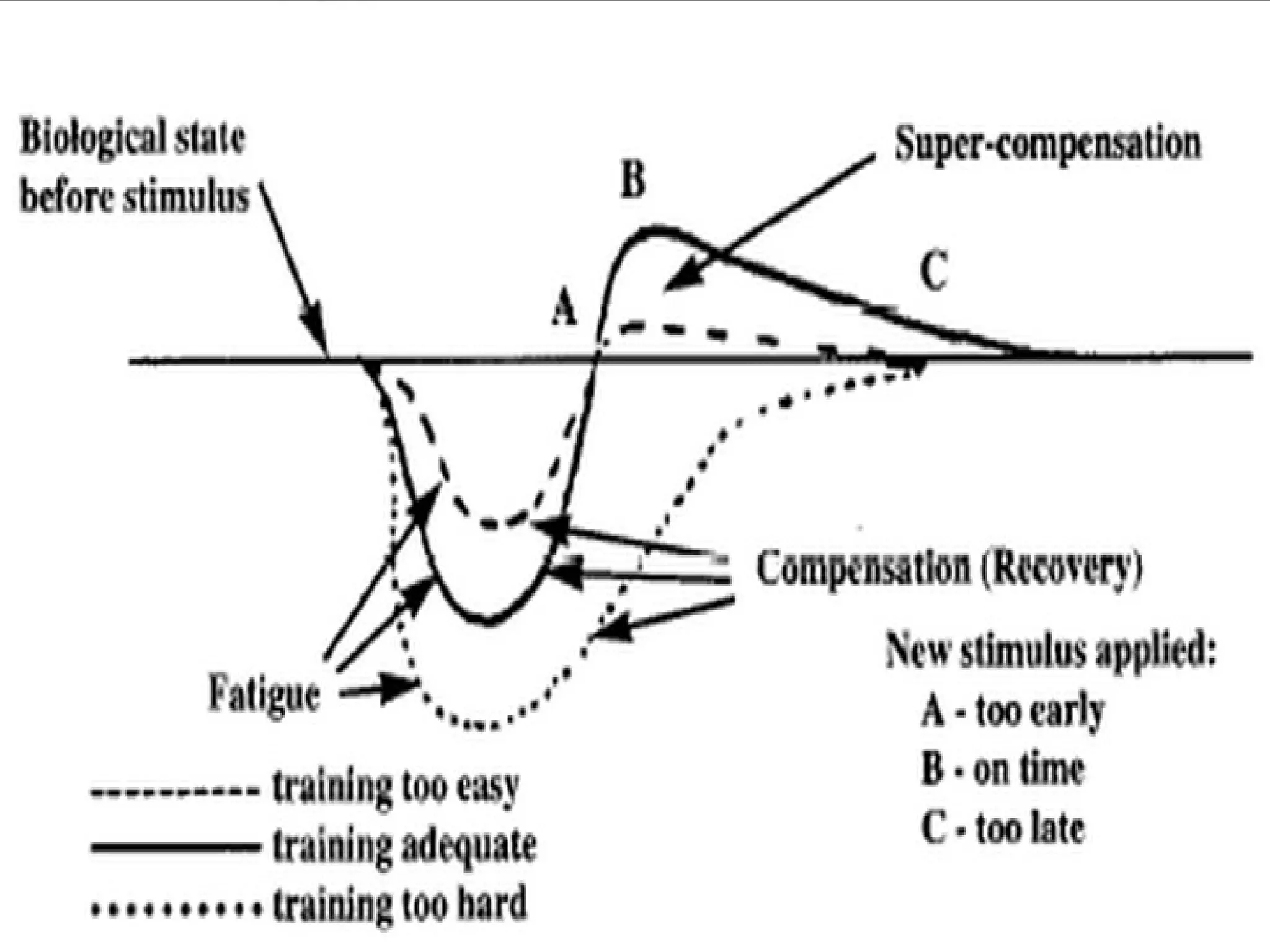
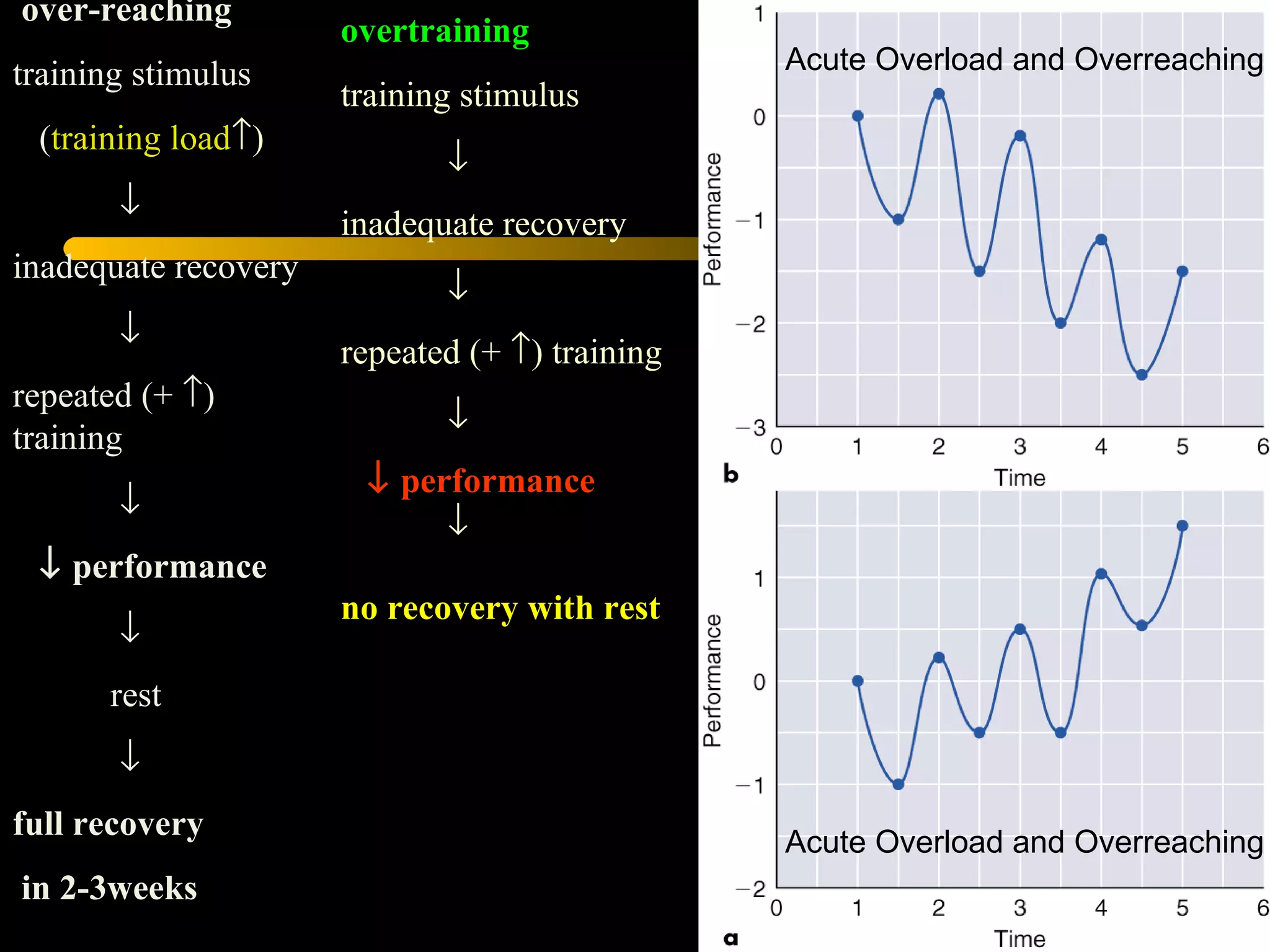
over-reaching training stimulus ( training load  )  inadequate recovery  repeated (+   ) training      performance  rest   full recovery in 2-3weeks overtraining training stimulus  inadequate recovery  repeated (+   ) training      performance    no recovery with rest Acute Overload and Overreaching  Acute Overload and Overreaching
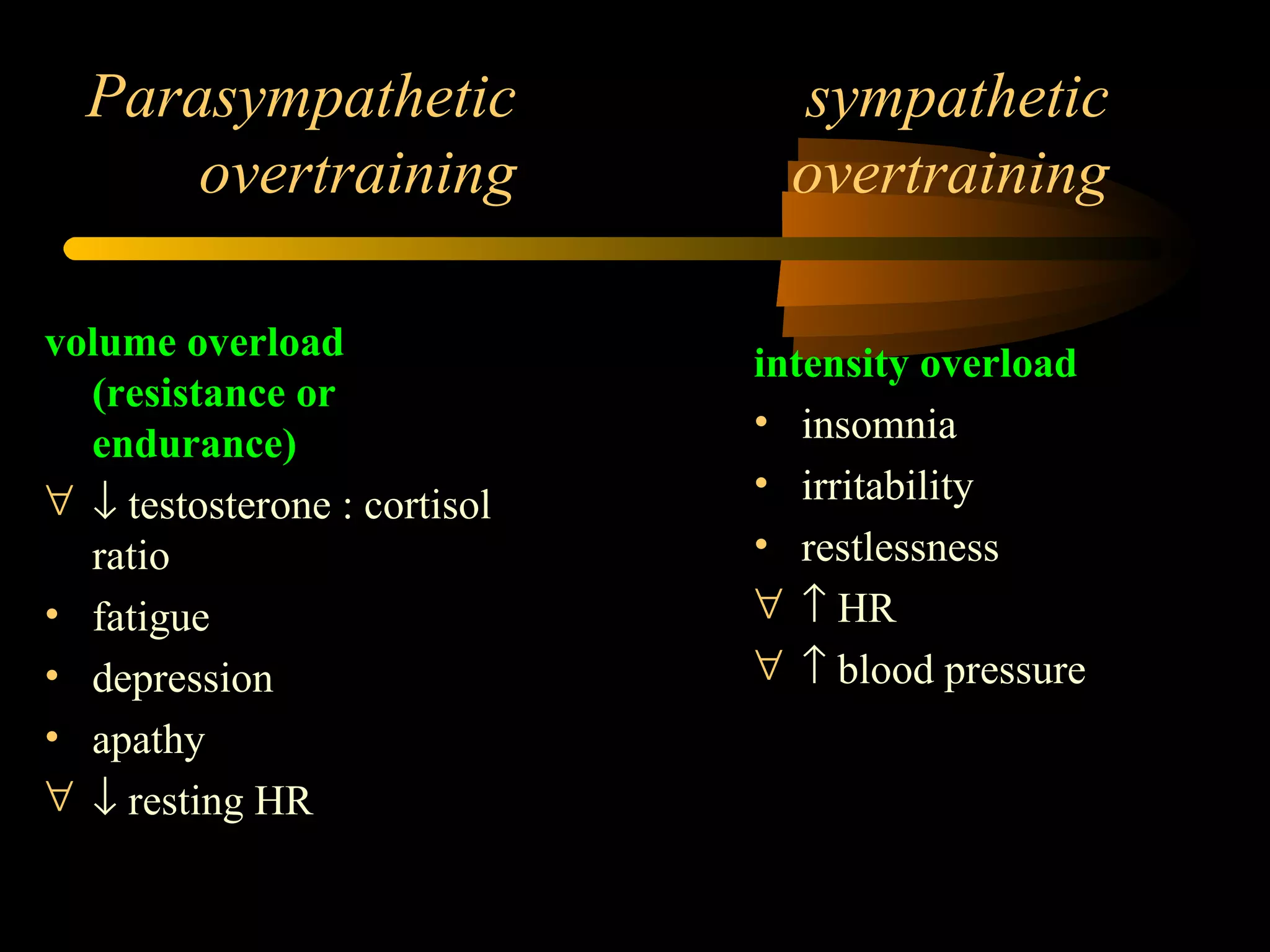
Parasympathetic  overtraining volume overload (resistance or endurance)    testosterone : cortisol ratio fatigue depression apathy    resting HR intensity overload insomnia irritability restlessness    HR    blood pressure sympathetic overtraining
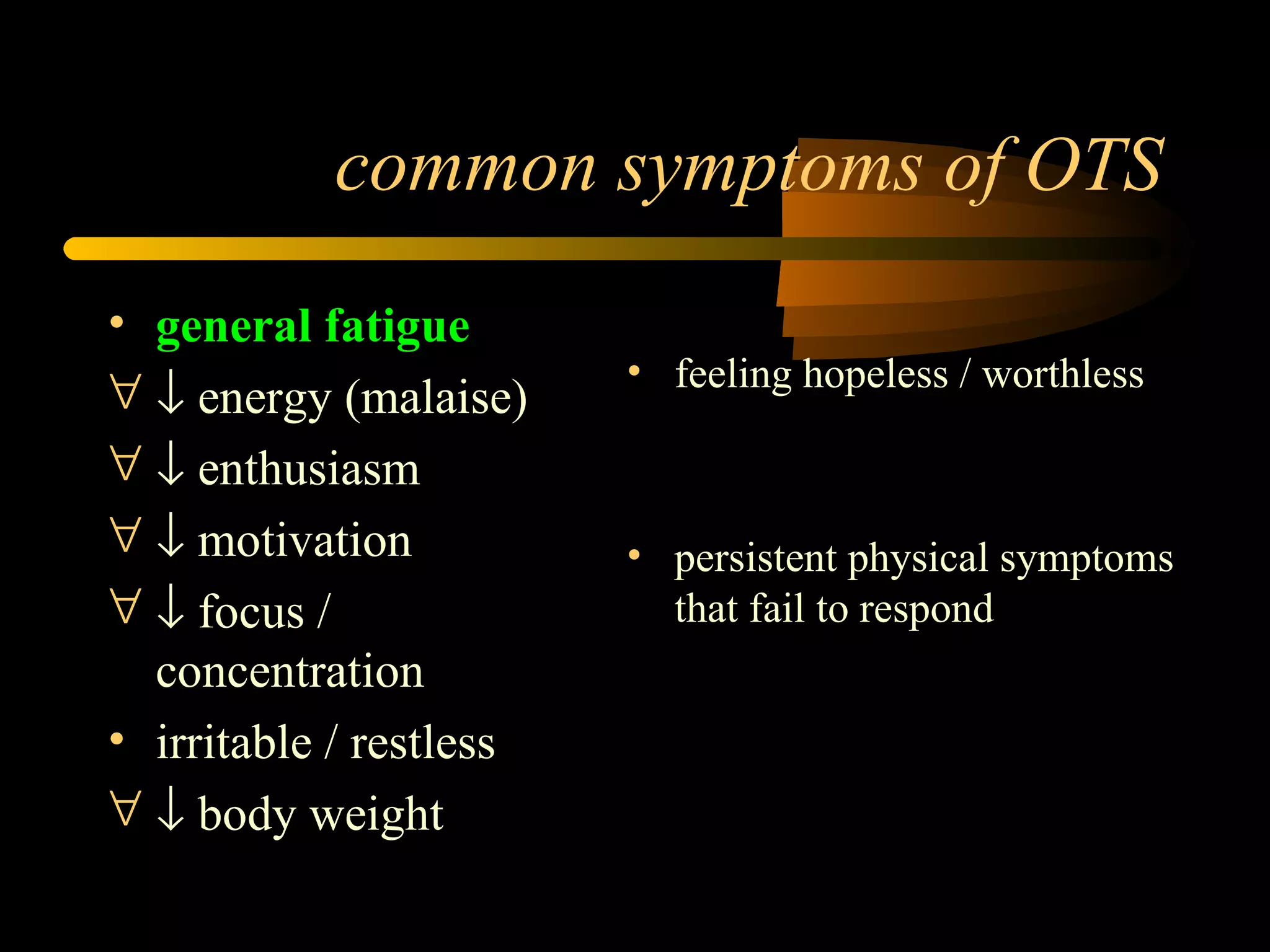
common symptoms of OTS general fatigue    energy (malaise)    enthusiasm    motivation    focus / concentration irritable / restless    body weight feeling hopeless / worthless persistent physical symptoms that fail to respond
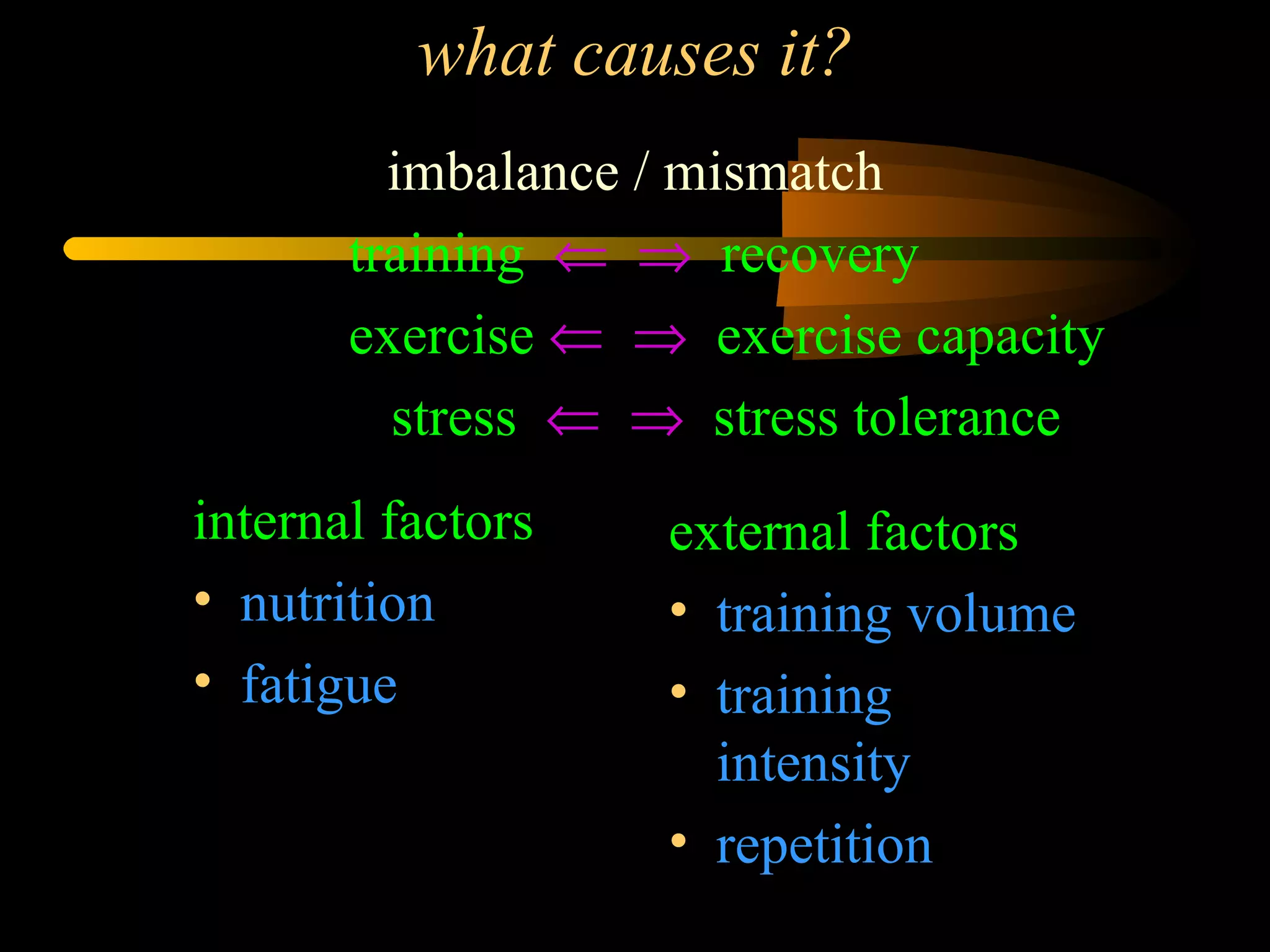
what causes it? imbalance / mismatch   training         recovery   exercise         exercise capacity   stress         stress tolerance external factors training volume training intensity repetition internal factors nutrition fatigue
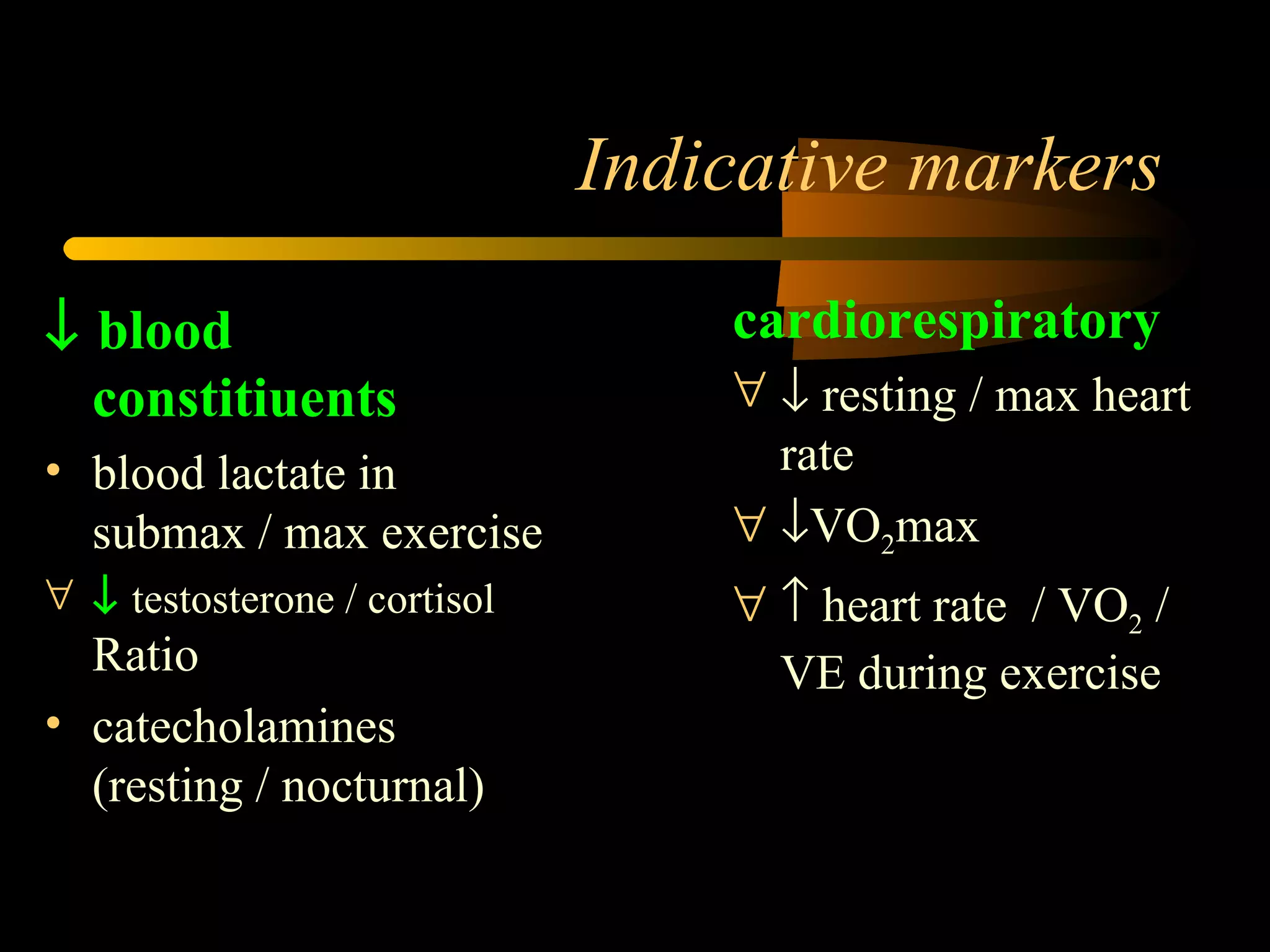
Indicative markers    blood constitiuents blood lactate in submax / max exercise    testosterone / cortisol  Ratio catecholamines (resting / nocturnal) cardiorespiratory    resting / max heart rate  VO 2 max    heart rate  / VO 2  / VE during exercise
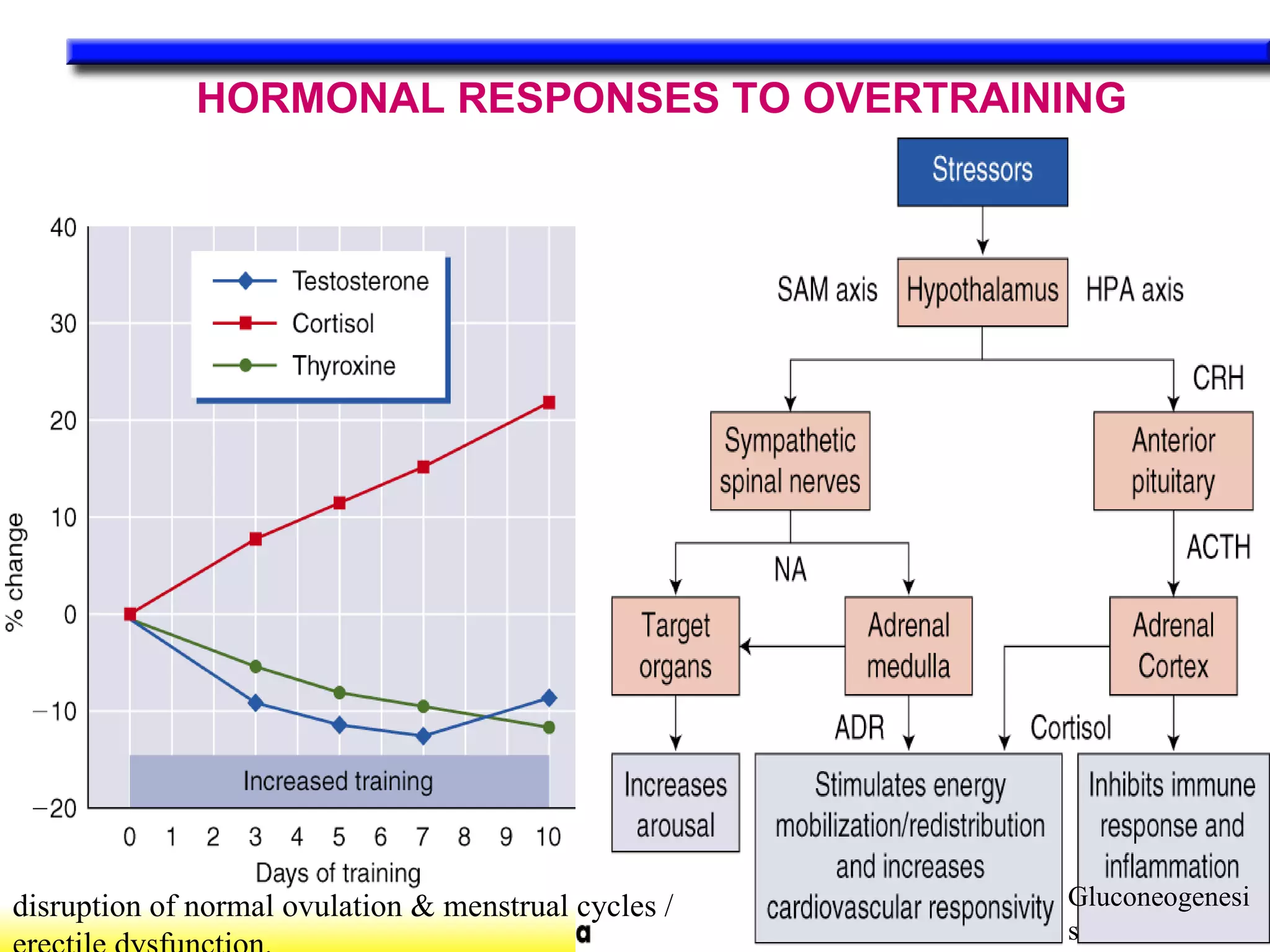
HORMONAL RESPONSES TO OVERTRAINING Gluconeogenesis disruption of normal ovulation & menstrual cycles /erectile dysfunction.
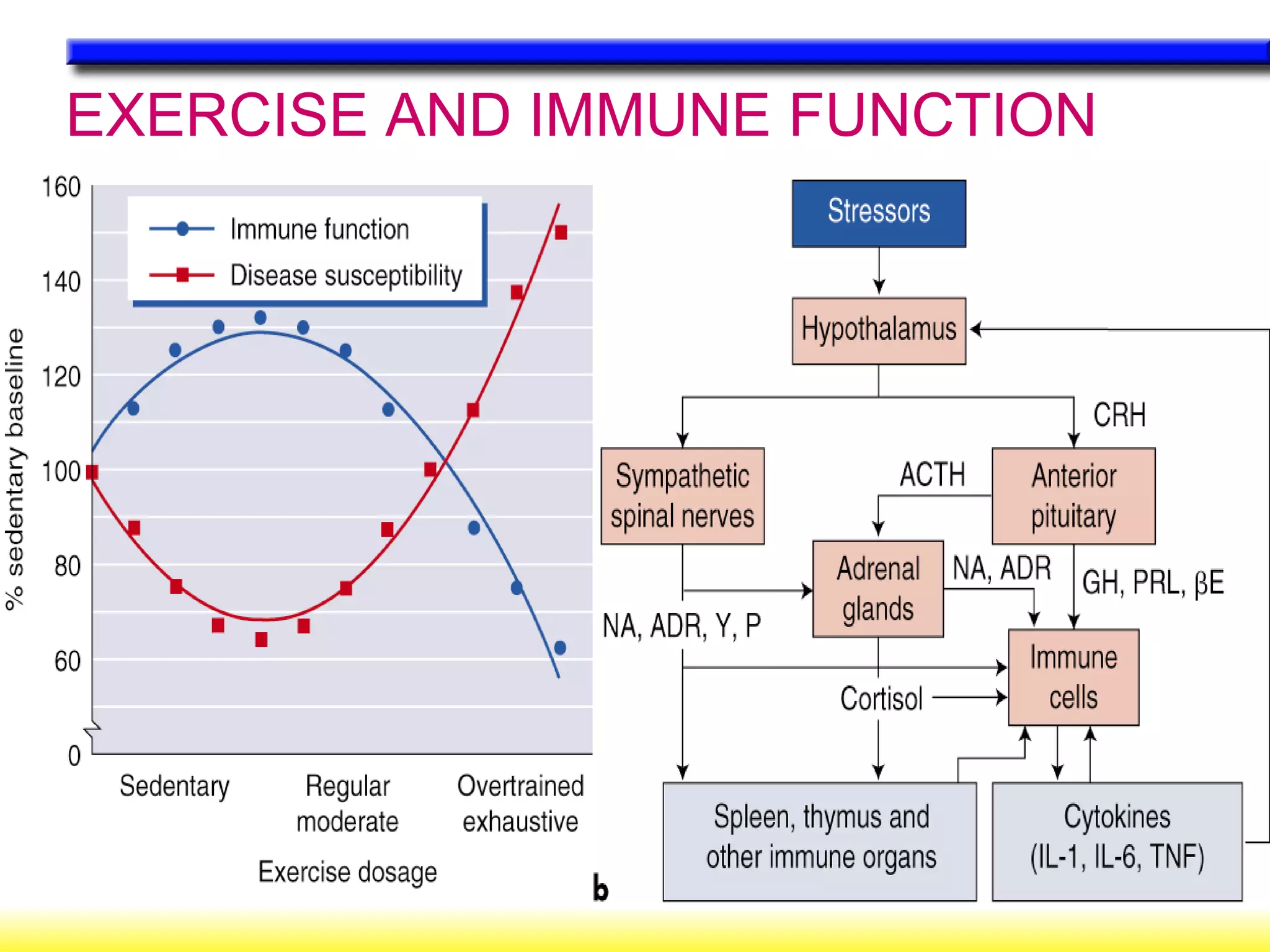
EXERCISE AND IMMUNE FUNCTION
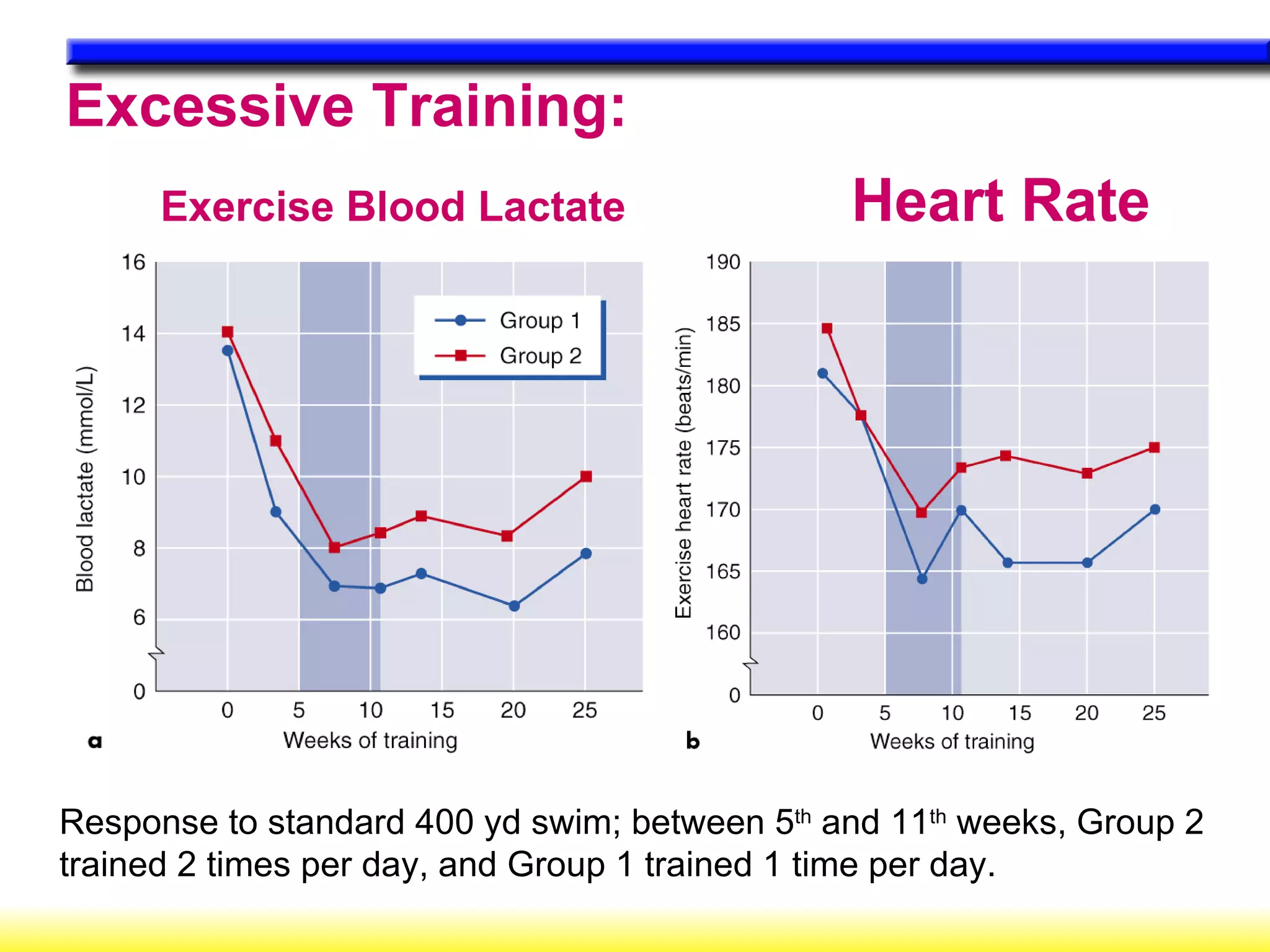
Excessive Training:  Exercise Blood Lactate  Heart Rate  Response to standard 400 yd swim; between 5 th  and 11 th  weeks, Group 2 trained 2 times per day, and Group 1 trained 1 time per day.
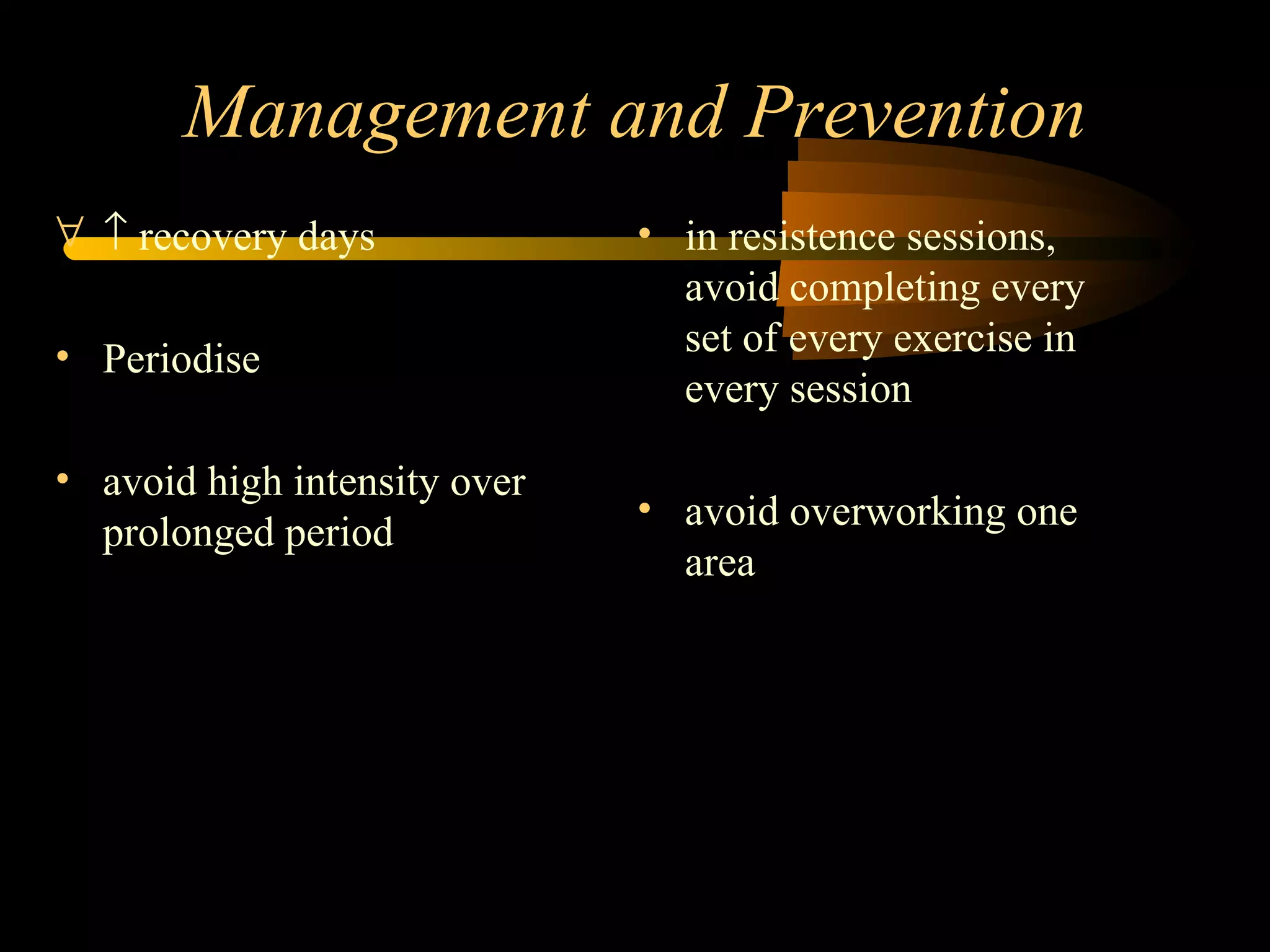
Management and Prevention    recovery days Periodise avoid high intensity over prolonged period in resistence sessions, avoid completing every set of every exercise in every session avoid overworking one area
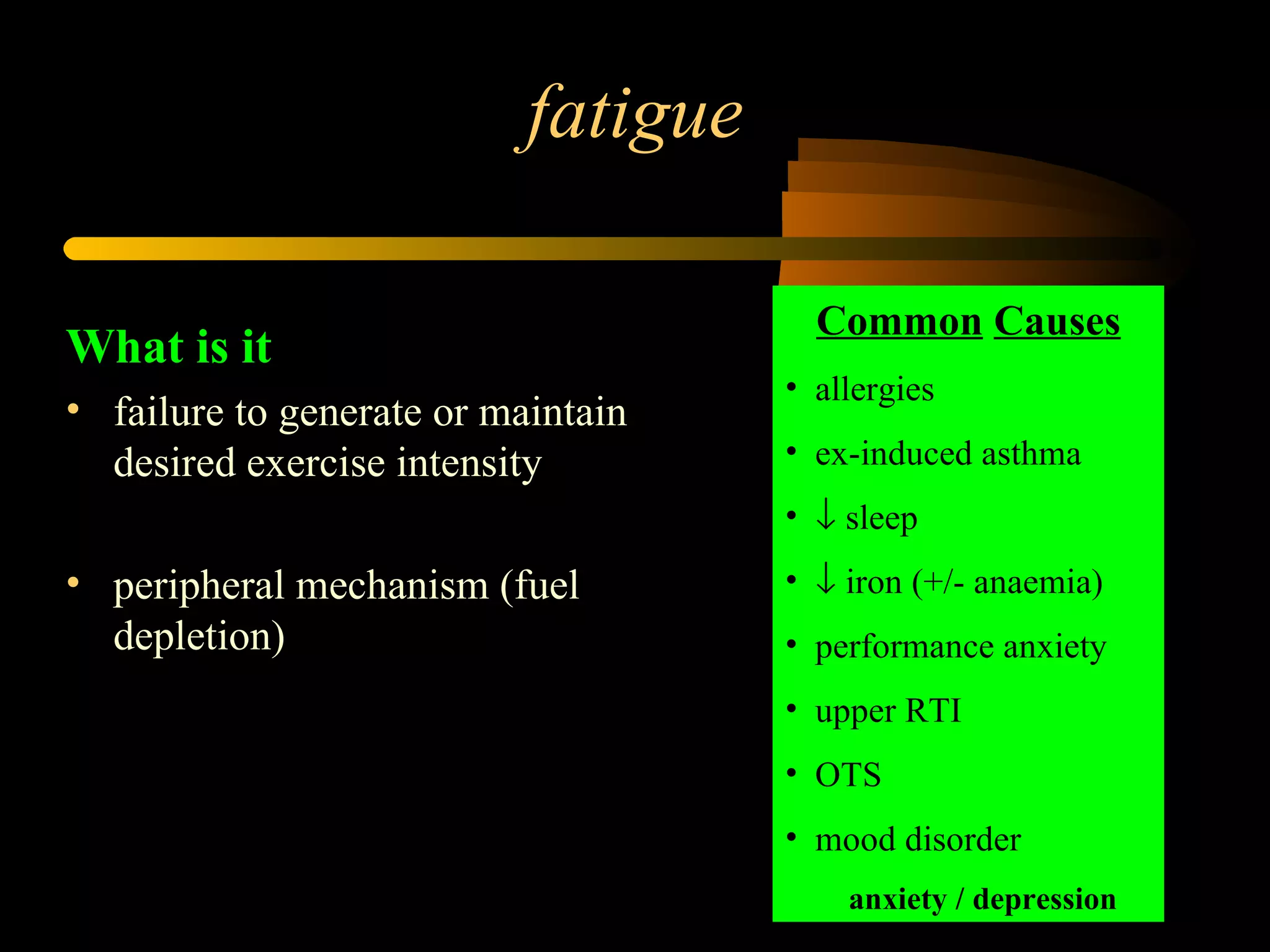
fatigue What is it failure to generate or maintain desired exercise intensity peripheral mechanism (fuel depletion) Common   Causes allergies ex-induced asthma    sleep    iron (+/- anaemia) performance anxiety upper RTI OTS mood disorder anxiety / depression
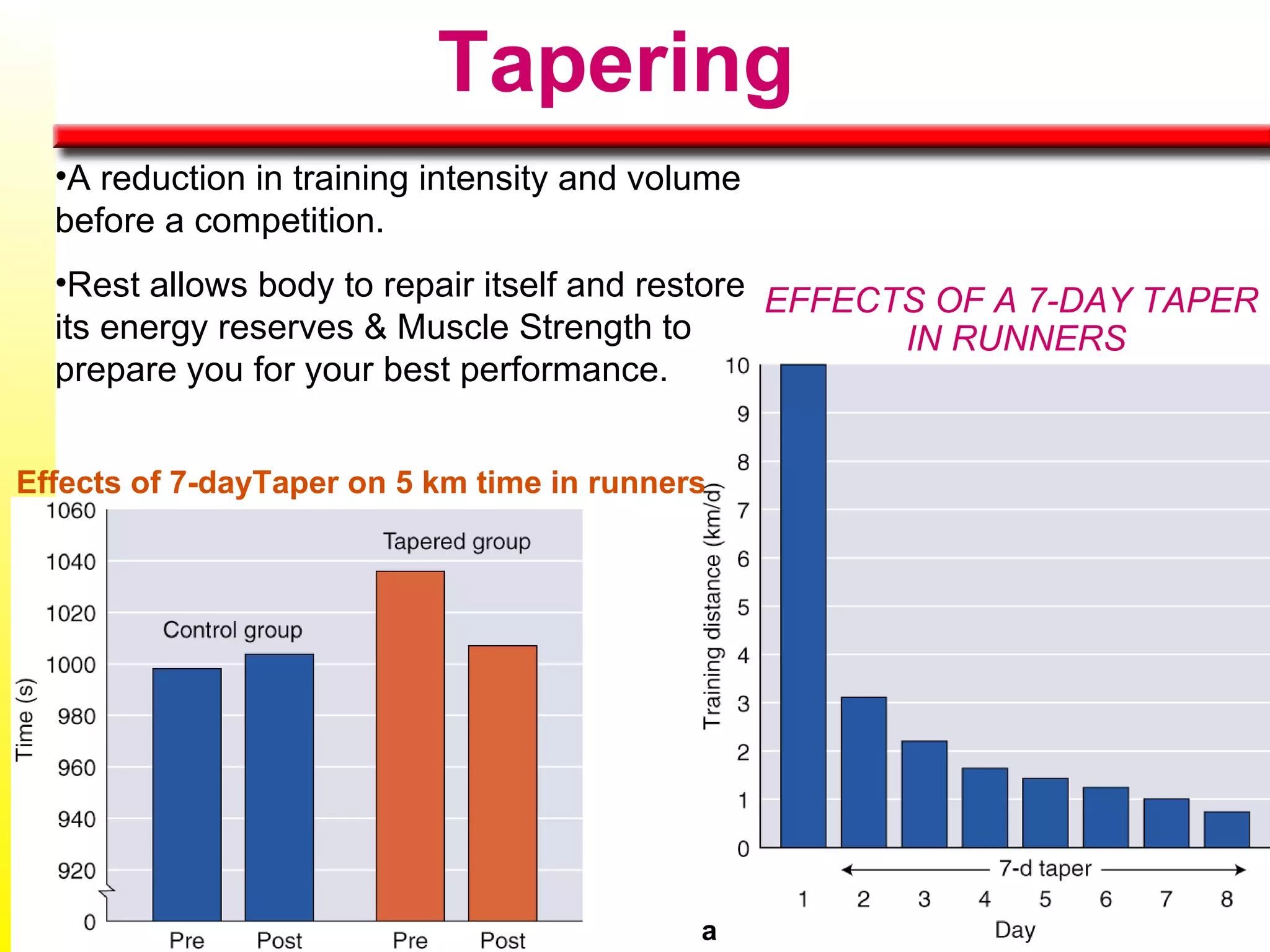
Tapering A reduction in training intensity and volume before a competition.  Rest allows body to repair itself and restore its energy reserves & Muscle Strength to prepare you for your best performance. EFFECTS OF A 7-DAY TAPER  IN RUNNERS Effects of 7-dayTaper on 5 km time in runners a b
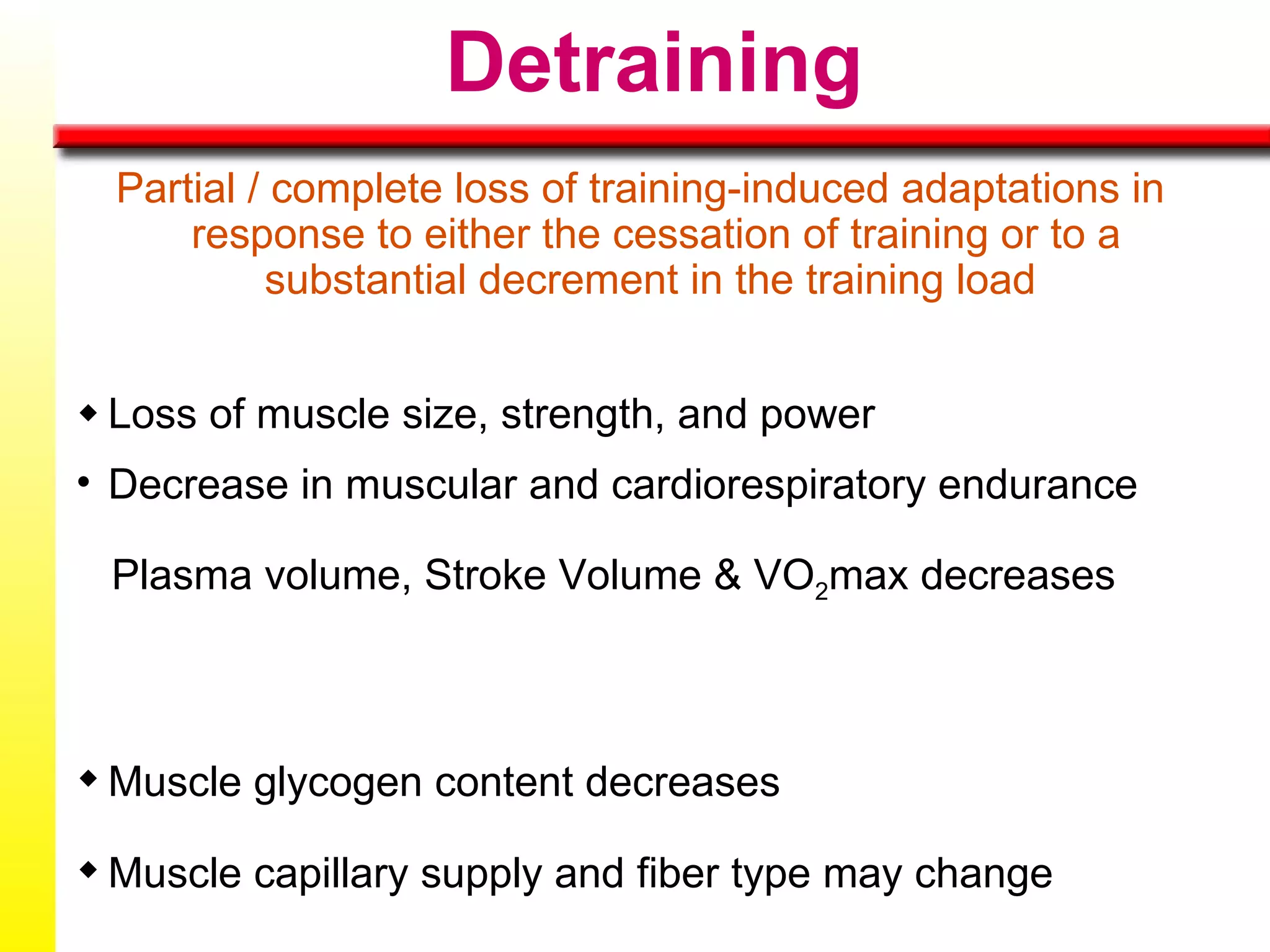
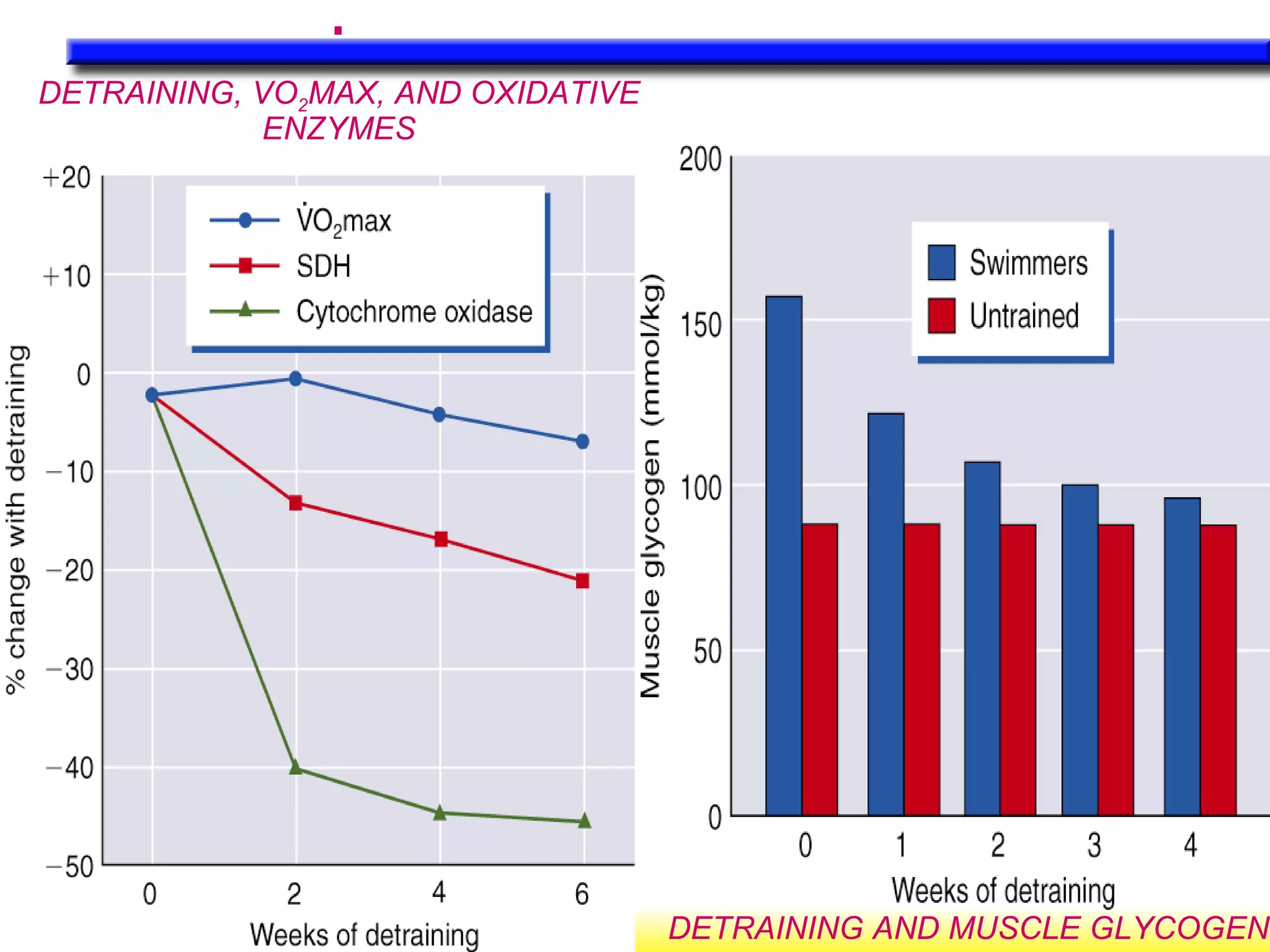
Detraining Partial / complete loss of training-induced adaptations in response to either the cessation of training or to a substantial decrement in the training load    Loss of muscle size, strength, and power Decrease in muscular and cardiorespiratory endurance Plasma volume, Stroke Volume & VO 2 max decreases  Muscle glycogen content decreases Muscle capillary supply and fiber type may change
DETRAINING AND MUSCLE GLYCOGEN DETRAINING, VO 2 MAX, AND OXIDATIVE ENZYMES .
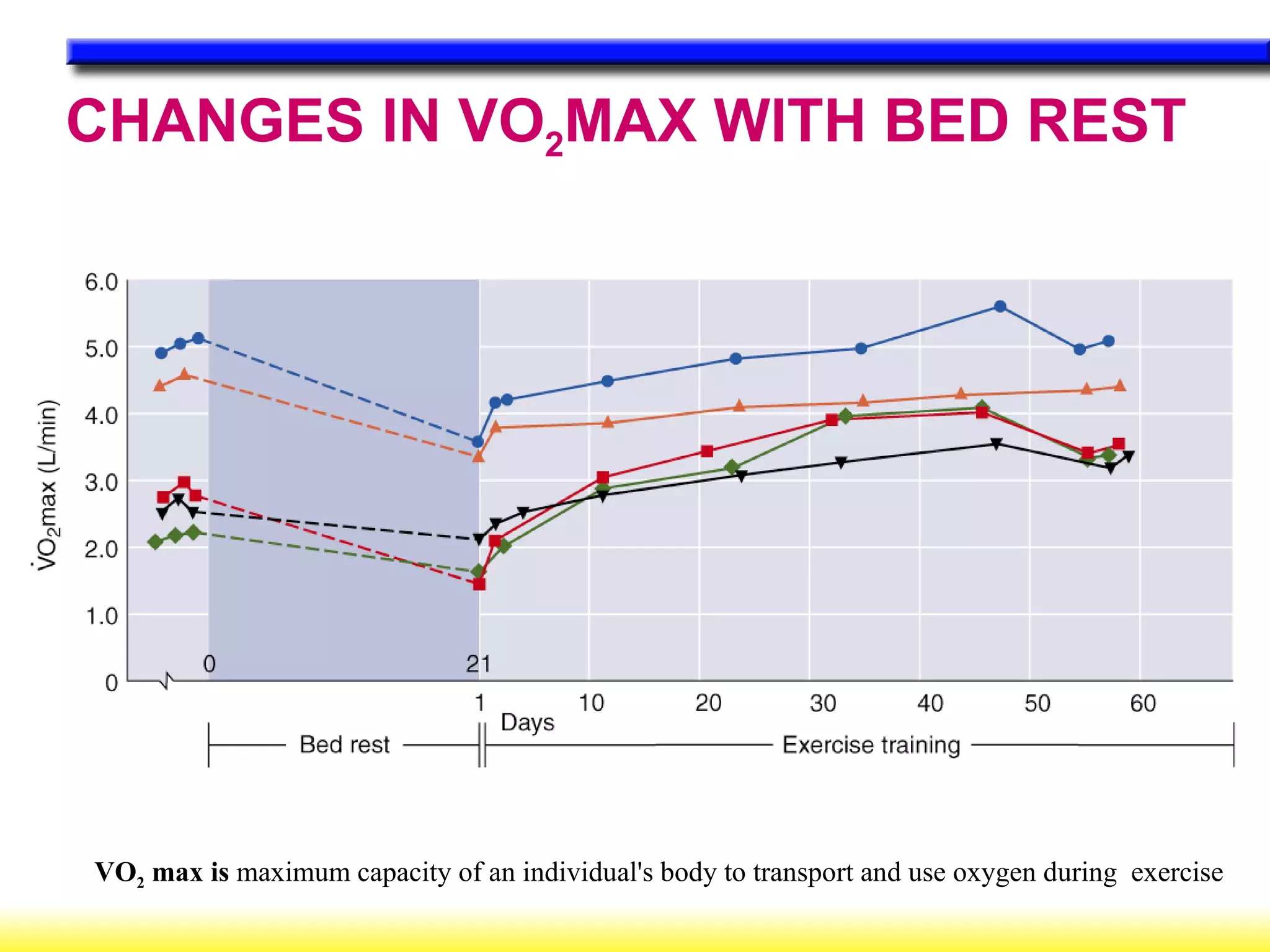
VO 2  max is  maximum capacity of an individual's body to transport and use oxygen during  exercise CHANGES IN VO 2 MAX WITH BED REST .
THANK YOU!
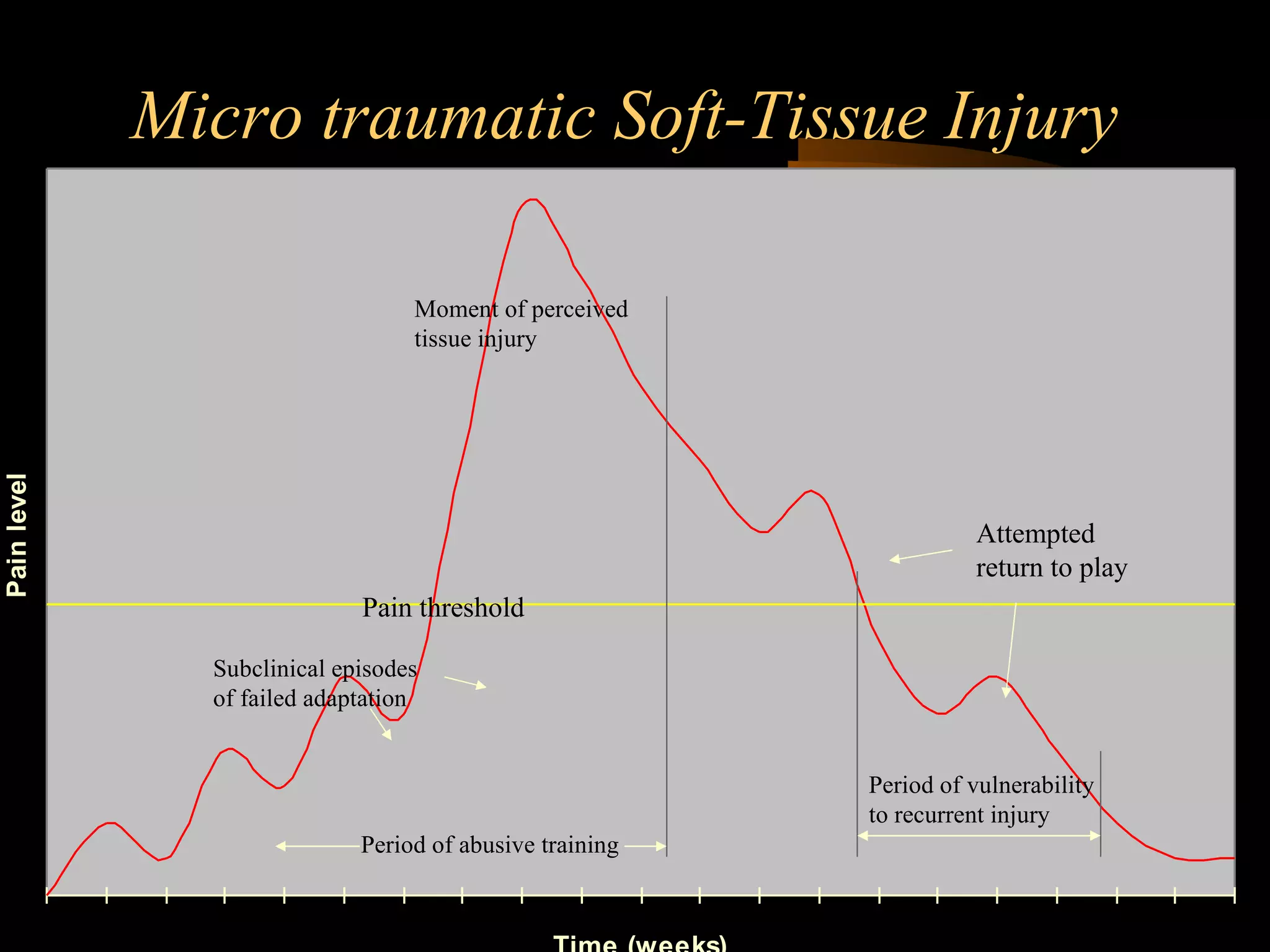
Micro traumatic Soft-Tissue Injury Period of abusive training Subclinical episodes  of failed adaptation Moment of perceived tissue injury Attempted  return to play Period of vulnerability to recurrent injury Pain threshold
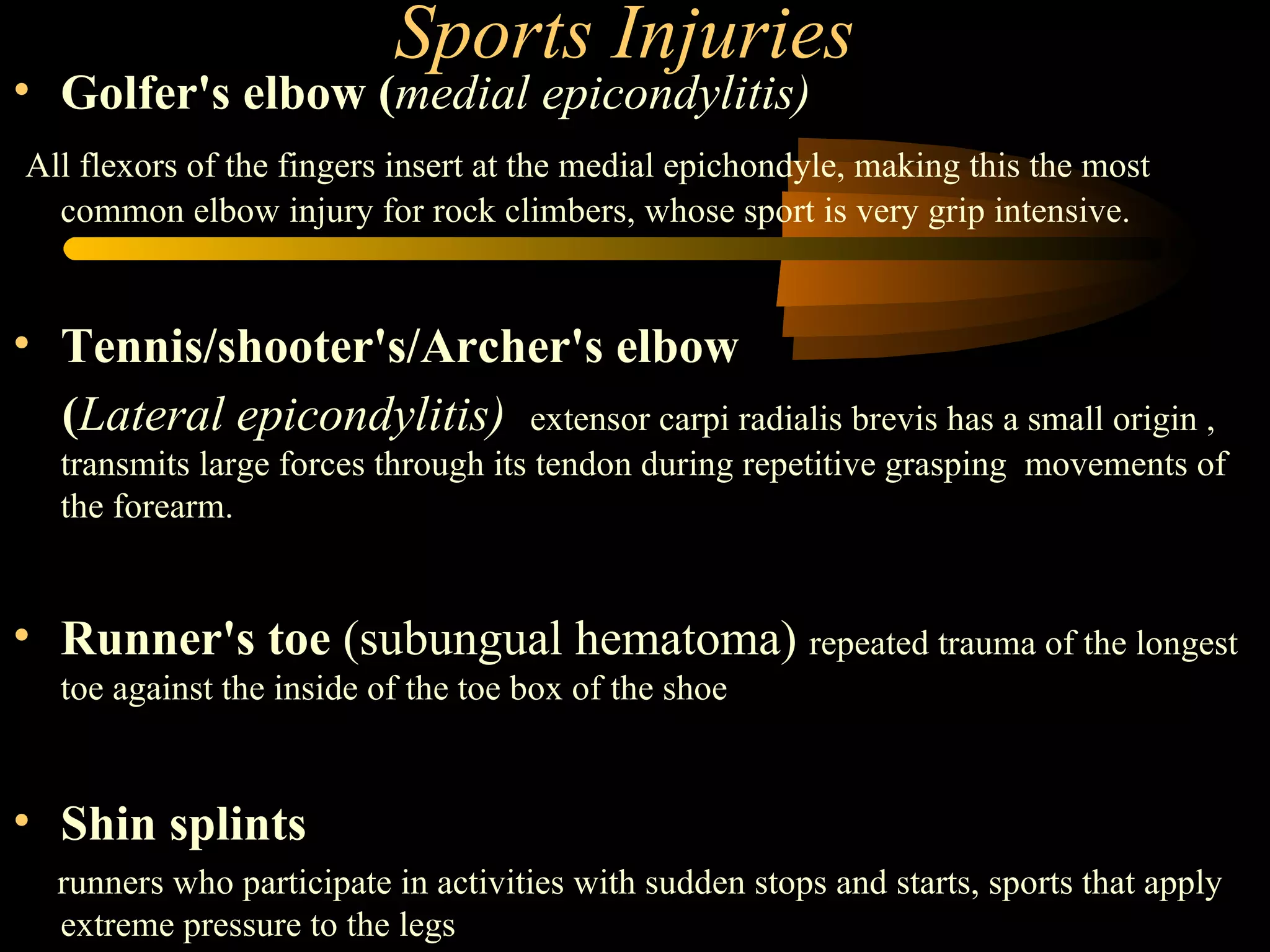
Sports Injuries Golfer's elbow ( medial epicondylitis)   All flexors of the fingers insert at the medial epichondyle, making this the most common elbow injury for rock climbers, whose sport is very grip intensive. Tennis/shooter's/Archer's elbow  ( Lateral epicondylitis)     extensor carpi radialis brevis has a small origin , transmits large forces through its tendon during repetitive grasping  movements of the forearm. Runner's toe  (subungual hematoma)  repeated trauma of the longest toe against the inside of the toe box of the shoe Shin splints   runners who participate in activities with sudden stops and starts, sports that apply extreme pressure to the legs

Overtraining chirantan mandal

  • 1.
    Overtraining Chiran M3 rd Year Student Medical College, Kolkata
  • 2.
    The challenge providecontinuous training stimulus with adequate variety, recovery, progression to facilitate optimum performance at the right time minimise injury Training Progressive overload to displace homeostasis and create stimulus for adaptation and Improved performance The body will adapt to the stress of exercise with increased fitness if the stress is above a minimum threshold intensity Adaptation
  • 3.
    Optimal Training LoadProgressive overload —progressive increase in training load as body adapts Training volume —duration and frequency Training intensity —force of muscle action and stress on the muscular and cardiovascular systems  Resistance training (high intensity and low volume)  Aerobic training (high volume and lower intensity)
  • 4.
    Exercise does notmake you fit……………. it is the rest that follows exercise overload training stimulus  adequate recovery  training increase (appropriate)   performance Rest periods —without them, muscles become chronically fatigued and depleted of stored energy
  • 5.
    Recovery Rest andsleep (HGH release=> promotes Recovery) Relaxation and emotional support Stretching and active rest
  • 6.
  • 7.
  • 8.
    the overtraining syndromecharacterised by  performance in training  effort required to deliver same performance failure to show improvement despite maintained or increased training
  • 9.
  • 10.
    Session 1 Session2 Session 3 Fitness Level Days inadequate recovery
  • 11.
  • 12.
    over-reaching training stimulus( training load  )  inadequate recovery  repeated (+  ) training   performance  rest  full recovery in 2-3weeks overtraining training stimulus  inadequate recovery  repeated (+  ) training   performance  no recovery with rest Acute Overload and Overreaching Acute Overload and Overreaching
  • 13.
    Parasympathetic overtrainingvolume overload (resistance or endurance)  testosterone : cortisol ratio fatigue depression apathy  resting HR intensity overload insomnia irritability restlessness  HR  blood pressure sympathetic overtraining
  • 14.
    common symptoms ofOTS general fatigue  energy (malaise)  enthusiasm  motivation  focus / concentration irritable / restless  body weight feeling hopeless / worthless persistent physical symptoms that fail to respond
  • 15.
    what causes it?imbalance / mismatch training   recovery exercise   exercise capacity stress   stress tolerance external factors training volume training intensity repetition internal factors nutrition fatigue
  • 16.
    Indicative markers  blood constitiuents blood lactate in submax / max exercise  testosterone / cortisol Ratio catecholamines (resting / nocturnal) cardiorespiratory  resting / max heart rate  VO 2 max  heart rate / VO 2 / VE during exercise
  • 17.
    HORMONAL RESPONSES TOOVERTRAINING Gluconeogenesis disruption of normal ovulation & menstrual cycles /erectile dysfunction.
  • 18.
  • 19.
    Excessive Training: Exercise Blood Lactate Heart Rate Response to standard 400 yd swim; between 5 th and 11 th weeks, Group 2 trained 2 times per day, and Group 1 trained 1 time per day.
  • 20.
    Management and Prevention recovery days Periodise avoid high intensity over prolonged period in resistence sessions, avoid completing every set of every exercise in every session avoid overworking one area
  • 21.
    fatigue What isit failure to generate or maintain desired exercise intensity peripheral mechanism (fuel depletion) Common Causes allergies ex-induced asthma  sleep  iron (+/- anaemia) performance anxiety upper RTI OTS mood disorder anxiety / depression
  • 22.
    Tapering A reductionin training intensity and volume before a competition. Rest allows body to repair itself and restore its energy reserves & Muscle Strength to prepare you for your best performance. EFFECTS OF A 7-DAY TAPER IN RUNNERS Effects of 7-dayTaper on 5 km time in runners a b
  • 23.
    Detraining Partial /complete loss of training-induced adaptations in response to either the cessation of training or to a substantial decrement in the training load  Loss of muscle size, strength, and power Decrease in muscular and cardiorespiratory endurance Plasma volume, Stroke Volume & VO 2 max decreases Muscle glycogen content decreases Muscle capillary supply and fiber type may change
  • 24.
    DETRAINING AND MUSCLEGLYCOGEN DETRAINING, VO 2 MAX, AND OXIDATIVE ENZYMES .
  • 25.
    VO 2  maxis maximum capacity of an individual's body to transport and use oxygen during  exercise CHANGES IN VO 2 MAX WITH BED REST .
  • 26.
  • 27.
    Micro traumatic Soft-TissueInjury Period of abusive training Subclinical episodes of failed adaptation Moment of perceived tissue injury Attempted return to play Period of vulnerability to recurrent injury Pain threshold
  • 28.
    Sports Injuries Golfer'selbow ( medial epicondylitis)   All flexors of the fingers insert at the medial epichondyle, making this the most common elbow injury for rock climbers, whose sport is very grip intensive. Tennis/shooter's/Archer's elbow ( Lateral epicondylitis)   extensor carpi radialis brevis has a small origin , transmits large forces through its tendon during repetitive grasping movements of the forearm. Runner's toe (subungual hematoma) repeated trauma of the longest toe against the inside of the toe box of the shoe Shin splints   runners who participate in activities with sudden stops and starts, sports that apply extreme pressure to the legs