Liver Cirrhosis
Definition "cirrhosis" derives from Greek  kirrhos , meaning "tawny" (the orange-yellow colour of the diseased liver). It is a chronic liver disease characterized by replacement of liver tissue by fibrous scar tissue as well as regenerative nodules (lumps that occur as a result of a process in which damaged tissue is regenerated), leading to progressive loss of liver function.  commonly caused by alcoholism, hepatitis B and C and fatty liver disease but has many other possible causes.  Some cases are of unknown cause, but most of these due to unrecognized fatty liver disease. Cirrhosis is generally irreversible once it occurs, and treatment generally focuses on preventing progression and complications.
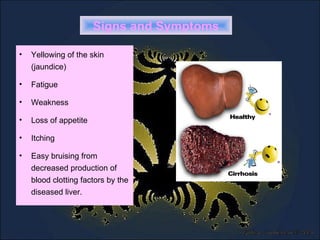
Signs and Symptoms Yellowing of the skin (jaundice)  Fatigue  Weakness  Loss of appetite  Itching  Easy bruising from decreased production of blood clotting factors by the diseased liver.
Spider angiomata or spider nevi. Nail changes.  Muehrcke's nails  Terry's nails Clubbing  Hypertrophic osteoarthropathy.  Dupuytren's contracture.  Gynecomastia Hypogonadism Splenomegaly  AscitesCaput medusa Cruveilhier-Baumgarten murmur.  Fetor hepaticus Jaundice Asterixis  Others. Weakness, fatigue, anorexia, weight loss.
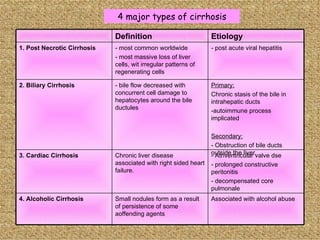
4 major types of cirrhosis Associated with alcohol abuse  Small nodules form as a result of persistence of some aoffending agents  4. Alcoholic Cirrhosis  - Atriventricular valve dse - prolonged constructive peritonitis - decompensated core pulmonale  Chronic liver disease associated with right sided heart failure.  3. Cardiac Cirrhosis  Primary: Chronic stasis of the bile in intrahepatic ducts -autoimmune process implicated Secondary: - Obstruction of bile ducts outside the liver. - bile flow decreased with concurrent cell damage to hepatocytes around the bile ductules  2. Biliary Cirrhosis  - post acute viral hepatitis - most common worldwide - most massive loss of liver cells, wit irregular patterns of regenerating cells  1. Post Necrotic Cirrhosis  Etiology Definition
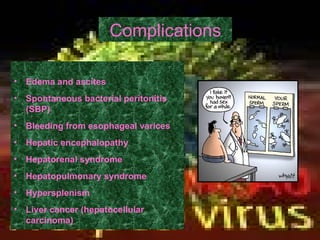
Complications Edema and ascites Spontaneous bacterial peritonitis (SBP) Bleeding from esophageal varices Hepatic encephalopathy   Hepatorenal syndrome   Hepatopulmonary syndrome   Hypersplenism   Liver cancer (hepatocellular carcinoma)
Causes Alcohol  Nonalcoholic fatty liver disease (NAFLD)  Cryptogenic cirrhosis (cirrhosis due to unidentified causes)  Chronic viral hepatitis  Inherited (genetic) disorders  Primary biliary cirrhosis (PBC Primary sclerosing cholangitis (PSC Autoimmune  Infants can be born without bile ducts ( biliary   atresia )  Less common causes of cirrhosis include unusual reactions to some drugs and prolonged exposure to toxins, as well as chronic heart failure (cardiac cirrhosis).  Hereditary hemochromatosis.  Wilson's disease.  Alpha 1-antitrypsin deficiency (AAT).  Cardiac cirrhosis Galactosemia Glycogen storage disease type IV Cystic fibrosis Drugs or toxins Certain parasitic infections (such as schistosomiasis)
Diagnosis liver biopsy , through a percutaneous, transjugular, laparoscopic, or fine-needle approach.  However, a biopsy is not necessary if the clinical, laboratory, and radiologic data suggests cirrhosis. Furthermore, there is a small but significant risk to liver biopsy, and cirrhosis itself predisposes for complications due to liver biopsy.
Lab findings Aminotransferases  Alkaline phosphatase . GGT . Bilirubin  Albumin  Prothrombin time  Globulins  Serum sodium  Thrombocytopenia  Leukopenia and neutropenia  Coagulation defects  Other laboratory studies performed in newly diagnosed cirrhosis may include Serology for hepatitis viruses, autoantibodies (ANA, anti-smooth muscle, anti-mitochondria, anti-LKM) Ferritin and transferrin saturation (markers of iron overload), copper and ceruloplasmin (markers of copper overload) Immunoglobulin levels (IgG, IgM, IgA) - these are non-specific but may assist in distinguishing various causes Cholesterol and glucose Alpha 1-antitrypsin Imaging Endoscopy
MEDICAL MANAGEMENT Diuretics  Lactulose and neomysin. The beta-blocker nadolol (Corgard) may be given together with isosorbide mononitrate  Ferrous sulfate and folic acid. Vitamin K may be ordered to reduce the risk of bleeding. When bleeding is acute, packed RBCs, fresh frozen plasma, or platelets may be administered to restore blood components and promote hemostasis. Antacids  Oxazepam (Serax), a benzodiazepine antianxiety/ sedative drug A healthy diet is encouraged, as cirrhosis may be an energy-consuming process.  Antibiotics will be prescribed for infections, and various medications can help with itching.  Alcoholic cirrhosis caused by alcohol abuse is treated by abstaining from alcohol.  Treatment for hepatitis-related cirrhosis involves medications used to treat the different  types of hepatitis, such as interferon for viral hepatitis and corticosteroids for autoimmune  hepatitis. Cirrhosis caused by Wilson's disease, in which copper builds up in organs, is  treated with chelation therapy (e.g. penicillamine) to remove the copper.
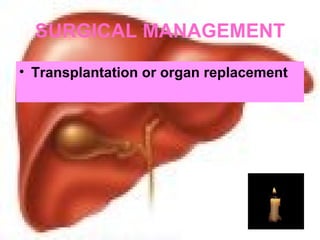
SURGICAL MANAGEMENT Transplantation or organ replacement
Nursing Management
Excess fluid volume Weight daily. Assess for JVD, measure abdominal girth daily, and check for peripheral edema. Monitor intake and output. Assess urine specific gravity. Provide low-sodium diet and restrict fluids as ordered. Disturbed thought processes Assess neurologic status, including level of consciousness, and mental status. Observe for signs of early encephalopathy: changes in handwriting, speech, and asterixis. Avoid factors that may precipitate hepatic encephalopathy. Avoid hepatotoxic medications and CNS depressant drugs. If possible, plan for consistent nursing care assignments. Provide low-protein diet as prescribed; teach the family the importance of maintaining diet restrictions. Administer medications or enemas as ordered to reduce nitrogenous products. Monitor bowel function and provide measures to promote regular elimination and prevent constipation. Orient to surroundings, person, and place; provide simple explanations and reassurance.
Ineffective protection Monitor VS; report tachycardia or hypotension Institute bleeding precautions Monitor coagulation studies and platelet count. Report abnormal results. Carefully monitor the client who has had bleeding esophageal varices for evidence of rebleeding: hematemesis, hematochezia or tarry stools, signs and symptoms of hypovolemia or shock
Impaired skin integrity Use warm water rather than hot water when bathing. Use measures to prevent dry skin If indicated, apply mittens to hands to prevent scratching. Institute measures to prevent skin and tissue breakdown Administer prescribed antihistamine cautiously.
Imbalanced nutrition: less than body requirements Weight daily Provide small meals with between meal snacks Unless protein is restricted due to impending hepatic encephalopathy, promote protein and nutrient intake by providing nutritional supplements such as Ensure or instant breakfast. Arrange for consultation with a dietician for diet planning while hospitalized and at home.
Thank you

Liver Cirrhosis

  • 1.
  • 2.
    Definition "cirrhosis" derivesfrom Greek kirrhos , meaning "tawny" (the orange-yellow colour of the diseased liver). It is a chronic liver disease characterized by replacement of liver tissue by fibrous scar tissue as well as regenerative nodules (lumps that occur as a result of a process in which damaged tissue is regenerated), leading to progressive loss of liver function. commonly caused by alcoholism, hepatitis B and C and fatty liver disease but has many other possible causes. Some cases are of unknown cause, but most of these due to unrecognized fatty liver disease. Cirrhosis is generally irreversible once it occurs, and treatment generally focuses on preventing progression and complications.
  • 3.
    Signs and SymptomsYellowing of the skin (jaundice) Fatigue Weakness Loss of appetite Itching Easy bruising from decreased production of blood clotting factors by the diseased liver.
  • 4.
    Spider angiomata orspider nevi. Nail changes. Muehrcke's nails Terry's nails Clubbing Hypertrophic osteoarthropathy. Dupuytren's contracture. Gynecomastia Hypogonadism Splenomegaly AscitesCaput medusa Cruveilhier-Baumgarten murmur. Fetor hepaticus Jaundice Asterixis Others. Weakness, fatigue, anorexia, weight loss.
  • 5.
    4 major typesof cirrhosis Associated with alcohol abuse Small nodules form as a result of persistence of some aoffending agents 4. Alcoholic Cirrhosis - Atriventricular valve dse - prolonged constructive peritonitis - decompensated core pulmonale Chronic liver disease associated with right sided heart failure. 3. Cardiac Cirrhosis Primary: Chronic stasis of the bile in intrahepatic ducts -autoimmune process implicated Secondary: - Obstruction of bile ducts outside the liver. - bile flow decreased with concurrent cell damage to hepatocytes around the bile ductules 2. Biliary Cirrhosis - post acute viral hepatitis - most common worldwide - most massive loss of liver cells, wit irregular patterns of regenerating cells 1. Post Necrotic Cirrhosis Etiology Definition
  • 6.
    Complications Edema andascites Spontaneous bacterial peritonitis (SBP) Bleeding from esophageal varices Hepatic encephalopathy Hepatorenal syndrome Hepatopulmonary syndrome Hypersplenism Liver cancer (hepatocellular carcinoma)
  • 7.
    Causes Alcohol Nonalcoholic fatty liver disease (NAFLD) Cryptogenic cirrhosis (cirrhosis due to unidentified causes) Chronic viral hepatitis Inherited (genetic) disorders Primary biliary cirrhosis (PBC Primary sclerosing cholangitis (PSC Autoimmune Infants can be born without bile ducts ( biliary atresia ) Less common causes of cirrhosis include unusual reactions to some drugs and prolonged exposure to toxins, as well as chronic heart failure (cardiac cirrhosis). Hereditary hemochromatosis. Wilson's disease. Alpha 1-antitrypsin deficiency (AAT). Cardiac cirrhosis Galactosemia Glycogen storage disease type IV Cystic fibrosis Drugs or toxins Certain parasitic infections (such as schistosomiasis)
  • 8.
    Diagnosis liver biopsy, through a percutaneous, transjugular, laparoscopic, or fine-needle approach. However, a biopsy is not necessary if the clinical, laboratory, and radiologic data suggests cirrhosis. Furthermore, there is a small but significant risk to liver biopsy, and cirrhosis itself predisposes for complications due to liver biopsy.
  • 9.
    Lab findings Aminotransferases Alkaline phosphatase . GGT . Bilirubin Albumin Prothrombin time Globulins Serum sodium Thrombocytopenia Leukopenia and neutropenia Coagulation defects Other laboratory studies performed in newly diagnosed cirrhosis may include Serology for hepatitis viruses, autoantibodies (ANA, anti-smooth muscle, anti-mitochondria, anti-LKM) Ferritin and transferrin saturation (markers of iron overload), copper and ceruloplasmin (markers of copper overload) Immunoglobulin levels (IgG, IgM, IgA) - these are non-specific but may assist in distinguishing various causes Cholesterol and glucose Alpha 1-antitrypsin Imaging Endoscopy
  • 10.
    MEDICAL MANAGEMENT Diuretics Lactulose and neomysin. The beta-blocker nadolol (Corgard) may be given together with isosorbide mononitrate Ferrous sulfate and folic acid. Vitamin K may be ordered to reduce the risk of bleeding. When bleeding is acute, packed RBCs, fresh frozen plasma, or platelets may be administered to restore blood components and promote hemostasis. Antacids Oxazepam (Serax), a benzodiazepine antianxiety/ sedative drug A healthy diet is encouraged, as cirrhosis may be an energy-consuming process. Antibiotics will be prescribed for infections, and various medications can help with itching. Alcoholic cirrhosis caused by alcohol abuse is treated by abstaining from alcohol. Treatment for hepatitis-related cirrhosis involves medications used to treat the different types of hepatitis, such as interferon for viral hepatitis and corticosteroids for autoimmune hepatitis. Cirrhosis caused by Wilson's disease, in which copper builds up in organs, is treated with chelation therapy (e.g. penicillamine) to remove the copper.
  • 11.
  • 12.
  • 13.
    Excess fluid volumeWeight daily. Assess for JVD, measure abdominal girth daily, and check for peripheral edema. Monitor intake and output. Assess urine specific gravity. Provide low-sodium diet and restrict fluids as ordered. Disturbed thought processes Assess neurologic status, including level of consciousness, and mental status. Observe for signs of early encephalopathy: changes in handwriting, speech, and asterixis. Avoid factors that may precipitate hepatic encephalopathy. Avoid hepatotoxic medications and CNS depressant drugs. If possible, plan for consistent nursing care assignments. Provide low-protein diet as prescribed; teach the family the importance of maintaining diet restrictions. Administer medications or enemas as ordered to reduce nitrogenous products. Monitor bowel function and provide measures to promote regular elimination and prevent constipation. Orient to surroundings, person, and place; provide simple explanations and reassurance.
  • 14.
    Ineffective protection MonitorVS; report tachycardia or hypotension Institute bleeding precautions Monitor coagulation studies and platelet count. Report abnormal results. Carefully monitor the client who has had bleeding esophageal varices for evidence of rebleeding: hematemesis, hematochezia or tarry stools, signs and symptoms of hypovolemia or shock
  • 15.
    Impaired skin integrityUse warm water rather than hot water when bathing. Use measures to prevent dry skin If indicated, apply mittens to hands to prevent scratching. Institute measures to prevent skin and tissue breakdown Administer prescribed antihistamine cautiously.
  • 16.
    Imbalanced nutrition: lessthan body requirements Weight daily Provide small meals with between meal snacks Unless protein is restricted due to impending hepatic encephalopathy, promote protein and nutrient intake by providing nutritional supplements such as Ensure or instant breakfast. Arrange for consultation with a dietician for diet planning while hospitalized and at home.
  • 17.