LIGHT AND EXPRESSION
and their use in Art
The light
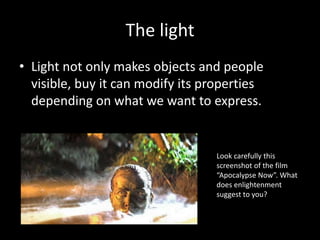
• Light not only makes objects and people
visible, buy it can modify its properties
depending on what we want to express.
Look carefully this
screenshot of the film
“Apocalypse Now”. What
does enlightenment
suggest to you?
Sources of light
High and low key
Quality of the light
Direction of the light
Sources of light
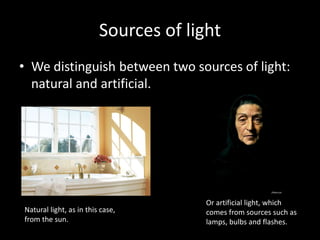
• We distinguish between two sources of light:
natural and artificial.
Natural light, as in this case,
from the sun.
Or artificial light, which
comes from sources such as
lamps, bulbs and flashes.
High and low key
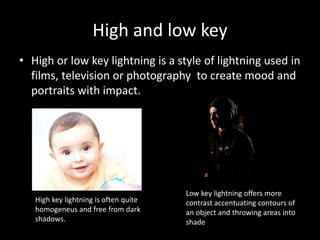
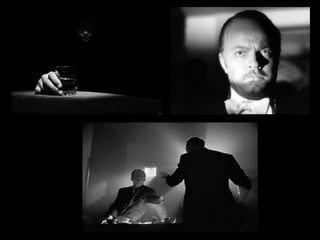
• High or low key lightning is a style of lightning used in
films, television or photography to create mood and
portraits with impact.
High key lightning is often quite
homogeneus and free from dark
shadows.
Low key lightning offers more
contrast accentuating contours of
an object and throwing areas into
shade
Quality of light
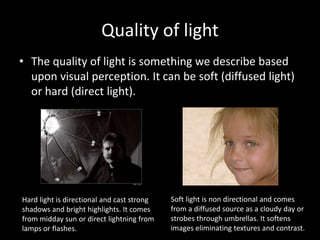
• The quality of light is something we describe based
upon visual perception. It can be soft (diffused light)
or hard (direct light).
Hard light is directional and cast strong
shadows and bright highlights. It comes
from midday sun or direct lightning from
lamps or flashes.
Soft light is non directional and comes
from a diffused source as a cloudy day or
strobes through umbrellas. It softens
images eliminating textures and contrast.
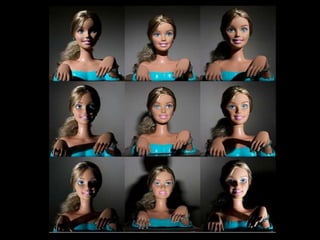
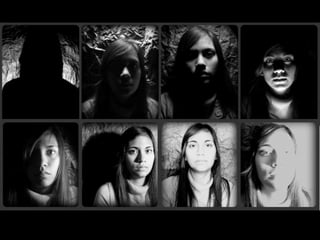
Direction of the light
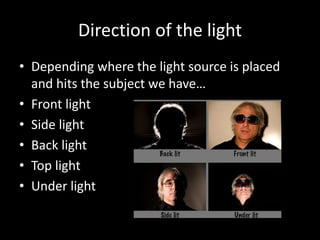
• Depending where the light source is placed
and hits the subject we have…
• Front light
• Side light
• Back light
• Top light
• Under light
Front light
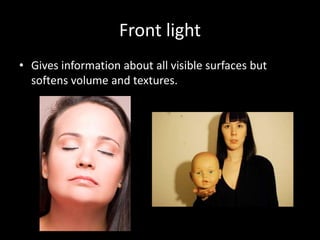
• Gives information about all visible surfaces but
softens volume and textures.
Side light
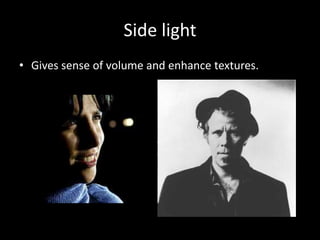
• Gives sense of volume and enhance textures.
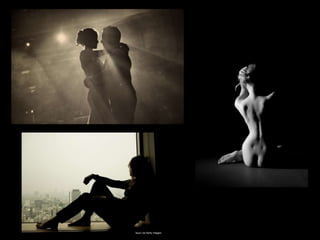
Back light
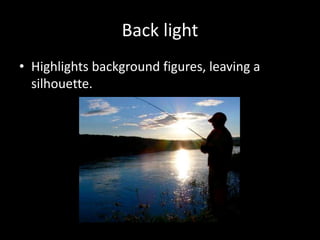
• Highlights background figures, leaving a
silhouette.
Top light
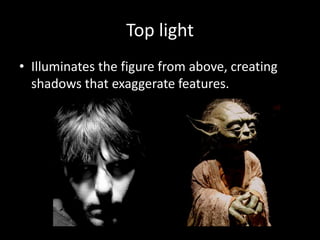
• Illuminates the figure from above, creating
shadows that exaggerate features.
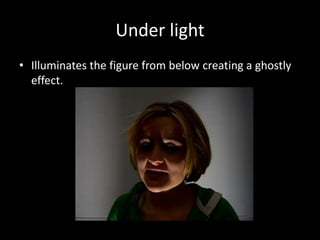
Under light
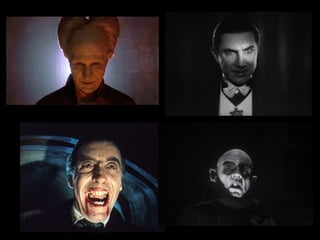
• Illuminates the figure from below creating a ghostly
effect.
Expressiveness of light
• With light we can also show feelings, moods and very
different psycological effects.
• Create environment or atmosphere and evoke
specific symbolic meanings
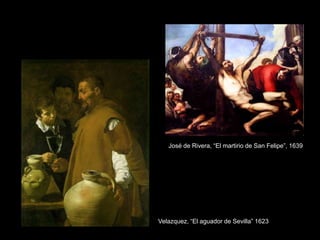
Velazquez, “El aguador de Sevilla” 1623
José de Rivera, “El martirio de San Felipe”, 1639
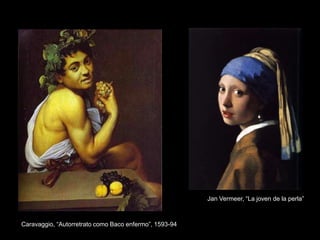
Jan Vermeer, “La joven de la perla”
Caravaggio, “Autorretrato como Baco enfermo”, 1593-94
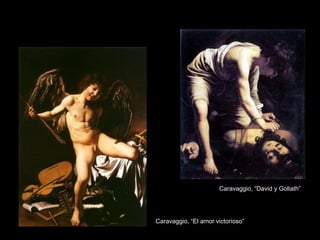
Caravaggio, “El amor victorioso”
Caravaggio, “David y Goliath”
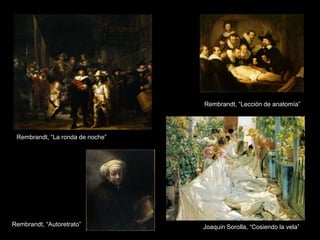
Joaquin Sorolla, “Cosiendo la vela”Rembrandt, “Autoretrato”
Rembrandt, “La ronda de noche”
Rembrandt, “Lección de anatomía”

Light and expression

  • 1.
    LIGHT AND EXPRESSION andtheir use in Art
  • 2.
    The light • Lightnot only makes objects and people visible, buy it can modify its properties depending on what we want to express. Look carefully this screenshot of the film “Apocalypse Now”. What does enlightenment suggest to you?
  • 3.
    Sources of light Highand low key Quality of the light Direction of the light
  • 4.
    Sources of light •We distinguish between two sources of light: natural and artificial. Natural light, as in this case, from the sun. Or artificial light, which comes from sources such as lamps, bulbs and flashes.
  • 5.
    High and lowkey • High or low key lightning is a style of lightning used in films, television or photography to create mood and portraits with impact. High key lightning is often quite homogeneus and free from dark shadows. Low key lightning offers more contrast accentuating contours of an object and throwing areas into shade
  • 6.
    Quality of light •The quality of light is something we describe based upon visual perception. It can be soft (diffused light) or hard (direct light). Hard light is directional and cast strong shadows and bright highlights. It comes from midday sun or direct lightning from lamps or flashes. Soft light is non directional and comes from a diffused source as a cloudy day or strobes through umbrellas. It softens images eliminating textures and contrast.
  • 7.
    Direction of thelight • Depending where the light source is placed and hits the subject we have… • Front light • Side light • Back light • Top light • Under light
  • 8.
    Front light • Givesinformation about all visible surfaces but softens volume and textures.
  • 9.
    Side light • Givessense of volume and enhance textures.
  • 10.
    Back light • Highlightsbackground figures, leaving a silhouette.
  • 11.
    Top light • Illuminatesthe figure from above, creating shadows that exaggerate features.
  • 12.
    Under light • Illuminatesthe figure from below creating a ghostly effect.
  • 13.
    Expressiveness of light •With light we can also show feelings, moods and very different psycological effects. • Create environment or atmosphere and evoke specific symbolic meanings
  • 19.
    Velazquez, “El aguadorde Sevilla” 1623 José de Rivera, “El martirio de San Felipe”, 1639
  • 20.
    Jan Vermeer, “Lajoven de la perla” Caravaggio, “Autorretrato como Baco enfermo”, 1593-94
  • 21.
    Caravaggio, “El amorvictorioso” Caravaggio, “David y Goliath”
  • 22.
    Joaquin Sorolla, “Cosiendola vela”Rembrandt, “Autoretrato” Rembrandt, “La ronda de noche” Rembrandt, “Lección de anatomía”