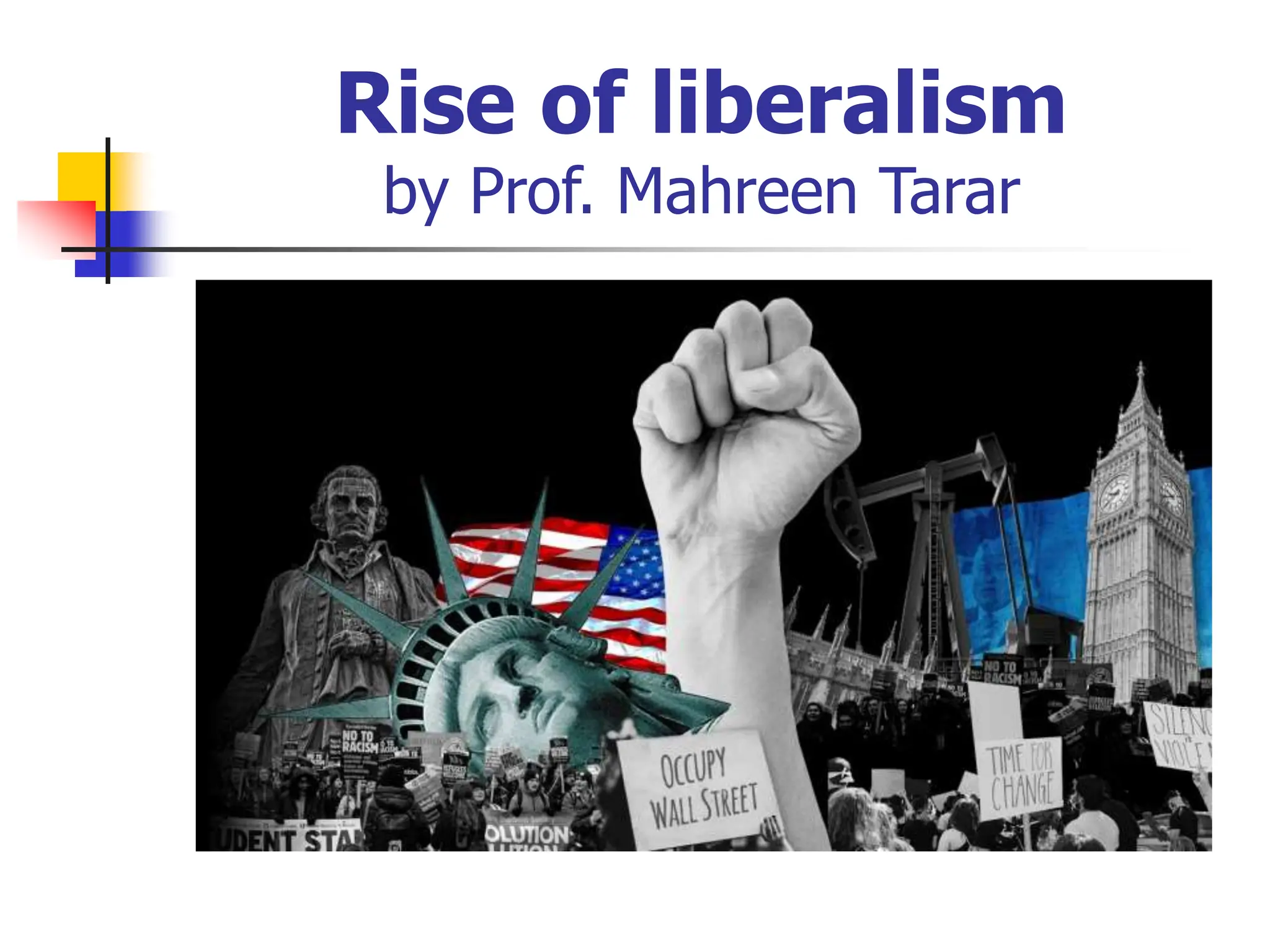
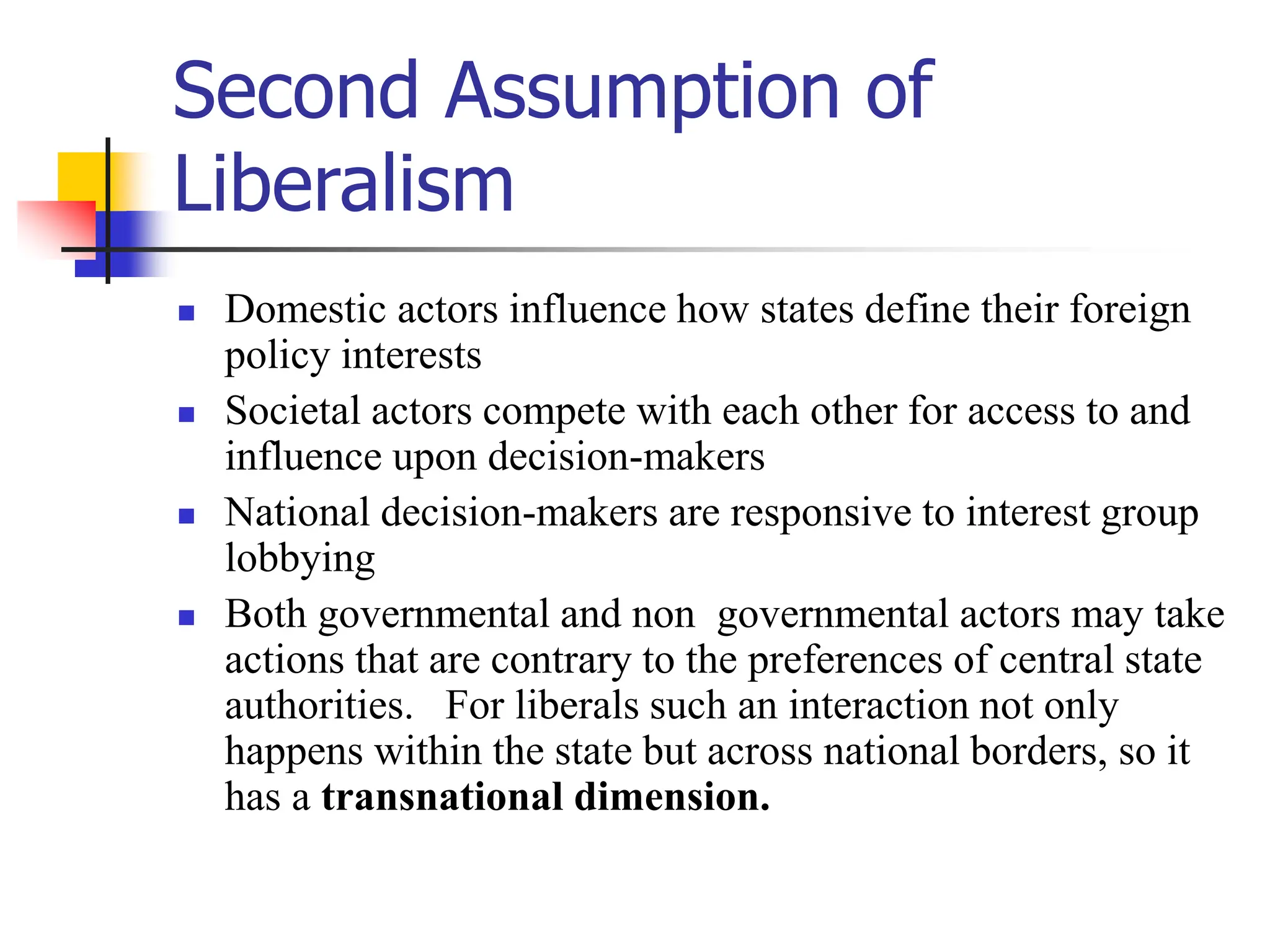
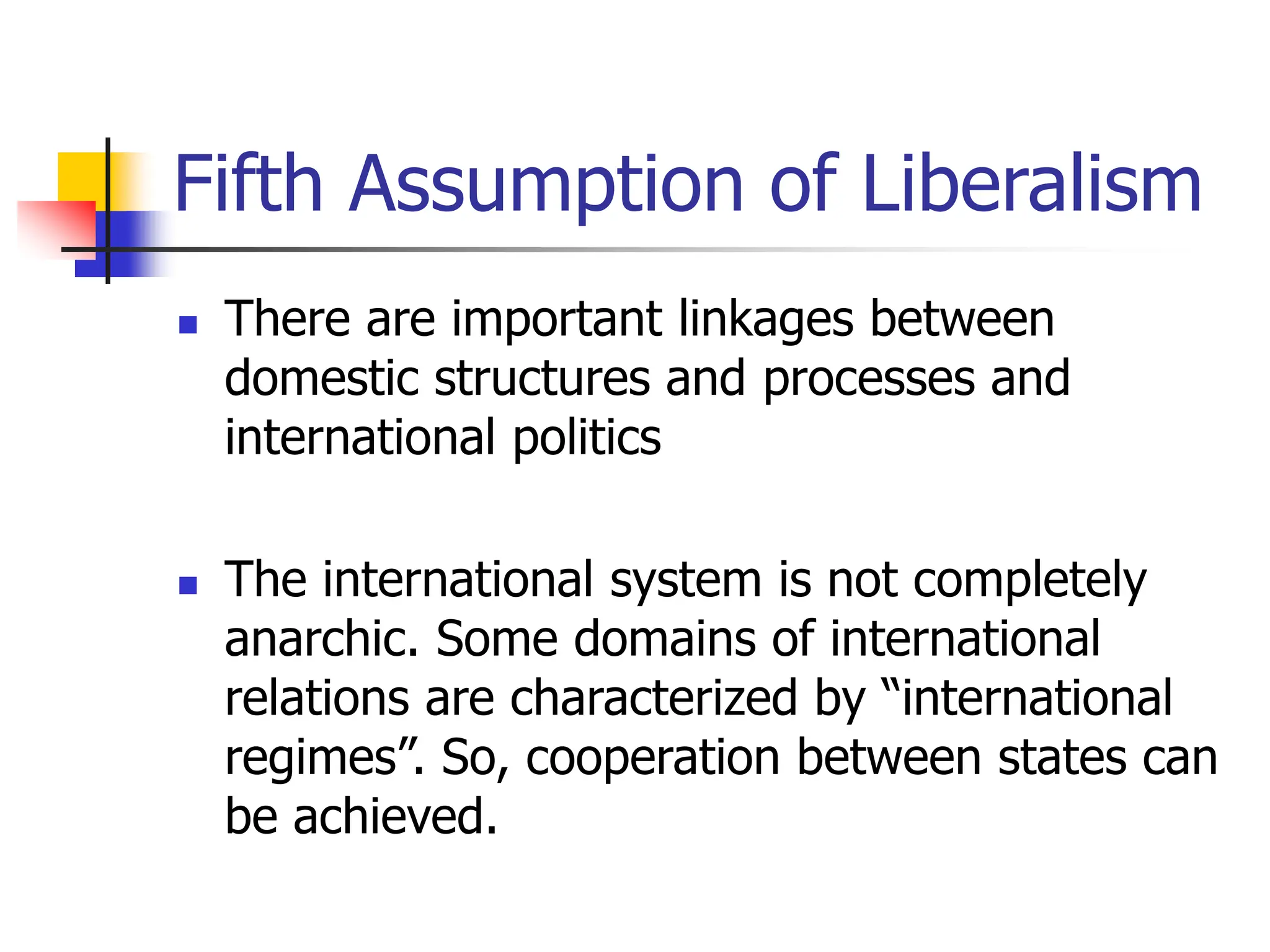
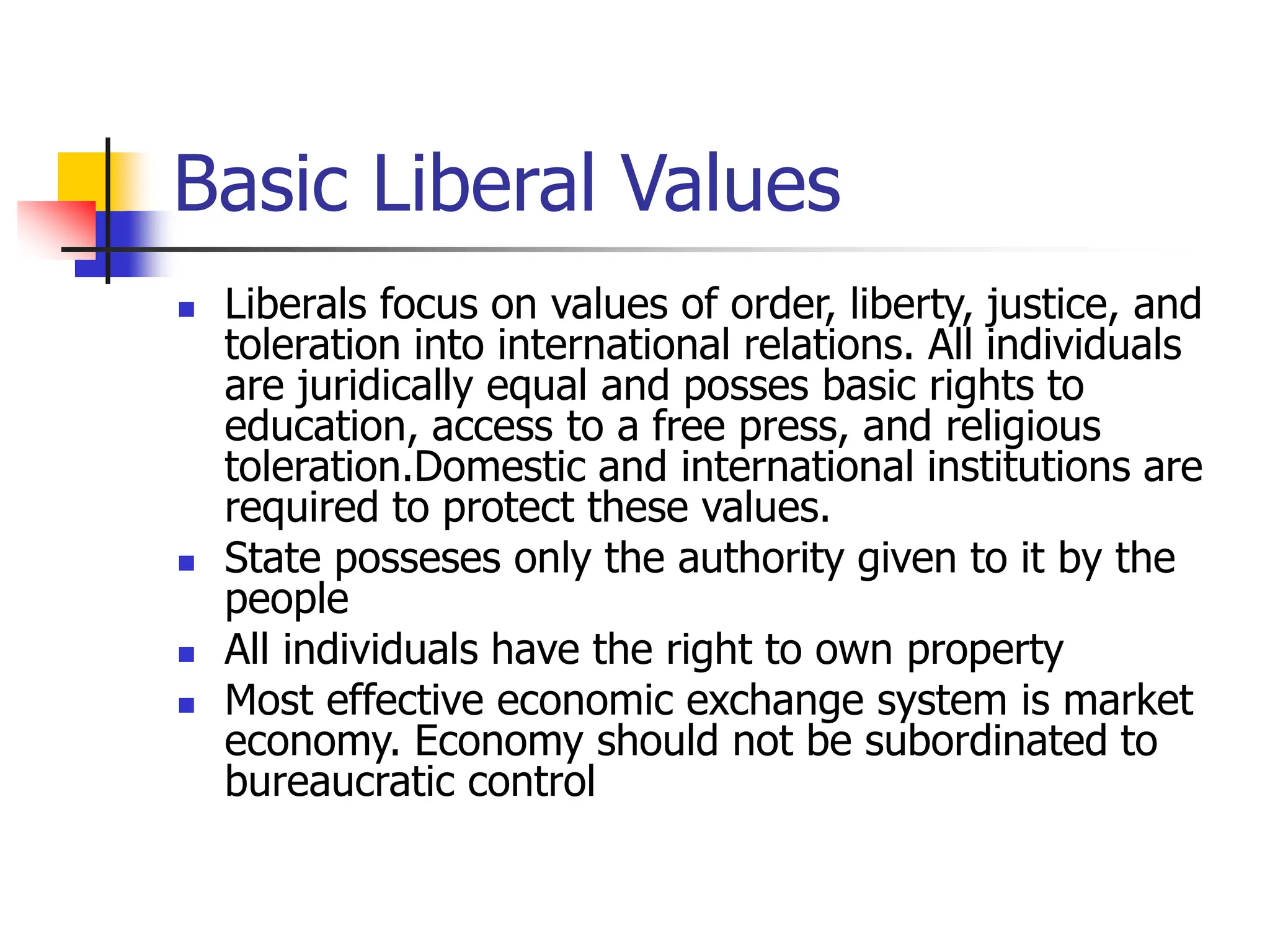
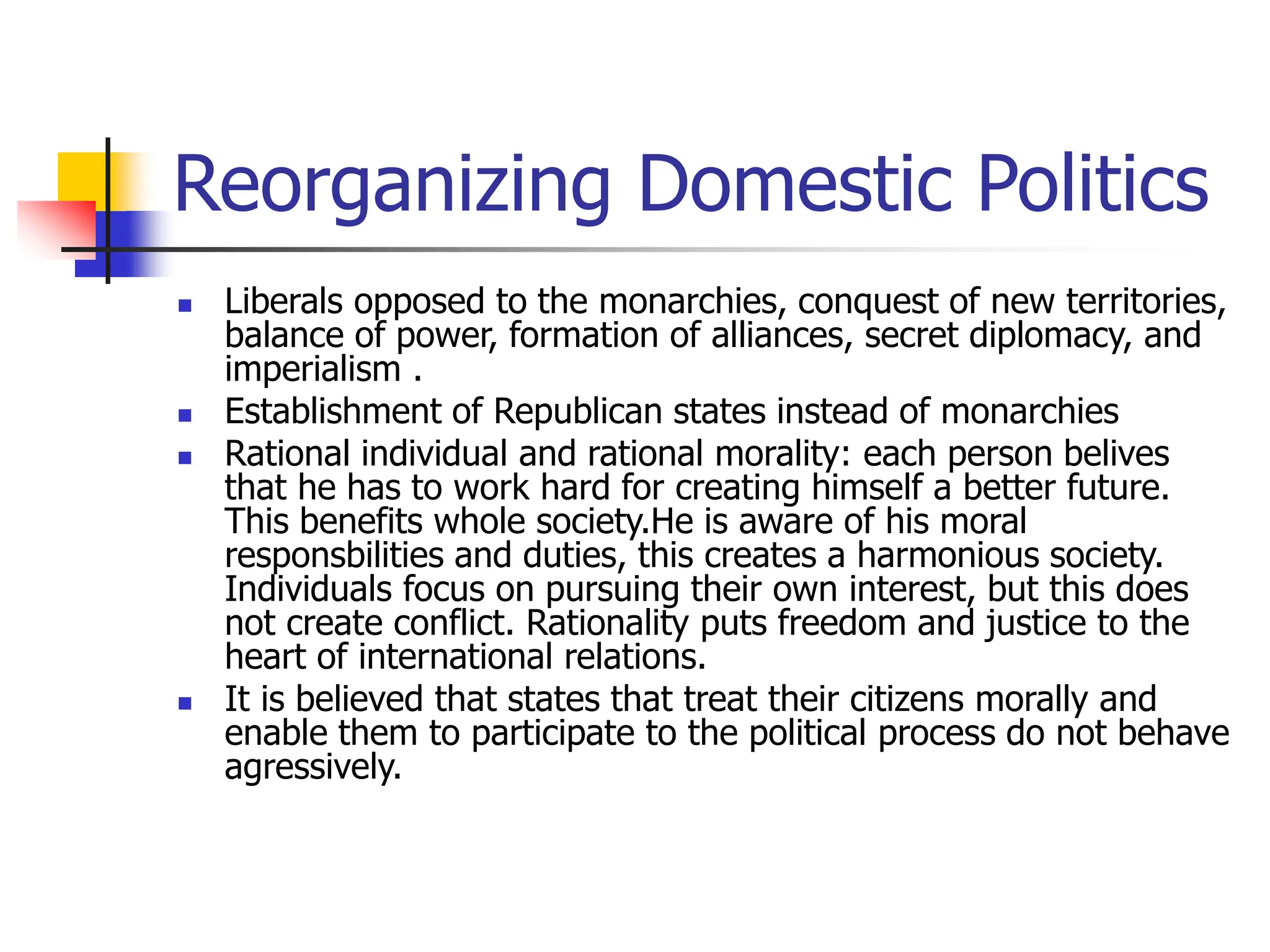
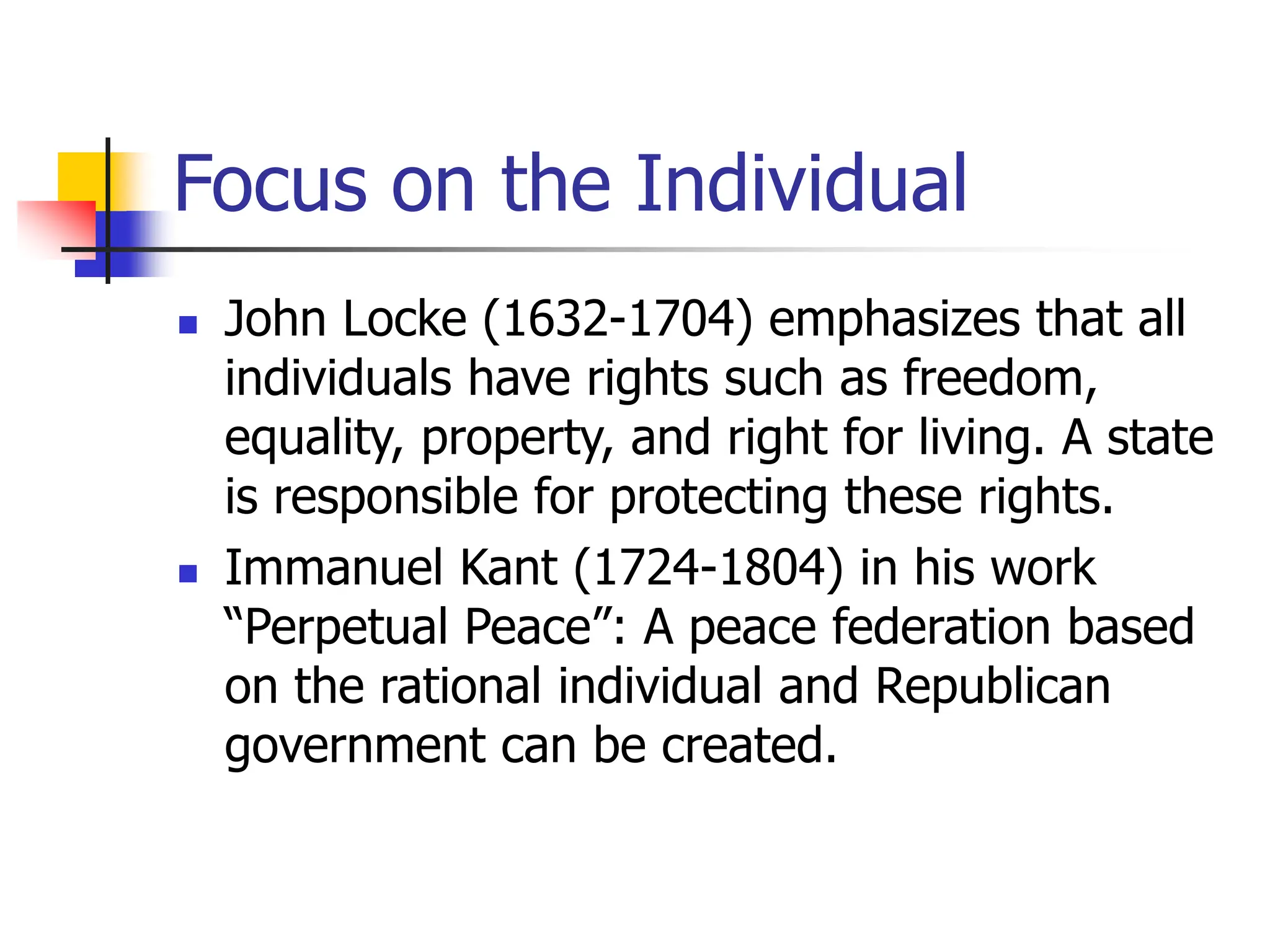
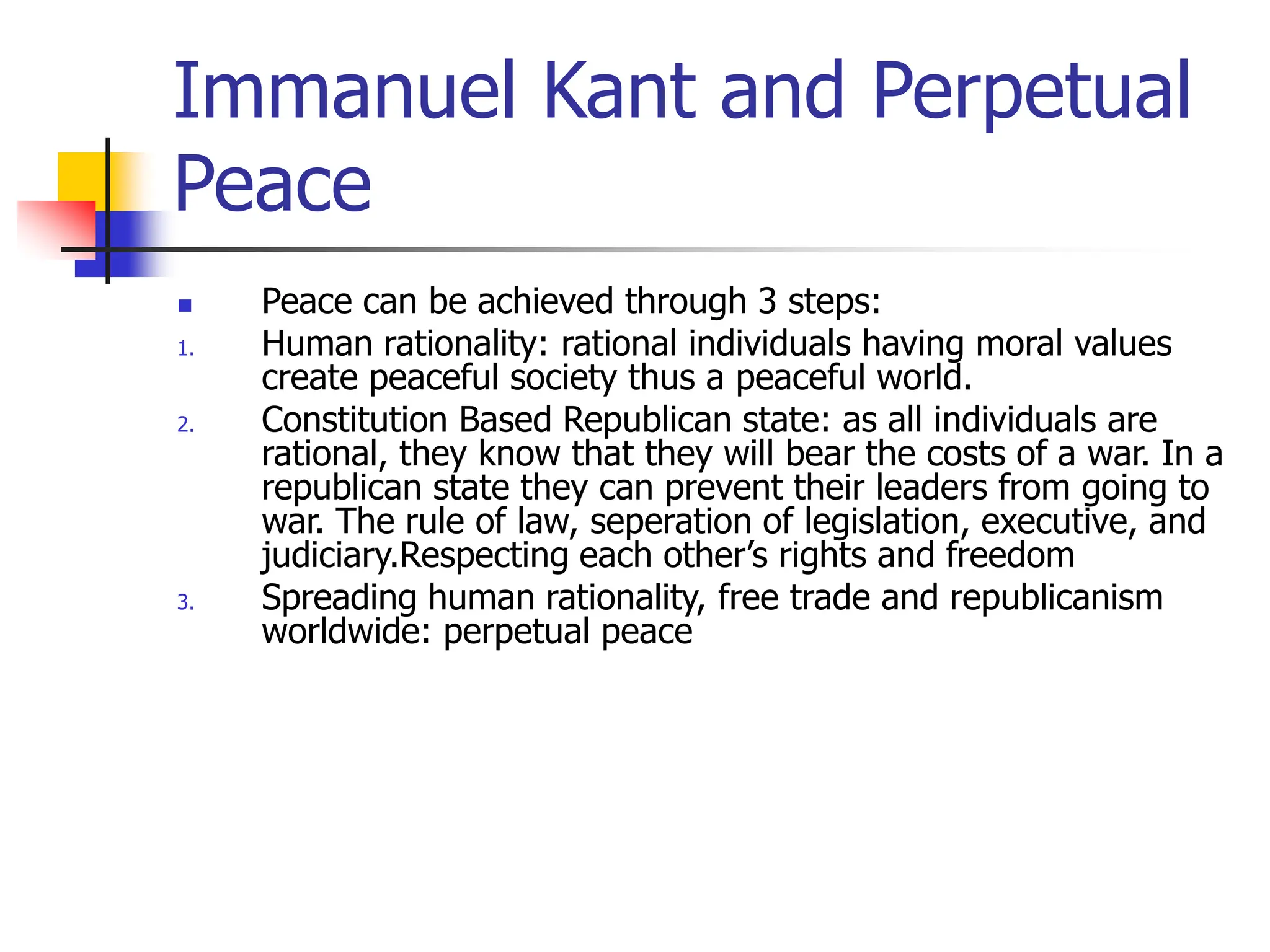
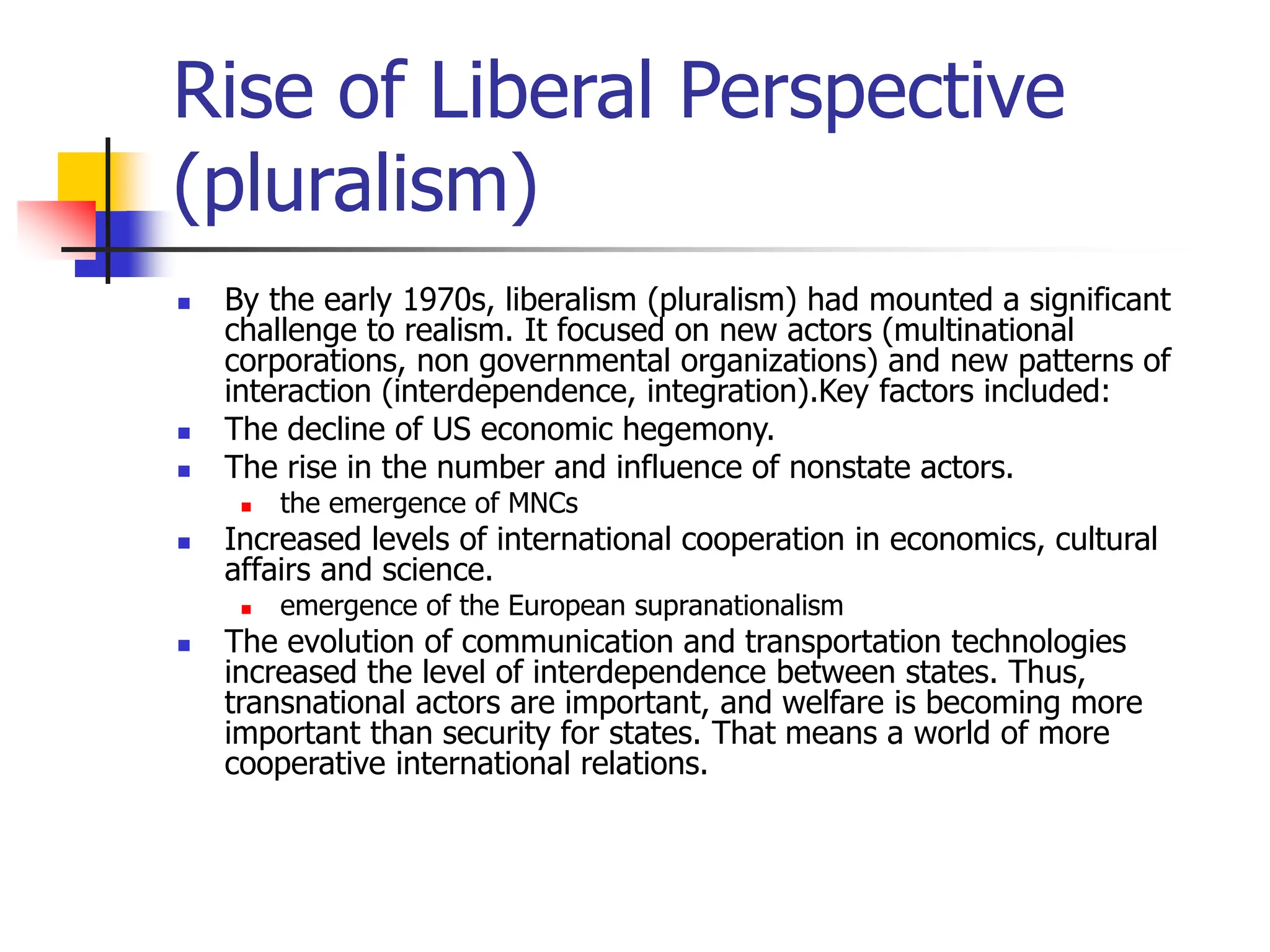
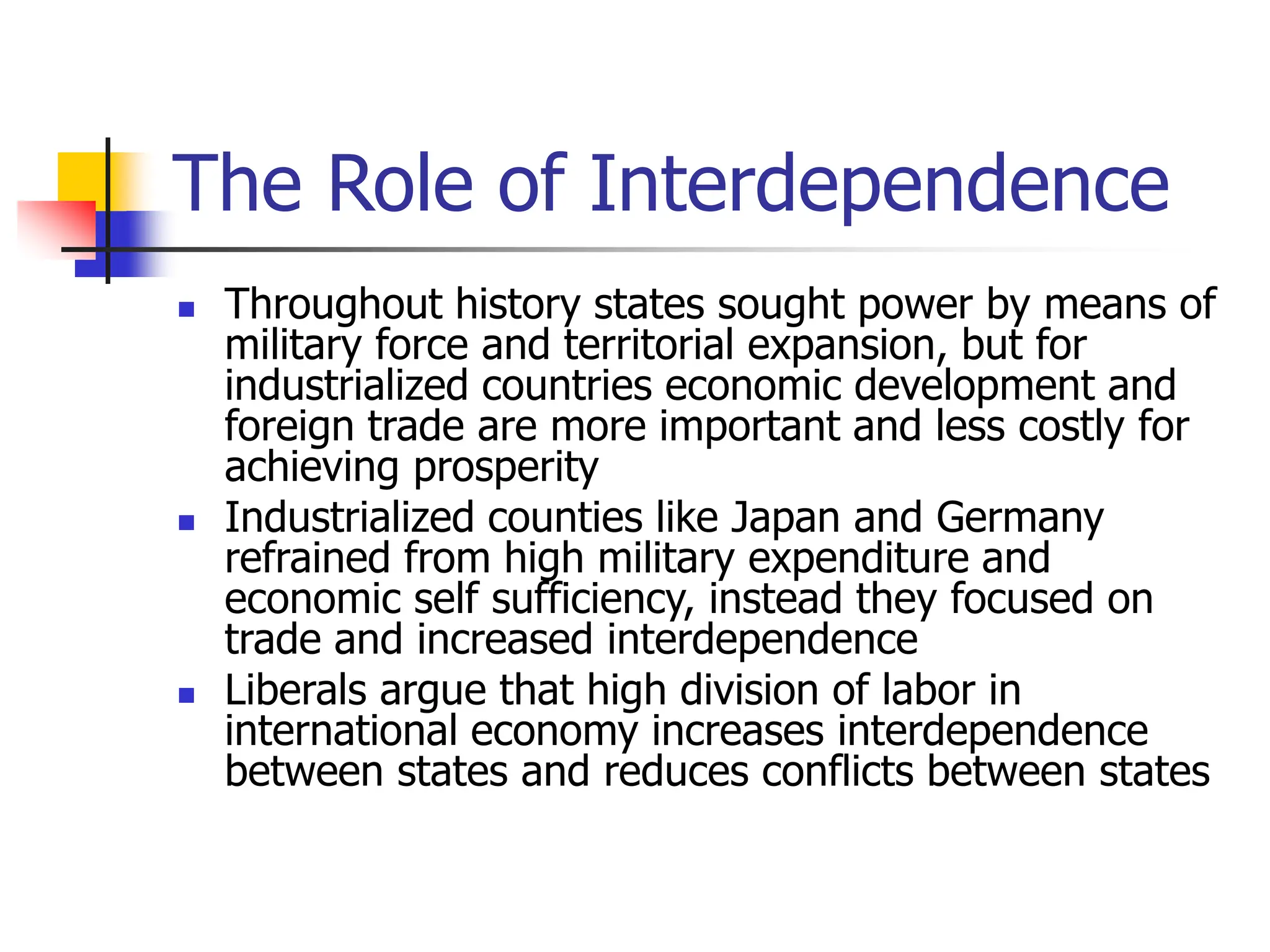
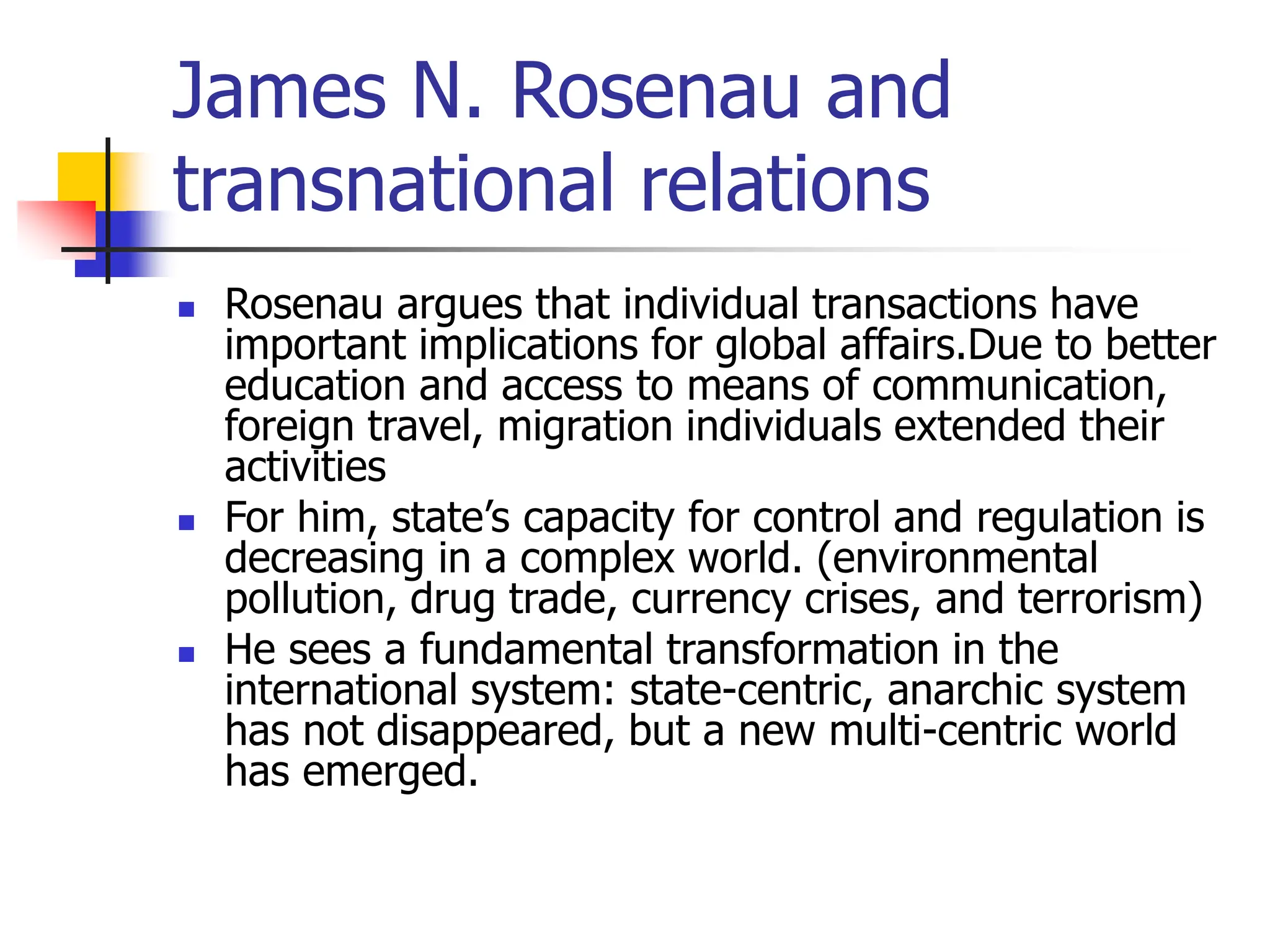
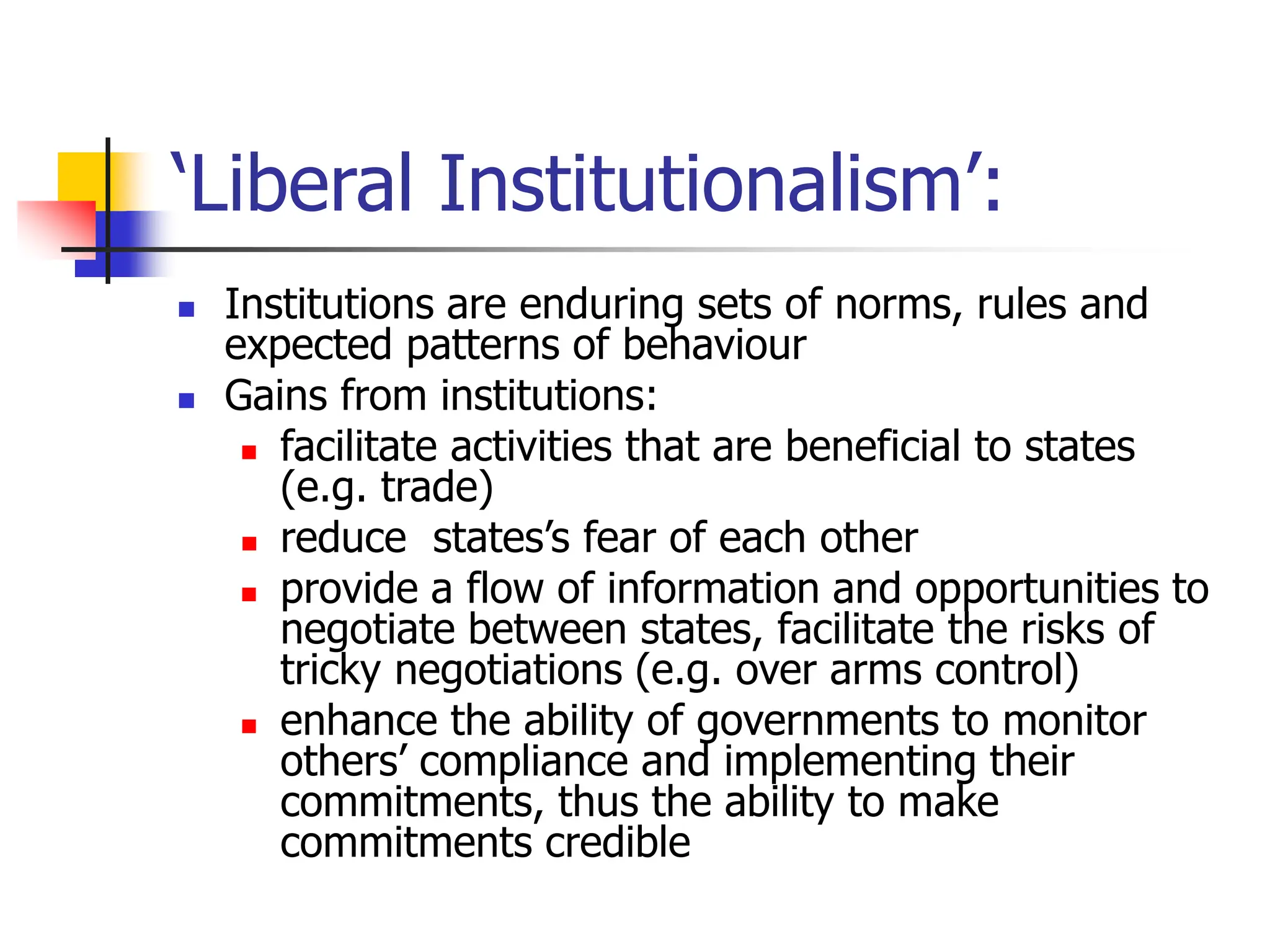
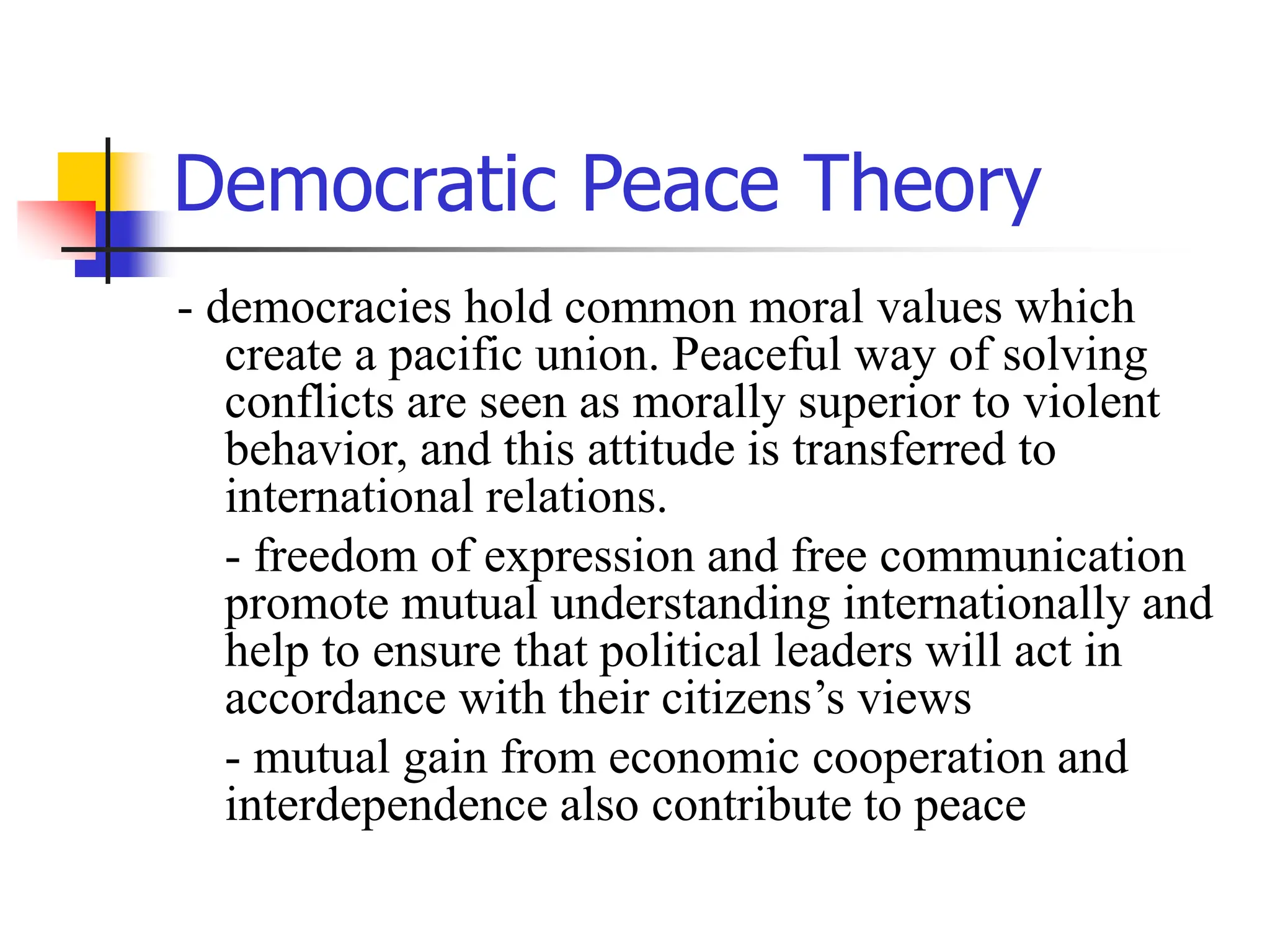
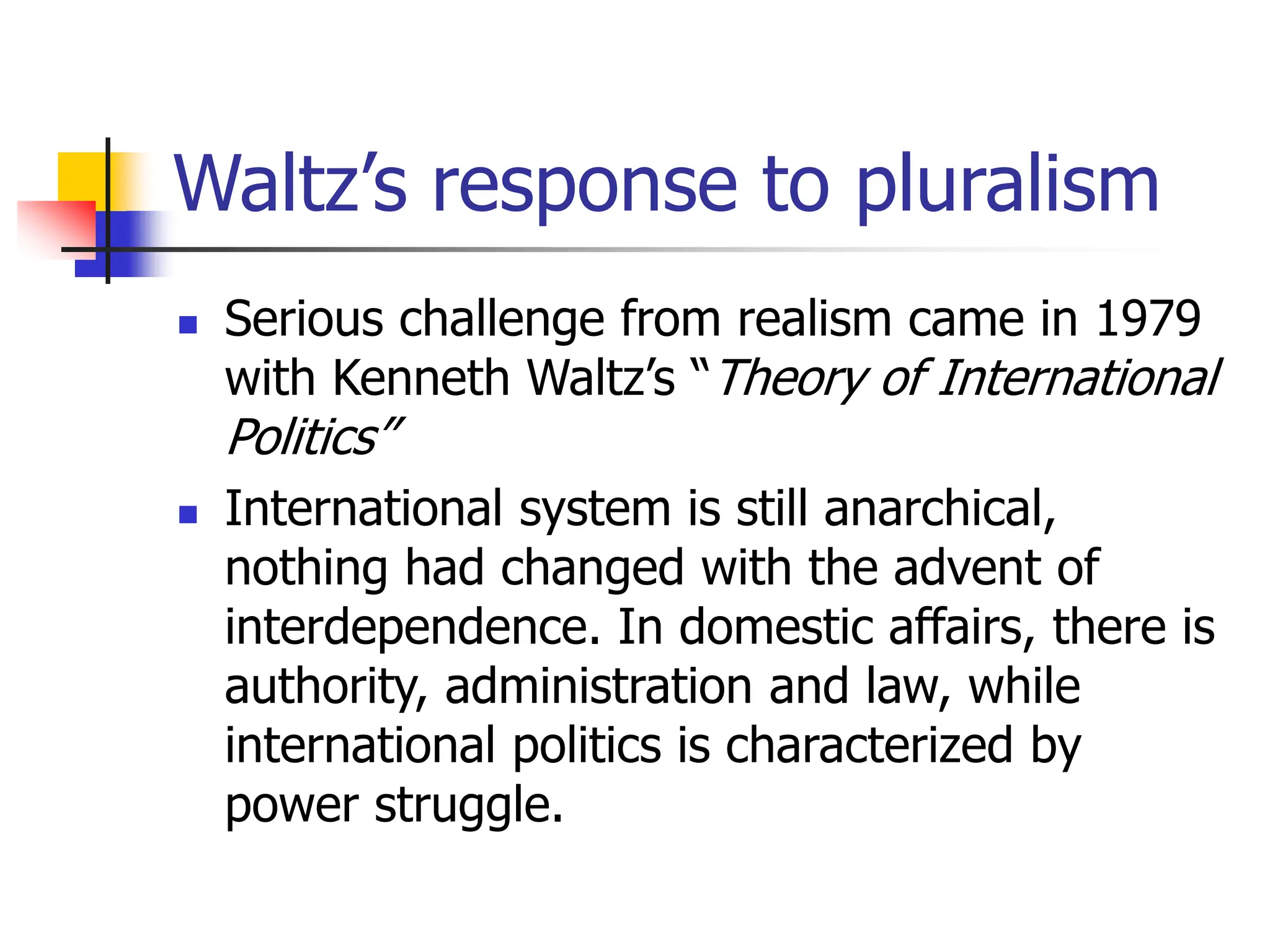
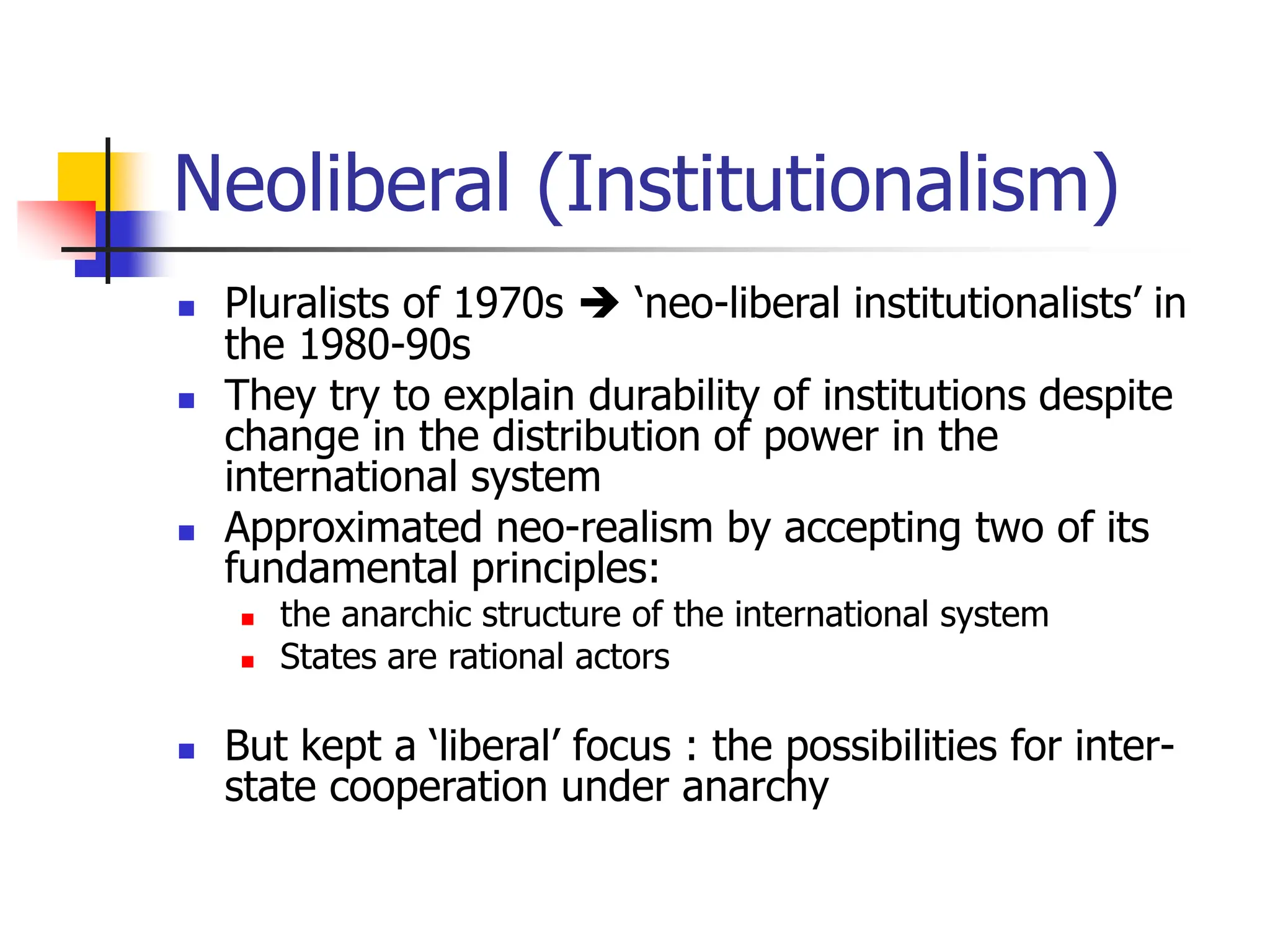
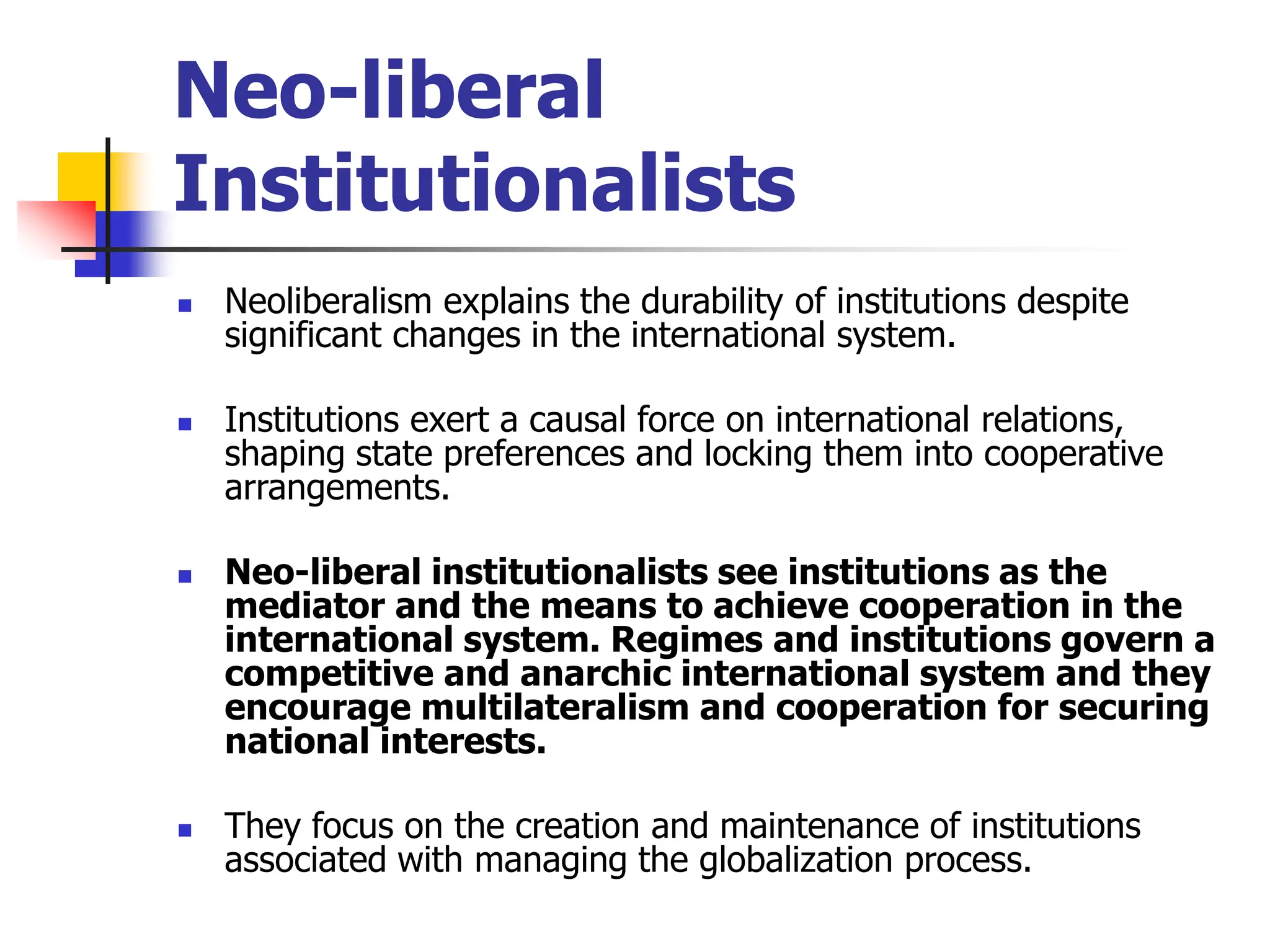
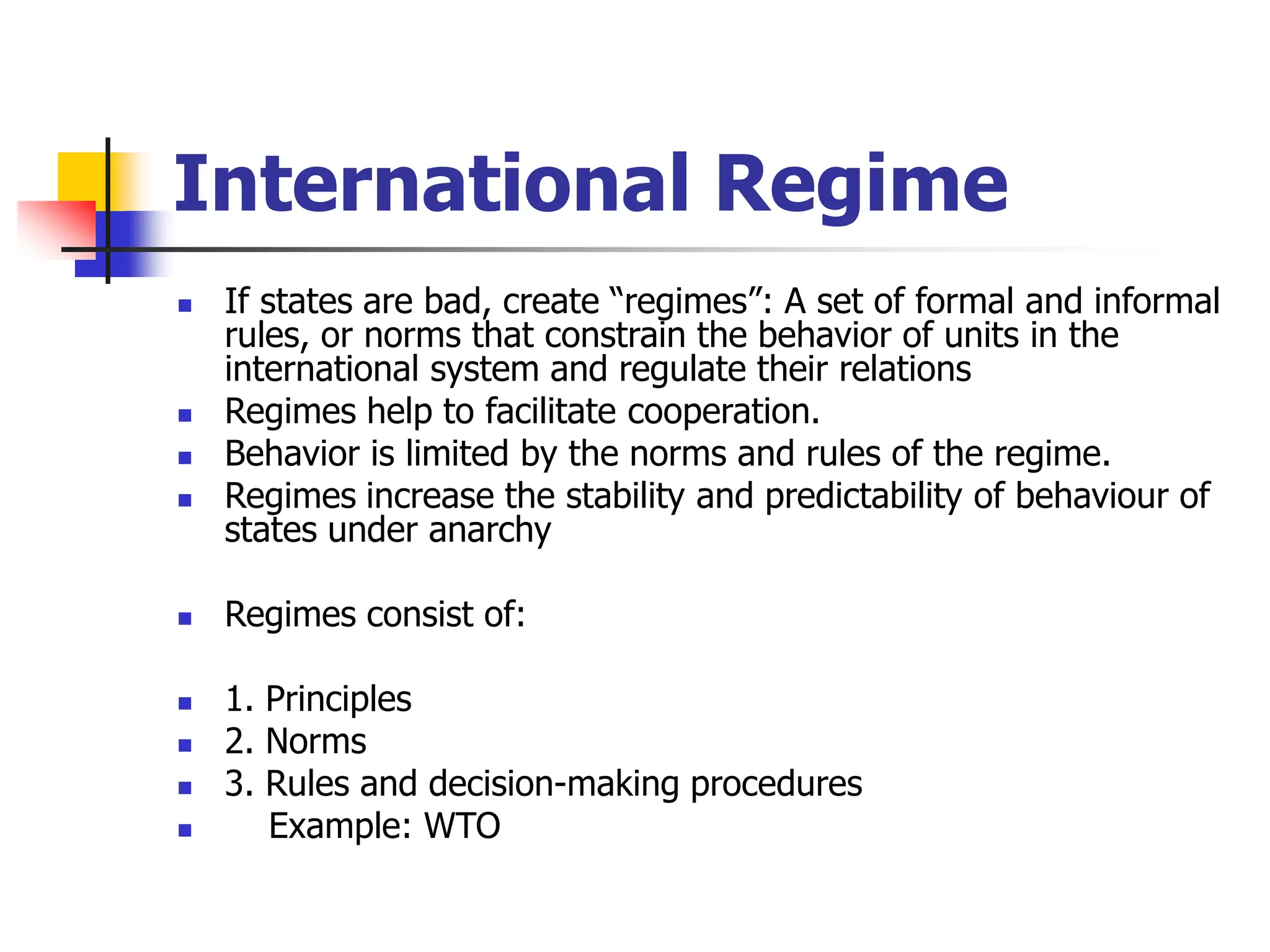
Liberalism focuses on the role of non-state actors like individuals, groups and organizations in international relations. It views the world as complexly interdependent and sees issues like human rights, the environment and the economy as important along with security. Key assumptions of liberalism include that states are not unitary actors and are influenced by domestic groups, and that international institutions can help facilitate cooperation between states. Liberal theories have evolved from the Enlightenment ideas of free trade and republican states to incorporate more modern concepts like complex interdependence and the role of international organizations in managing relations between states.




















![Number_Guessing_Game_Dsbsbssbzboc[1].pptx](https://cdn.slidesharecdn.com/ss_thumbnails/numberguessinggamedoc1-251206215042-a076fc05-thumbnail.jpg?width=640&height=640&fit=bounds)


