Supply


  Academic Decathlon—
  Lesson 7
  Berryhill Economics
Supply

   Demand is usually a much easier concept for
    students because it deals with the
    consumption side of the economy—and
    students are familiar with being consumers.
   Now you have to change roles to understand
    supply. Think as a business owner. What
    would you want to do if you owned a
    business and you were on the production
    side of the economy?
Supply

   The Law of Supply—The quantity of a
    product supplied varies directly with price,
    ceteris paribus.
    --This means the producer will increase their
    supply as price goes up, other factors held
    constant.
Supply

   Individual Supply Schedule—A chart or table
    that lists the quantity that one supplier will
    produce at each given price
   Market Supply Schedule– A chart or table
    that lists the quantity that all producers within
    an industry or market will produce at each
    given price
Supply

   Supply curve—Graph that represents the
    different quantities that will be supplied at
    each given price (there are individual and
    market supply curves, just as there are
    individual or market supply schedules)
Supply

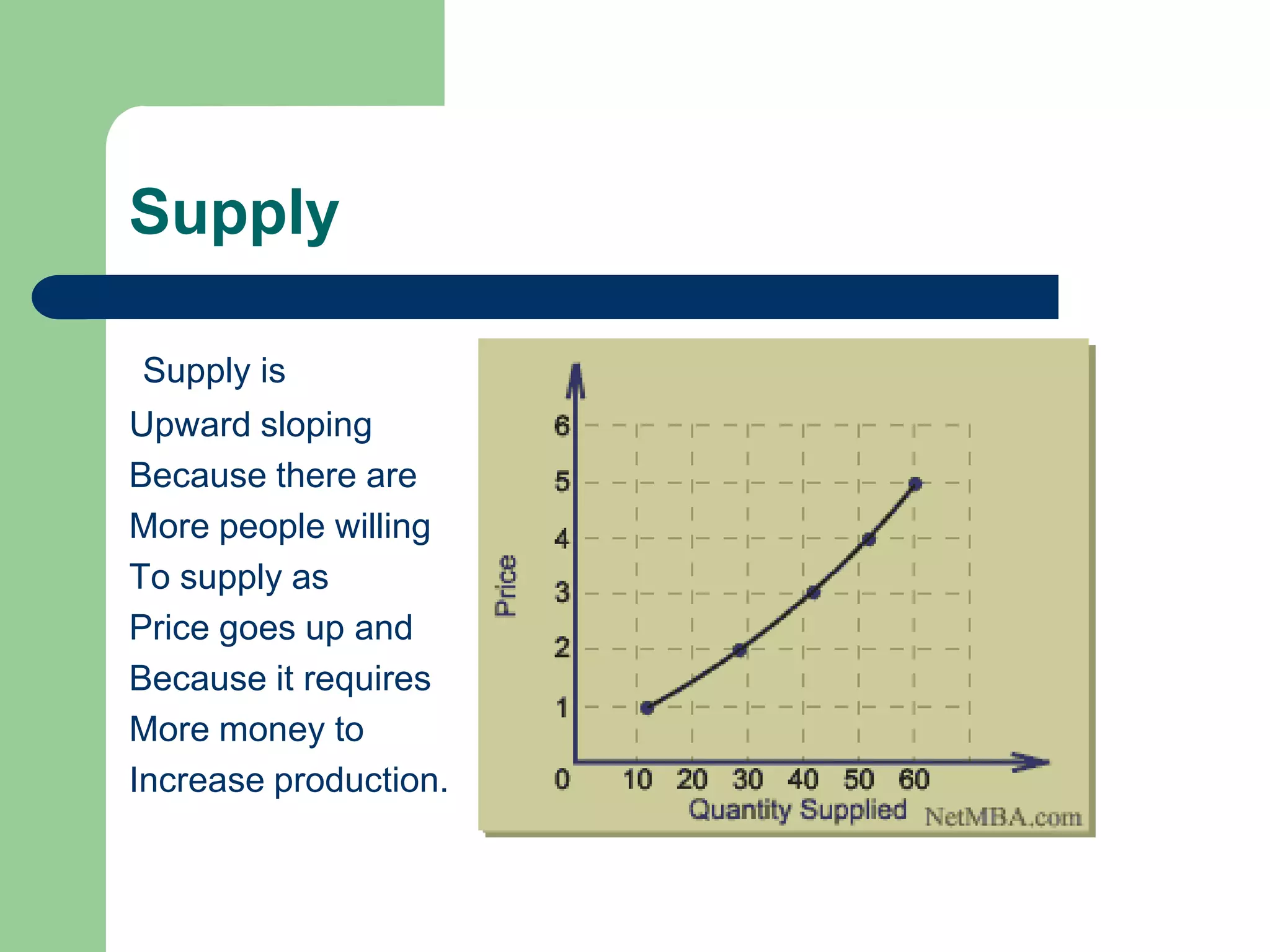
Supply is
Upward sloping
Because there are
More people willing
To supply as
Price goes up and
Because it requires
More money to
Increase production.
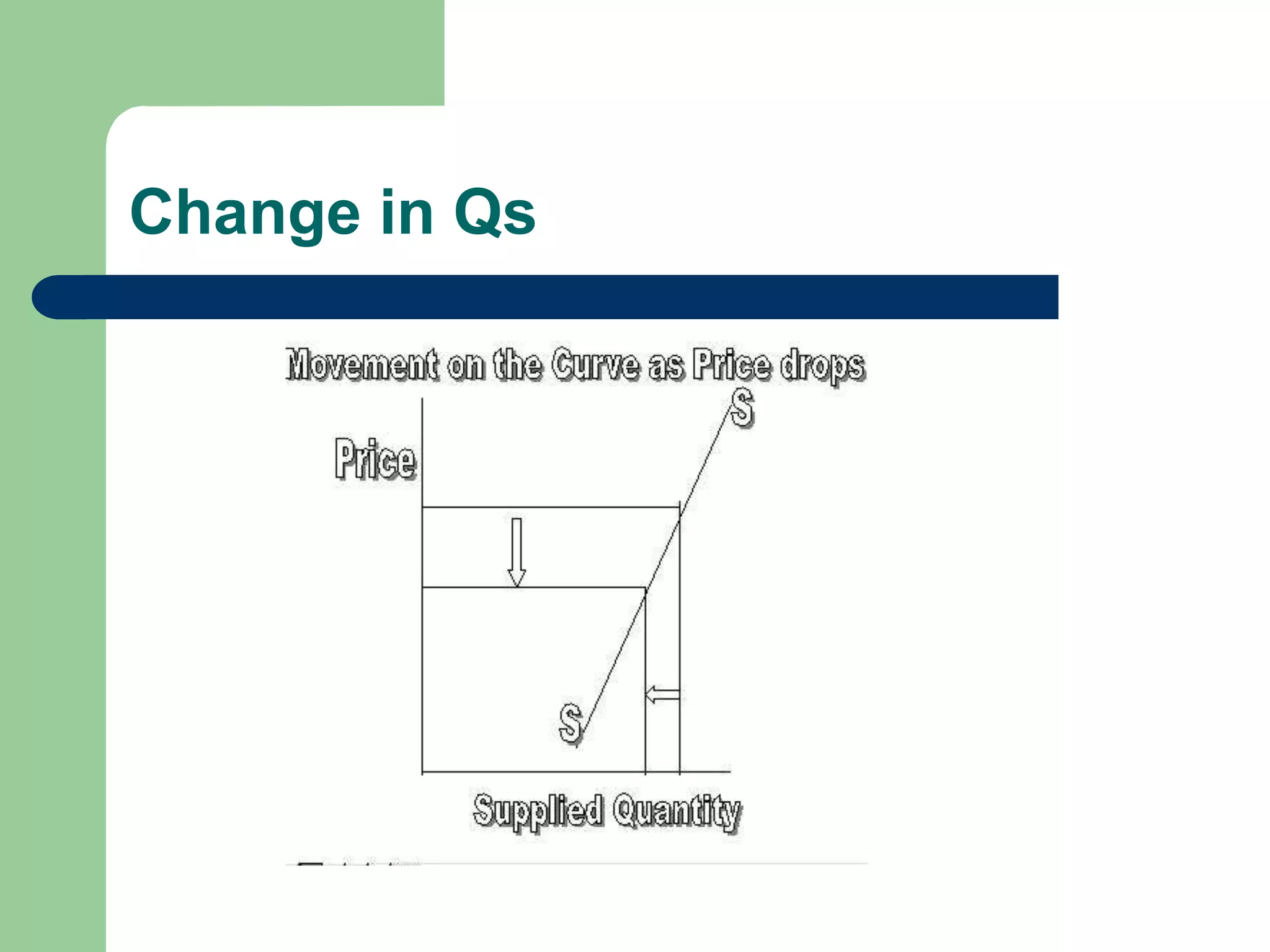
Change in Quantity Supplied

   This is a movement ALONG the curve
    resulting from a change in price
   As prices change, producers will be willing to
    produce more or less (depending on the
    direction of the price change) resulting in a
    new point on the same graph
Change in Qs
Change in Supply

   Change in supply is when there is a shift in
    the entire supply curve resulting from some
    outside force that changes the amount of a
    product supplied at each given point
Change in Supply

   Cost—how much the supplier must pay to
    make the item
   Price—how much the supplier will earn when
    they sell the item
Change in Supply

   Say you are a producer. What would cause
    you to produce MORE or LESS of a product,
    even though the price (how much you will
    earn when you sell the product) doesn’t
    change at all?
Change in Supply

   Determinants of Supply—Forces that will
    cause the entire supply curve to shift either
    left or right (so producers will produce more
    or less, even though the price of the product
    has not changed)
Determinants of Supply

   Factor costs—if the cost of production
    increases, the selling price will have to rise to
    cover these costs
    --so anything that will affect the cost of ANY
    of the factors of production (land, labor,
    capital) will shift the curve
Determinants of Supply

   Technology and regulations—new production
    technology can lower the cost of production;
    regulations and requirements implemented
    by the government will raise the cost of
    production
Determinants of Supply

   Expectations—future expectations of the
    market or industry may cause a firm to adjust
    its quantity supplied
   The number of firms—when more firms enter
    the industry, more of the good can be offered
    at each price
Determinants of Supply

   The bottom line—
    ANYTHING that changes how long it takes to
    produce or how much it costs to produce will
    change supply and shift the supply curve
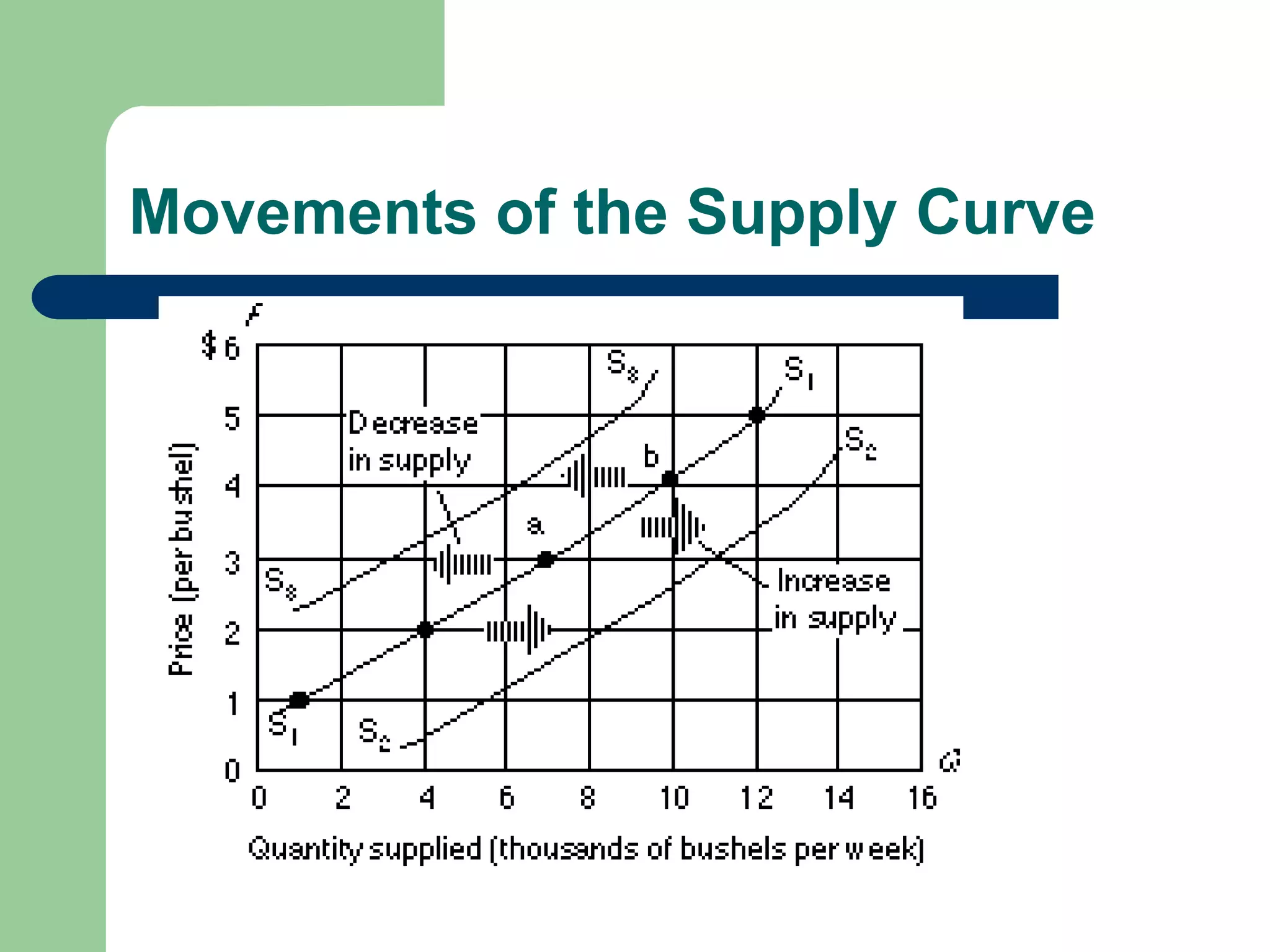
Movement of the Supply Curve

   If it costs more to make an item, will you
    make more or less?
   LESS, so the curve shifts LEFT (just like the
    demand curve)
   If is costs less to make an item, will you
    make more or less?
   MORE, so the curve shifts RIGHT (just like
    the demand curve)
Movements of the Supply Curve
Supply Elasticity

   Supply curves, like demand curves, have
    different slops.
   They can be more vertical or more
    horizontal, and this is due to differences in
    supply elasticity.
   However, the determinants of a product’s
    supply elasticity is different than the
    determinants for demand elasticity.
Supply Elasticity

   Supply elasticity is a measure of the way in which
    quantity supplied responds to a change in price.
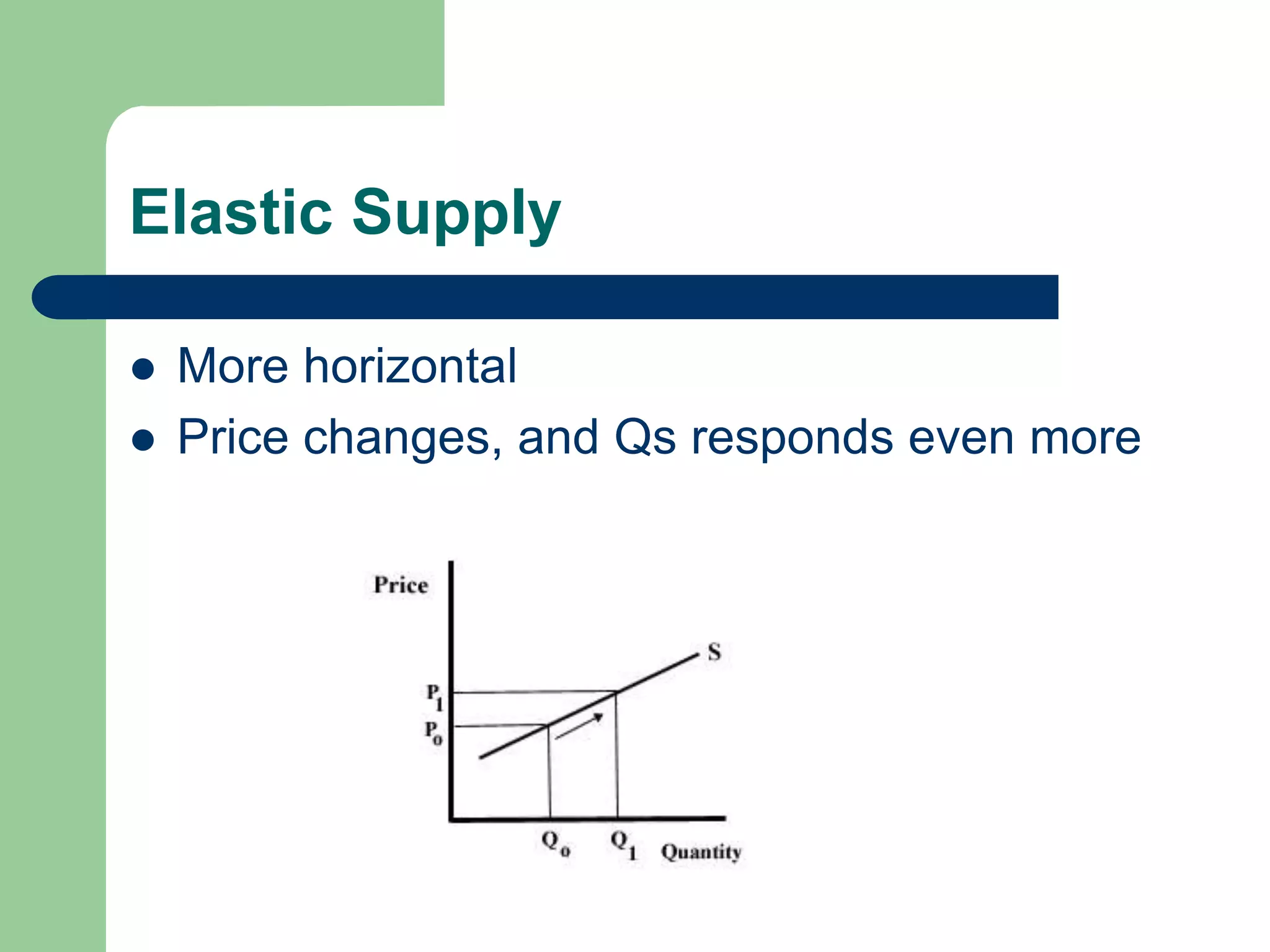
   Elastic supply—a small change in price results in a
    relatively larger change in quantity supplied
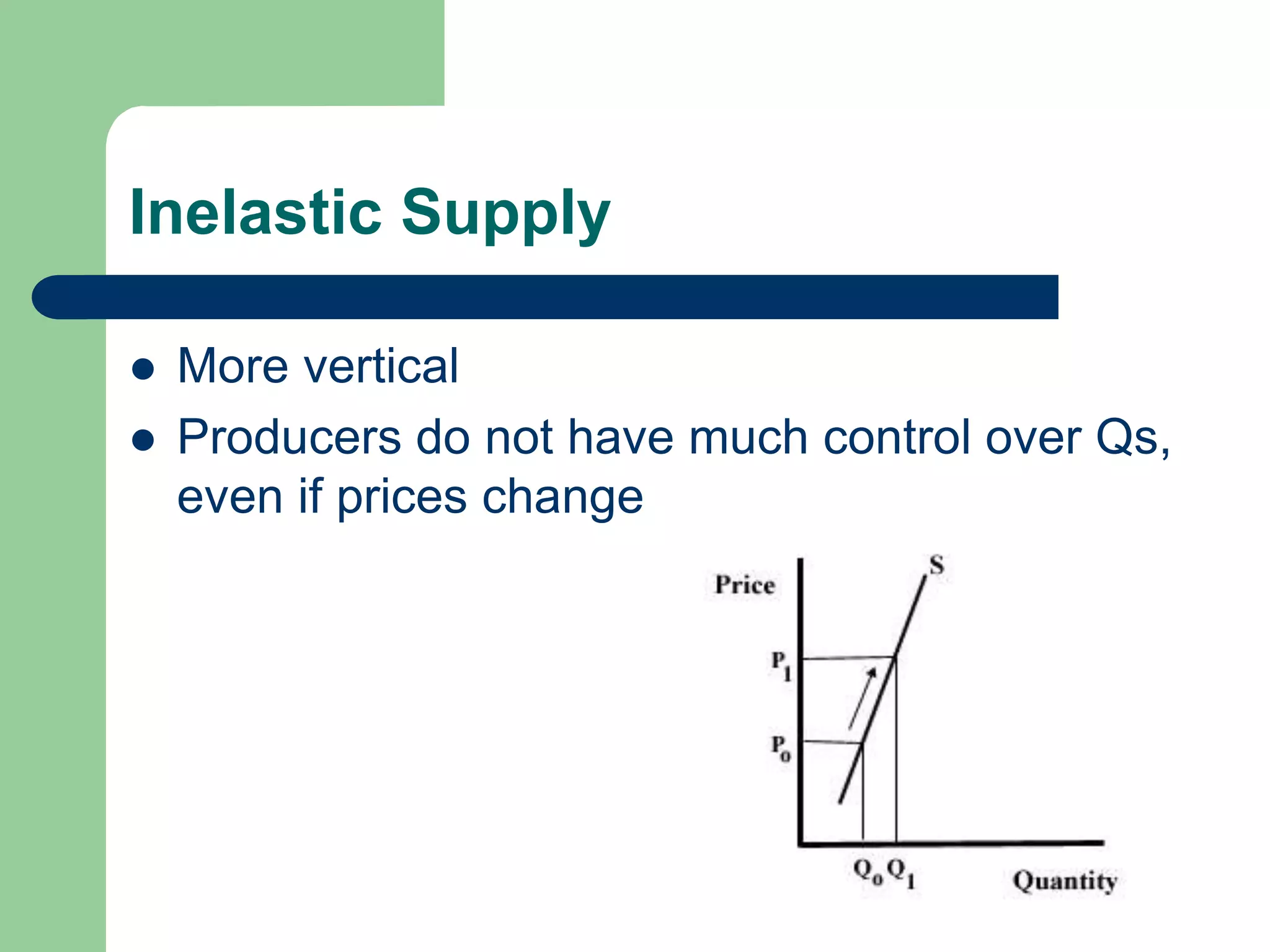
   Inelastic supply—a small change in price results in a
    proportionally smaller change in quantity supplied
   Unit Elastic—a change in price results in a
    proportionally equal change in Qs
Elastic Supply

   Occurs when price changes are met with
    proportionally larger changes in Qs
   The price changes, and the producer
    responds by increasing production.
   The producer has the capability and capacity
    to increase production, there are no (or few)
    limits on how much they can produce.
Elastic Supply

   More horizontal
   Price changes, and Qs responds even more
Inelastic Supply

   Occurs when changes in price is met with a
    proportionally smaller change in Qs
   Even if the producer wanted to increase or
    decrease Qs, they can’t.
   There must be some sort of technical or
    natural constraint that will not allow
    producers increase production.
Inelastic Supply

   More vertical
   Producers do not have much control over Qs,
    even if prices change
Determinants of Supply Elasticity

   The nature of its production is the only
    determinant to supply elasticity.
   If a firm can adjust to new prices quickly,
    then supply is likely to be elastic.
   If the nature of production is such that
    adjustments take longer, then supply is likely
    to be inelastic.

Lesson 7--supply[1]

  • 1.
    Supply AcademicDecathlon— Lesson 7 Berryhill Economics
  • 2.
    Supply  Demand is usually a much easier concept for students because it deals with the consumption side of the economy—and students are familiar with being consumers.  Now you have to change roles to understand supply. Think as a business owner. What would you want to do if you owned a business and you were on the production side of the economy?
  • 3.
    Supply  The Law of Supply—The quantity of a product supplied varies directly with price, ceteris paribus. --This means the producer will increase their supply as price goes up, other factors held constant.
  • 4.
    Supply  Individual Supply Schedule—A chart or table that lists the quantity that one supplier will produce at each given price  Market Supply Schedule– A chart or table that lists the quantity that all producers within an industry or market will produce at each given price
  • 5.
    Supply  Supply curve—Graph that represents the different quantities that will be supplied at each given price (there are individual and market supply curves, just as there are individual or market supply schedules)
  • 6.
    Supply Supply is Upward sloping Becausethere are More people willing To supply as Price goes up and Because it requires More money to Increase production.
  • 7.
    Change in QuantitySupplied  This is a movement ALONG the curve resulting from a change in price  As prices change, producers will be willing to produce more or less (depending on the direction of the price change) resulting in a new point on the same graph
  • 8.
  • 9.
    Change in Supply  Change in supply is when there is a shift in the entire supply curve resulting from some outside force that changes the amount of a product supplied at each given point
  • 10.
    Change in Supply  Cost—how much the supplier must pay to make the item  Price—how much the supplier will earn when they sell the item
  • 11.
    Change in Supply  Say you are a producer. What would cause you to produce MORE or LESS of a product, even though the price (how much you will earn when you sell the product) doesn’t change at all?
  • 12.
    Change in Supply  Determinants of Supply—Forces that will cause the entire supply curve to shift either left or right (so producers will produce more or less, even though the price of the product has not changed)
  • 13.
    Determinants of Supply  Factor costs—if the cost of production increases, the selling price will have to rise to cover these costs --so anything that will affect the cost of ANY of the factors of production (land, labor, capital) will shift the curve
  • 14.
    Determinants of Supply  Technology and regulations—new production technology can lower the cost of production; regulations and requirements implemented by the government will raise the cost of production
  • 15.
    Determinants of Supply  Expectations—future expectations of the market or industry may cause a firm to adjust its quantity supplied  The number of firms—when more firms enter the industry, more of the good can be offered at each price
  • 16.
    Determinants of Supply  The bottom line— ANYTHING that changes how long it takes to produce or how much it costs to produce will change supply and shift the supply curve
  • 17.
    Movement of theSupply Curve  If it costs more to make an item, will you make more or less?  LESS, so the curve shifts LEFT (just like the demand curve)  If is costs less to make an item, will you make more or less?  MORE, so the curve shifts RIGHT (just like the demand curve)
  • 18.
    Movements of theSupply Curve
  • 19.
    Supply Elasticity  Supply curves, like demand curves, have different slops.  They can be more vertical or more horizontal, and this is due to differences in supply elasticity.  However, the determinants of a product’s supply elasticity is different than the determinants for demand elasticity.
  • 20.
    Supply Elasticity  Supply elasticity is a measure of the way in which quantity supplied responds to a change in price.  Elastic supply—a small change in price results in a relatively larger change in quantity supplied  Inelastic supply—a small change in price results in a proportionally smaller change in quantity supplied  Unit Elastic—a change in price results in a proportionally equal change in Qs
  • 21.
    Elastic Supply  Occurs when price changes are met with proportionally larger changes in Qs  The price changes, and the producer responds by increasing production.  The producer has the capability and capacity to increase production, there are no (or few) limits on how much they can produce.
  • 22.
    Elastic Supply  More horizontal  Price changes, and Qs responds even more
  • 23.
    Inelastic Supply  Occurs when changes in price is met with a proportionally smaller change in Qs  Even if the producer wanted to increase or decrease Qs, they can’t.  There must be some sort of technical or natural constraint that will not allow producers increase production.
  • 24.
    Inelastic Supply  More vertical  Producers do not have much control over Qs, even if prices change
  • 25.
    Determinants of SupplyElasticity  The nature of its production is the only determinant to supply elasticity.  If a firm can adjust to new prices quickly, then supply is likely to be elastic.  If the nature of production is such that adjustments take longer, then supply is likely to be inelastic.