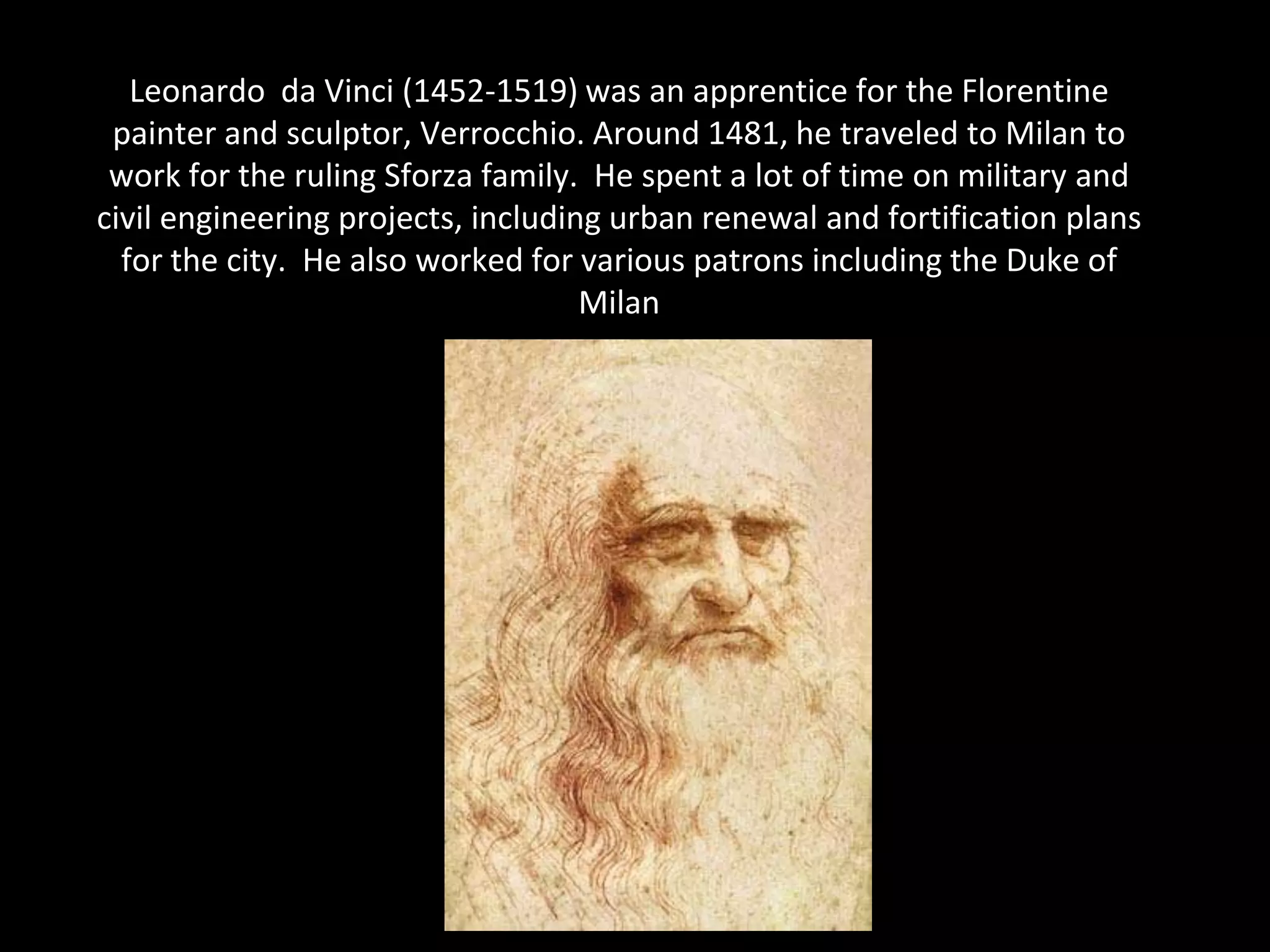
Leonardo da Vinci (1452-1519) was an apprentice for the Florentine
 painter and sculptor, Verrocchio. Around 1481, he traveled to Milan to
 work for the ruling Sforza family. He spent a lot of time on military and
civil engineering projects, including urban renewal and fortification plans
  for the city. He also worked for various patrons including the Duke of
                                    Milan
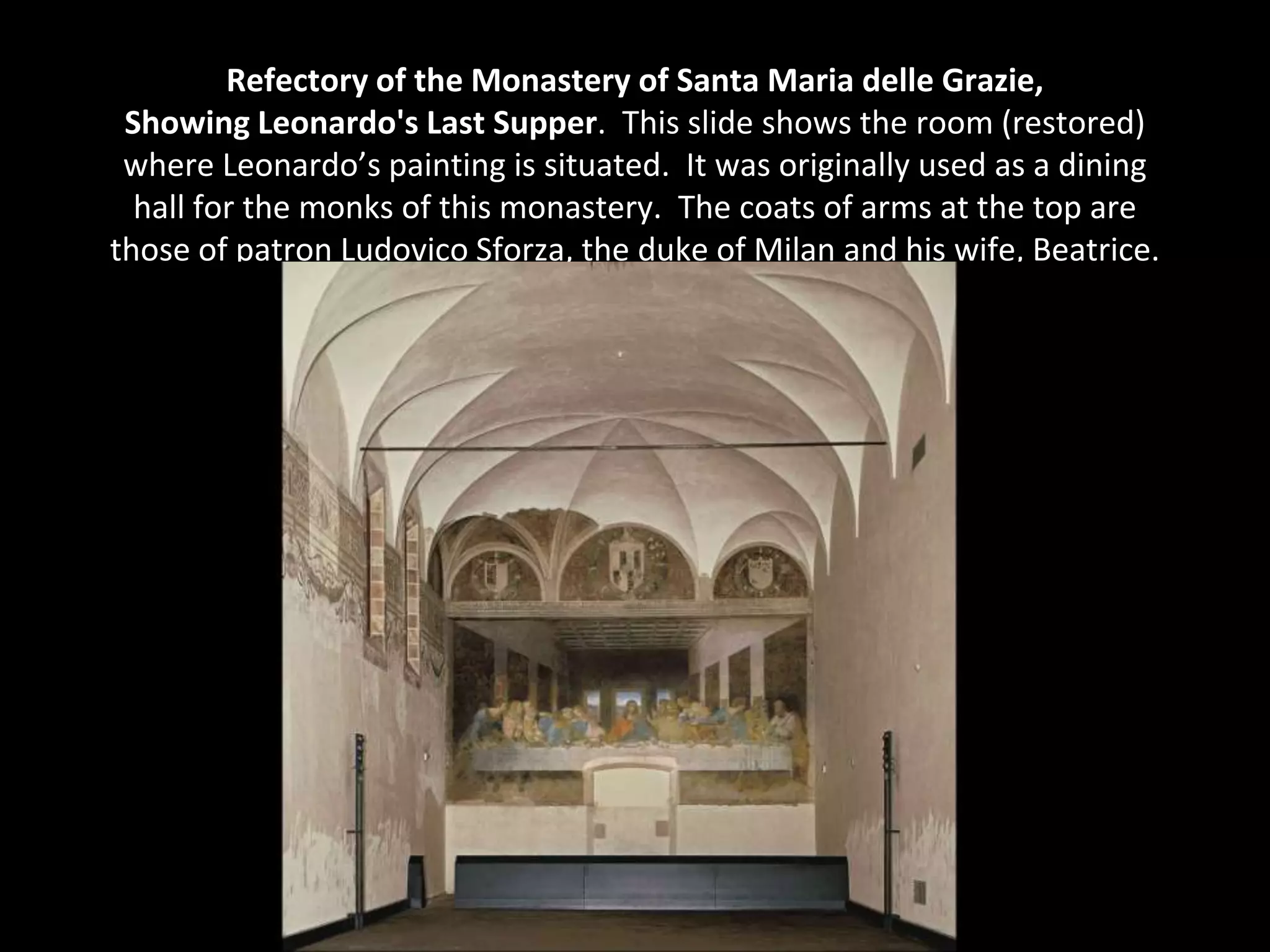
Refectory of the Monastery of Santa Maria delle Grazie,
 Showing Leonardo's Last Supper. This slide shows the room (restored)
 where Leonardo’s painting is situated. It was originally used as a dining
  hall for the monks of this monastery. The coats of arms at the top are
those of patron Ludovico Sforza, the duke of Milan and his wife, Beatrice.
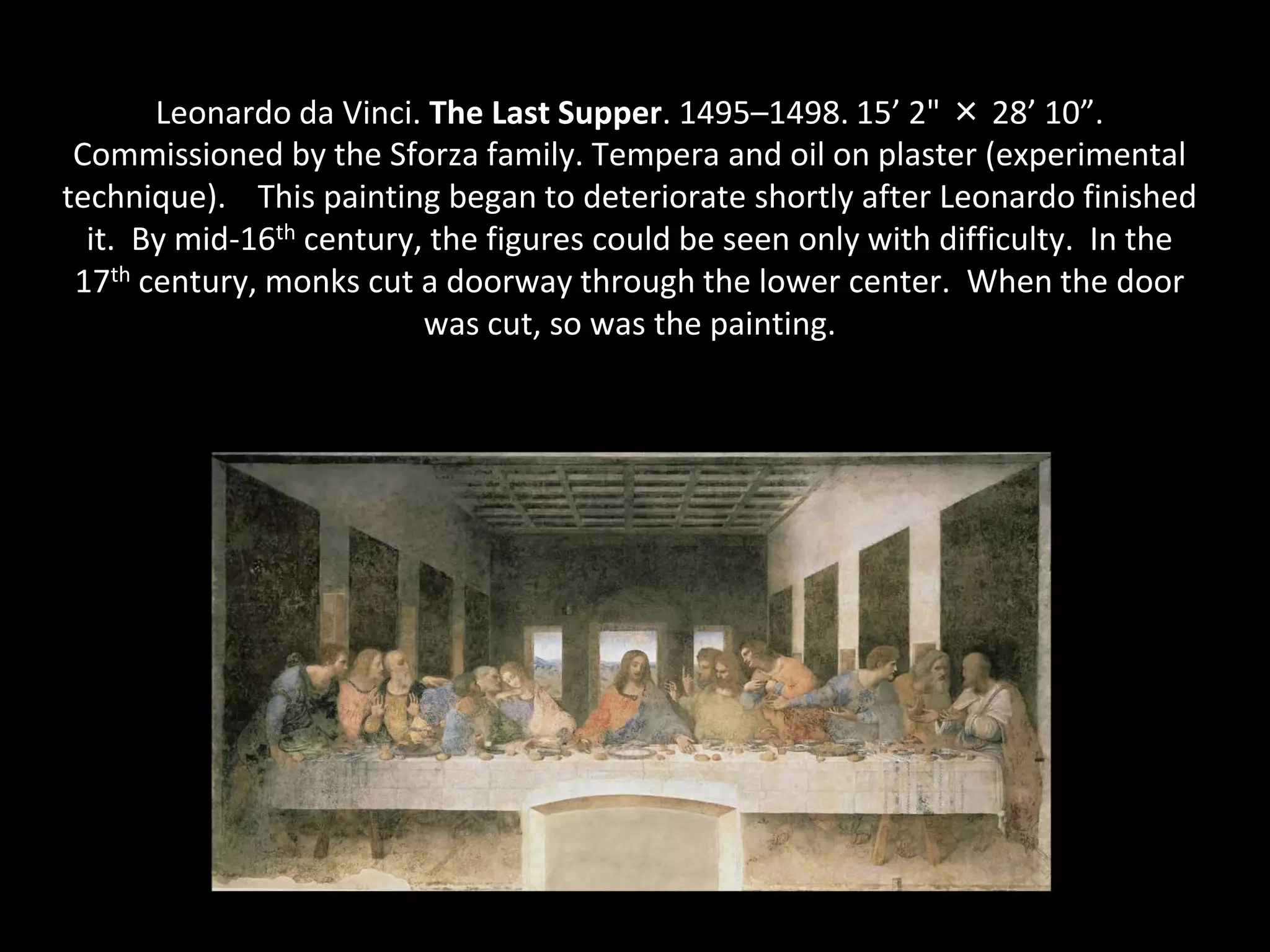
Leonardo da Vinci. The Last Supper. 1495–1498. 15’ 2" × 28’ 10”.
 Commissioned by the Sforza family. Tempera and oil on plaster (experimental
technique). This painting began to deteriorate shortly after Leonardo finished
  it. By mid-16th century, the figures could be seen only with difficulty. In the
 17th century, monks cut a doorway through the lower center. When the door
                          was cut, so was the painting.
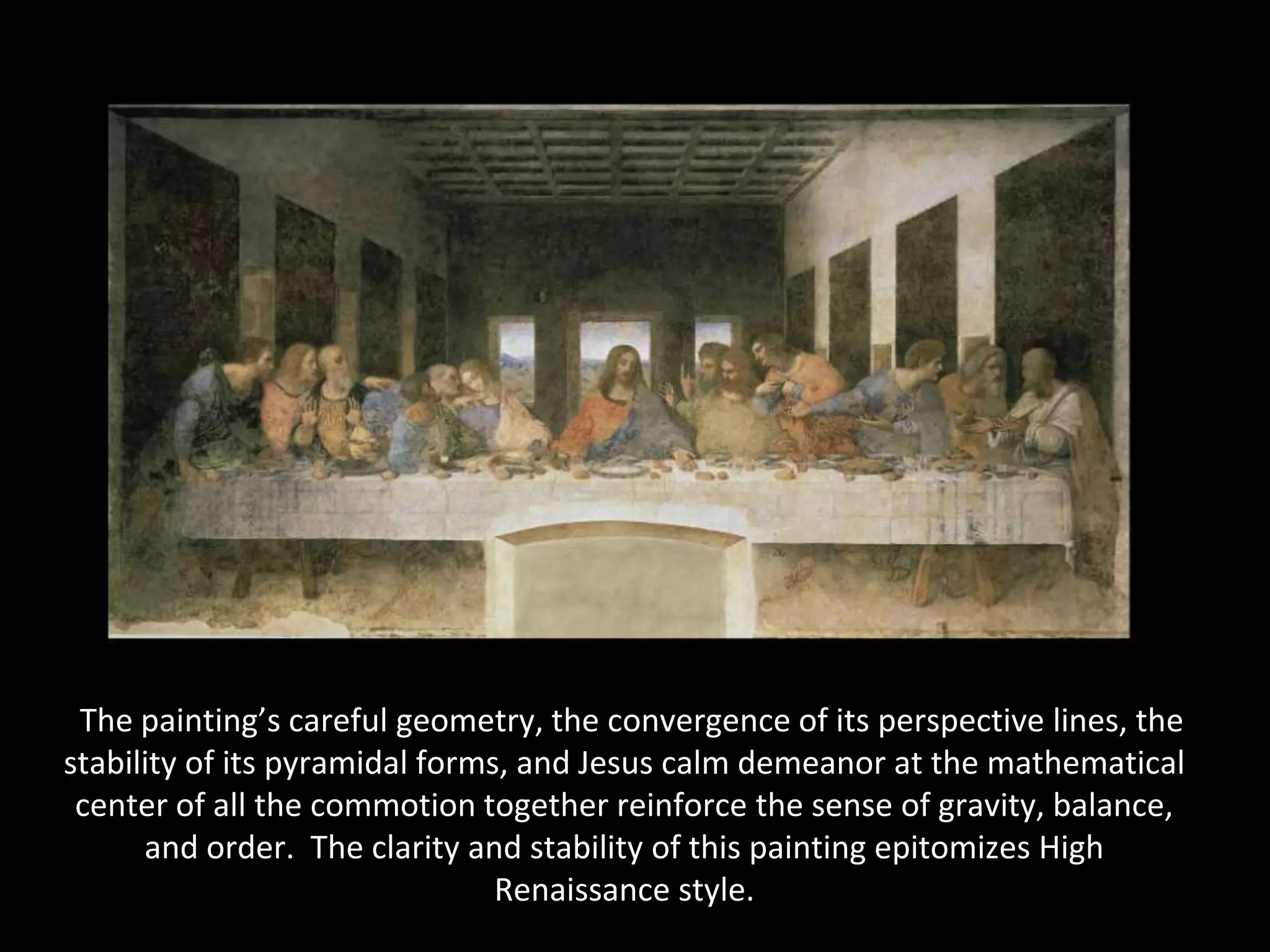
“The painting’s careful geometry, the convergence of its perspective lines, the
stability of its pyramidal forms, and Jesus calm demeanor at the mathematical
 center of all the commotion together reinforce the sense of gravity, balance,
      and order. The clarity and stability of this painting epitomizes High
                                Renaissance style.
The ebb and flow of movement in the Last Supper is the outward effect of
   the inner causes of emotion; the individual movement of each disciple
 typifies their personalities. For example, at the group to the left of Christ:
look at the impulsive surge of shock expressed by Peter's angular motion,
as he elbows his way towards Christ which is carefully contrasted with the
sleepy curves of young John, and set in counterpoint to the tense recoil of
            Judas, those tendons contract like taut bow strings.....

The action of the painting centers around the variety of reactions caused
                         by Christ's pronouncement,
     'I say to you that one of you is about to betray me' (Matt 26:21).
 Christ's own hands, his right closing towards a glass of wine and his left
directed towards a piece of bread, suggest his institution of the Eucharist.
 Peter holds a knife which prefigures his severing of a soldier's ear, and
    which is also pointed towards Bartholomew at the end of the table,
         perhaps in anticipation of the latter's martyrdom by flaying.
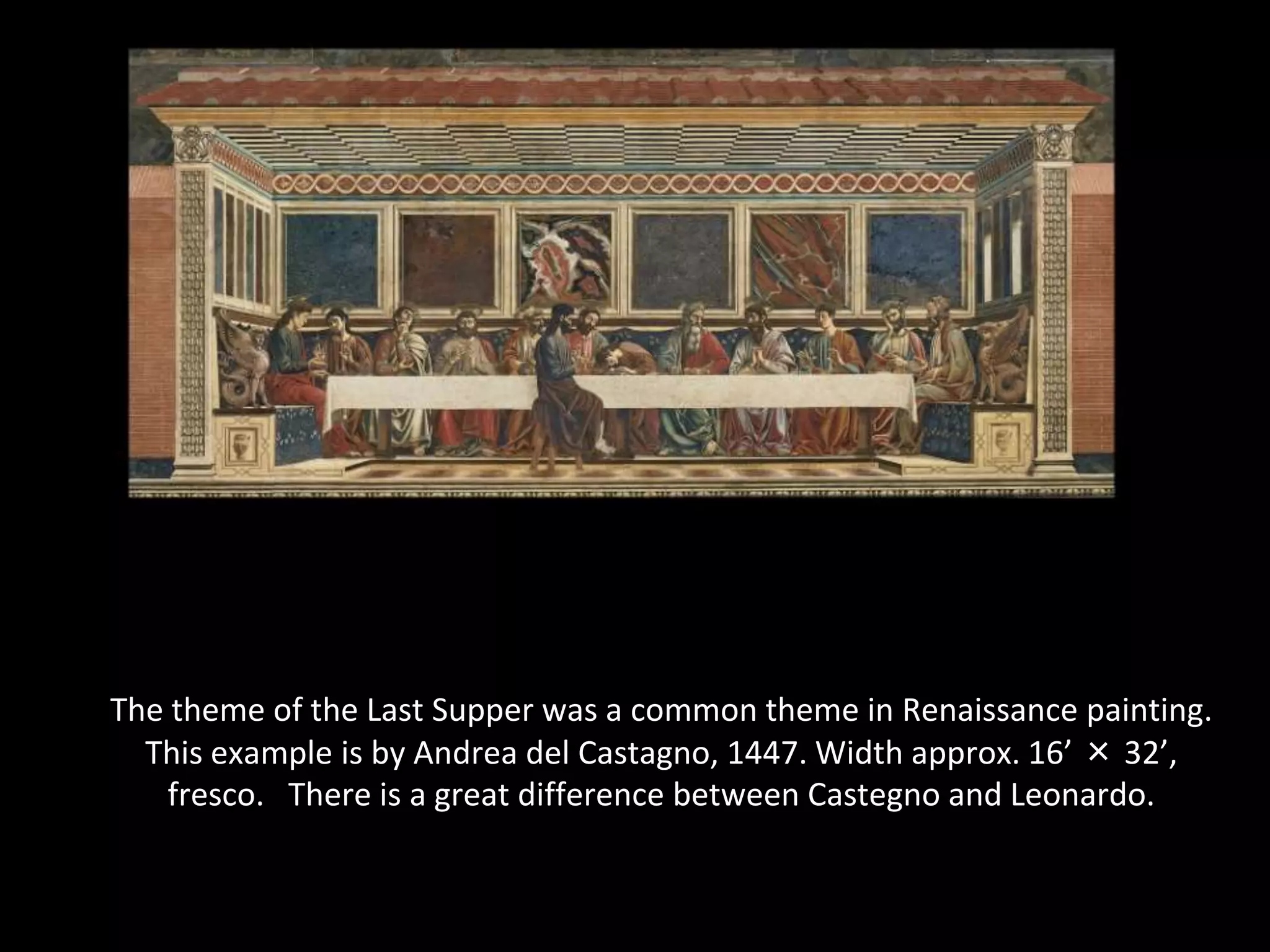
The theme of the Last Supper was a common theme in Renaissance painting.
  This example is by Andrea del Castagno, 1447. Width approx. 16’ × 32’,
    fresco. There is a great difference between Castegno and Leonardo.
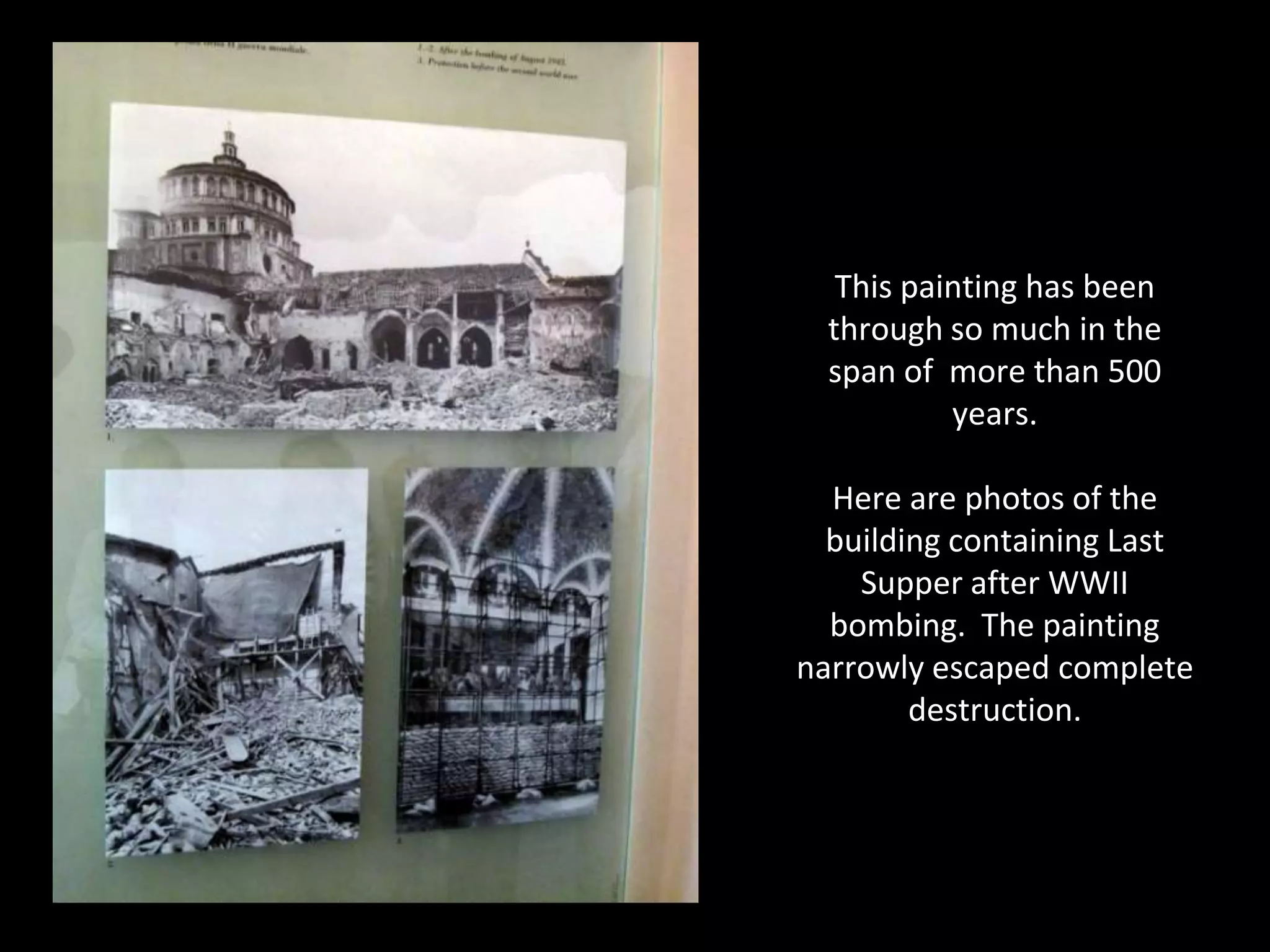
This painting has been
  through so much in the
  span of more than 500
           years.

  Here are photos of the
  building containing Last
    Supper after WWII
  bombing. The painting
narrowly escaped complete
        destruction.
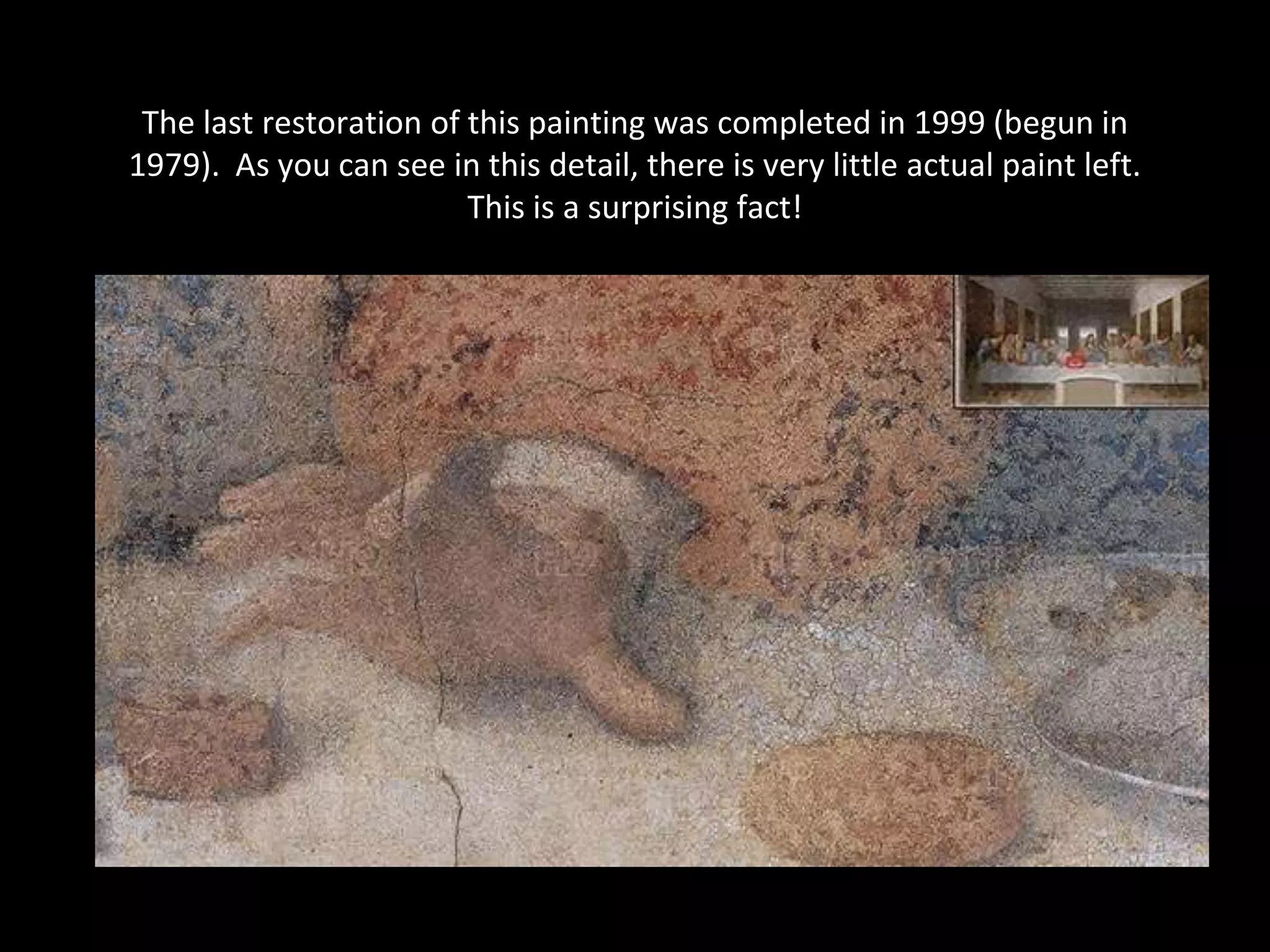
The last restoration of this painting was completed in 1999 (begun in
1979). As you can see in this detail, there is very little actual paint left.
                         This is a surprising fact!

Leonardo's the last supper

  • 1.
    Leonardo da Vinci(1452-1519) was an apprentice for the Florentine painter and sculptor, Verrocchio. Around 1481, he traveled to Milan to work for the ruling Sforza family. He spent a lot of time on military and civil engineering projects, including urban renewal and fortification plans for the city. He also worked for various patrons including the Duke of Milan
  • 2.
    Refectory of theMonastery of Santa Maria delle Grazie, Showing Leonardo's Last Supper. This slide shows the room (restored) where Leonardo’s painting is situated. It was originally used as a dining hall for the monks of this monastery. The coats of arms at the top are those of patron Ludovico Sforza, the duke of Milan and his wife, Beatrice.
  • 3.
    Leonardo da Vinci.The Last Supper. 1495–1498. 15’ 2" × 28’ 10”. Commissioned by the Sforza family. Tempera and oil on plaster (experimental technique). This painting began to deteriorate shortly after Leonardo finished it. By mid-16th century, the figures could be seen only with difficulty. In the 17th century, monks cut a doorway through the lower center. When the door was cut, so was the painting.
  • 4.
    “The painting’s carefulgeometry, the convergence of its perspective lines, the stability of its pyramidal forms, and Jesus calm demeanor at the mathematical center of all the commotion together reinforce the sense of gravity, balance, and order. The clarity and stability of this painting epitomizes High Renaissance style.
  • 5.
    The ebb andflow of movement in the Last Supper is the outward effect of the inner causes of emotion; the individual movement of each disciple typifies their personalities. For example, at the group to the left of Christ: look at the impulsive surge of shock expressed by Peter's angular motion, as he elbows his way towards Christ which is carefully contrasted with the sleepy curves of young John, and set in counterpoint to the tense recoil of Judas, those tendons contract like taut bow strings..... The action of the painting centers around the variety of reactions caused by Christ's pronouncement, 'I say to you that one of you is about to betray me' (Matt 26:21). Christ's own hands, his right closing towards a glass of wine and his left directed towards a piece of bread, suggest his institution of the Eucharist. Peter holds a knife which prefigures his severing of a soldier's ear, and which is also pointed towards Bartholomew at the end of the table, perhaps in anticipation of the latter's martyrdom by flaying.
  • 6.
    The theme ofthe Last Supper was a common theme in Renaissance painting. This example is by Andrea del Castagno, 1447. Width approx. 16’ × 32’, fresco. There is a great difference between Castegno and Leonardo.
  • 7.
    This painting hasbeen through so much in the span of more than 500 years. Here are photos of the building containing Last Supper after WWII bombing. The painting narrowly escaped complete destruction.
  • 8.
    The last restorationof this painting was completed in 1999 (begun in 1979). As you can see in this detail, there is very little actual paint left. This is a surprising fact!