38yo M presents

unconscious after
motorcycle accident. Pt
found 40yds from
scene. Obvious facial
trauma and left lower
extremity trauma.

 T 98.6 HR 120 RR 12 PO2

90% NRB BP 95/60
 GEN:GCS 8
 HEENT: PERRLA, b/l
ecchymosis, midface
unstable, severe facial
edema, blood in
oropharynx
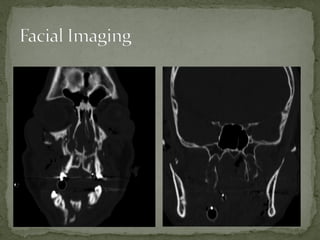
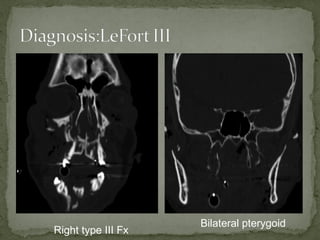
Right type III Fx

Bilateral pterygoid
Intubation
 GCS score plus significant facial instability
Trauma Evaluation
Ophthalmology c/s
Admit
 OR for open reduction and internal fixation
 Trauma Observation for associated injuries
 Airway Management
Physical Exam

 Entire face shifts including eyes and nose

Fracture Line

 Transverse
 Nasofrontal/frontomaxillary sutures->orbit floor-

>zygomatic arch

Highest Rate of CSF Rhinorrhea
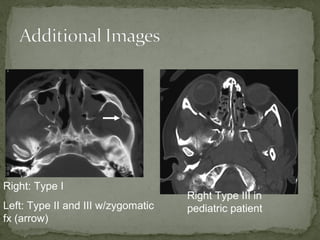
Right: Type I
Left: Type II and III w/zygomatic
fx (arrow)

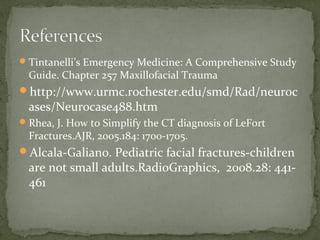
Right Type III in
pediatric patient
 Tintanelli’s Emergency Medicine: A Comprehensive Study

Guide. Chapter 257 Maxillofacial Trauma
http://www.urmc.rochester.edu/smd/Rad/neuroc

ases/Neurocase488.htm

 Rhea, J. How to Simplify the CT diagnosis of LeFort

Fractures.AJR, 2005.184: 1700-1705.
Alcala-Galiano. Pediatric facial fractures-children

are not small adults.RadioGraphics, 2008.28: 441461

Lefort 3 Fracture

  • 2.
    38yo M presents unconsciousafter motorcycle accident. Pt found 40yds from scene. Obvious facial trauma and left lower extremity trauma.  T 98.6 HR 120 RR 12 PO2 90% NRB BP 95/60  GEN:GCS 8  HEENT: PERRLA, b/l ecchymosis, midface unstable, severe facial edema, blood in oropharynx
  • 4.
    Right type IIIFx Bilateral pterygoid
  • 5.
    Intubation  GCS scoreplus significant facial instability Trauma Evaluation Ophthalmology c/s Admit  OR for open reduction and internal fixation  Trauma Observation for associated injuries  Airway Management
  • 6.
    Physical Exam  Entireface shifts including eyes and nose Fracture Line  Transverse  Nasofrontal/frontomaxillary sutures->orbit floor- >zygomatic arch Highest Rate of CSF Rhinorrhea
  • 7.
    Right: Type I Left:Type II and III w/zygomatic fx (arrow) Right Type III in pediatric patient
  • 8.
     Tintanelli’s EmergencyMedicine: A Comprehensive Study Guide. Chapter 257 Maxillofacial Trauma http://www.urmc.rochester.edu/smd/Rad/neuroc ases/Neurocase488.htm  Rhea, J. How to Simplify the CT diagnosis of LeFort Fractures.AJR, 2005.184: 1700-1705. Alcala-Galiano. Pediatric facial fractures-children are not small adults.RadioGraphics, 2008.28: 441461