Jashapara, Knowledge Management: An Integrated Approach, 2nd Edition, © Pearson Education Limited 2011 
Slide 8.1 
Analysis 1: Evidence and the Nature of 
Knowledge in the Digital Age 
Topic: Digital Knowledge Management 
Topic Number: 8
Jashapara, Knowledge Management: An Integrated Approach, 2nd Edition, © Pearson Education Limited 2011 
Slide 8.2 
LEARNING OBJECTIVES 
• To explain the nature of systems thinking 
• To describe the key drivers of knowledge 
management systems 
• To distinguish between the different types of 
knowledge management systems
Jashapara, Knowledge Management: An Integrated Approach, 2nd Edition, © Pearson Education Limited 2011 
Slide 8.3 
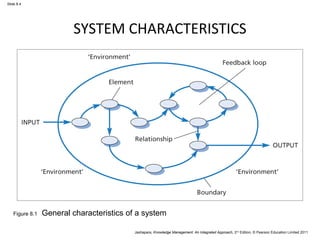
WHAT IS A SYSTEM? 
• Has elements 
• Has relationships between elements – may be causal 
or feedback loops 
• Has a boundary 
• Has an environment outside the boundary 
• Has an input and an output
Jashapara, Knowledge Management: An Integrated Approach, 2nd Edition, © Pearson Education Limited 2011 
Slide 8.4 
SYSTEM CHARACTERISTICS 
Figure 8.1 General characteristics of a system
Jashapara, Knowledge Management: An Integrated Approach, 2nd Edition, © Pearson Education Limited 2011 
Slide 8.5 
DRIVERS OF KM SYSTEMS 
• Deming and Juran – most errors arose from 
ineffective systems rather than operators 
• PDCA: Plan, Do, Check, Act 
• TQM and continuous improvement 
• BPR led to flatter hierarchies 
• Lean production including just-in-time and eliminating 
zero-value activities
Jashapara, Knowledge Management: An Integrated Approach, 2nd Edition, © Pearson Education Limited 2011 
Slide 8.6 
ELECTRONIC DOCUMENT MANAGEMENT 
SYSTEMS 
• Convergence of document processing, imaging and IT 
• Combines text with digital audio and video 
• Forms management allows organisation and 
structure of data 
• Indexing, searching and retrieval
Slide 8.7 
ORGANIZATIONAL CHALLENGES OF EDMS 
• Privacy – sensitive information 
• Currency – can add ‘date of last change’ 
• Performance – whether the existing bandwidth 
• Security – encryption, intelligent firewalls etc. 
Jashapara, Knowledge Management: An Integrated Approach, 2nd Edition, © Pearson Education Limited 2011
Jashapara, Knowledge Management: An Integrated Approach, 2nd Edition, © Pearson Education Limited 2011 
Slide 8.8 
DECISION SUPPORT SYSTEMS 
• Assist decision making by combining data, analytical 
tools and models to support structured and 
unstructured decisions 
• May use statistical models and trend analyses 
• Analyse data to produce graphs, charts and reports 
• May use internal and external data
Jashapara, Knowledge Management: An Integrated Approach, 2nd Edition, © Pearson Education Limited 2011 
Slide 8.9 
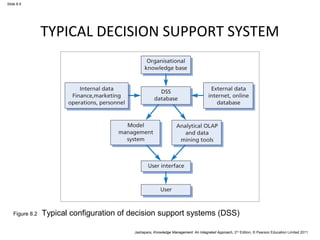
TYPICAL DECISION SUPPORT SYSTEM 
Figure 8.2 Typical configuration of decision support systems (DSS)
Jashapara, Knowledge Management: An Integrated Approach, 2nd Edition, © Pearson Education Limited 2011 
Slide 8.10 
DSS APPLICATIONS 
• Supply chain management to determine implications 
for purchasing and distribution depending on 
customer analysis and segmentation 
• CRM uses datamining to guide pricing, customer 
retention, market share and revenue streams 
• Business scenarios by asking ‘what if’ questions
Jashapara, Knowledge Management: An Integrated Approach, 2nd Edition, © Pearson Education Limited 2011 
Slide 8.11 
Questions to think about 
• How would you go about capturing, storing and 
retrieving tacit knowledge? 
• What are the likely difficulties with a technology 
oriented approach?
Slide 8.12 
GROUP DECISION SUPPORT SYSTEMS 
• Interactive system to facilitate solution of 
unstructured problems working in a group 
• Electronic brainstorming and idea organisation tools 
• Questionnaire tools 
• Voting and priority setting tools 
• Stakeholder identification tools 
• Policy formation tools 
Jashapara, Knowledge Management: An Integrated Approach, 2nd Edition, © Pearson Education Limited 2011
Jashapara, Knowledge Management: An Integrated Approach, 2nd Edition, © Pearson Education Limited 2011 
Slide 8.13 
EXECUTIVE SUPPORT SYSTEMS 
• Help senior managers with unstructured problems 
• Avoid information overload by filtering organisational 
data into graphical form 
• Can ‘drill down’ to lower levels of detail 
• Can use OLAP tools
Jashapara, Knowledge Management: An Integrated Approach, 2nd Edition, © Pearson Education Limited 2011 
Slide 8.14 
PERFORMANCE SUPPORT SYSTEMS 
• Assist groups or individuals to perform certain tasks 
• May contain multimedia delivery and use techniques 
such as expert systems and natural language 
recognition 
• Examples: assisting with tax returns or creating an 
entry for a financial transaction
Slide 8.15 
WORKFLOW MANAGEMENT SYSTEMS 
• Allows documents and other forms of knowledge to be 
routed among individuals and applications according 
to predefined processes 
• Processes may be predefined or vary according to 
certain rules 
• Workflows set up as users, types of information, 
processes, timing, alternatives etc. 
• May alert users to problems that need resolution 
Jashapara, Knowledge Management: An Integrated Approach, 2nd Edition, © Pearson Education Limited 2011
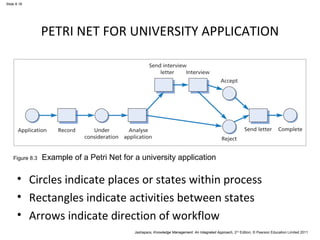
Figure 8.3 Example of a Petri Net for a university application 
Jashapara, Knowledge Management: An Integrated Approach, 2nd Edition, © Pearson Education Limited 2011 
Slide 8.16 
PETRI NET FOR UNIVERSITY APPLICATION 
• Circles indicate places or states within process 
• Rectangles indicate activities between states 
• Arrows indicate direction of workflow
Slide 8.17 
CUSTOMER RELATIONSHIP MANAGEMENT 
SYSTEMS 
• To coordinate all business and technological processes 
dealing with the customer 
• Share customer information between sales, marketing 
finance and service divisions 
• Consolidate customer data from various sources and 
use analytical tools to answer questions 
Jashapara, Knowledge Management: An Integrated Approach, 2nd Edition, © Pearson Education Limited 2011
Slide 8.18 
WHAT’S THE FINAL GOAL OF KM SYSTEMS? 
• Cost savings? 
• Quality control and assurance 
• TQM – cultural change 
• Partnering 
• Benchmarking 
• BPR – radical change by questioning organisational 
processes 
• Lean production by using less human effort, 
manufacturing space and equipment by focusing on 
value 
Jashapara, Knowledge Management: An Integrated Approach, 2nd Edition, © Pearson Education Limited 2011
Slide 8.19 
Reading and preparatory work to be done 
Read: 
• Jashapara, A. (2011) “ Knowledge Management: 
An Integrated Approach” Pearson Education, 
Chapter 8 
Work to be done before the seminar: 
• Carry out all the reading above 
• Answer the questions on the handout 
• Bring your work to the seminar 
19 
Jashapara, Knowledge Management: An Integrated Approach, 2nd Edition, © Pearson Education Limited 2011
Jashapara, Knowledge Management: An Integrated Approach, 2nd Edition, © Pearson Education Limited 2011 
Slide 8.20 
Essential work for next week 
• Please consult the OLE for details of: 
– Essential readings* 
– Seminar/workshop preparation work* 
– Recommended further readings 
– Any additional learning 
* Essential readings and preparation work must always be completed in time 
for the next session 
20
Jashapara, Knowledge Management: An Integrated Approach, 2nd Edition, © Pearson Education Limited 2011 
Slide 8.21 
End of presentation 
© Pearson College 2013

Lecture 8 digital knowledge management

  • 1.
    Jashapara, Knowledge Management:An Integrated Approach, 2nd Edition, © Pearson Education Limited 2011 Slide 8.1 Analysis 1: Evidence and the Nature of Knowledge in the Digital Age Topic: Digital Knowledge Management Topic Number: 8
  • 2.
    Jashapara, Knowledge Management:An Integrated Approach, 2nd Edition, © Pearson Education Limited 2011 Slide 8.2 LEARNING OBJECTIVES • To explain the nature of systems thinking • To describe the key drivers of knowledge management systems • To distinguish between the different types of knowledge management systems
  • 3.
    Jashapara, Knowledge Management:An Integrated Approach, 2nd Edition, © Pearson Education Limited 2011 Slide 8.3 WHAT IS A SYSTEM? • Has elements • Has relationships between elements – may be causal or feedback loops • Has a boundary • Has an environment outside the boundary • Has an input and an output
  • 4.
    Jashapara, Knowledge Management:An Integrated Approach, 2nd Edition, © Pearson Education Limited 2011 Slide 8.4 SYSTEM CHARACTERISTICS Figure 8.1 General characteristics of a system
  • 5.
    Jashapara, Knowledge Management:An Integrated Approach, 2nd Edition, © Pearson Education Limited 2011 Slide 8.5 DRIVERS OF KM SYSTEMS • Deming and Juran – most errors arose from ineffective systems rather than operators • PDCA: Plan, Do, Check, Act • TQM and continuous improvement • BPR led to flatter hierarchies • Lean production including just-in-time and eliminating zero-value activities
  • 6.
    Jashapara, Knowledge Management:An Integrated Approach, 2nd Edition, © Pearson Education Limited 2011 Slide 8.6 ELECTRONIC DOCUMENT MANAGEMENT SYSTEMS • Convergence of document processing, imaging and IT • Combines text with digital audio and video • Forms management allows organisation and structure of data • Indexing, searching and retrieval
  • 7.
    Slide 8.7 ORGANIZATIONALCHALLENGES OF EDMS • Privacy – sensitive information • Currency – can add ‘date of last change’ • Performance – whether the existing bandwidth • Security – encryption, intelligent firewalls etc. Jashapara, Knowledge Management: An Integrated Approach, 2nd Edition, © Pearson Education Limited 2011
  • 8.
    Jashapara, Knowledge Management:An Integrated Approach, 2nd Edition, © Pearson Education Limited 2011 Slide 8.8 DECISION SUPPORT SYSTEMS • Assist decision making by combining data, analytical tools and models to support structured and unstructured decisions • May use statistical models and trend analyses • Analyse data to produce graphs, charts and reports • May use internal and external data
  • 9.
    Jashapara, Knowledge Management:An Integrated Approach, 2nd Edition, © Pearson Education Limited 2011 Slide 8.9 TYPICAL DECISION SUPPORT SYSTEM Figure 8.2 Typical configuration of decision support systems (DSS)
  • 10.
    Jashapara, Knowledge Management:An Integrated Approach, 2nd Edition, © Pearson Education Limited 2011 Slide 8.10 DSS APPLICATIONS • Supply chain management to determine implications for purchasing and distribution depending on customer analysis and segmentation • CRM uses datamining to guide pricing, customer retention, market share and revenue streams • Business scenarios by asking ‘what if’ questions
  • 11.
    Jashapara, Knowledge Management:An Integrated Approach, 2nd Edition, © Pearson Education Limited 2011 Slide 8.11 Questions to think about • How would you go about capturing, storing and retrieving tacit knowledge? • What are the likely difficulties with a technology oriented approach?
  • 12.
    Slide 8.12 GROUPDECISION SUPPORT SYSTEMS • Interactive system to facilitate solution of unstructured problems working in a group • Electronic brainstorming and idea organisation tools • Questionnaire tools • Voting and priority setting tools • Stakeholder identification tools • Policy formation tools Jashapara, Knowledge Management: An Integrated Approach, 2nd Edition, © Pearson Education Limited 2011
  • 13.
    Jashapara, Knowledge Management:An Integrated Approach, 2nd Edition, © Pearson Education Limited 2011 Slide 8.13 EXECUTIVE SUPPORT SYSTEMS • Help senior managers with unstructured problems • Avoid information overload by filtering organisational data into graphical form • Can ‘drill down’ to lower levels of detail • Can use OLAP tools
  • 14.
    Jashapara, Knowledge Management:An Integrated Approach, 2nd Edition, © Pearson Education Limited 2011 Slide 8.14 PERFORMANCE SUPPORT SYSTEMS • Assist groups or individuals to perform certain tasks • May contain multimedia delivery and use techniques such as expert systems and natural language recognition • Examples: assisting with tax returns or creating an entry for a financial transaction
  • 15.
    Slide 8.15 WORKFLOWMANAGEMENT SYSTEMS • Allows documents and other forms of knowledge to be routed among individuals and applications according to predefined processes • Processes may be predefined or vary according to certain rules • Workflows set up as users, types of information, processes, timing, alternatives etc. • May alert users to problems that need resolution Jashapara, Knowledge Management: An Integrated Approach, 2nd Edition, © Pearson Education Limited 2011
  • 16.
    Figure 8.3 Exampleof a Petri Net for a university application Jashapara, Knowledge Management: An Integrated Approach, 2nd Edition, © Pearson Education Limited 2011 Slide 8.16 PETRI NET FOR UNIVERSITY APPLICATION • Circles indicate places or states within process • Rectangles indicate activities between states • Arrows indicate direction of workflow
  • 17.
    Slide 8.17 CUSTOMERRELATIONSHIP MANAGEMENT SYSTEMS • To coordinate all business and technological processes dealing with the customer • Share customer information between sales, marketing finance and service divisions • Consolidate customer data from various sources and use analytical tools to answer questions Jashapara, Knowledge Management: An Integrated Approach, 2nd Edition, © Pearson Education Limited 2011
  • 18.
    Slide 8.18 WHAT’STHE FINAL GOAL OF KM SYSTEMS? • Cost savings? • Quality control and assurance • TQM – cultural change • Partnering • Benchmarking • BPR – radical change by questioning organisational processes • Lean production by using less human effort, manufacturing space and equipment by focusing on value Jashapara, Knowledge Management: An Integrated Approach, 2nd Edition, © Pearson Education Limited 2011
  • 19.
    Slide 8.19 Readingand preparatory work to be done Read: • Jashapara, A. (2011) “ Knowledge Management: An Integrated Approach” Pearson Education, Chapter 8 Work to be done before the seminar: • Carry out all the reading above • Answer the questions on the handout • Bring your work to the seminar 19 Jashapara, Knowledge Management: An Integrated Approach, 2nd Edition, © Pearson Education Limited 2011
  • 20.
    Jashapara, Knowledge Management:An Integrated Approach, 2nd Edition, © Pearson Education Limited 2011 Slide 8.20 Essential work for next week • Please consult the OLE for details of: – Essential readings* – Seminar/workshop preparation work* – Recommended further readings – Any additional learning * Essential readings and preparation work must always be completed in time for the next session 20
  • 21.
    Jashapara, Knowledge Management:An Integrated Approach, 2nd Edition, © Pearson Education Limited 2011 Slide 8.21 End of presentation © Pearson College 2013