Topic 5:
Noise Hazard
Topic Learning Outcome :
1)Explains the characteristic of sound and vibration and its risk.
2) Describe the identifying and assessing of noise hazard in
industries and its control and prevention strategies.
TOPIC
CONTENTs:
5.1 Characteristic of sound and vibration
5.2 Hazard level and its risk
5.3 Identifying and assessing hazardous noise in
industries
5.4 Noise hazard control and prevention strategies.
5.1 Characteristic of sound and vibration
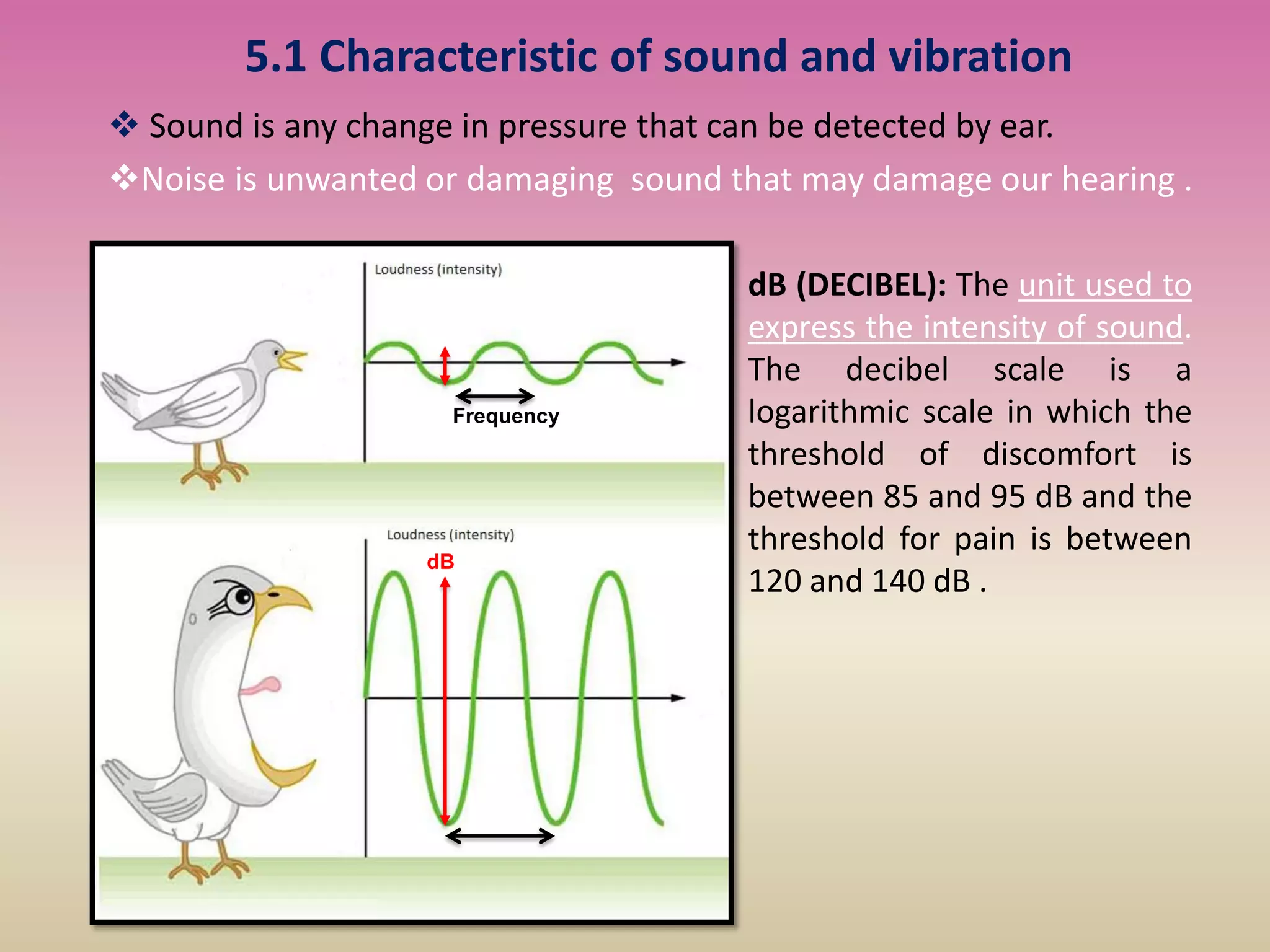
 Sound is any change in pressure that can be detected by ear.
Noise is unwanted or damaging sound that may damage our hearing .
dB (DECIBEL): The unit used to
express the intensity of sound.
The decibel scale is a
logarithmic scale in which the
threshold of discomfort is
between 85 and 95 dB and the
threshold for pain is between
120 and 140 dB .
Frequency
dB
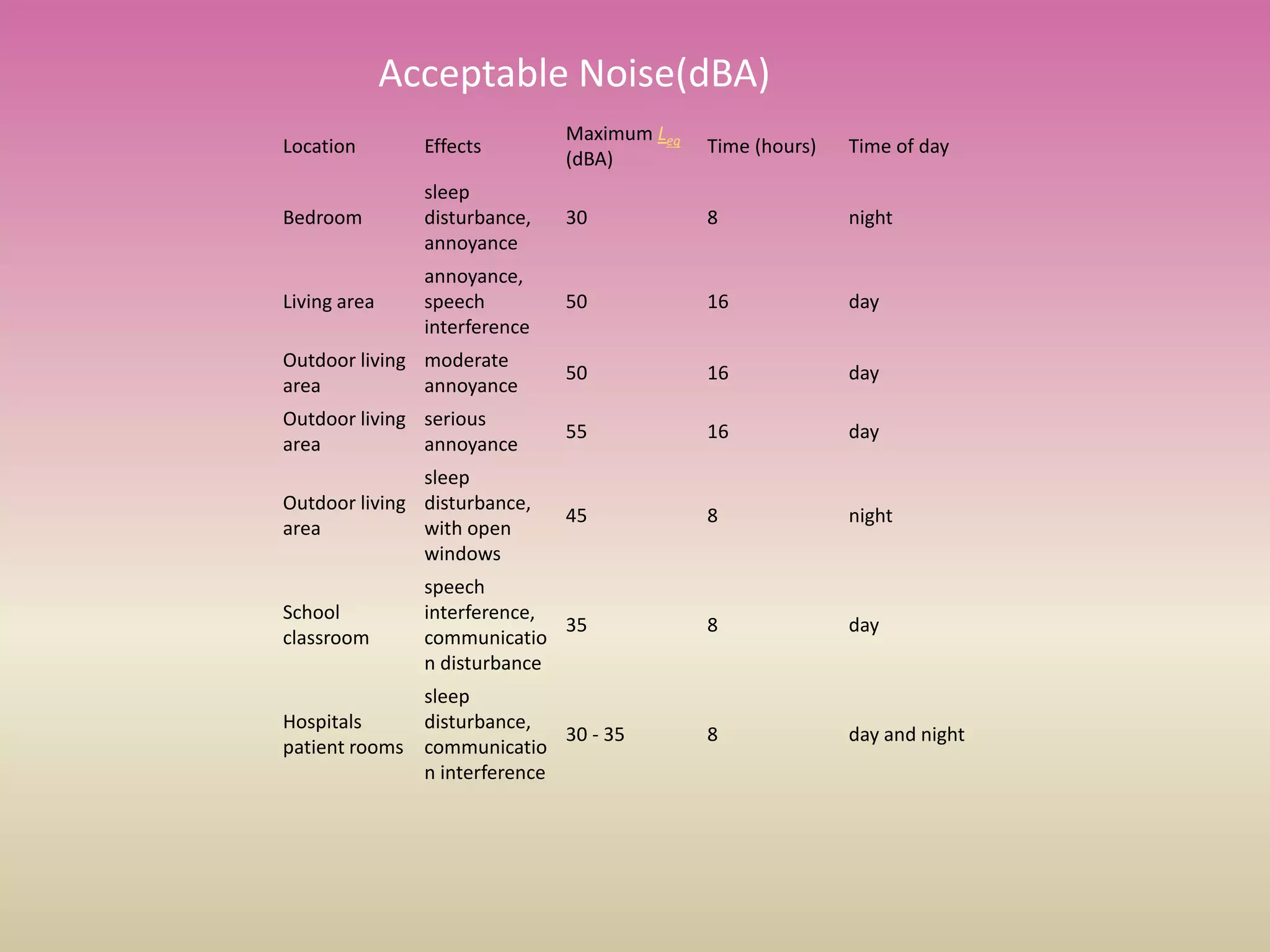
Acceptable Noise(dBA)
Location Effects
Maximum Leq
(dBA)
Time (hours) Time of day
Bedroom
sleep
disturbance,
annoyance
30 8 night
Living area
annoyance,
speech
interference
50 16 day
Outdoor living
area
moderate
annoyance
50 16 day
Outdoor living
area
serious
annoyance
55 16 day
Outdoor living
area
sleep
disturbance,
with open
windows
45 8 night
School
classroom
speech
interference,
communicatio
n disturbance
35 8 day
Hospitals
patient rooms
sleep
disturbance,
communicatio
n interference
30 - 35 8 day and night
5.1 Characteristic of sound and vibration
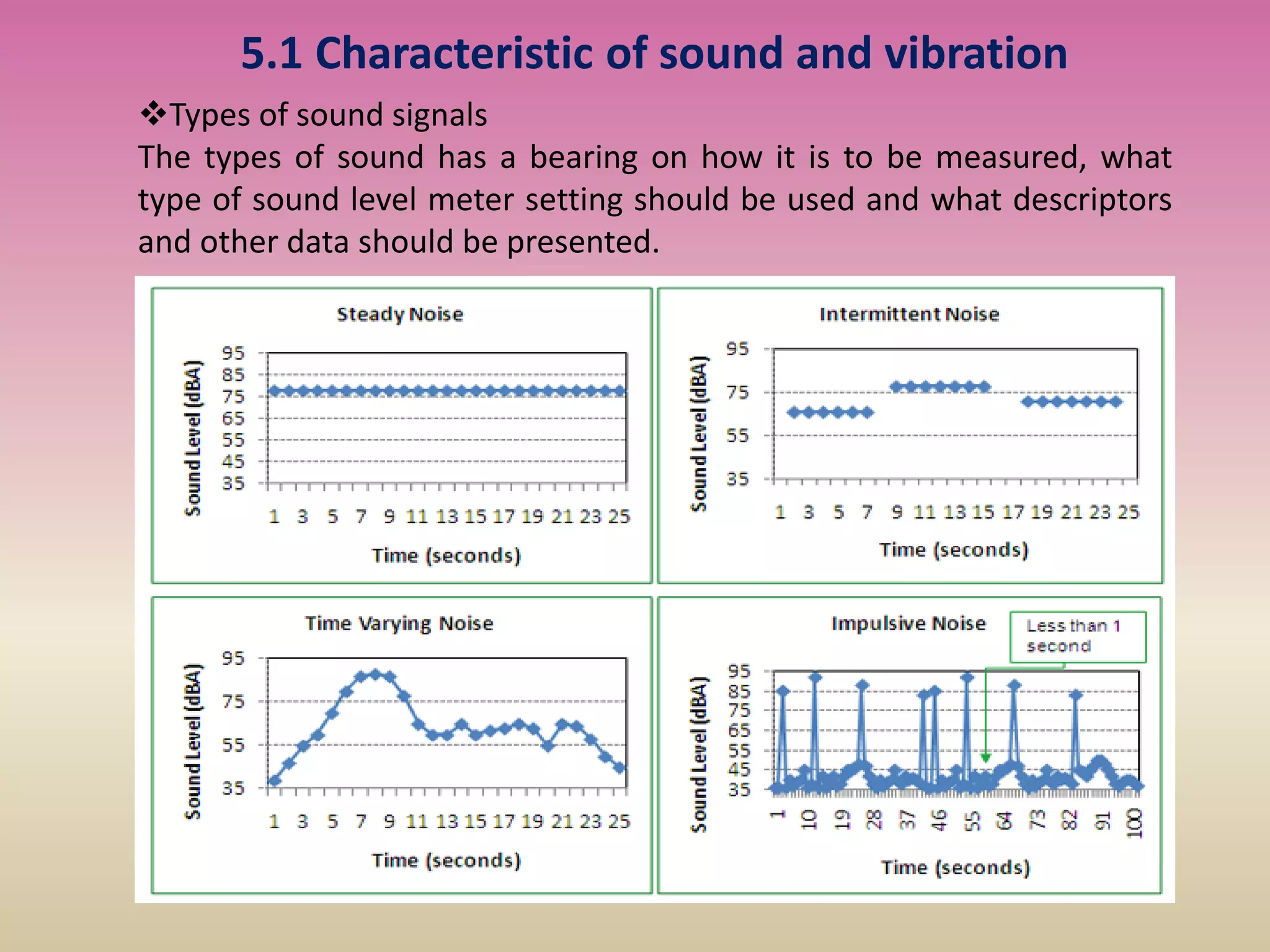
Types of sound signals
The types of sound has a bearing on how it is to be measured, what
type of sound level meter setting should be used and what descriptors
and other data should be presented.
5.2 Hazard level and its risk
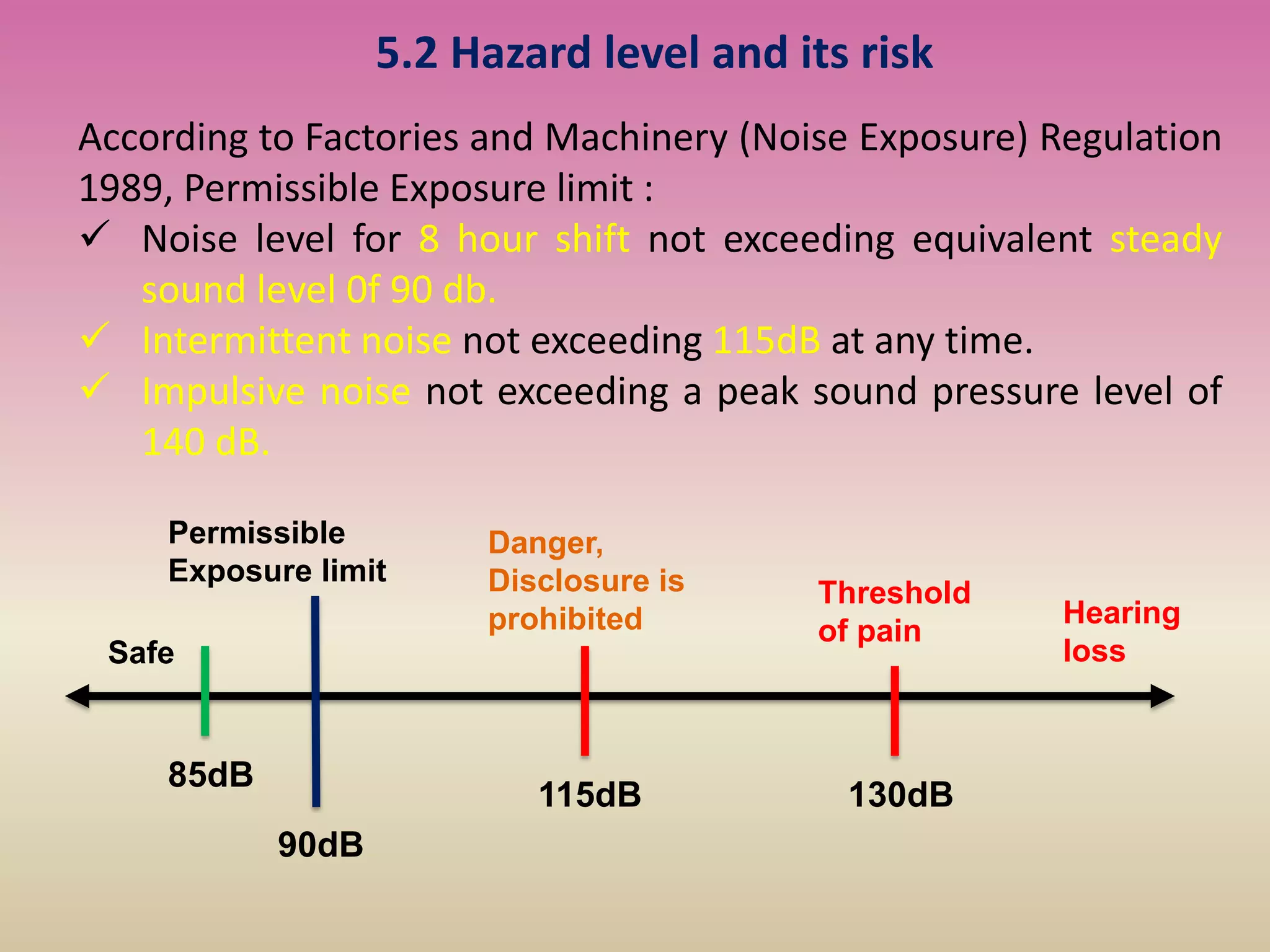
According to Factories and Machinery (Noise Exposure) Regulation
1989, Permissible Exposure limit :
 Noise level for 8 hour shift not exceeding equivalent steady
sound level 0f 90 db.
 Intermittent noise not exceeding 115dB at any time.
 Impulsive noise not exceeding a peak sound pressure level of
140 dB.
Safe
85dB
90dB
115dB 130dB
Permissible
Exposure limit
Danger,
Disclosure is
prohibited
Threshold
of pain
Hearing
loss
5.2 Hazard level and its risk
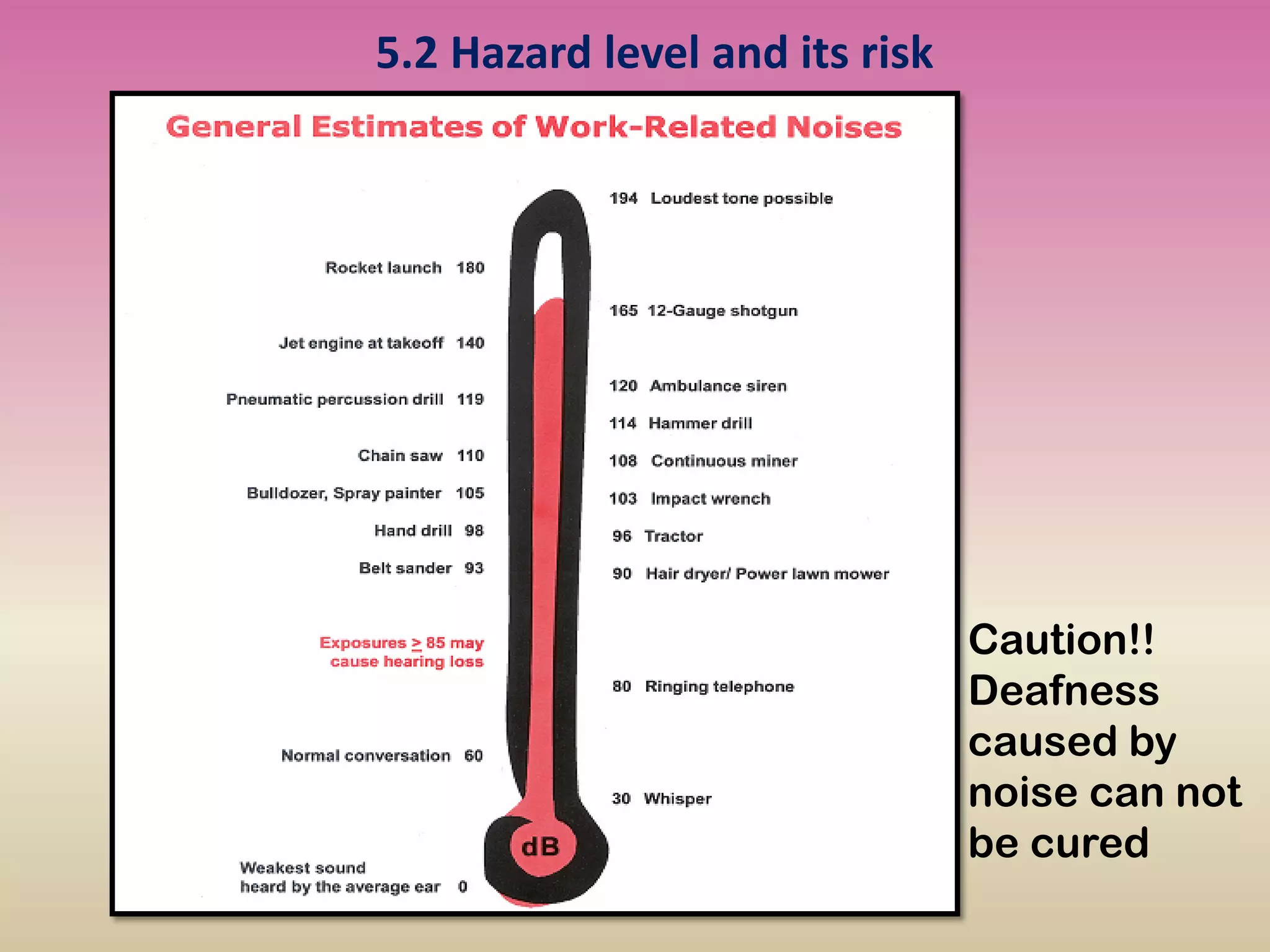
Caution!!
Deafness
caused by
noise can not
be cured
5.3 Identifying and assessing hazardous noise in
industries
 Noise identification and assessment may be simple or complex,
depending on the type of workplaces, number of workers and
the information already available regarding noise exposure
level.
The general aim of a noise assessment is to:
• Identify all persons likely to be exposed to excessive noise.
• Obtain information on noise sources and associated work
practices.
• Check the effectiveness of measures taken to reduce noise
exposure or the risks from noise exposure.
• Help choose appropriate personal hearing protectors for
persons exposed to risks from excessive noise; and
• Define hearing protection areas at work.
5.3 Identifying and assessing hazardous noise in
industries
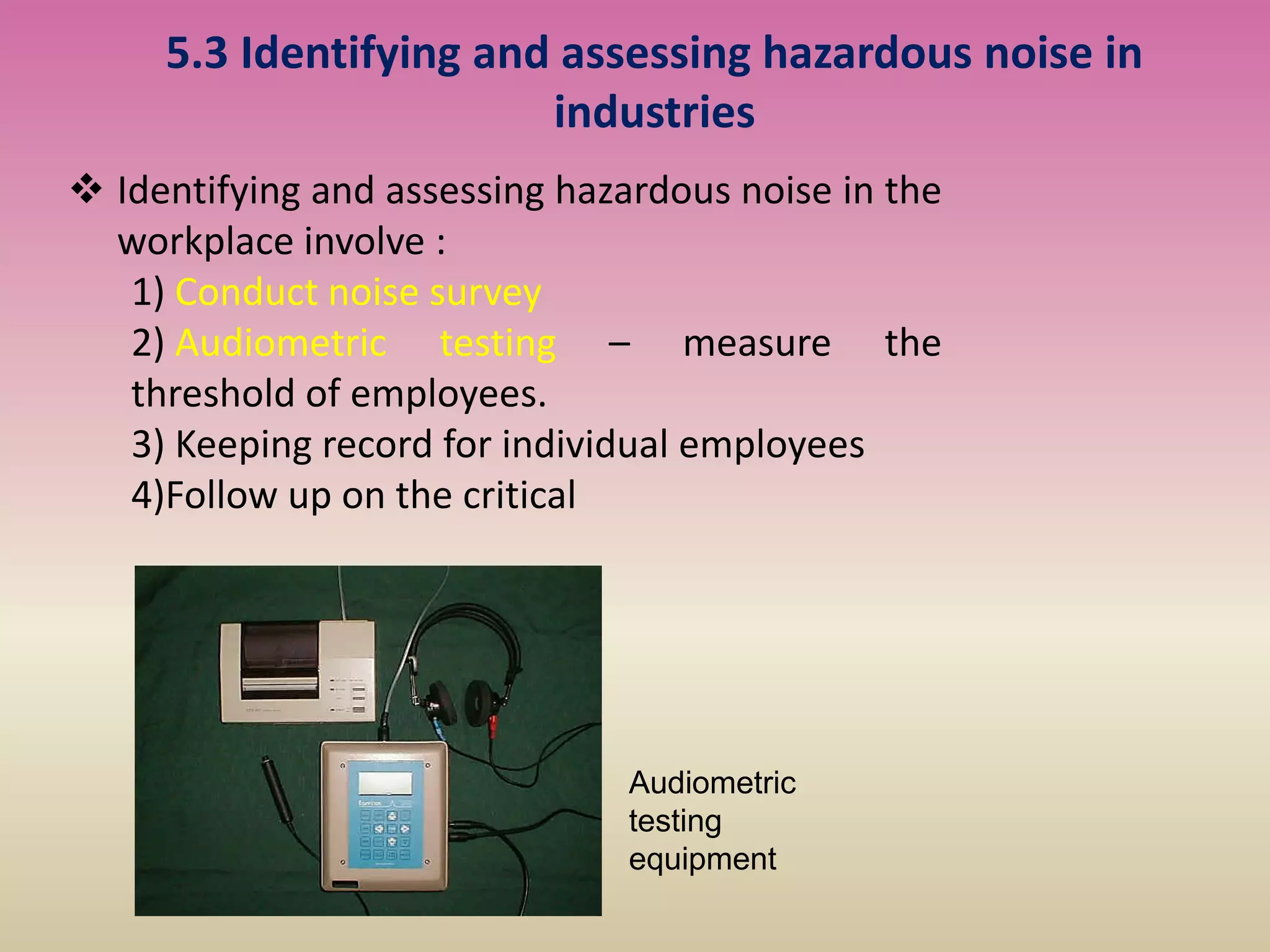
 Identifying and assessing hazardous noise in the
workplace involve :
1) Conduct noise survey
2) Audiometric testing – measure the
threshold of employees.
3) Keeping record for individual employees
4)Follow up on the critical
Audiometric
testing
equipment
5.3 Identifying and assessing hazardous noise in
industries
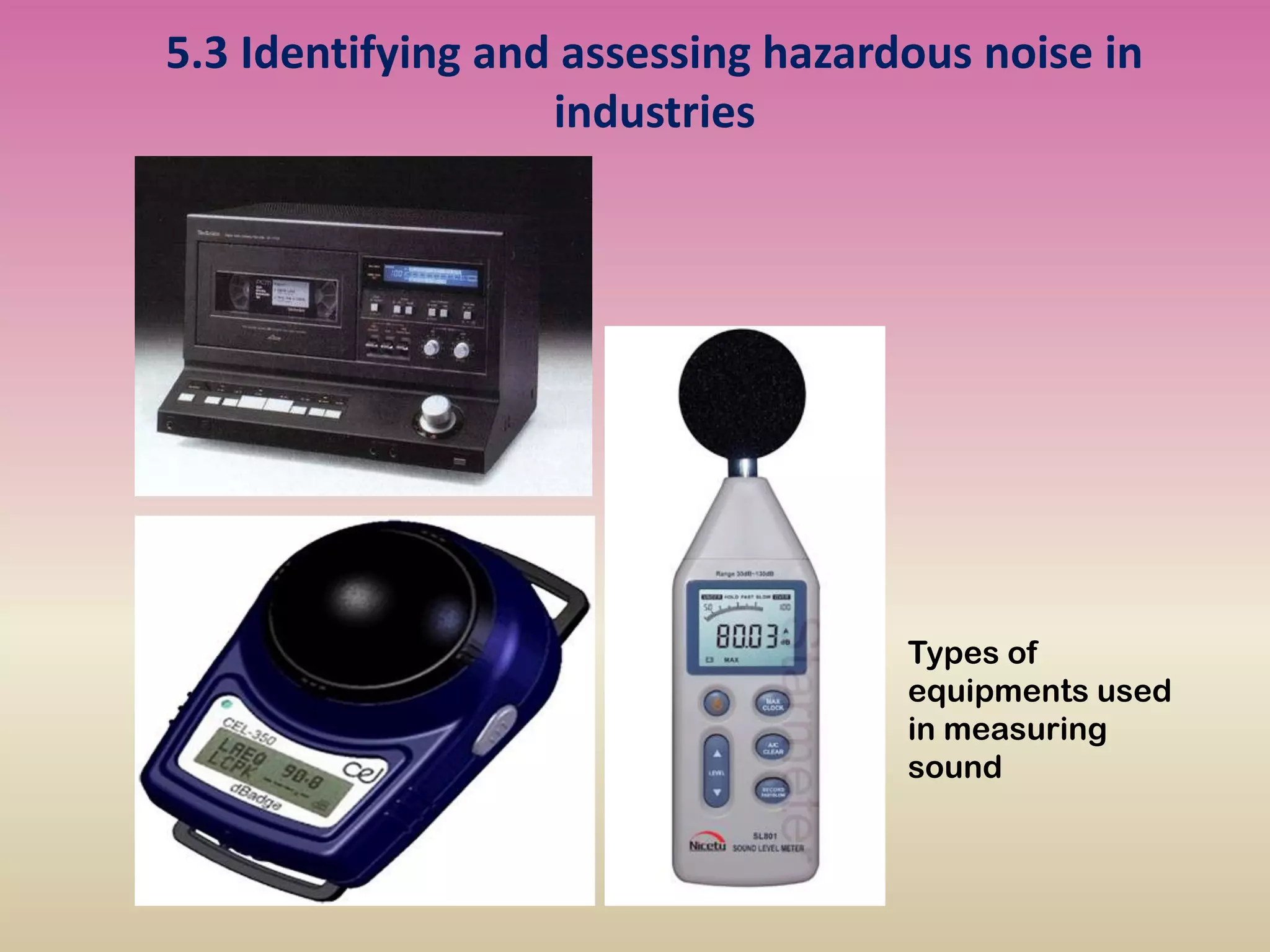
Types of
equipments used
in measuring
sound
5.3 Identifying and assessing hazardous noise in
industries
.
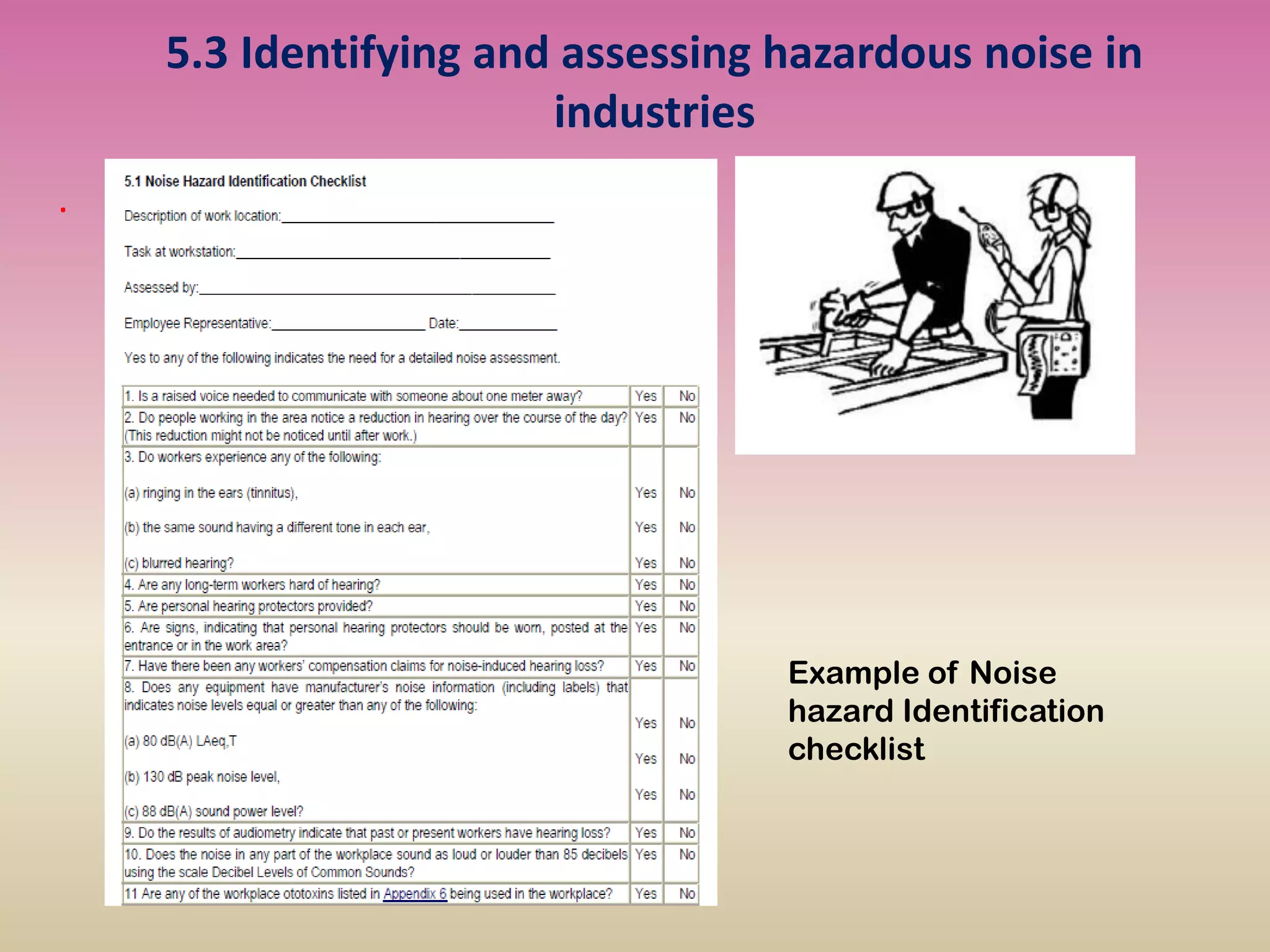
Example of Noise
hazard Identification
checklist
5.3 Identifying and assessing hazardous noise in
industries
.
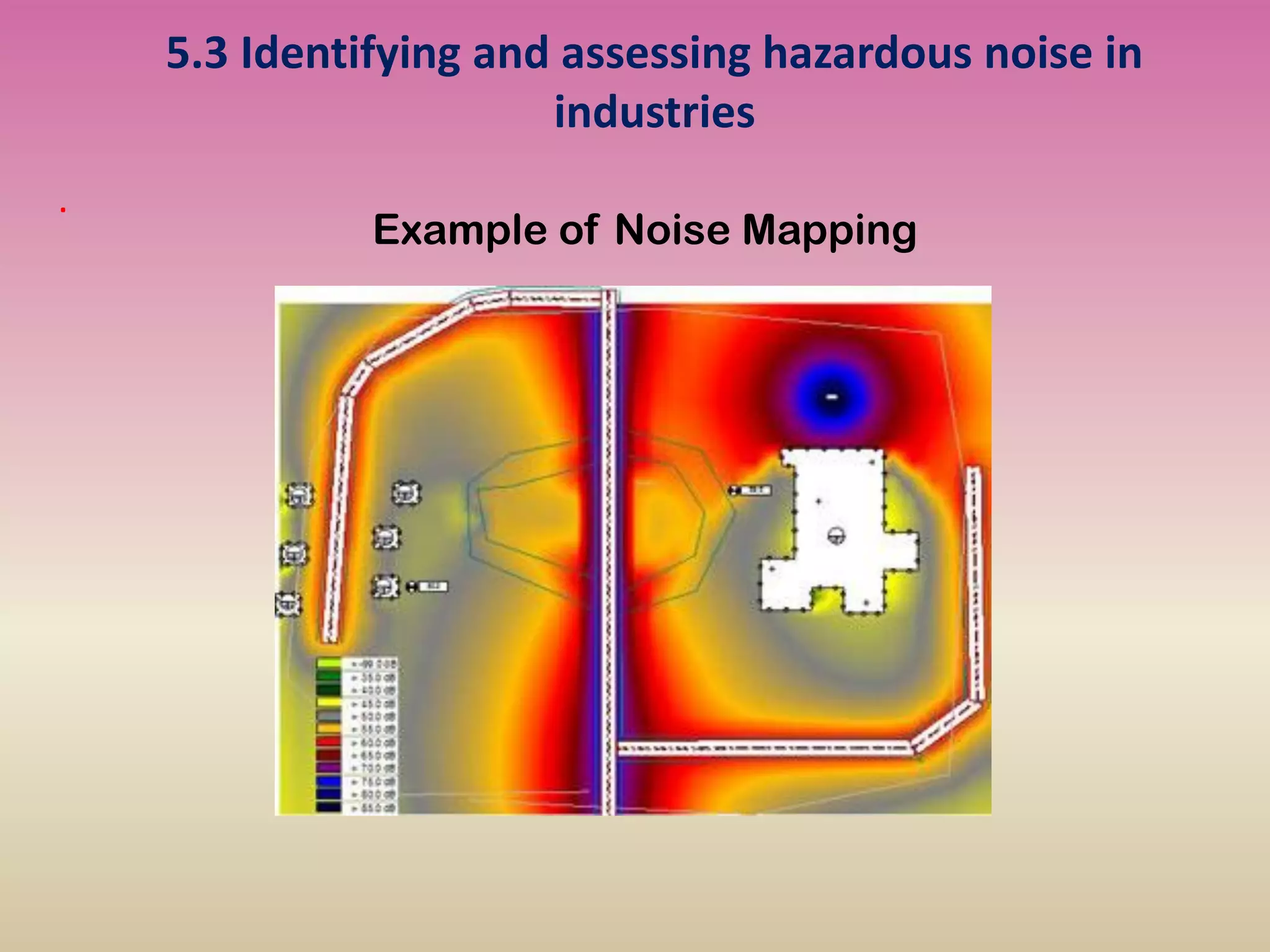
Example of Noise Mapping
5.4 Noise hazard control and prevention strategies.
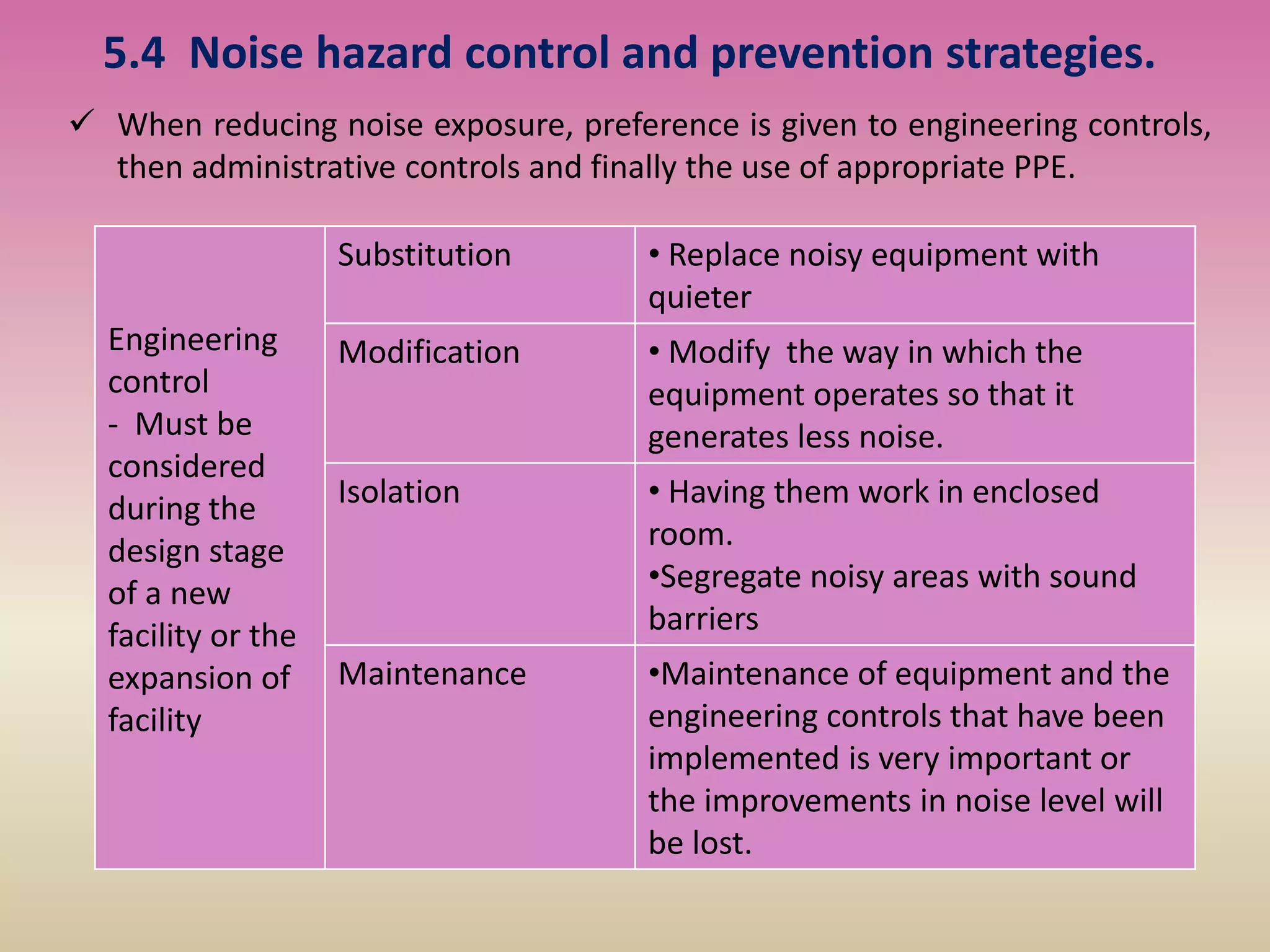
 When reducing noise exposure, preference is given to engineering controls,
then administrative controls and finally the use of appropriate PPE.
Engineering
control
- Must be
considered
during the
design stage
of a new
facility or the
expansion of
facility
Substitution • Replace noisy equipment with
quieter
Modification • Modify the way in which the
equipment operates so that it
generates less noise.
Isolation • Having them work in enclosed
room.
•Segregate noisy areas with sound
barriers
Maintenance •Maintenance of equipment and the
engineering controls that have been
implemented is very important or
the improvements in noise level will
be lost.
5.4 Noise hazard control and prevention strategies.
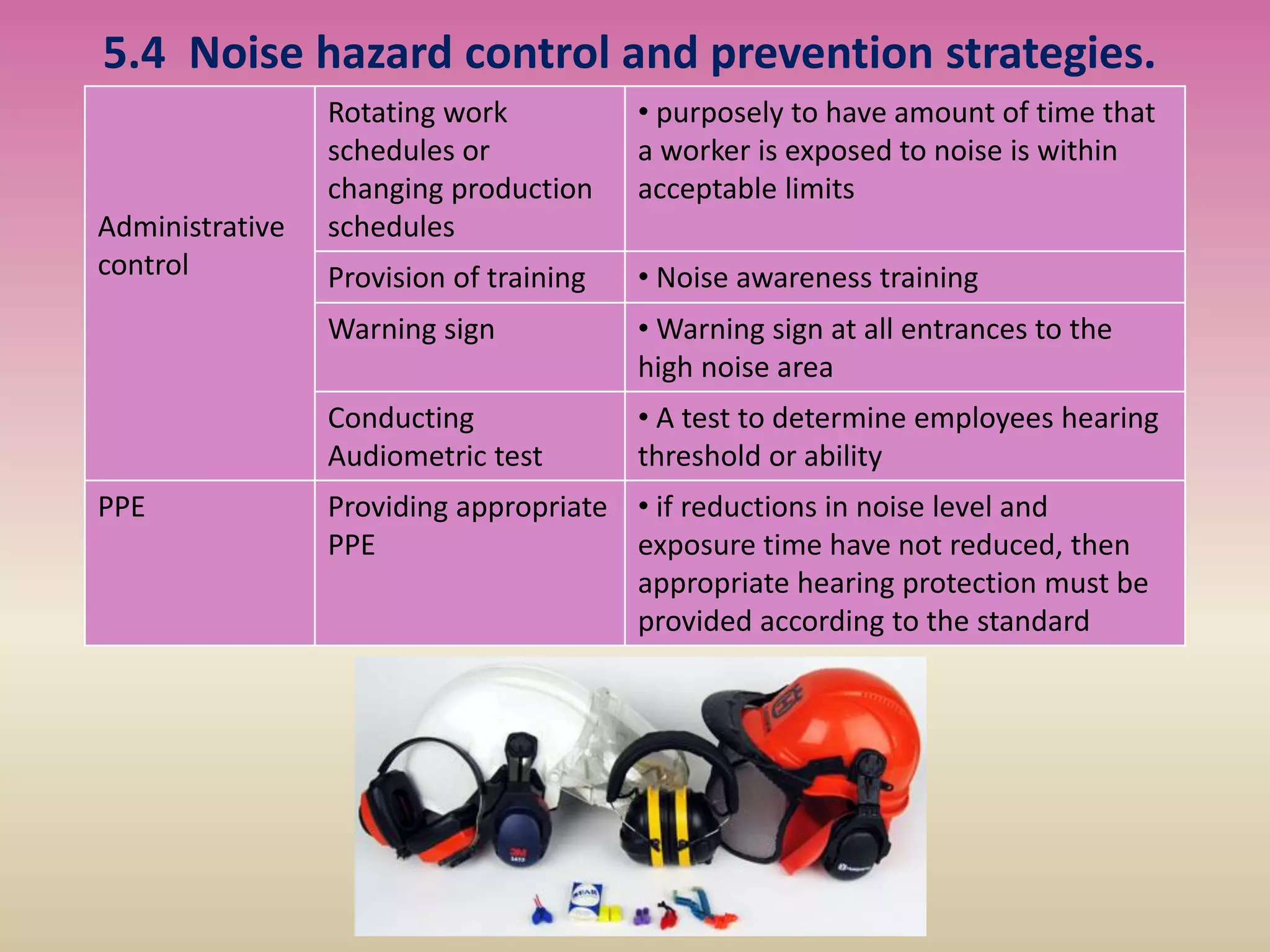
Administrative
control
Rotating work
schedules or
changing production
schedules
• purposely to have amount of time that
a worker is exposed to noise is within
acceptable limits
Provision of training • Noise awareness training
Warning sign • Warning sign at all entrances to the
high noise area
Conducting
Audiometric test
• A test to determine employees hearing
threshold or ability
PPE Providing appropriate
PPE
• if reductions in noise level and
exposure time have not reduced, then
appropriate hearing protection must be
provided according to the standard

Lecture 6-_noise_hazard

  • 1.
    Topic 5: Noise Hazard TopicLearning Outcome : 1)Explains the characteristic of sound and vibration and its risk. 2) Describe the identifying and assessing of noise hazard in industries and its control and prevention strategies.
  • 2.
    TOPIC CONTENTs: 5.1 Characteristic ofsound and vibration 5.2 Hazard level and its risk 5.3 Identifying and assessing hazardous noise in industries 5.4 Noise hazard control and prevention strategies.
  • 3.
    5.1 Characteristic ofsound and vibration  Sound is any change in pressure that can be detected by ear. Noise is unwanted or damaging sound that may damage our hearing . dB (DECIBEL): The unit used to express the intensity of sound. The decibel scale is a logarithmic scale in which the threshold of discomfort is between 85 and 95 dB and the threshold for pain is between 120 and 140 dB . Frequency dB
  • 4.
    Acceptable Noise(dBA) Location Effects MaximumLeq (dBA) Time (hours) Time of day Bedroom sleep disturbance, annoyance 30 8 night Living area annoyance, speech interference 50 16 day Outdoor living area moderate annoyance 50 16 day Outdoor living area serious annoyance 55 16 day Outdoor living area sleep disturbance, with open windows 45 8 night School classroom speech interference, communicatio n disturbance 35 8 day Hospitals patient rooms sleep disturbance, communicatio n interference 30 - 35 8 day and night
  • 5.
    5.1 Characteristic ofsound and vibration Types of sound signals The types of sound has a bearing on how it is to be measured, what type of sound level meter setting should be used and what descriptors and other data should be presented.
  • 6.
    5.2 Hazard leveland its risk According to Factories and Machinery (Noise Exposure) Regulation 1989, Permissible Exposure limit :  Noise level for 8 hour shift not exceeding equivalent steady sound level 0f 90 db.  Intermittent noise not exceeding 115dB at any time.  Impulsive noise not exceeding a peak sound pressure level of 140 dB. Safe 85dB 90dB 115dB 130dB Permissible Exposure limit Danger, Disclosure is prohibited Threshold of pain Hearing loss
  • 7.
    5.2 Hazard leveland its risk Caution!! Deafness caused by noise can not be cured
  • 8.
    5.3 Identifying andassessing hazardous noise in industries  Noise identification and assessment may be simple or complex, depending on the type of workplaces, number of workers and the information already available regarding noise exposure level. The general aim of a noise assessment is to: • Identify all persons likely to be exposed to excessive noise. • Obtain information on noise sources and associated work practices. • Check the effectiveness of measures taken to reduce noise exposure or the risks from noise exposure. • Help choose appropriate personal hearing protectors for persons exposed to risks from excessive noise; and • Define hearing protection areas at work.
  • 9.
    5.3 Identifying andassessing hazardous noise in industries  Identifying and assessing hazardous noise in the workplace involve : 1) Conduct noise survey 2) Audiometric testing – measure the threshold of employees. 3) Keeping record for individual employees 4)Follow up on the critical Audiometric testing equipment
  • 10.
    5.3 Identifying andassessing hazardous noise in industries Types of equipments used in measuring sound
  • 11.
    5.3 Identifying andassessing hazardous noise in industries . Example of Noise hazard Identification checklist
  • 12.
    5.3 Identifying andassessing hazardous noise in industries . Example of Noise Mapping
  • 13.
    5.4 Noise hazardcontrol and prevention strategies.  When reducing noise exposure, preference is given to engineering controls, then administrative controls and finally the use of appropriate PPE. Engineering control - Must be considered during the design stage of a new facility or the expansion of facility Substitution • Replace noisy equipment with quieter Modification • Modify the way in which the equipment operates so that it generates less noise. Isolation • Having them work in enclosed room. •Segregate noisy areas with sound barriers Maintenance •Maintenance of equipment and the engineering controls that have been implemented is very important or the improvements in noise level will be lost.
  • 14.
    5.4 Noise hazardcontrol and prevention strategies. Administrative control Rotating work schedules or changing production schedules • purposely to have amount of time that a worker is exposed to noise is within acceptable limits Provision of training • Noise awareness training Warning sign • Warning sign at all entrances to the high noise area Conducting Audiometric test • A test to determine employees hearing threshold or ability PPE Providing appropriate PPE • if reductions in noise level and exposure time have not reduced, then appropriate hearing protection must be provided according to the standard