Downloaded 407 times
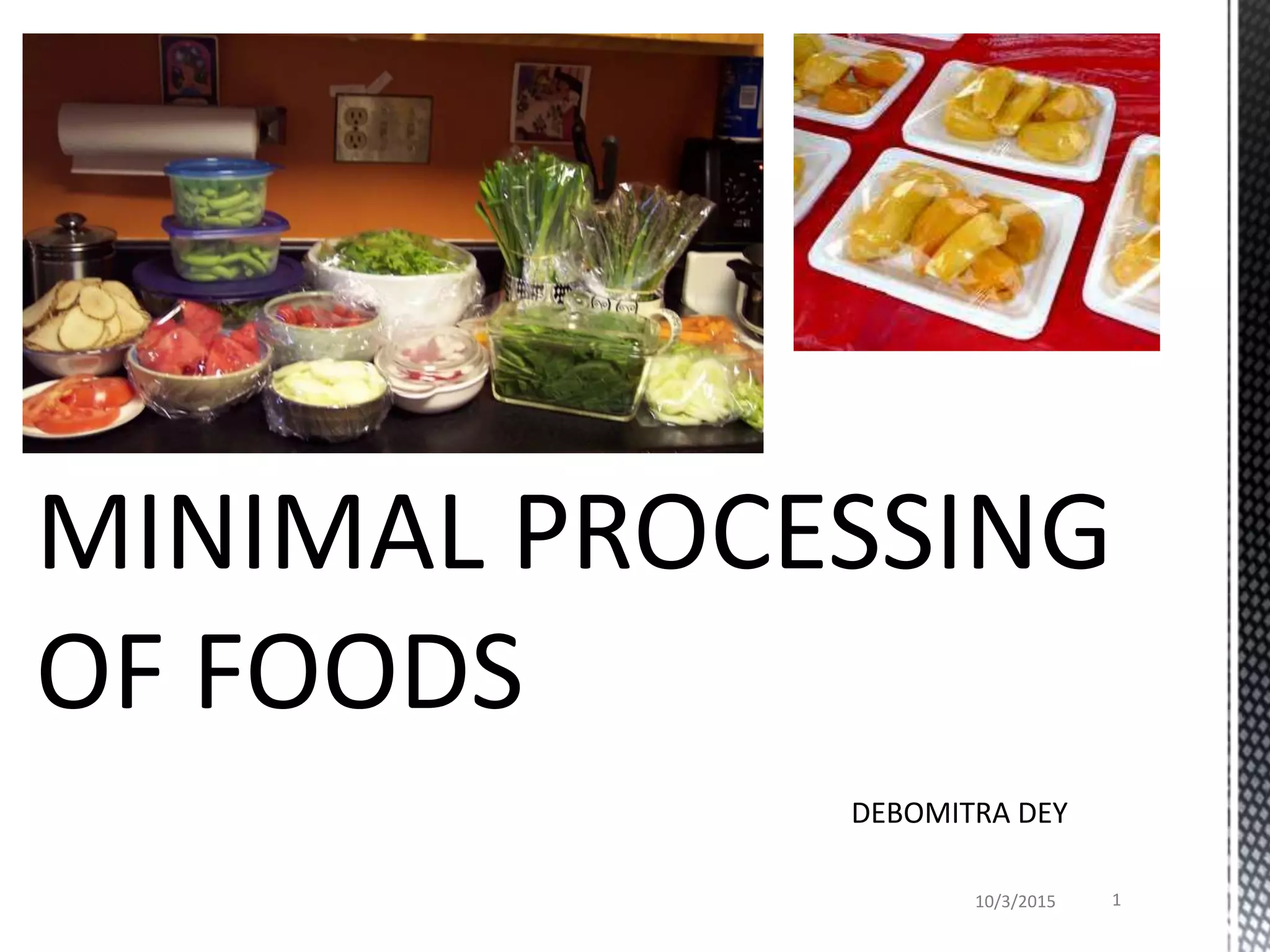
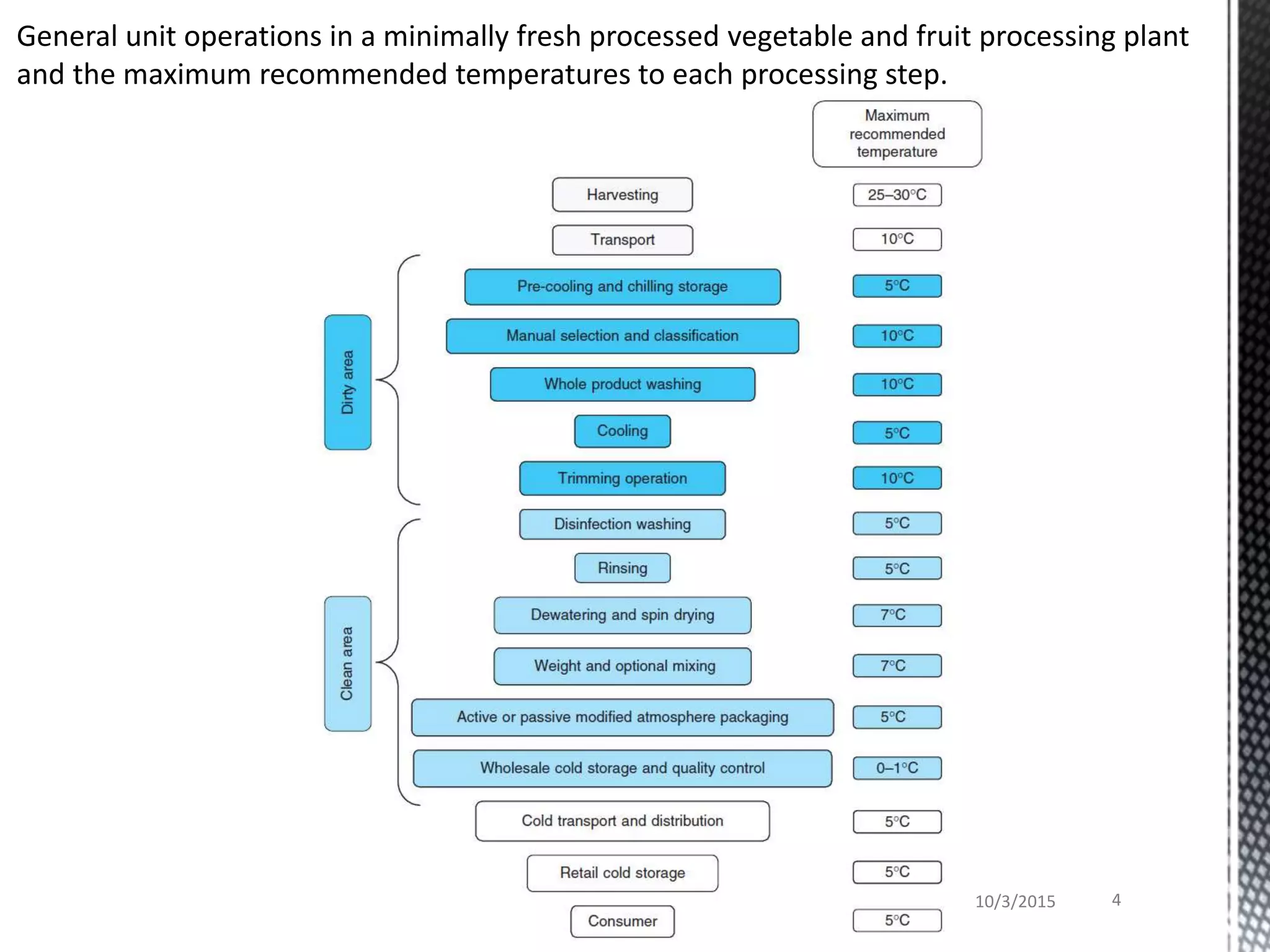
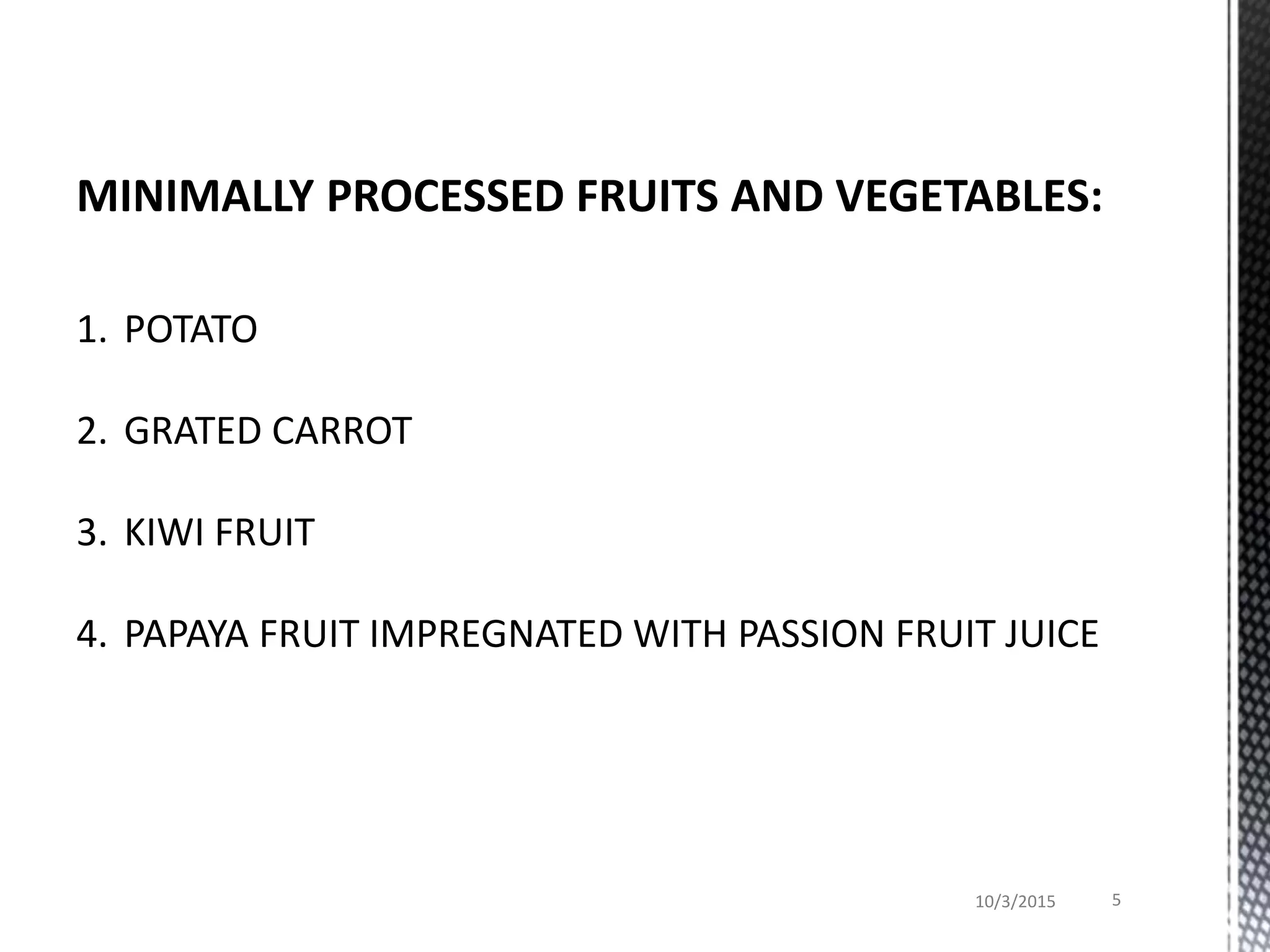
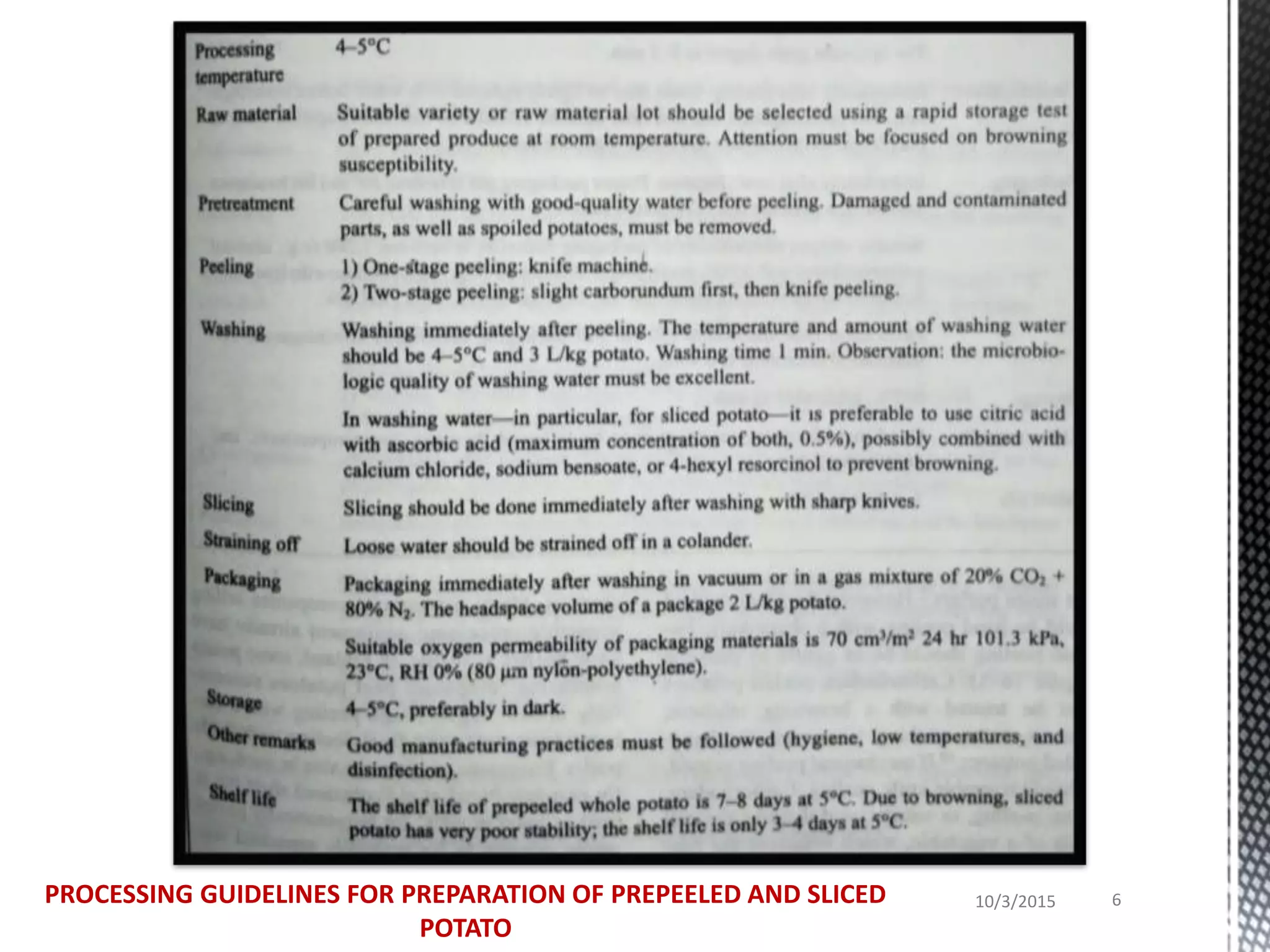
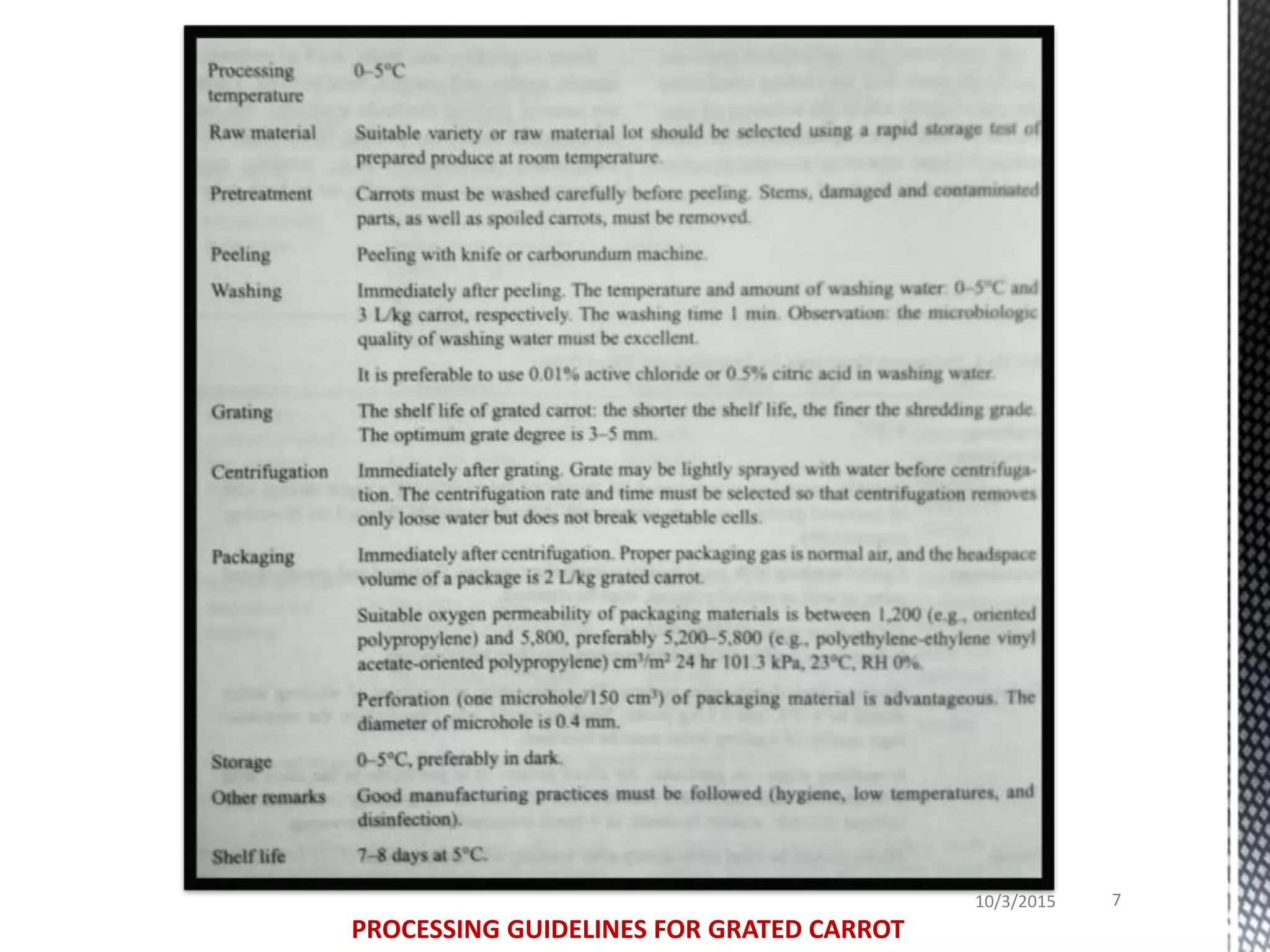
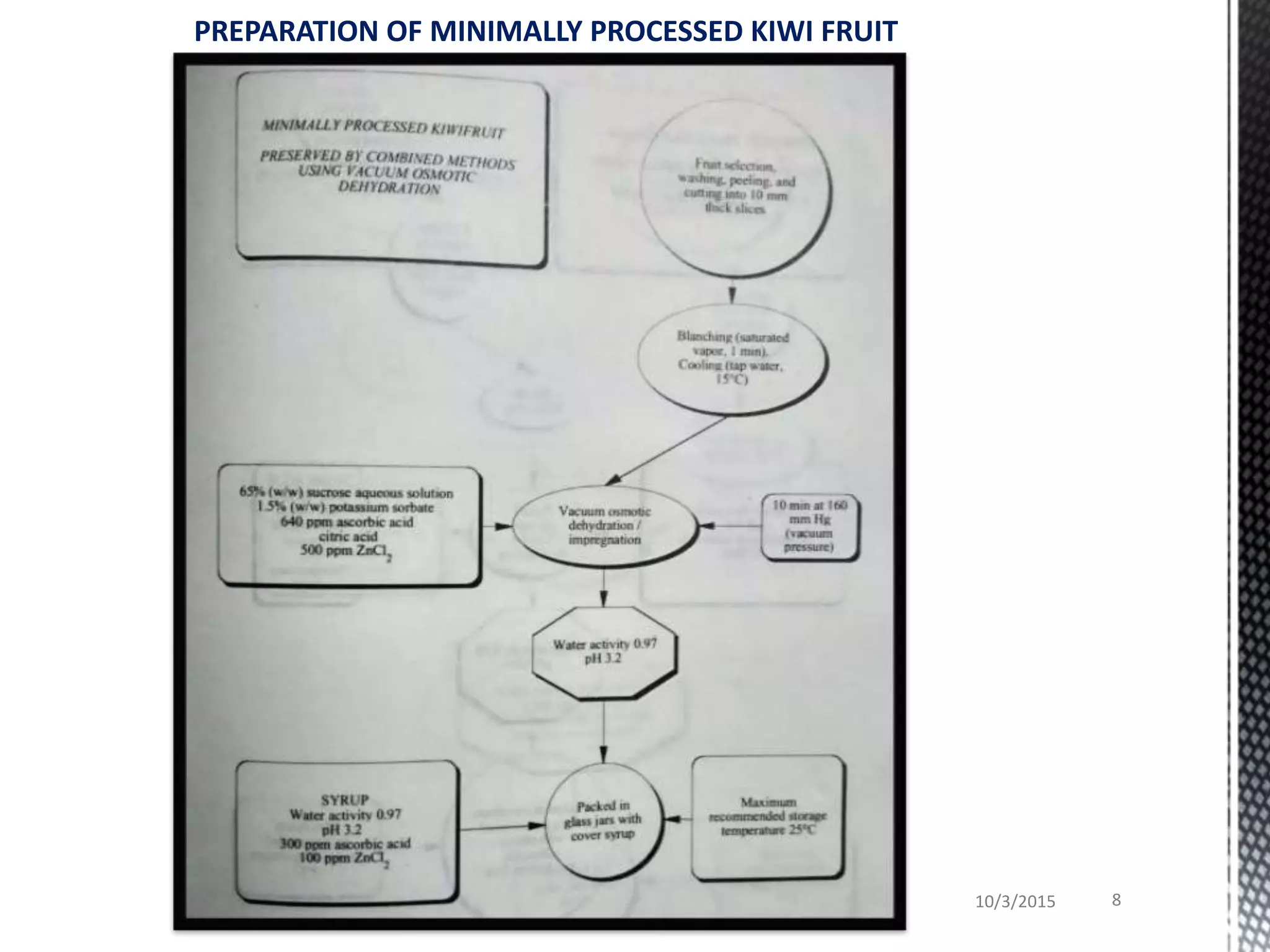
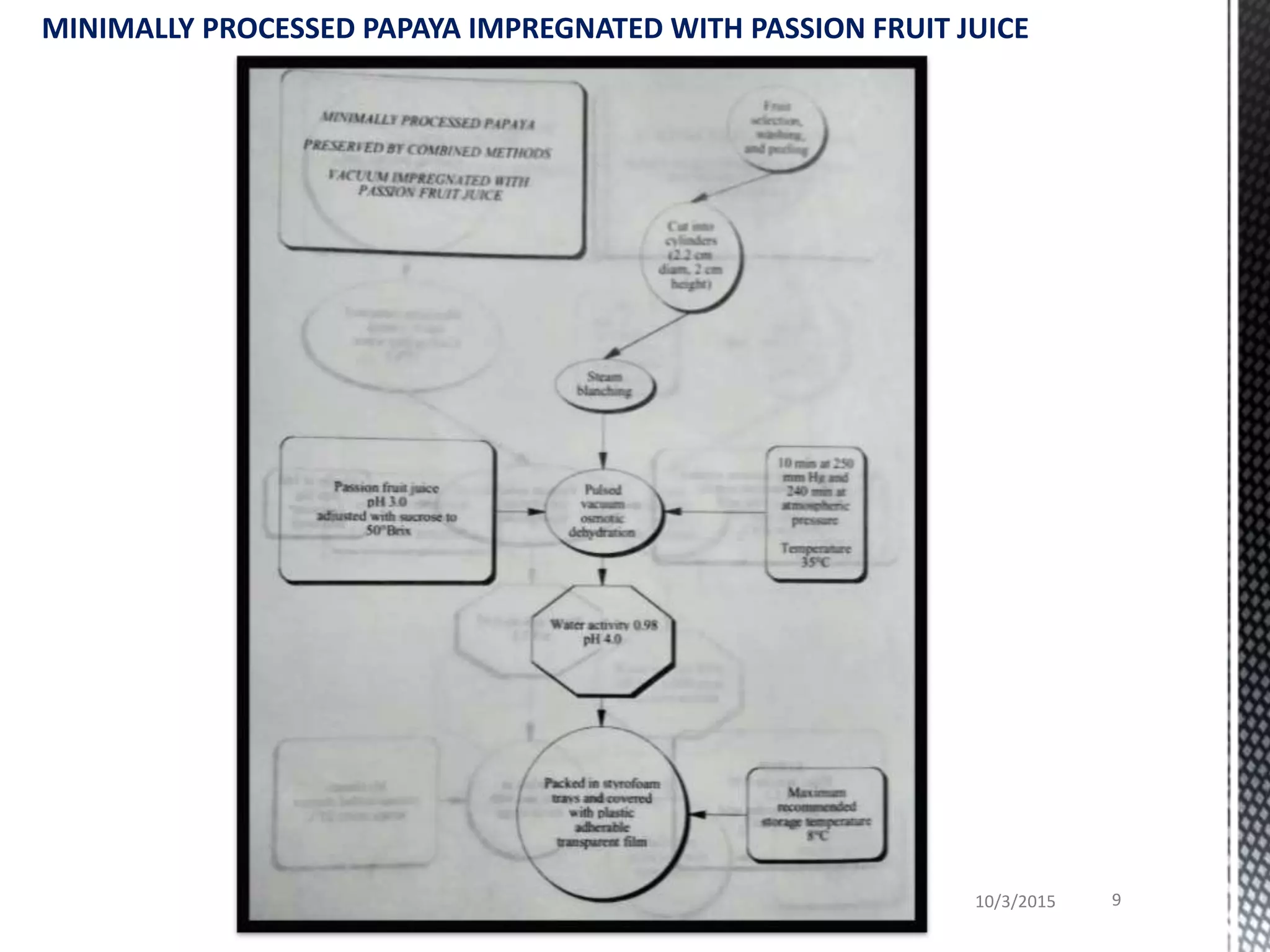
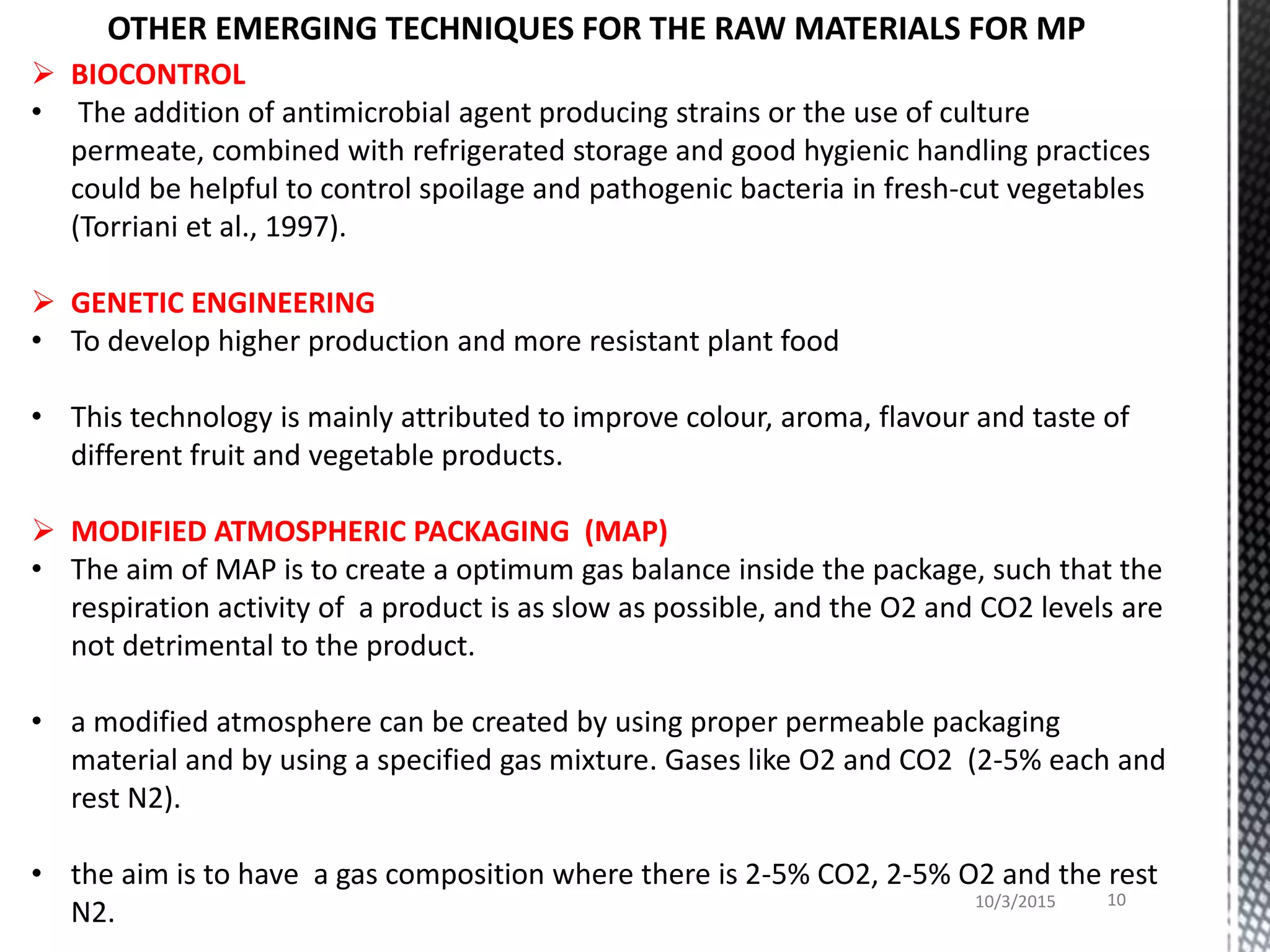
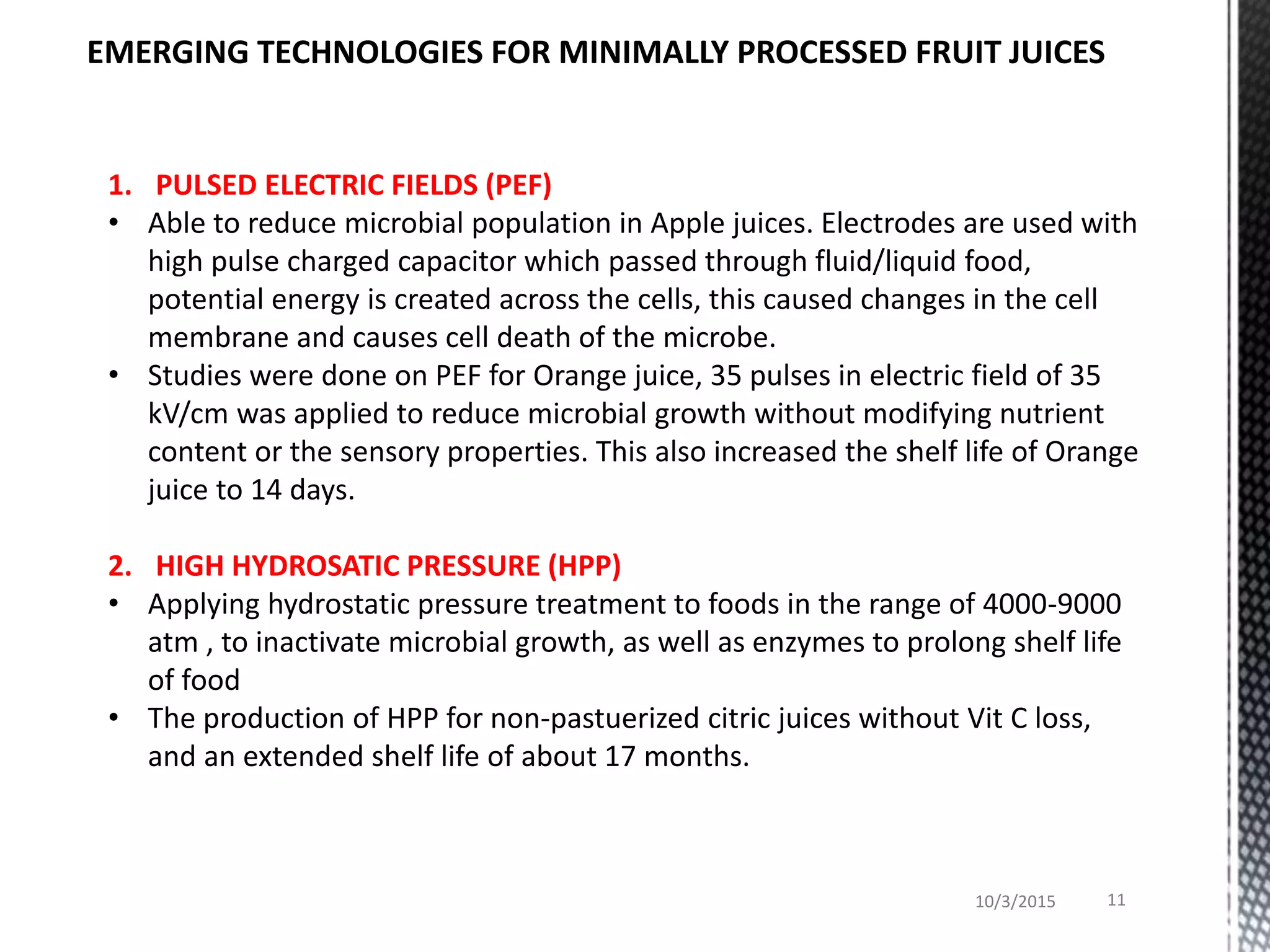
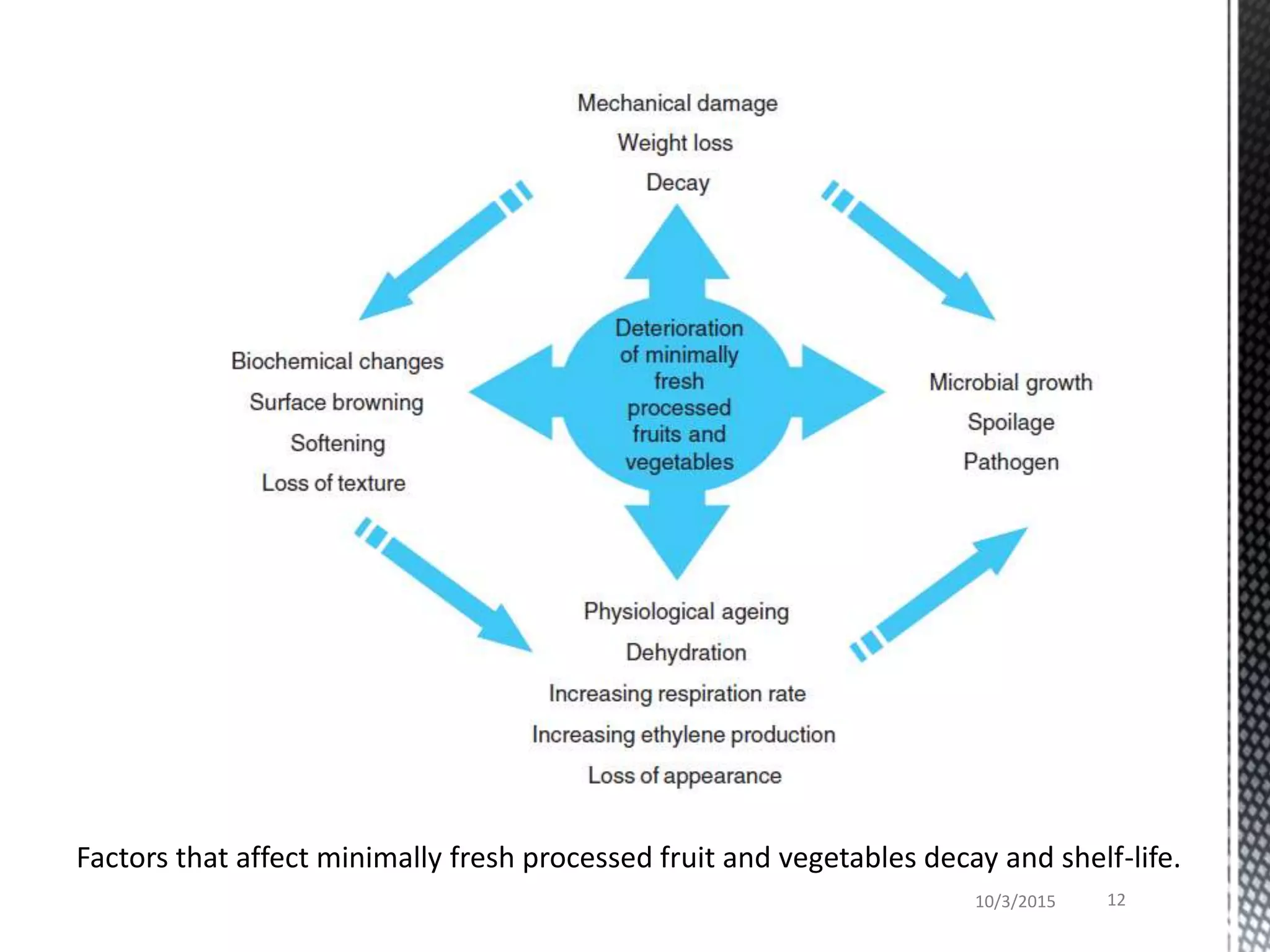


Minimal processing of foods involves techniques that preserve foods while retaining much of their nutritional quality and sensory characteristics. This involves light methods like washing, cutting, and packaging at cold temperatures under film. Minimally processed fruits and vegetables are prepared for consumption with minimal further processing needed prior to eating. The processing aims to meet consumer demand for convenience while maintaining nutritional value, fresh appearance, and taste with fewer additives. Emerging technologies like pulsed electric fields and high hydrostatic pressure can reduce microbes in fruit juices without affecting nutrients or taste. Factors like wounding during processing, respiration rate, ethylene production, and enzymatic browning affect the decay and shelf life of minimally processed produce.


