Dr. Abdirashid Ahmed Hussein
BSc IN Veterinary science department of animal husbandry in
university of Somalia (Uniso)
BSc in public health in Somvill university
Email: abwaanrashka39@gmail.com
Lecture: 12
FOOD PACKAGING
Outline
Introduction
What is Packaging?
Selection criteria for Packaging material
Characteristics of Packaging material
Uses of Packaging
Types of Packaging
1.Primary
2.Secondary
3.Tertiary
Types of Packaging material
Objectives of packaging
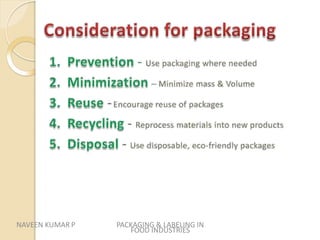
Consideration for packaging
9/12/2014 2
• Most physical products must be
packaged and labeled. Some packages
such as coke bottles are world famous.
• Many marketers have called packaging
as fifth P,along with price, product,
place and promotion.
PACKAGING
4
P
a
ckaging is the science, art, and technology of
enclosing or protecting products for distribution,
storage, sale, and use.
Packaging also refers to the process of design,
evaluation, and production of packages.
Packaging may also be defined as the collection of
different components (e.g. bottle, vial, closure, cap,
ampoule, blister) which surround the pharmaceutical
product from the time of production until its use.
SELECTION CRITERIA FOR
PACKAGING MATERIAL
5
There are many factors which need to consider when
selecting a suitable type of pack for the product:
•The product or pack contents
•The application of the product
•Content stability, and the need of protection from any
environmental factors
•Content reactivity ( with relevant to the packaging
material)
•Acceptibilty of the pack to the consumer or user
The packaging process
•Regulatory, legal and quality issues
CHARACTERISTICS OF
PACKAGING MATERIAL:
6
The material selected must have the following
characteristics:
•Must meet tamper-resistance requirements
•Must be FDAapproved
•Must be non-toxic
•Must not impart odor/taste to the product
•Must not reactive with the product
•They must protect the preparation from environmental
conditions
USES OF PACKAGING:
7
•Physical protection: It protects from, among other things,
mechanical
shock, vibration, electrostatic discharge, compression,
temperature, etc.
•Information transmission: Packages and labels
communicate how to use, transport, recycle, or dispose of
the package or product. With pharmaceuticals, food,
medical, and chemical products, some types of information
are required by governments.
•Marketing: The packaging and labels can be used by
marketers to encourage potential buyers to purchase the
product.
•Convenience: Packages can have features that
add convenience in distribution, handling, display,
sale, opening, re-closing, use, reuse, recycling, and
ease of disposal
•Security: Packaging can play an important role in
reducing the security risks of shipment. Packages
can be made with improved tamper resistance to
deter tampering and also can have tamper-evident
features to help indicate tampering. Packages can
be engineered to help reduce the risks of package
pilferage.
9/12/2014 8
USES OF PACKAGING:
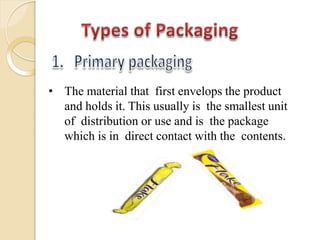
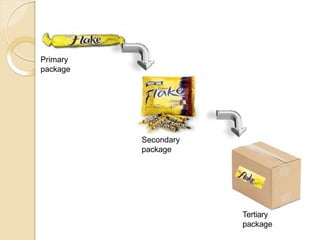
• The material that first envelops the product
and holds it. This usually is the smallest unit
of distribution or use and is the package
which is in direct contact with the contents.
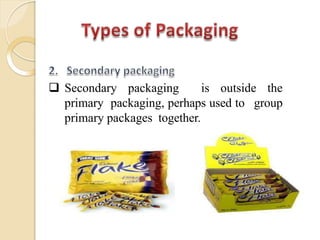
 Secondary packaging is outside the
primary packaging, perhaps used to group
primary packages together.
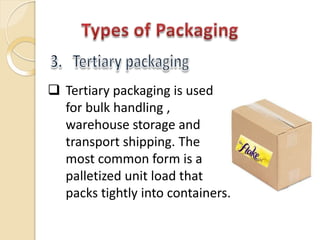
 Tertiary packaging is used
for bulk handling ,
warehouse storage and
transport shipping. The
most common form is a
palletized unit load that
packs tightly into containers.
Primary
package
Secondary
package
Tertiary
package
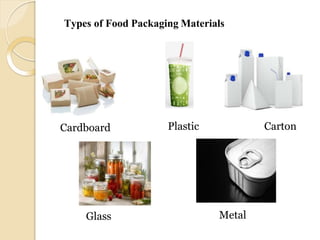
Types of Food Packaging Materials
Cardboard Plastic Carton
Glass Metal
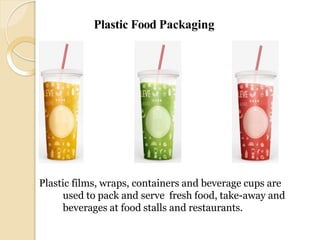
Plastic Food Packaging
Plastic films, wraps, containers and beverage cups are
used to pack and serve fresh food, take-away and
beverages at food stalls and restaurants.
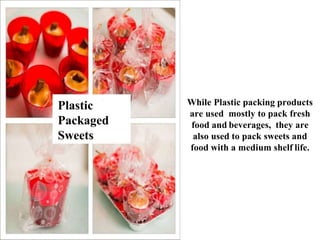
While Plastic packing products
are used mostly to pack fresh
food and beverages, they are
also used to pack sweets and
food with a medium shelf life.
Plastic
Packaged
Sweets
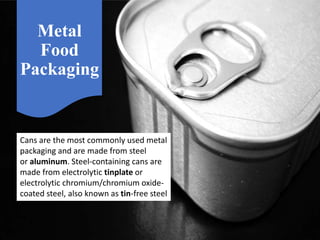
Metal
Food
Packaging
Cans are the most commonly used metal
packaging and are made from steel
or aluminum. Steel-containing cans are
made from electrolytic tinplate or
electrolytic chromium/chromium oxide-
coated steel, also known as tin-free steel
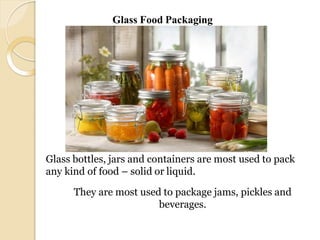
Glass bottles, jars and containers are most used to pack
any kind of food – solid or liquid.
They are most used to package jams, pickles and
beverages.
Glass Food Packaging
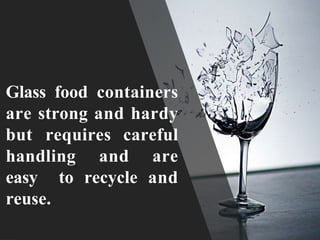
Glass food containers
are strong and hardy
but requires careful
handling and are
easy to recycle and
reuse.
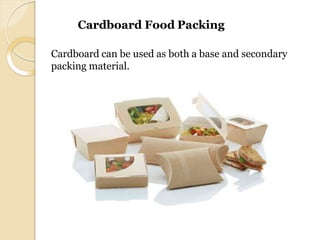
Cardboard Food Packing
Cardboard can be used as both a base and secondary
packing material.
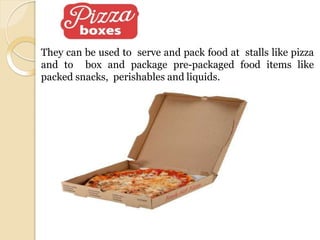
They can be used to serve and pack food at stalls like pizza
and to box and package pre-packaged food items like
packed snacks, perishables and liquids.
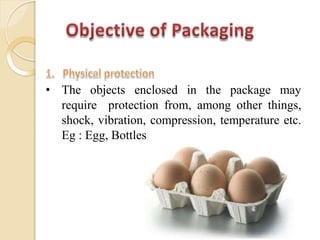
• The objects enclosed in the package may
require protection from, among other things,
shock, vibration, compression, temperature etc.
Eg : Egg, Bottles
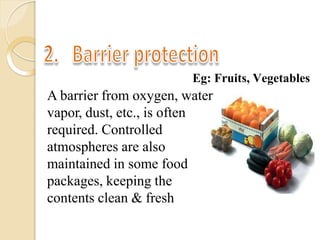
Eg: Fruits, Vegetables
A barrier from oxygen, water
vapor, dust, etc., is often
required. Controlled
atmospheres are also
maintained in some food
packages, keeping the
contents clean & fresh
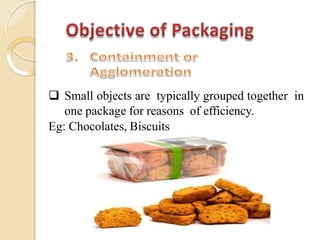
 Small objects are typically grouped together in
one package for reasons of efficiency.
Eg: Chocolates, Biscuits
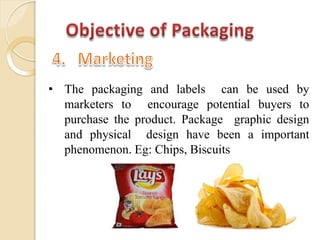
• The packaging and labels can be used by
marketers to encourage potential buyers to
purchase the product. Package graphic design
and physical design have been a important
phenomenon. Eg: Chips, Biscuits
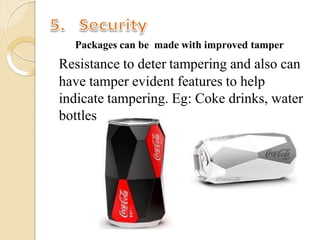
Packages can be made with improved tamper
Resistance to deter tampering and also can
have tamper evident features to help
indicate tampering. Eg: Coke drinks, water
bottles
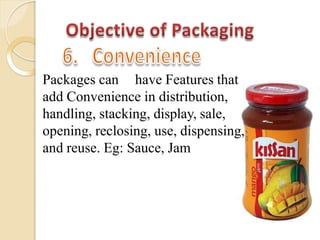
Packages can have Features that
add Convenience in distribution,
handling, stacking, display, sale,
opening, reclosing, use, dispensing,
and reuse. Eg: Sauce, Jam
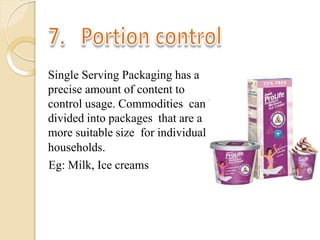
Single Serving Packaging has a
precise amount of content to
control usage. Commodities can be
divided into packages that are a
more suitable size for individual
households.
Eg: Milk, Ice creams
PACKAGING & LABELING IN
FOOD INDUSTRIES
NAVEEN KUMAR P
End……………..

Lecture 12 food packaging

  • 1.
    Dr. Abdirashid AhmedHussein BSc IN Veterinary science department of animal husbandry in university of Somalia (Uniso) BSc in public health in Somvill university Email: abwaanrashka39@gmail.com Lecture: 12 FOOD PACKAGING
  • 2.
    Outline Introduction What is Packaging? Selectioncriteria for Packaging material Characteristics of Packaging material Uses of Packaging Types of Packaging 1.Primary 2.Secondary 3.Tertiary Types of Packaging material Objectives of packaging Consideration for packaging 9/12/2014 2
  • 3.
    • Most physicalproducts must be packaged and labeled. Some packages such as coke bottles are world famous. • Many marketers have called packaging as fifth P,along with price, product, place and promotion.
  • 4.
    PACKAGING 4 P a ckaging is thescience, art, and technology of enclosing or protecting products for distribution, storage, sale, and use. Packaging also refers to the process of design, evaluation, and production of packages. Packaging may also be defined as the collection of different components (e.g. bottle, vial, closure, cap, ampoule, blister) which surround the pharmaceutical product from the time of production until its use.
  • 5.
    SELECTION CRITERIA FOR PACKAGINGMATERIAL 5 There are many factors which need to consider when selecting a suitable type of pack for the product: •The product or pack contents •The application of the product •Content stability, and the need of protection from any environmental factors •Content reactivity ( with relevant to the packaging material) •Acceptibilty of the pack to the consumer or user The packaging process •Regulatory, legal and quality issues
  • 6.
    CHARACTERISTICS OF PACKAGING MATERIAL: 6 Thematerial selected must have the following characteristics: •Must meet tamper-resistance requirements •Must be FDAapproved •Must be non-toxic •Must not impart odor/taste to the product •Must not reactive with the product •They must protect the preparation from environmental conditions
  • 7.
    USES OF PACKAGING: 7 •Physicalprotection: It protects from, among other things, mechanical shock, vibration, electrostatic discharge, compression, temperature, etc. •Information transmission: Packages and labels communicate how to use, transport, recycle, or dispose of the package or product. With pharmaceuticals, food, medical, and chemical products, some types of information are required by governments. •Marketing: The packaging and labels can be used by marketers to encourage potential buyers to purchase the product.
  • 8.
    •Convenience: Packages canhave features that add convenience in distribution, handling, display, sale, opening, re-closing, use, reuse, recycling, and ease of disposal •Security: Packaging can play an important role in reducing the security risks of shipment. Packages can be made with improved tamper resistance to deter tampering and also can have tamper-evident features to help indicate tampering. Packages can be engineered to help reduce the risks of package pilferage. 9/12/2014 8 USES OF PACKAGING:
  • 9.
    • The materialthat first envelops the product and holds it. This usually is the smallest unit of distribution or use and is the package which is in direct contact with the contents.
  • 10.
     Secondary packagingis outside the primary packaging, perhaps used to group primary packages together.
  • 11.
     Tertiary packagingis used for bulk handling , warehouse storage and transport shipping. The most common form is a palletized unit load that packs tightly into containers.
  • 12.
  • 13.
    Types of FoodPackaging Materials Cardboard Plastic Carton Glass Metal
  • 14.
    Plastic Food Packaging Plasticfilms, wraps, containers and beverage cups are used to pack and serve fresh food, take-away and beverages at food stalls and restaurants.
  • 15.
    While Plastic packingproducts are used mostly to pack fresh food and beverages, they are also used to pack sweets and food with a medium shelf life. Plastic Packaged Sweets
  • 16.
    Metal Food Packaging Cans are themost commonly used metal packaging and are made from steel or aluminum. Steel-containing cans are made from electrolytic tinplate or electrolytic chromium/chromium oxide- coated steel, also known as tin-free steel
  • 17.
    Glass bottles, jarsand containers are most used to pack any kind of food – solid or liquid. They are most used to package jams, pickles and beverages. Glass Food Packaging
  • 18.
    Glass food containers arestrong and hardy but requires careful handling and are easy to recycle and reuse.
  • 19.
    Cardboard Food Packing Cardboardcan be used as both a base and secondary packing material.
  • 20.
    They can beused to serve and pack food at stalls like pizza and to box and package pre-packaged food items like packed snacks, perishables and liquids.
  • 21.
    • The objectsenclosed in the package may require protection from, among other things, shock, vibration, compression, temperature etc. Eg : Egg, Bottles
  • 22.
    Eg: Fruits, Vegetables Abarrier from oxygen, water vapor, dust, etc., is often required. Controlled atmospheres are also maintained in some food packages, keeping the contents clean & fresh
  • 23.
     Small objectsare typically grouped together in one package for reasons of efficiency. Eg: Chocolates, Biscuits
  • 24.
    • The packagingand labels can be used by marketers to encourage potential buyers to purchase the product. Package graphic design and physical design have been a important phenomenon. Eg: Chips, Biscuits
  • 25.
    Packages can bemade with improved tamper Resistance to deter tampering and also can have tamper evident features to help indicate tampering. Eg: Coke drinks, water bottles
  • 26.
    Packages can haveFeatures that add Convenience in distribution, handling, stacking, display, sale, opening, reclosing, use, dispensing, and reuse. Eg: Sauce, Jam
  • 27.
    Single Serving Packaginghas a precise amount of content to control usage. Commodities can be divided into packages that are a more suitable size for individual households. Eg: Milk, Ice creams
  • 28.
    PACKAGING & LABELINGIN FOOD INDUSTRIES NAVEEN KUMAR P
  • 29.

Editor's Notes

  • #7 The FDA Acronyms and Abbreviations database provides a quick reference to acronyms and abbreviations related to Food and Drug Administration (FDA) activities. "FDA approved" means that the agency has determined that the "benefits of the product outweigh the known risks for the intended use.