EXPECTATION OF MODERN PACKAGING,
FUNCTIONS,TERMS, MATERIALS..
BY
MONISHA SELVAN
EXPECTATIONS OF MODERN
PACKAGING
 The packages must have
 Sufficient mechanical strength to protect
 Construction material must not contain chemicals.
 Must meet handling & marketing in terms of
weight,size,shape.
 Allow rapid coding of the contents.
 Security of the package.
 Should identify its contents.
 Required to aid retail presentation.
 Designed for easy disposal,reuse,recycling.
 cost should be less.
FUNCTION
CONTAINMENT:
 packaging needed to contain a product depends on the physical
form of the product and the nature of the product itself.
.
 For example, a corrosive chemical needs to be contained in a pack
that does not allow the chemical to leak, react with its surroundings,
react with its packaging
PROVIDING INFORMATION ON A PRODUCT:
 communicating information on a pack to a consumer.
 Helps to identify and market the product,
 legal requirements as to the information a pack must contain.
PRESERVATION:
 Inhibiting chemical and biological changes.
 This extending the shelf life of a food product beyond its natural life.
 Limits must be established so that packaging can be designed to
preserve a product to an acceptable level within these limits.
PROTECTION:
 guarding against physical damage.
 This could arise through shock, vibration or compression damage.
 Eg: corrugated cardboard boxes used for distribution packaging .
Sales:
 a pack must be effective in branding the product name using
enticing pack shapes, colours, designs, etc.
 These complementary skills are normally the preserve of the sales
and marketing team
PACKAGING TERMS
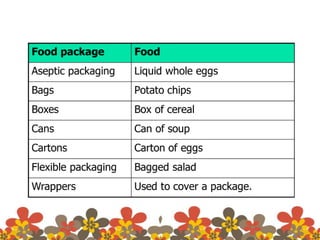
Aseptic packaging
 shelf-stable container by placing a commercially sterile product into
a container in a sterile environment.
 maintains product sterility until the seal is broken.
Breathing package
 air may enter or leave under varying conditions,
 including temperature changes, with or without a drying agent to
remove moisture from entering the package
Retort packaging
 a flexible container formed from aluminum foil and plastic laminants.
 withstand in-package sterilization of the product.
PET ("polyethylene terephthalate")
• a thermoplastic polyester used in beverage bottles and food trays
MAP ("modified atmosphere packaging")
 a combination of gases such as oxygen, CO2 and N2 is introduced
into the package at the time of closure.
 to extend shelf life of the product packaged.
Metal can
 steel sheet or plate, 27 gauge or less in thickness, or
 a similar container made of aluminum, copper or other metal.
(example: food cans)
Meat wrapping paper
 a specially treated odorless and tasteless paper that resists meat
juices, fat and grease, and
 It is easy to remove from any kind of meat.
Shrink wrapping
 plastic film that shrinks when heated, producing a tight, neat fit;
 the most popular form of grocery store ,meat packaging is PVC
wrapping with foam trays.
Ovenable board :
 a paperboard that can be placed in an oven to serve as the cooking
utensil for food;
 typically a solid, bleached sulphate board coated with polyester
terephthalate.
Vacuum packaging:
 all air has been removed before sealing.
 Carbon dioxide or nitrogen may be introduced into the container.
 This process prolongs shelf life, preserves the flavors and retards
bacterial growth.
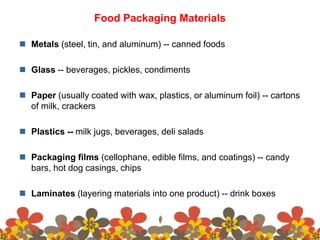
Food Packaging Materials
 Metals (steel, tin, and aluminum) -- canned foods
 Glass -- beverages, pickles, condiments
 Paper (usually coated with wax, plastics, or aluminum foil) -- cartons
of milk, crackers
 Plastics -- milk jugs, beverages, deli salads
 Packaging films (cellophane, edible films, and coatings) -- candy
bars, hot dog casings, chips
 Laminates (layering materials into one product) -- drink boxes
Packaging Materials
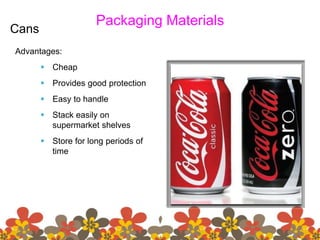
Cans
Advantages:
 Cheap
 Provides good protection
 Easy to handle
 Stack easily on
supermarket shelves
 Store for long periods of
time
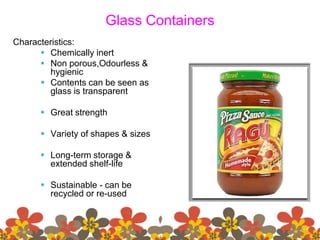
Glass Containers
Characteristics:
 Chemically inert
 Non porous,Odourless &
hygienic
 Contents can be seen as
glass is transparent
 Great strength
 Variety of shapes & sizes
 Long-term storage &
extended shelf-life
 Sustainable - can be
recycled or re-used
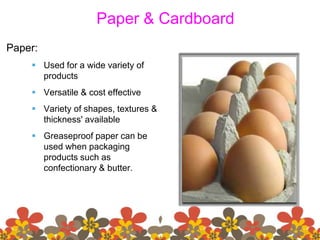
Paper & Cardboard
Paper:
 Used for a wide variety of
products
 Versatile & cost effective
 Variety of shapes, textures &
thickness' available
 Greaseproof paper can be
used when packaging
products such as
confectionary & butter.
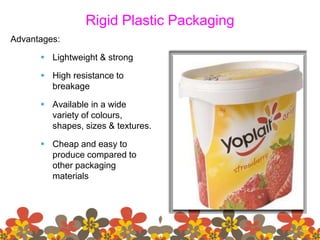
Rigid Plastic Packaging
Advantages:
 Lightweight & strong
 High resistance to
breakage
 Available in a wide
variety of colours,
shapes, sizes & textures.
 Cheap and easy to
produce compared to
other packaging
materials
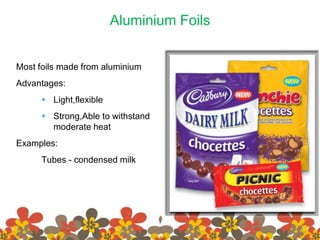
Aluminium Foils
Most foils made from aluminium
Advantages:
 Light,flexible
 Strong,Able to withstand
moderate heat
Examples:
Tubes - condensed milk
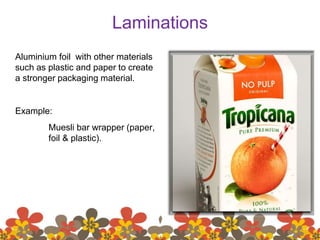
Laminations
Aluminium foil with other materials
such as plastic and paper to create
a stronger packaging material.
Example:
Muesli bar wrapper (paper,
foil & plastic).
Thank u

Modern packaging

  • 1.
    EXPECTATION OF MODERNPACKAGING, FUNCTIONS,TERMS, MATERIALS.. BY MONISHA SELVAN
  • 2.
    EXPECTATIONS OF MODERN PACKAGING The packages must have  Sufficient mechanical strength to protect  Construction material must not contain chemicals.  Must meet handling & marketing in terms of weight,size,shape.  Allow rapid coding of the contents.
  • 3.
     Security ofthe package.  Should identify its contents.  Required to aid retail presentation.  Designed for easy disposal,reuse,recycling.  cost should be less.
  • 4.
    FUNCTION CONTAINMENT:  packaging neededto contain a product depends on the physical form of the product and the nature of the product itself. .  For example, a corrosive chemical needs to be contained in a pack that does not allow the chemical to leak, react with its surroundings, react with its packaging
  • 5.
    PROVIDING INFORMATION ONA PRODUCT:  communicating information on a pack to a consumer.  Helps to identify and market the product,  legal requirements as to the information a pack must contain. PRESERVATION:  Inhibiting chemical and biological changes.  This extending the shelf life of a food product beyond its natural life.  Limits must be established so that packaging can be designed to preserve a product to an acceptable level within these limits.
  • 6.
    PROTECTION:  guarding againstphysical damage.  This could arise through shock, vibration or compression damage.  Eg: corrugated cardboard boxes used for distribution packaging . Sales:  a pack must be effective in branding the product name using enticing pack shapes, colours, designs, etc.  These complementary skills are normally the preserve of the sales and marketing team
  • 7.
    PACKAGING TERMS Aseptic packaging shelf-stable container by placing a commercially sterile product into a container in a sterile environment.  maintains product sterility until the seal is broken. Breathing package  air may enter or leave under varying conditions,  including temperature changes, with or without a drying agent to remove moisture from entering the package
  • 8.
    Retort packaging  aflexible container formed from aluminum foil and plastic laminants.  withstand in-package sterilization of the product. PET ("polyethylene terephthalate") • a thermoplastic polyester used in beverage bottles and food trays
  • 9.
    MAP ("modified atmospherepackaging")  a combination of gases such as oxygen, CO2 and N2 is introduced into the package at the time of closure.  to extend shelf life of the product packaged.
  • 10.
    Metal can  steelsheet or plate, 27 gauge or less in thickness, or  a similar container made of aluminum, copper or other metal. (example: food cans) Meat wrapping paper  a specially treated odorless and tasteless paper that resists meat juices, fat and grease, and  It is easy to remove from any kind of meat.
  • 11.
    Shrink wrapping  plasticfilm that shrinks when heated, producing a tight, neat fit;  the most popular form of grocery store ,meat packaging is PVC wrapping with foam trays. Ovenable board :  a paperboard that can be placed in an oven to serve as the cooking utensil for food;  typically a solid, bleached sulphate board coated with polyester terephthalate.
  • 12.
    Vacuum packaging:  allair has been removed before sealing.  Carbon dioxide or nitrogen may be introduced into the container.  This process prolongs shelf life, preserves the flavors and retards bacterial growth.
  • 14.
    Food Packaging Materials Metals (steel, tin, and aluminum) -- canned foods  Glass -- beverages, pickles, condiments  Paper (usually coated with wax, plastics, or aluminum foil) -- cartons of milk, crackers  Plastics -- milk jugs, beverages, deli salads  Packaging films (cellophane, edible films, and coatings) -- candy bars, hot dog casings, chips  Laminates (layering materials into one product) -- drink boxes
  • 15.
    Packaging Materials Cans Advantages:  Cheap Provides good protection  Easy to handle  Stack easily on supermarket shelves  Store for long periods of time
  • 16.
    Glass Containers Characteristics:  Chemicallyinert  Non porous,Odourless & hygienic  Contents can be seen as glass is transparent  Great strength  Variety of shapes & sizes  Long-term storage & extended shelf-life  Sustainable - can be recycled or re-used
  • 17.
    Paper & Cardboard Paper: Used for a wide variety of products  Versatile & cost effective  Variety of shapes, textures & thickness' available  Greaseproof paper can be used when packaging products such as confectionary & butter.
  • 18.
    Rigid Plastic Packaging Advantages: Lightweight & strong  High resistance to breakage  Available in a wide variety of colours, shapes, sizes & textures.  Cheap and easy to produce compared to other packaging materials
  • 19.
    Aluminium Foils Most foilsmade from aluminium Advantages:  Light,flexible  Strong,Able to withstand moderate heat Examples: Tubes - condensed milk
  • 20.
    Laminations Aluminium foil withother materials such as plastic and paper to create a stronger packaging material. Example: Muesli bar wrapper (paper, foil & plastic).
  • 21.