Food Packaging Materials
Express Pack Print
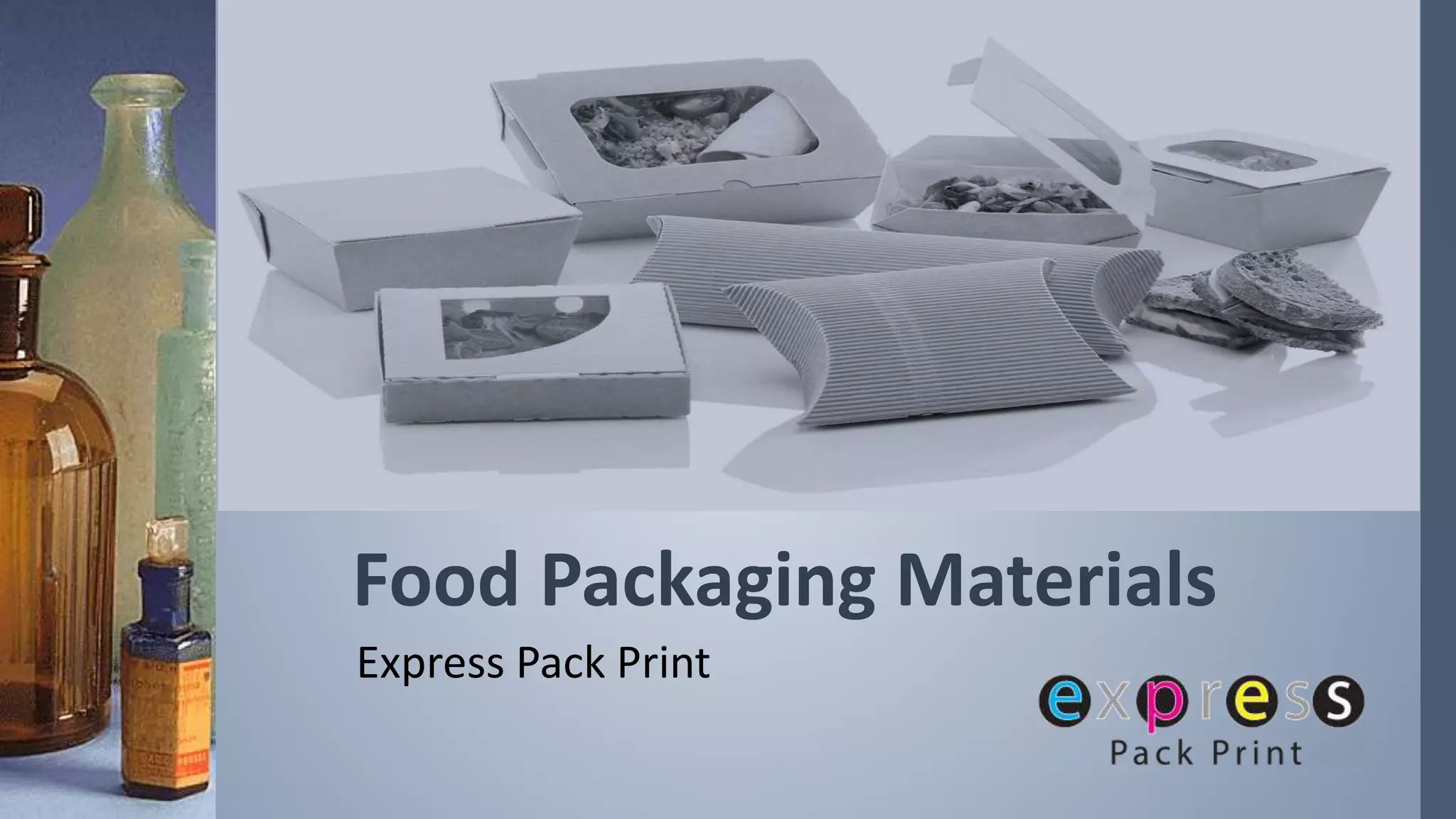
Food Packaging Materials
Food is one product that needs careful packaging. This is
because of the strict regulations and standards imposed in
relation to health issues arising from wrong packaging.
Accordingly, food packaging materials should be suitable to
provide superior health protection and convenience to
consumers as well as low impact on the environment. For your
packaging needs, there are different materials to choose from
for food and beverage:
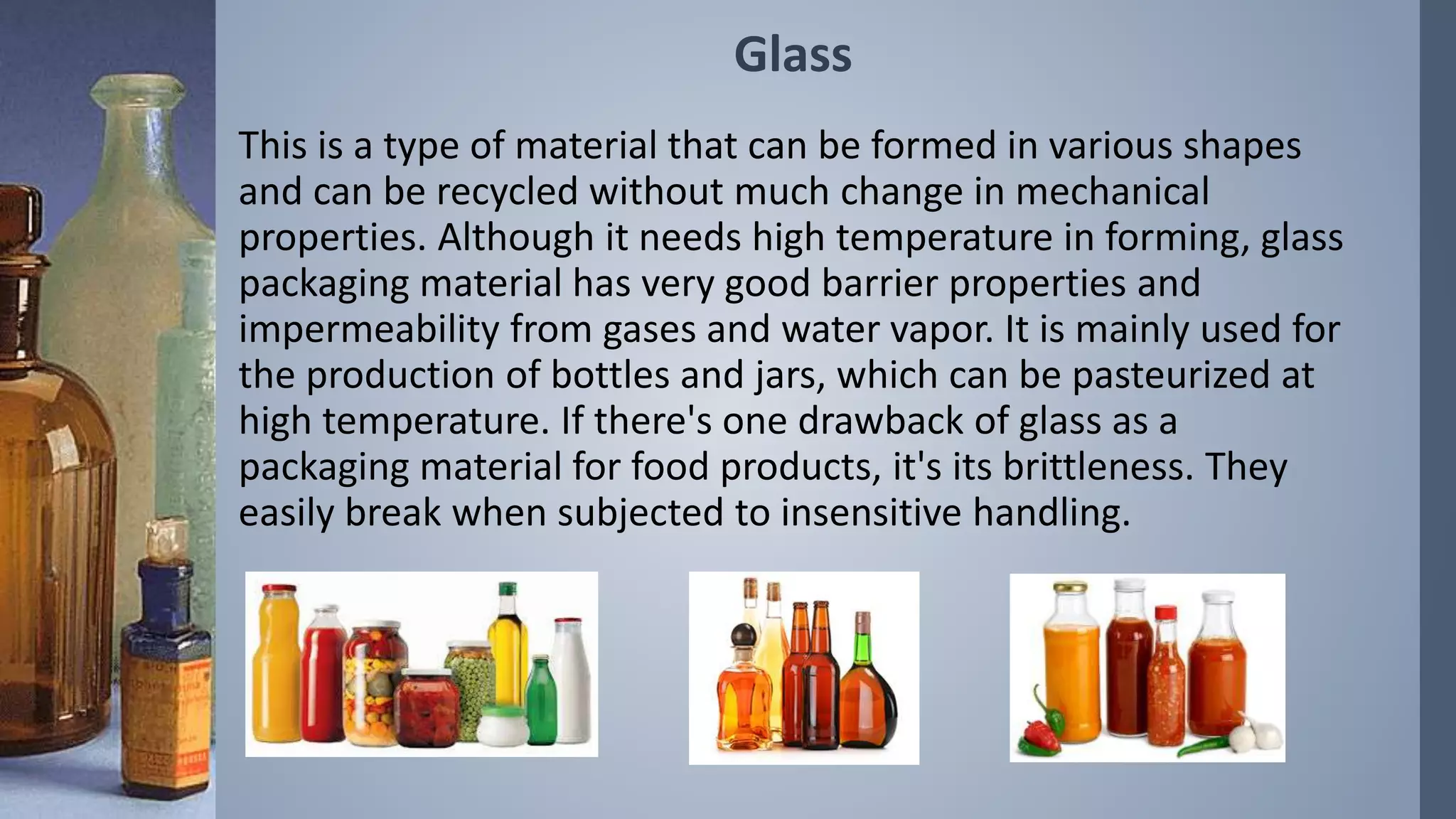
Glass
This is a type of material that can be formed in various shapes
and can be recycled without much change in mechanical
properties. Although it needs high temperature in forming, glass
packaging material has very good barrier properties and
impermeability from gases and water vapor. It is mainly used for
the production of bottles and jars, which can be pasteurized at
high temperature. If there's one drawback of glass as a
packaging material for food products, it's its brittleness. They
easily break when subjected to insensitive handling.
Metal
It has been a base in packaging for a long time. It's mainly used in
the production of cans, metallic trays, foils and bags for food
products. Like glasses, metals have very good barrier properties
but needs to be sterilized before packaging food and beverage. It
can also be used for frozen and heated meals. Disadvantages of
metals as food packaging include the high cost, corrosion for
some types and opaqueness that consumers can't see what's
inside.
Paper and Cardboard
These materials from wood are
made mainly used for dry food
such as sugar, salt, bread, flour
and others. Paper is light, easy
printable but permeable to air,
water vapor and gases. They
are very cheap materials and
yet can be easily customized to
various shapes and sizes. Paper
as packaging material has very
low impact on environment
because of its highly
sustainable property.
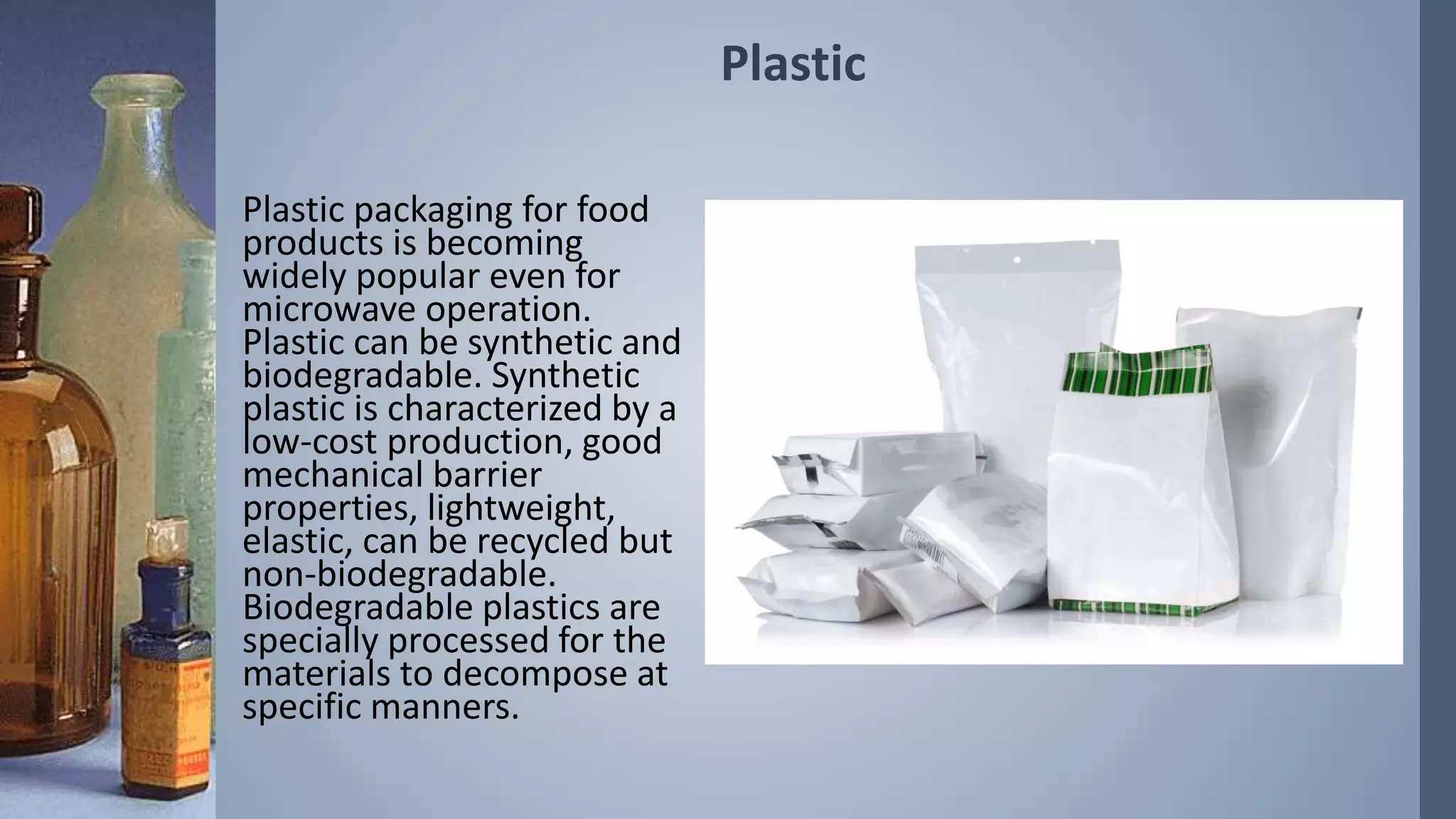
Plastic
Plastic packaging for food
products is becoming
widely popular even for
microwave operation.
Plastic can be synthetic and
biodegradable. Synthetic
plastic is characterized by a
low-cost production, good
mechanical barrier
properties, lightweight,
elastic, can be recycled but
non-biodegradable.
Biodegradable plastics are
specially processed for the
materials to decompose at
specific manners.
Mixed materials (laminates)
Packaging materials of this
type is composed of few thin
layers of different materials
like metallic plastic and paper
films. They also have very
good barrier properties and
laminate packaging is airtight
that increases the shell life of
products.
Active and intelligent packaging
Food packaging materials, which contain substances that prolong
shelf-life. These substances are mainly oxygen and ethylene
absorbers. They could also be compounds emitting or binding
oxygen dioxide, regulating water, antioxidants and antibacterial
substances.
Nanocomposites
They are new-generation packaging with specific properties
which improve mechanical and barrier properties. They are
usually applied to production of bottles or films with very low
permeability for oxygen and water vapor. This one though is
relatively expensive but can be recycled.
Food and beverages deserve the best packaging materials
because of health concerns. Issues about economics should not
compromise the quality of food packaging. People are becoming
more health conscious and very discriminating about the food
and drinks they bring in their stomach. Accordingly, food
packaging materials should provide the utmost protection to the
products for human consumption.
Contact Us:
Address:
Plot No. EWTA-28, Jebel Ali
P.O. Box 16797, Dubai, UAE
Phone:
04-8819990
Fax:
04-8815745, 04-8819723
Email:
exppack@emirates.net.ae
Website:
http://exppack.ae/adp.html
Food packaging materials

Food packaging materials

  • 1.
  • 2.
    Food Packaging Materials Foodis one product that needs careful packaging. This is because of the strict regulations and standards imposed in relation to health issues arising from wrong packaging. Accordingly, food packaging materials should be suitable to provide superior health protection and convenience to consumers as well as low impact on the environment. For your packaging needs, there are different materials to choose from for food and beverage:
  • 3.
    Glass This is atype of material that can be formed in various shapes and can be recycled without much change in mechanical properties. Although it needs high temperature in forming, glass packaging material has very good barrier properties and impermeability from gases and water vapor. It is mainly used for the production of bottles and jars, which can be pasteurized at high temperature. If there's one drawback of glass as a packaging material for food products, it's its brittleness. They easily break when subjected to insensitive handling.
  • 4.
    Metal It has beena base in packaging for a long time. It's mainly used in the production of cans, metallic trays, foils and bags for food products. Like glasses, metals have very good barrier properties but needs to be sterilized before packaging food and beverage. It can also be used for frozen and heated meals. Disadvantages of metals as food packaging include the high cost, corrosion for some types and opaqueness that consumers can't see what's inside.
  • 5.
    Paper and Cardboard Thesematerials from wood are made mainly used for dry food such as sugar, salt, bread, flour and others. Paper is light, easy printable but permeable to air, water vapor and gases. They are very cheap materials and yet can be easily customized to various shapes and sizes. Paper as packaging material has very low impact on environment because of its highly sustainable property.
  • 6.
    Plastic Plastic packaging forfood products is becoming widely popular even for microwave operation. Plastic can be synthetic and biodegradable. Synthetic plastic is characterized by a low-cost production, good mechanical barrier properties, lightweight, elastic, can be recycled but non-biodegradable. Biodegradable plastics are specially processed for the materials to decompose at specific manners.
  • 7.
    Mixed materials (laminates) Packagingmaterials of this type is composed of few thin layers of different materials like metallic plastic and paper films. They also have very good barrier properties and laminate packaging is airtight that increases the shell life of products.
  • 8.
    Active and intelligentpackaging Food packaging materials, which contain substances that prolong shelf-life. These substances are mainly oxygen and ethylene absorbers. They could also be compounds emitting or binding oxygen dioxide, regulating water, antioxidants and antibacterial substances.
  • 9.
    Nanocomposites They are new-generationpackaging with specific properties which improve mechanical and barrier properties. They are usually applied to production of bottles or films with very low permeability for oxygen and water vapor. This one though is relatively expensive but can be recycled. Food and beverages deserve the best packaging materials because of health concerns. Issues about economics should not compromise the quality of food packaging. People are becoming more health conscious and very discriminating about the food and drinks they bring in their stomach. Accordingly, food packaging materials should provide the utmost protection to the products for human consumption.
  • 10.
    Contact Us: Address: Plot No.EWTA-28, Jebel Ali P.O. Box 16797, Dubai, UAE Phone: 04-8819990 Fax: 04-8815745, 04-8819723 Email: exppack@emirates.net.ae Website: http://exppack.ae/adp.html