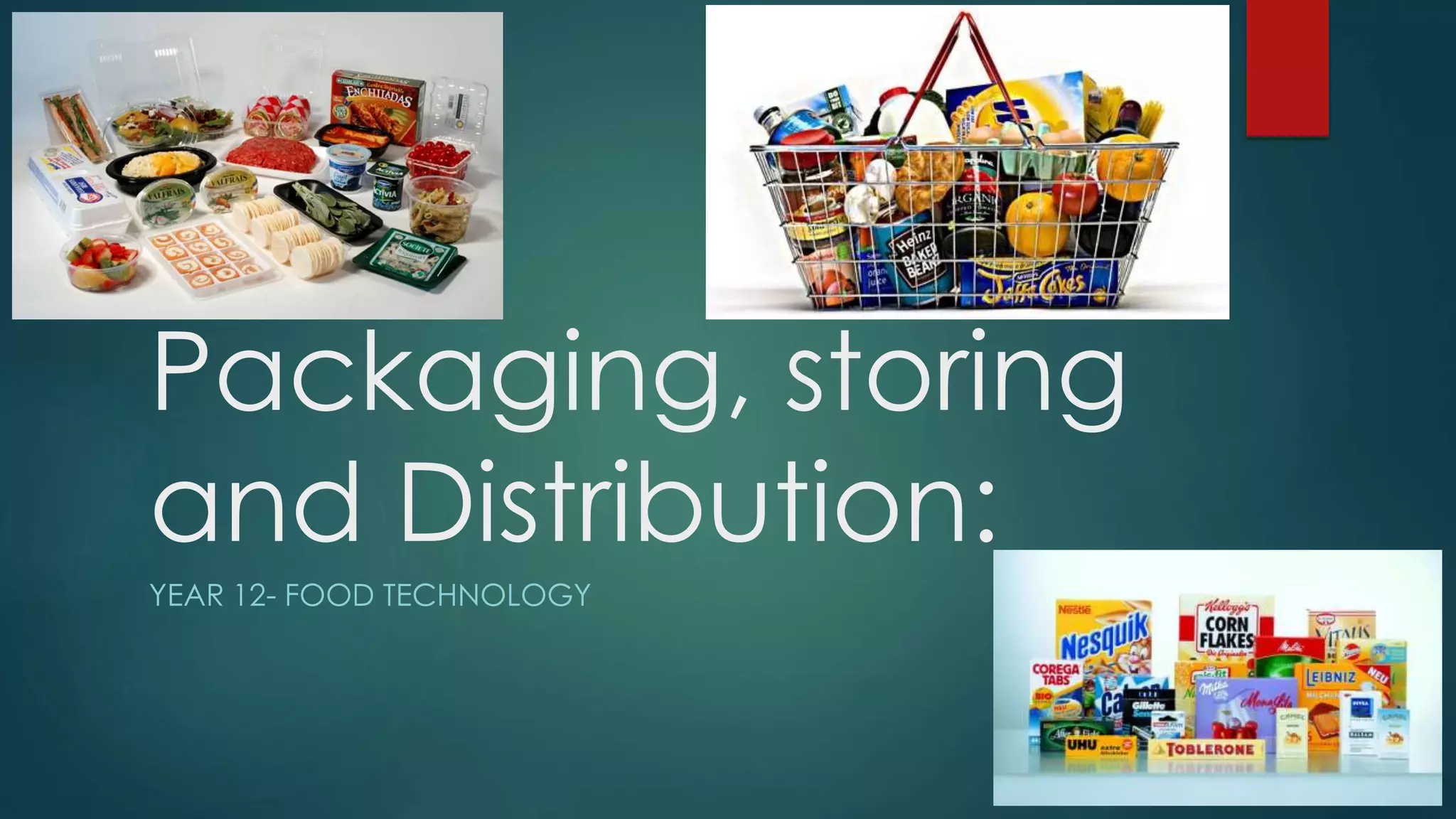
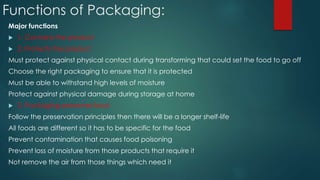
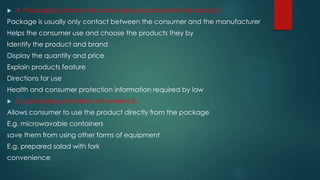
Packaging, storing
and Distribution:
YEAR 12- FOOD TECHNOLOGY
Functions of Packaging:
Major functions
 1. Contains the product
 2. Protects the product
Must protect against physical contact during transforming that could set the food to go off
Choose the right packaging to ensure that it is protected
Must be able to withstand high levels of moisture
Protect against physical damage during storage at home
 3. Packaging preserves food
Follow the preservation principles then there will be a longer shelf-life
All foods are different so it has to be specific for the food
Prevent contamination that causes food poisoning
Prevent loss of moisture from those products that require it
Not remove the air from those things which need it
 4. Packaging informs the consumers and promotes the product
Package is usually only contact between the consumer and the manufacturer
Helps the consumer use and choose the products they by
Identify the product and brand
Display the quantity and price
Explain products feature
Directions for use
Health and consumer protection information required by law
 5. packaging provided convenience;
Allows consumer to use the product directly from the package
E.g. microwavable containers
save them from using other forms of equipment
E.g. prepared salad with fork
convenience
Determining the best packaging
for the job:
 Different foods= different packaging
 Meet the needs of what the food is
 Considerations you must take into account:
Characteristics of the food- moisture levels and fragile it is
Likely causes of spoilage or lose of quality
Shelf-life requirements of the food
Intended usage by consumers- suitable shape size and weight
Company image- creates image of the product depending on what the packaging is used
Cost- packaging isn’t cheap
Production facilities- if company doesn’t have necessary equipment then it will cst you more to
bring in the required equipment
Legal requirements- food must not react with packaging material
Ethical considerations for the environment- recyclable?
Consumer wants and expectations- they like things that look nice
Types of Packaging material:
 Many different types
For example: can, plastic bag, glass, aluminium
Cans:
 Metal can= cheap and most widely used in Australia
e.g. tuna, corn, beans, soft drink, beers
 Advantages:
Easy to handle in manufacturing production line
Steel is impact resistant
Good protection and help the quality to be very good
High speed during manufacturing
Standard sizes and shapes so it is easier to manufacture
Can be stored for long periods
Glass container:
 Good product
 Chemically inert- doesn’t react with foods to produce flavour changes
 Non-porous and impermeable not allowing fluid to pass through= no extra liquid coming through the
packaging
 Odourless and hygienic
 Transparent= see the product inside good for inspections
 Easy to open and reseal
 Shapes, sizes and colours= a lot
 Provides a means of ling-term storage and shelf-life
 Re-used and recycled
 Strong but light
 Used for a wide range of different types of food products
 Problem= package but if you dropped it will smash so care must be taken when conveying glass and during
transportation
 Once it is closed different types are used
 Maintain a certain internal pressure
 Tamper proof lids so you know the product is safe and hasn’t been tampered with
e.g. olives, jams, coke,
Paper and cardboard:
E.g. wet-bix, fruit juices
 Paper= cost affective and versatile
= different types of paper depending on the needs of product
 Treat it so it matches the product is is packaging
 Can be thicker cardboard that can be laminated= strength and moisture resistant e.g. frozen meals
 Very common
Rigid plastic packaging:
 Two different types – rigid anf flexibale
 Flexible= plastic bags, cling wrap
 Rigid plastic is the other stuff
 Advantages:
 Light weight
 High resistance to breakage
 Available in many shapes and colours
 Cheap to produce
 Easily moulded material
 Most common are the
 PET- clear
 HDPE- once you apply colours, they colour becomes stronger
Flexible plastic packaging:
 Sheets or reels
Plastic film and bags:
 Common plastics used to make films and bags
 PET- cling wrap
 HDPE- used for stronger flexible packaging e.g. cereal box liners, shopping bags
 Low destiny polyethylene used in thinner flexible packaging e.g. wraps
 Polypropylene- used for packaging snack foods e.g. 2 Minute noodles
Lamination:
 Combining of two or more materials from separate reels that are stuck together with the use
of adhesive and/ or heat
 Common in plastic
 Vaccum bags and you seal it applying heat, it is laminating together
 Holds out moisture and keeps the air out
Aluminium foils and laminations:
 Foil is light weight and flexible
 All about the heating – can withstand variations of heat
 Heat sensitive items get stored in foil
 Certain milk containers and stuff, they have a foil lid helps to keep it fresh= composite
packaging- two different types of packaging inside the same product
Current development in
packaging:
 Been around for a long time and are constantly modified
 Sustainability= impacts on the environment
 biodegradable- break down
Cans:
 pull ring lids= current developments
 sterile cans (Aseptic canning) new style and different canning process, food is heated
separately and placed inside a sterile can
 different shapes and sizes- through more developments
Packaging that modify the foods environment:
Modified atmosphere packaging (MAP):
 a modified atmosphere packaging has had the air or space around the food altered by
manufacturers so the ideal mix of gases maximises shelf-life
Active packaging:
 barrier to outside environment
 can control and react to the environment within the packaging
 protects from outside and controls from the inside
 humidity increases= encouragement of micro-organisms occurs
 increase the rate which ripening occurs because the gases inside change- active
packaging protects against this
 extends the shelf-life of a product that would normally go off pretty quickly
 modified environment inside the packaging to make sure that it remains good for a long
time
Sous vide:
 cook and chill process
 used to extend shelf-life
 materials is polyester film because it needs to withstand heating and freezing
 advantages:
 Easily opened
 Light weight
 Low in cost
 Transparent
 Easily stored
Packaging innovations:
Biodegradable packaging:
 for the environment
 ability of the packaging to break down so we are not left with land fill
Intelligent packaging:
 respond to the changing conditions inside the packaging
 packages that tell you if the food product is fresh or not
 use of RFID chips- radio frequency identification tag- provides information about bulk
packaging
Packaging providing greater levels of convenience:
 packaging that does all the work for you
 chills it for you
 resealable packages
Food labelling:
 labelling is major source of information of that food
 FSANZ controls them
Storage and distribution during
food manufacturing:
Storage
 After raw materials arrive
 When a product is held while it changes
 After the final product has been packaged= warehousing
Have a place in your factory that stores what you need
Storage conditions:
 Cold storage- 0-5 degrees
 Freezing storage- -18 degrees
 Dry storage- below 24 degrees
You don’t want sunlight in these storages= remove it
No glass is used for storage= it can break- quality of the food
Transport and distribution after
manufacture:
 Need to handle good efficiently
 Packaging must be able to stand up to handling
 Needs to withstand the whole transportation and distribution stage= has to be strong

Packaging, Storing and Distribution

  • 1.
  • 2.
    Functions of Packaging: Majorfunctions  1. Contains the product  2. Protects the product Must protect against physical contact during transforming that could set the food to go off Choose the right packaging to ensure that it is protected Must be able to withstand high levels of moisture Protect against physical damage during storage at home  3. Packaging preserves food Follow the preservation principles then there will be a longer shelf-life All foods are different so it has to be specific for the food Prevent contamination that causes food poisoning Prevent loss of moisture from those products that require it Not remove the air from those things which need it
  • 3.
     4. Packaginginforms the consumers and promotes the product Package is usually only contact between the consumer and the manufacturer Helps the consumer use and choose the products they by Identify the product and brand Display the quantity and price Explain products feature Directions for use Health and consumer protection information required by law  5. packaging provided convenience; Allows consumer to use the product directly from the package E.g. microwavable containers save them from using other forms of equipment E.g. prepared salad with fork convenience
  • 4.
    Determining the bestpackaging for the job:  Different foods= different packaging  Meet the needs of what the food is  Considerations you must take into account: Characteristics of the food- moisture levels and fragile it is Likely causes of spoilage or lose of quality Shelf-life requirements of the food Intended usage by consumers- suitable shape size and weight Company image- creates image of the product depending on what the packaging is used Cost- packaging isn’t cheap Production facilities- if company doesn’t have necessary equipment then it will cst you more to bring in the required equipment Legal requirements- food must not react with packaging material Ethical considerations for the environment- recyclable? Consumer wants and expectations- they like things that look nice
  • 5.
    Types of Packagingmaterial:  Many different types For example: can, plastic bag, glass, aluminium Cans:  Metal can= cheap and most widely used in Australia e.g. tuna, corn, beans, soft drink, beers  Advantages: Easy to handle in manufacturing production line Steel is impact resistant Good protection and help the quality to be very good High speed during manufacturing Standard sizes and shapes so it is easier to manufacture Can be stored for long periods
  • 6.
    Glass container:  Goodproduct  Chemically inert- doesn’t react with foods to produce flavour changes  Non-porous and impermeable not allowing fluid to pass through= no extra liquid coming through the packaging  Odourless and hygienic  Transparent= see the product inside good for inspections  Easy to open and reseal  Shapes, sizes and colours= a lot  Provides a means of ling-term storage and shelf-life  Re-used and recycled  Strong but light  Used for a wide range of different types of food products  Problem= package but if you dropped it will smash so care must be taken when conveying glass and during transportation  Once it is closed different types are used  Maintain a certain internal pressure  Tamper proof lids so you know the product is safe and hasn’t been tampered with e.g. olives, jams, coke,
  • 7.
    Paper and cardboard: E.g.wet-bix, fruit juices  Paper= cost affective and versatile = different types of paper depending on the needs of product  Treat it so it matches the product is is packaging  Can be thicker cardboard that can be laminated= strength and moisture resistant e.g. frozen meals  Very common Rigid plastic packaging:  Two different types – rigid anf flexibale  Flexible= plastic bags, cling wrap  Rigid plastic is the other stuff  Advantages:  Light weight  High resistance to breakage  Available in many shapes and colours  Cheap to produce  Easily moulded material  Most common are the  PET- clear  HDPE- once you apply colours, they colour becomes stronger
  • 8.
    Flexible plastic packaging: Sheets or reels Plastic film and bags:  Common plastics used to make films and bags  PET- cling wrap  HDPE- used for stronger flexible packaging e.g. cereal box liners, shopping bags  Low destiny polyethylene used in thinner flexible packaging e.g. wraps  Polypropylene- used for packaging snack foods e.g. 2 Minute noodles Lamination:  Combining of two or more materials from separate reels that are stuck together with the use of adhesive and/ or heat  Common in plastic  Vaccum bags and you seal it applying heat, it is laminating together  Holds out moisture and keeps the air out
  • 9.
    Aluminium foils andlaminations:  Foil is light weight and flexible  All about the heating – can withstand variations of heat  Heat sensitive items get stored in foil  Certain milk containers and stuff, they have a foil lid helps to keep it fresh= composite packaging- two different types of packaging inside the same product
  • 10.
    Current development in packaging: Been around for a long time and are constantly modified  Sustainability= impacts on the environment  biodegradable- break down Cans:  pull ring lids= current developments  sterile cans (Aseptic canning) new style and different canning process, food is heated separately and placed inside a sterile can  different shapes and sizes- through more developments
  • 11.
    Packaging that modifythe foods environment: Modified atmosphere packaging (MAP):  a modified atmosphere packaging has had the air or space around the food altered by manufacturers so the ideal mix of gases maximises shelf-life Active packaging:  barrier to outside environment  can control and react to the environment within the packaging  protects from outside and controls from the inside  humidity increases= encouragement of micro-organisms occurs  increase the rate which ripening occurs because the gases inside change- active packaging protects against this  extends the shelf-life of a product that would normally go off pretty quickly  modified environment inside the packaging to make sure that it remains good for a long time
  • 12.
    Sous vide:  cookand chill process  used to extend shelf-life  materials is polyester film because it needs to withstand heating and freezing  advantages:  Easily opened  Light weight  Low in cost  Transparent  Easily stored
  • 13.
    Packaging innovations: Biodegradable packaging: for the environment  ability of the packaging to break down so we are not left with land fill Intelligent packaging:  respond to the changing conditions inside the packaging  packages that tell you if the food product is fresh or not  use of RFID chips- radio frequency identification tag- provides information about bulk packaging Packaging providing greater levels of convenience:  packaging that does all the work for you  chills it for you  resealable packages
  • 14.
    Food labelling:  labellingis major source of information of that food  FSANZ controls them Storage and distribution during food manufacturing: Storage  After raw materials arrive  When a product is held while it changes  After the final product has been packaged= warehousing Have a place in your factory that stores what you need Storage conditions:  Cold storage- 0-5 degrees  Freezing storage- -18 degrees  Dry storage- below 24 degrees You don’t want sunlight in these storages= remove it No glass is used for storage= it can break- quality of the food
  • 15.
    Transport and distributionafter manufacture:  Need to handle good efficiently  Packaging must be able to stand up to handling  Needs to withstand the whole transportation and distribution stage= has to be strong