SPECIALITY FOODS BASED ON PROCESS
Presented by
Apurva Vakharkar
i.e. innovative process technology
 SPECIALITY FOODS :
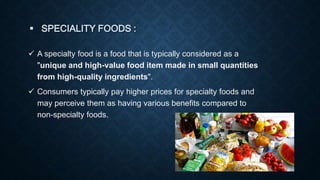
 A specialty food is a food that is typically considered as a
"unique and high-value food item made in small quantities
from high-quality ingredients".
 Consumers typically pay higher prices for specialty foods and
may perceive them as having various benefits compared to
non-specialty foods.
 NEED AND SCOPE OF SPECIALITY FOODS
• Nutritional Quality is Preserved–Modern food processing
technology ensures that no food loses its nutritional value while
storing it.
• Preservation and packaging techniques stabilize these important
nutrients.
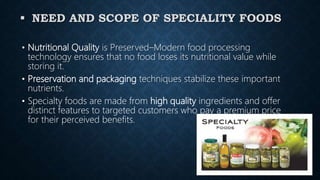
• Specialty foods are made from high quality ingredients and offer
distinct features to targeted customers who pay a premium price
for their perceived benefits.
 TYPES OF SPECIALITY FOODS :
In preparation of different types of speciality foods , use
different process which includes ,
1) Bakery process
2) Fermented & Fermentation products
3) Extruded products
4)Canning and juicing
1. BAKERY PRODUCTS :
• In this process products are prepared by using baking process are called as
bakery products.
• Baking is normally carried out by oven.
• Different products in baking process –
Bread
Cookies
Cake & pastries
Crackers
Biscuits
• Some medicinal and health benefits biscuits are prepared by using baking
technology.
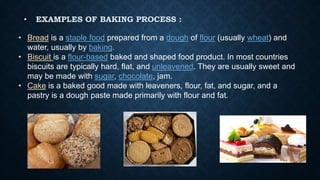
• EXAMPLES OF BAKING PROCESS :
• Bread is a staple food prepared from a dough of flour (usually wheat) and
water, usually by baking.
• Biscuit is a flour-based baked and shaped food product. In most countries
biscuits are typically hard, flat, and unleavened. They are usually sweet and
may be made with sugar, chocolate, jam.
• Cake is a baked good made with leaveners, flour, fat, and sugar, and a
pastry is a dough paste made primarily with flour and fat.
2) FERMENTED & FERMENTATION PRODUCTS
• Fermentation means conversion of CHO into alcoholic by using living
micro organism called as FERMENTATION .
• This process is not only useful for making products but also for
preservation technology.
• It is useful in
Enrichment of diet
Preservation of foods
Biological enrichment of foods
Decrease cooking time and feed Requirements.
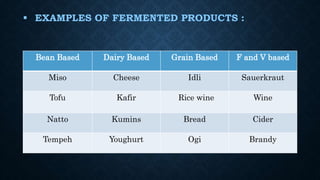
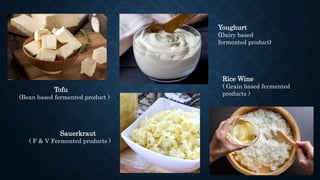
 EXAMPLES OF FERMENTED PRODUCTS :
Bean Based Dairy Based Grain Based F and V based
Miso Cheese Idli Sauerkraut
Tofu Kafir Rice wine Wine
Natto Kumins Bread Cider
Tempeh Youghurt Ogi Brandy
Tofu
(Bean based fermented product )
Youghurt
(Dairy based
fermented product)
Rice Wine
( Grain based fermented
products )
Sauerkraut
( F & V Fermented products )
3) EXTRUDED PRODUCTS :
• In this type of products EXTRUSION cooking technology is applied.
• Extrusion is a mechanical process create products of a desired shape, size,
and/or texture.
• in which certain materials are forced, under pressure, through a die opening
to this process is mainly carried out in extruder.
• Food products manufactured using extrusion usually have a high starch
content.
• These include some pasta, breads, many breakfast cereals and ready-to-eat
snacks, confectionery, pre- made cookie dough, some baby foods, full-fat
soy, textured vegetable protein, some beverages, and dry and semi-moist
pet foods.
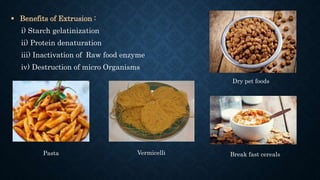
 Benefits of Extrusion :
i) Starch gelatinization
ii) Protein denaturation
iii) Inactivation of Raw food enzyme
iv) Destruction of micro Organisms
Dry pet foods
Pasta Vermicelli Break fast cereals
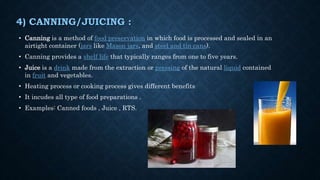
4) CANNING/JUICING :
• Canning is a method of food preservation in which food is processed and sealed in an
airtight container (jars like Mason jars, and steel and tin cans).
• Canning provides a shelf life that typically ranges from one to five years.
• Juice is a drink made from the extraction or pressing of the natural liquid contained
in fruit and vegetables.
• Heating process or cooking process gives different benefits
• It incudes all type of food preparations .
• Examples: Canned foods , Juice , RTS.
ADVANTAGES :
• Foods are usually processed to kill harmful bacteria or other microorganisms, to make them safer and for
longer shelf life.
• Some processed foods like peanut butter, blueberry jam, home made cranberry juice, apple juice, grape
juice, are healthy choices that can be harmless.
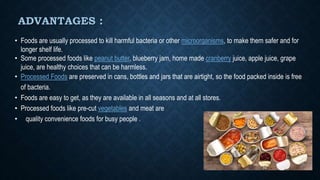
• Processed Foods are preserved in cans, bottles and jars that are airtight, so the food packed inside is free
of bacteria.
• Foods are easy to get, as they are available in all seasons and at all stores.
• Processed foods like pre-cut vegetables and meat are
• quality convenience foods for busy people .
DISADVANTAGES :
• Removes some of the nutrients, vitamins and fiber present in the food.
• The foods are genetically modified and may cause gastrointestinal disorders, infertility and can damage your
organs.
• The trans fats and sugar present in processed items can cause inflammation, an unhealthy condition that leads
to asthma.
• Frequent intake of processed foods can make people become angry and irritable.
• Daily munching of processed foods promotes aging and kidney damage as they contain phosphates and
genetically engineered ingredients.
THANK YOU

Speciality Foods based on process.pptx

  • 1.
    SPECIALITY FOODS BASEDON PROCESS Presented by Apurva Vakharkar i.e. innovative process technology
  • 2.
     SPECIALITY FOODS:  A specialty food is a food that is typically considered as a "unique and high-value food item made in small quantities from high-quality ingredients".  Consumers typically pay higher prices for specialty foods and may perceive them as having various benefits compared to non-specialty foods.
  • 3.
     NEED ANDSCOPE OF SPECIALITY FOODS • Nutritional Quality is Preserved–Modern food processing technology ensures that no food loses its nutritional value while storing it. • Preservation and packaging techniques stabilize these important nutrients. • Specialty foods are made from high quality ingredients and offer distinct features to targeted customers who pay a premium price for their perceived benefits.
  • 4.
     TYPES OFSPECIALITY FOODS : In preparation of different types of speciality foods , use different process which includes , 1) Bakery process 2) Fermented & Fermentation products 3) Extruded products 4)Canning and juicing
  • 5.
    1. BAKERY PRODUCTS: • In this process products are prepared by using baking process are called as bakery products. • Baking is normally carried out by oven. • Different products in baking process – Bread Cookies Cake & pastries Crackers Biscuits • Some medicinal and health benefits biscuits are prepared by using baking technology.
  • 6.
    • EXAMPLES OFBAKING PROCESS : • Bread is a staple food prepared from a dough of flour (usually wheat) and water, usually by baking. • Biscuit is a flour-based baked and shaped food product. In most countries biscuits are typically hard, flat, and unleavened. They are usually sweet and may be made with sugar, chocolate, jam. • Cake is a baked good made with leaveners, flour, fat, and sugar, and a pastry is a dough paste made primarily with flour and fat.
  • 7.
    2) FERMENTED &FERMENTATION PRODUCTS • Fermentation means conversion of CHO into alcoholic by using living micro organism called as FERMENTATION . • This process is not only useful for making products but also for preservation technology. • It is useful in Enrichment of diet Preservation of foods Biological enrichment of foods Decrease cooking time and feed Requirements.
  • 8.
     EXAMPLES OFFERMENTED PRODUCTS : Bean Based Dairy Based Grain Based F and V based Miso Cheese Idli Sauerkraut Tofu Kafir Rice wine Wine Natto Kumins Bread Cider Tempeh Youghurt Ogi Brandy
  • 9.
    Tofu (Bean based fermentedproduct ) Youghurt (Dairy based fermented product) Rice Wine ( Grain based fermented products ) Sauerkraut ( F & V Fermented products )
  • 10.
    3) EXTRUDED PRODUCTS: • In this type of products EXTRUSION cooking technology is applied. • Extrusion is a mechanical process create products of a desired shape, size, and/or texture. • in which certain materials are forced, under pressure, through a die opening to this process is mainly carried out in extruder. • Food products manufactured using extrusion usually have a high starch content. • These include some pasta, breads, many breakfast cereals and ready-to-eat snacks, confectionery, pre- made cookie dough, some baby foods, full-fat soy, textured vegetable protein, some beverages, and dry and semi-moist pet foods.
  • 11.
     Benefits ofExtrusion : i) Starch gelatinization ii) Protein denaturation iii) Inactivation of Raw food enzyme iv) Destruction of micro Organisms Dry pet foods Pasta Vermicelli Break fast cereals
  • 12.
    4) CANNING/JUICING : •Canning is a method of food preservation in which food is processed and sealed in an airtight container (jars like Mason jars, and steel and tin cans). • Canning provides a shelf life that typically ranges from one to five years. • Juice is a drink made from the extraction or pressing of the natural liquid contained in fruit and vegetables. • Heating process or cooking process gives different benefits • It incudes all type of food preparations . • Examples: Canned foods , Juice , RTS.
  • 13.
    ADVANTAGES : • Foodsare usually processed to kill harmful bacteria or other microorganisms, to make them safer and for longer shelf life. • Some processed foods like peanut butter, blueberry jam, home made cranberry juice, apple juice, grape juice, are healthy choices that can be harmless. • Processed Foods are preserved in cans, bottles and jars that are airtight, so the food packed inside is free of bacteria. • Foods are easy to get, as they are available in all seasons and at all stores. • Processed foods like pre-cut vegetables and meat are • quality convenience foods for busy people .
  • 14.
    DISADVANTAGES : • Removessome of the nutrients, vitamins and fiber present in the food. • The foods are genetically modified and may cause gastrointestinal disorders, infertility and can damage your organs. • The trans fats and sugar present in processed items can cause inflammation, an unhealthy condition that leads to asthma. • Frequent intake of processed foods can make people become angry and irritable. • Daily munching of processed foods promotes aging and kidney damage as they contain phosphates and genetically engineered ingredients.
  • 15.