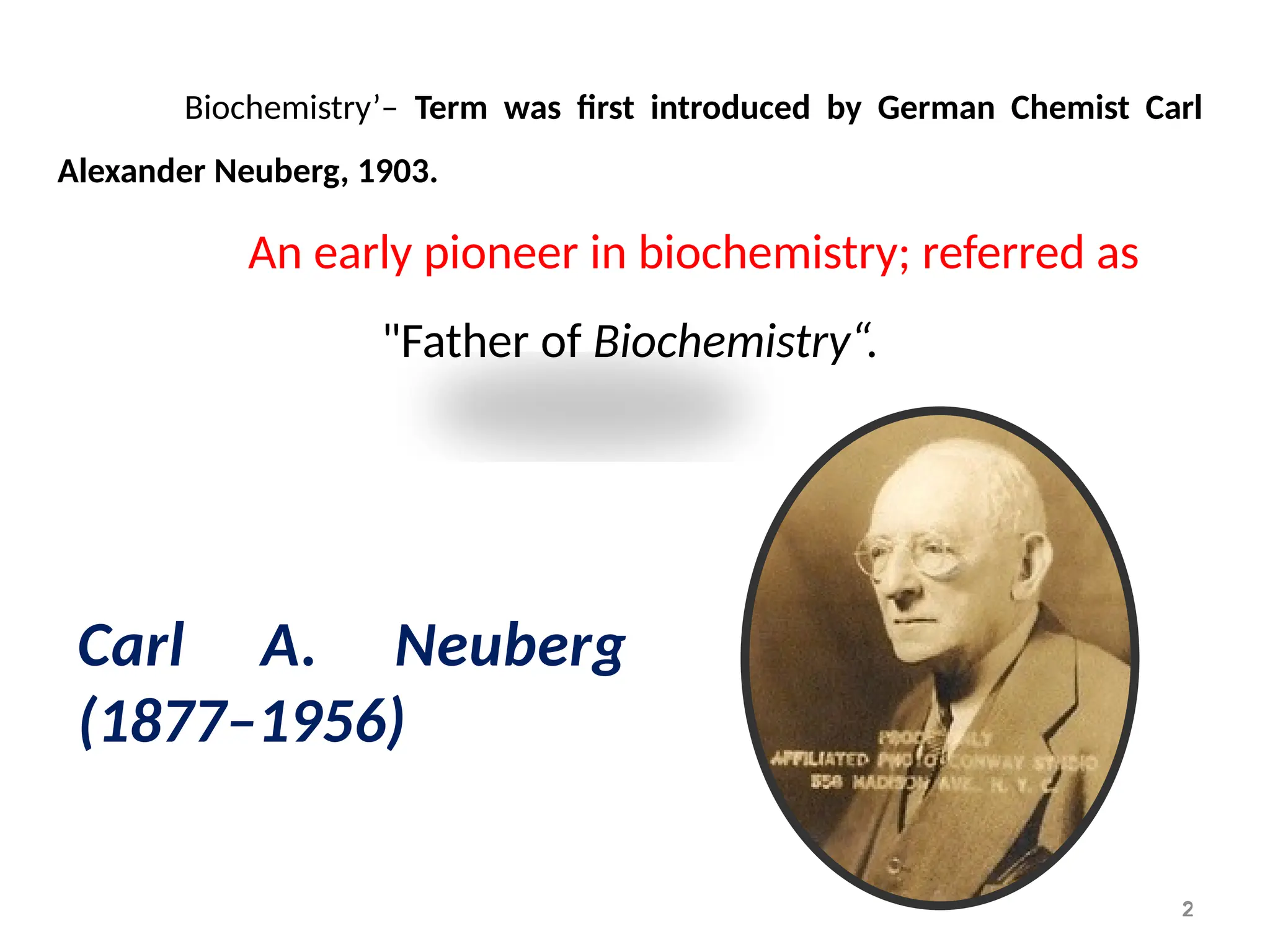
Biochemistry’– Term was first introduced by German Chemist Carl
Alexander Neuberg, 1903.
An early pioneer in biochemistry; referred as
"Father of Biochemistry“.
2
2
Carl A. Neuberg
(1877–1956)
3
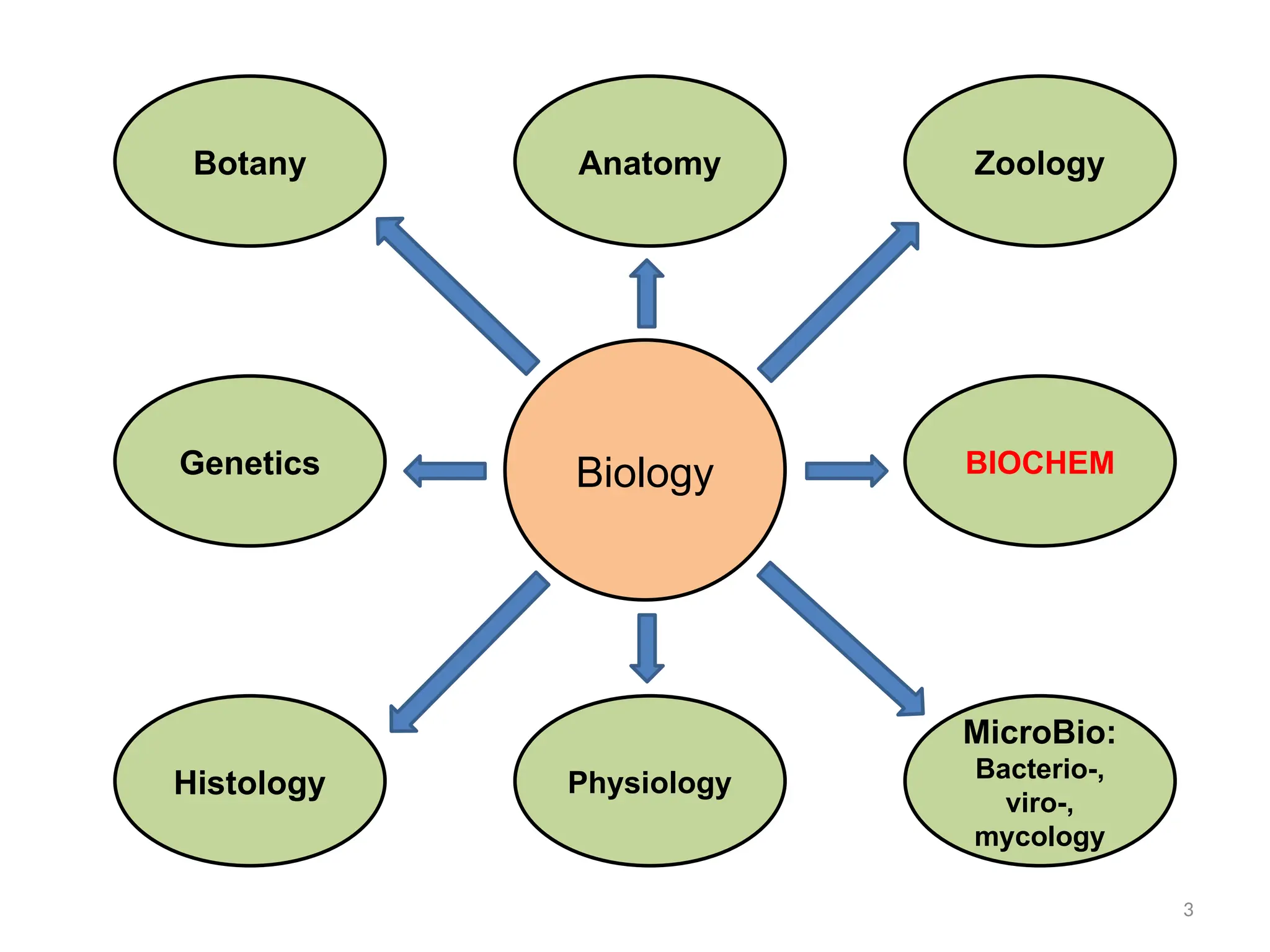
Biology
Histology
Botany
Genetics
MicroBio:
Bacterio-,
viro-,
mycology
BIOCHEM
Zoology
Anatomy
Physiology
4
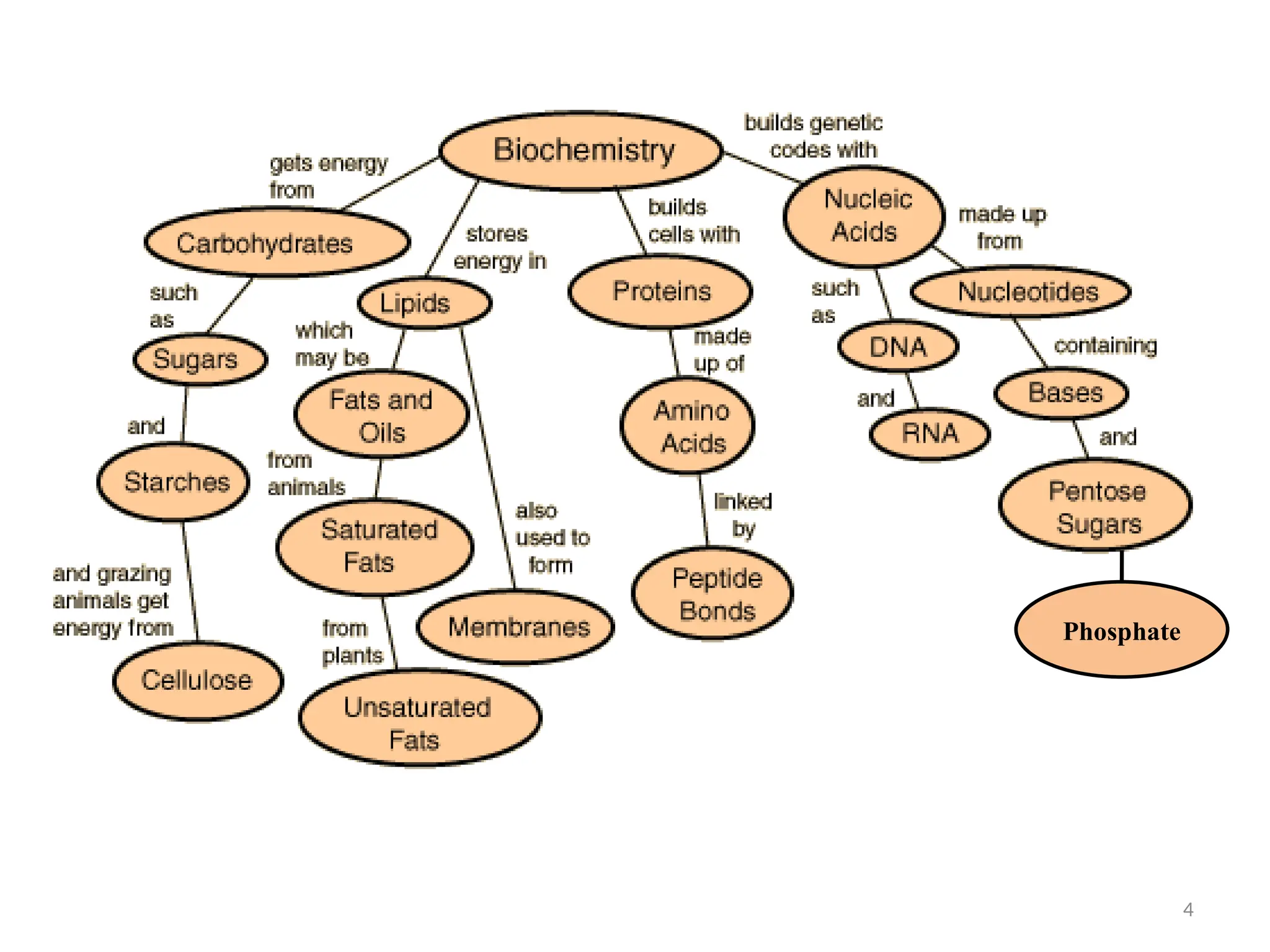
Phosphate
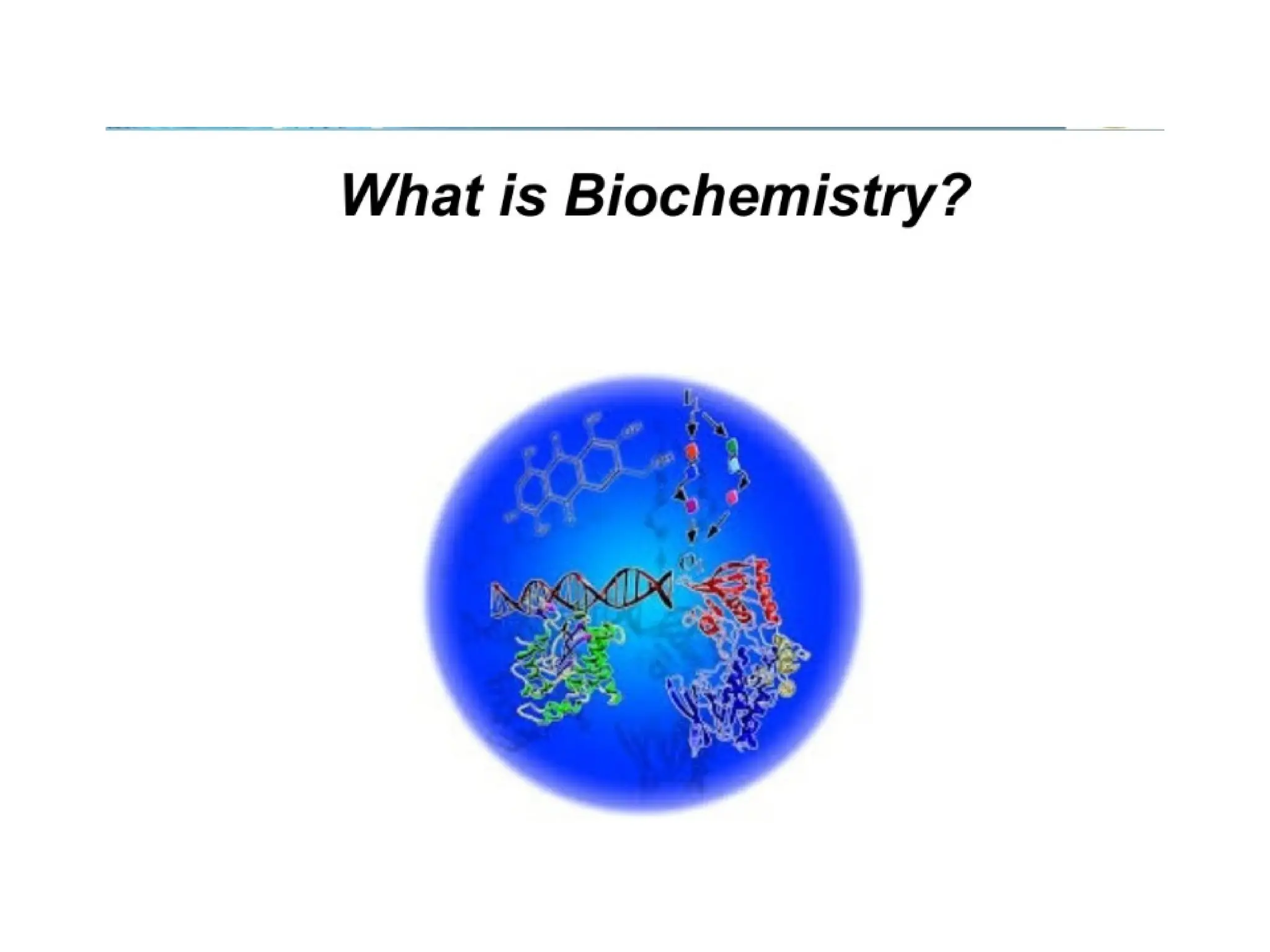
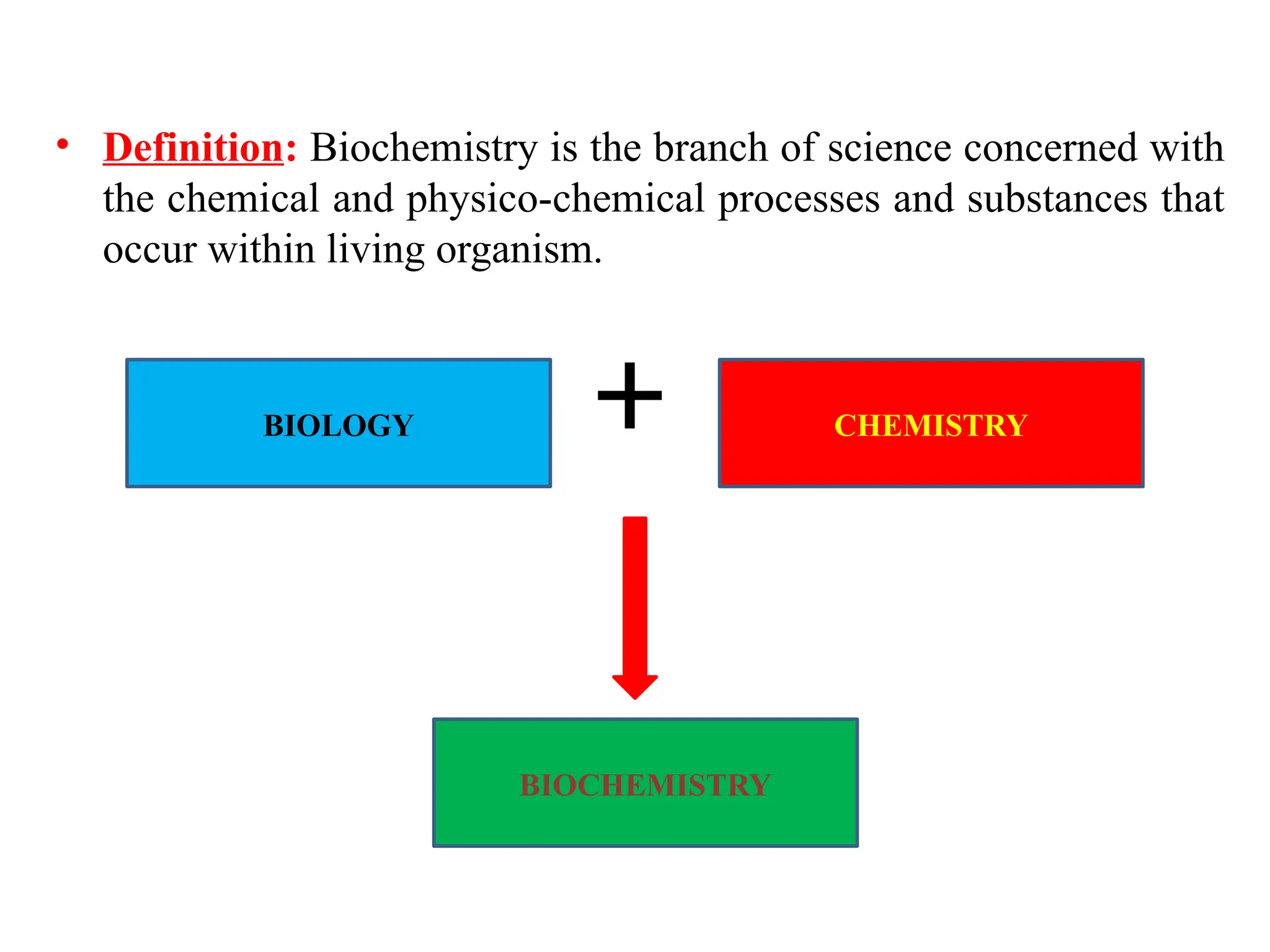
• Definition: Biochemistry is the branch of science concerned with
the chemical and physico-chemical processes and substances that
occur within living organism.
+
BIOLOGY CHEMISTRY
BIOCHEMISTRY
6
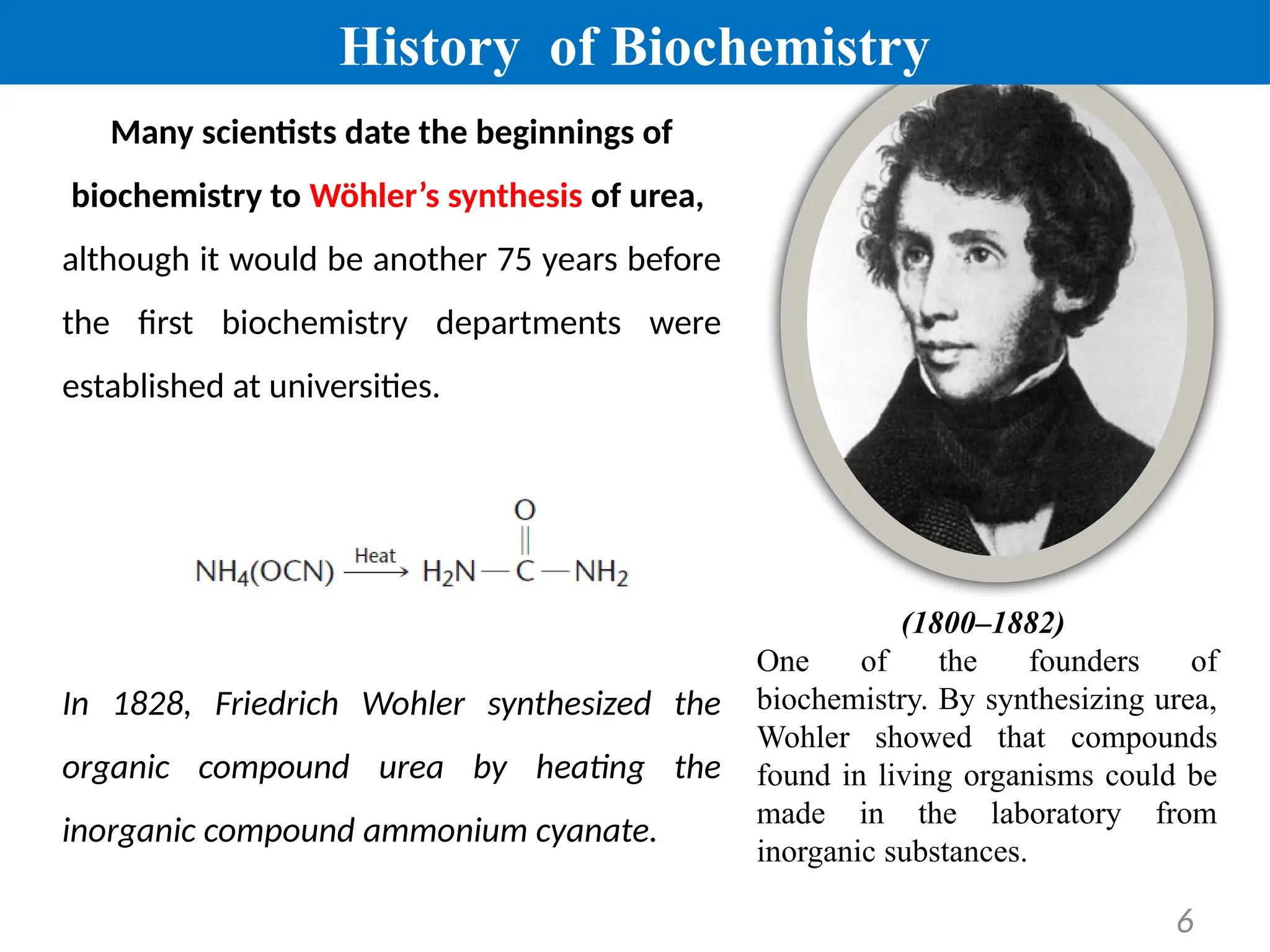
Many scientists date the beginnings of
biochemistry to Wöhler’s synthesis of urea,
although it would be another 75 years before
the first biochemistry departments were
established at universities.
In 1828, Friedrich Wohler synthesized the
organic compound urea by heating the
inorganic compound ammonium cyanate.
(1800–1882)
One of the founders of
biochemistry. By synthesizing urea,
Wohler showed that compounds
found in living organisms could be
made in the laboratory from
inorganic substances.
History of Biochemistry
7
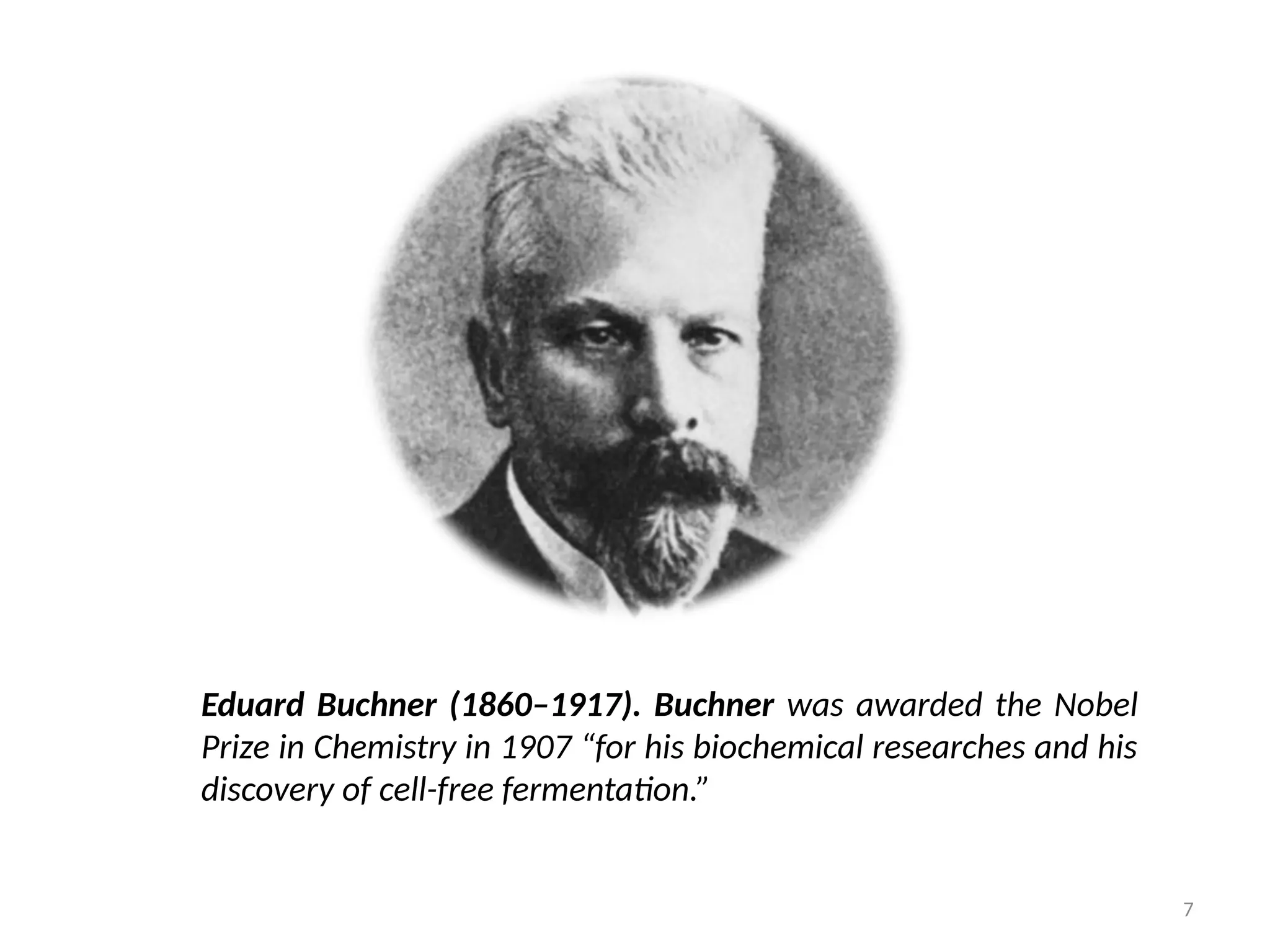
Eduard Buchner (1860–1917). Buchner was awarded the Nobel
Prize in Chemistry in 1907 “for his biochemical researches and his
discovery of cell-free fermentation.”
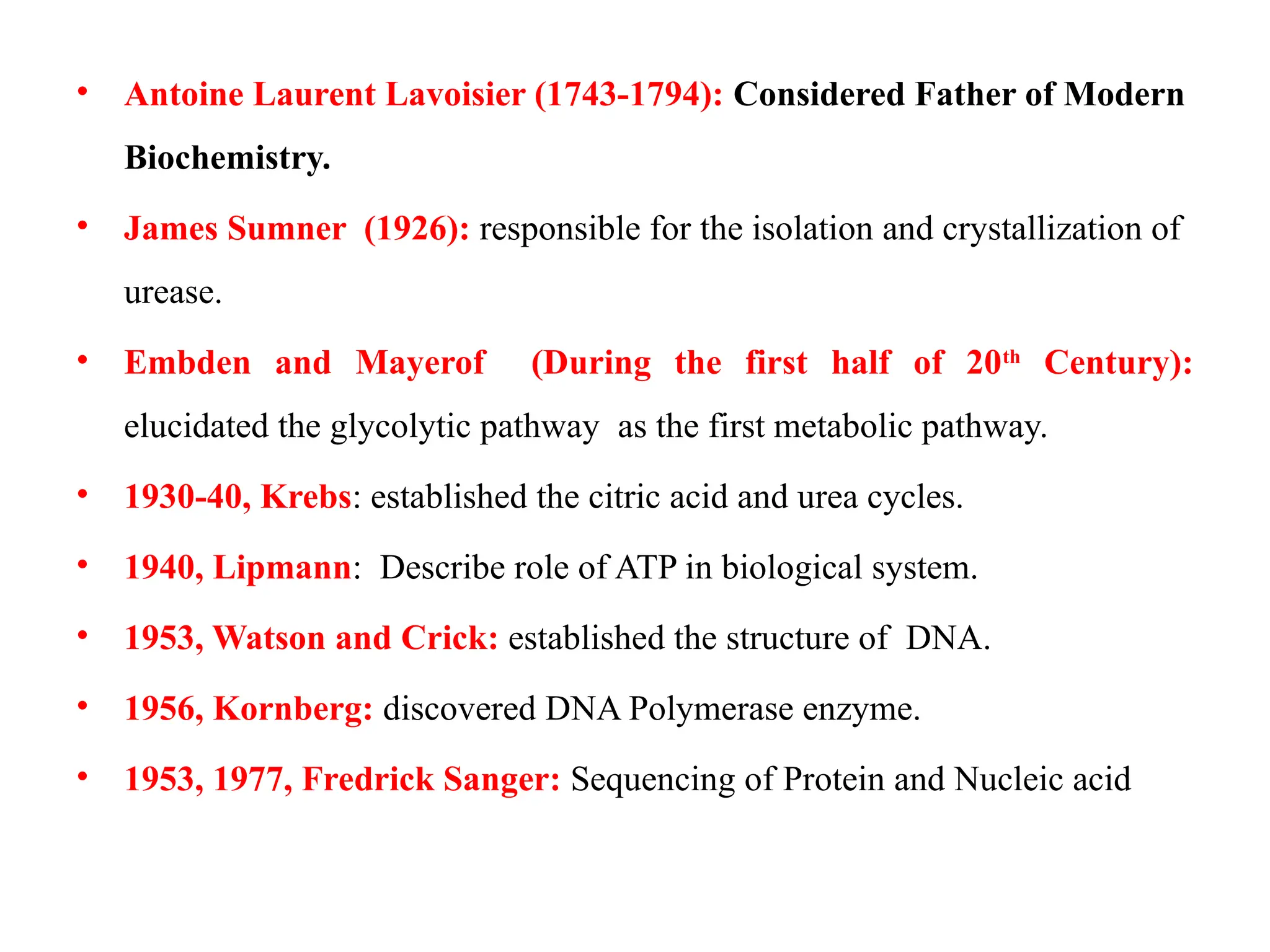
• Antoine Laurent Lavoisier (1743-1794): Considered Father of Modern
Biochemistry.
• James Sumner (1926): responsible for the isolation and crystallization of
urease.
• Embden and Mayerof (During the first half of 20th
Century):
elucidated the glycolytic pathway as the first metabolic pathway.
• 1930-40, Krebs: established the citric acid and urea cycles.
• 1940, Lipmann: Describe role of ATP in biological system.
• 1953, Watson and Crick: established the structure of DNA.
• 1956, Kornberg: discovered DNA Polymerase enzyme.
• 1953, 1977, Fredrick Sanger: Sequencing of Protein and Nucleic acid
Importance of Biochemistry
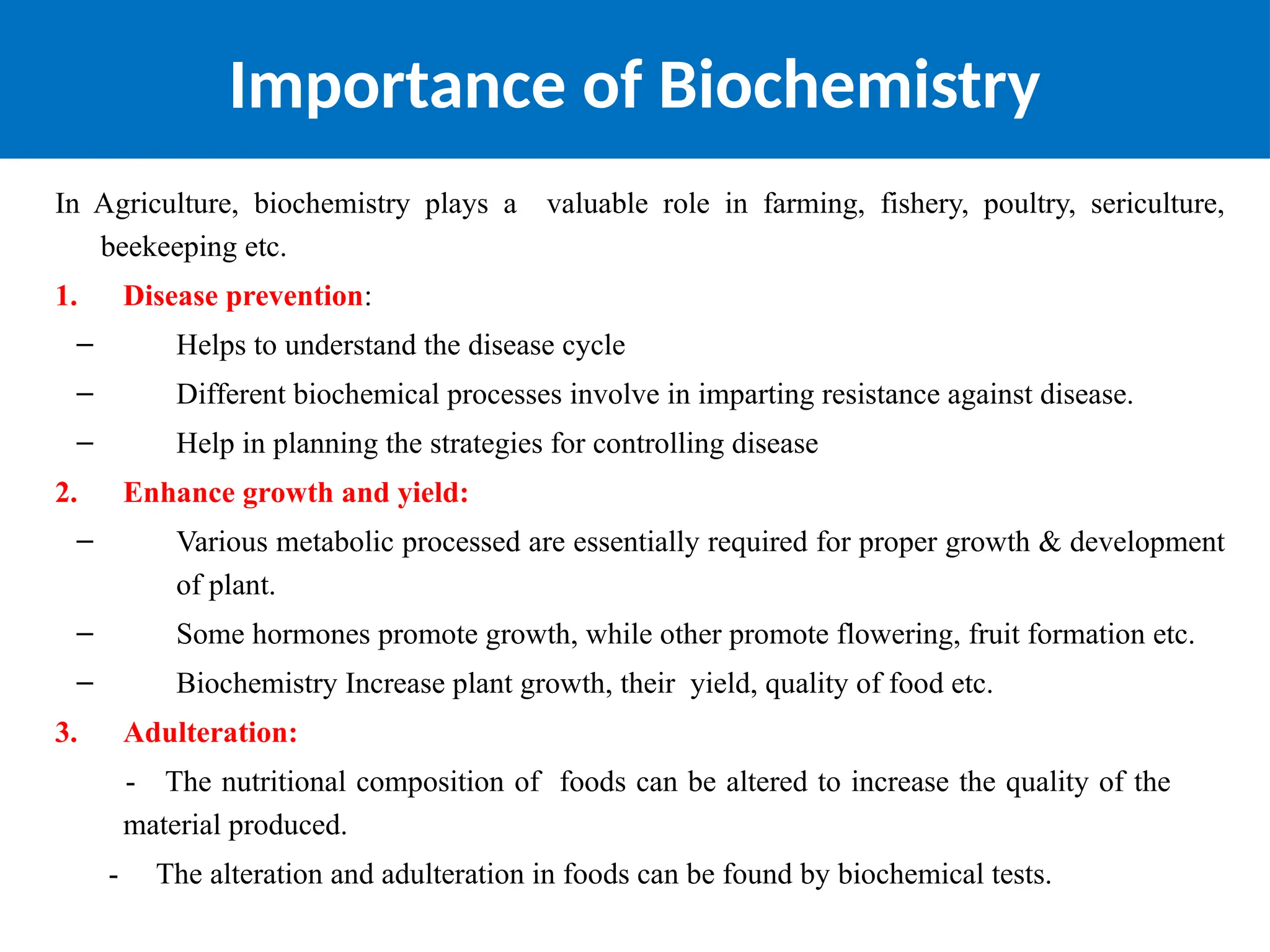
In Agriculture, biochemistry plays a valuable role in farming, fishery, poultry, sericulture,
beekeeping etc.
1. Disease prevention:
– Helps to understand the disease cycle
– Different biochemical processes involve in imparting resistance against disease.
– Help in planning the strategies for controlling disease
2. Enhance growth and yield:
– Various metabolic processed are essentially required for proper growth & development
of plant.
– Some hormones promote growth, while other promote flowering, fruit formation etc.
– Biochemistry Increase plant growth, their yield, quality of food etc.
3. Adulteration:
- The nutritional composition of foods can be altered to increase the quality of the
material produced.
- The alteration and adulteration in foods can be found by biochemical tests.
Importance of Biochemistry
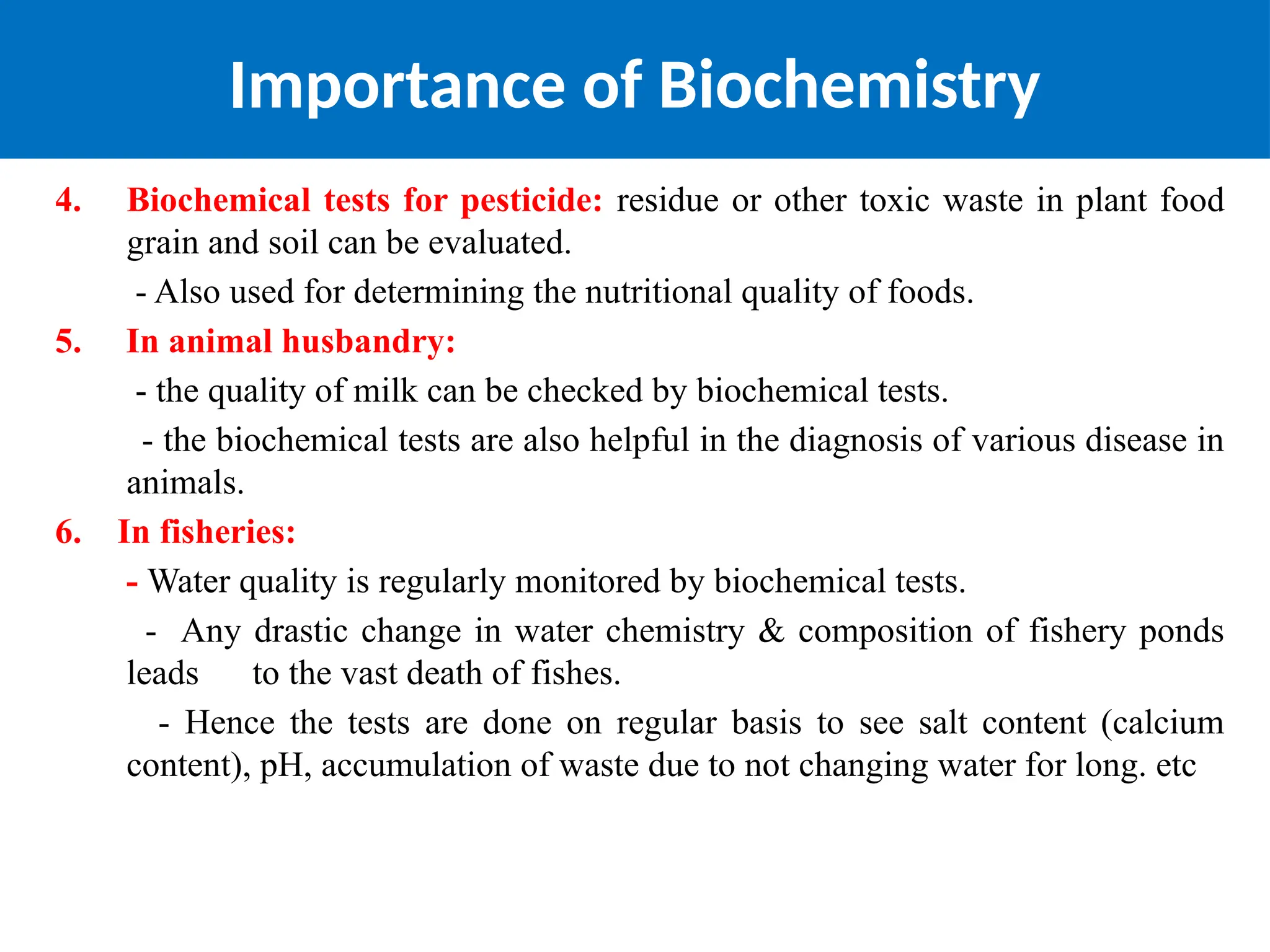
4. Biochemical tests for pesticide: residue or other toxic waste in plant food
grain and soil can be evaluated.
- Also used for determining the nutritional quality of foods.
5. In animal husbandry:
- the quality of milk can be checked by biochemical tests.
- the biochemical tests are also helpful in the diagnosis of various disease in
animals.
6. In fisheries:
- Water quality is regularly monitored by biochemical tests.
- Any drastic change in water chemistry & composition of fishery ponds
leads to the vast death of fishes.
- Hence the tests are done on regular basis to see salt content (calcium
content), pH, accumulation of waste due to not changing water for long. etc

Lecture 1 _Biochemistry Importance in agriculture

  • 2.
    Biochemistry’– Term wasfirst introduced by German Chemist Carl Alexander Neuberg, 1903. An early pioneer in biochemistry; referred as "Father of Biochemistry“. 2 2 Carl A. Neuberg (1877–1956)
  • 3.
  • 4.
  • 5.
    • Definition: Biochemistryis the branch of science concerned with the chemical and physico-chemical processes and substances that occur within living organism. + BIOLOGY CHEMISTRY BIOCHEMISTRY
  • 6.
    6 Many scientists datethe beginnings of biochemistry to Wöhler’s synthesis of urea, although it would be another 75 years before the first biochemistry departments were established at universities. In 1828, Friedrich Wohler synthesized the organic compound urea by heating the inorganic compound ammonium cyanate. (1800–1882) One of the founders of biochemistry. By synthesizing urea, Wohler showed that compounds found in living organisms could be made in the laboratory from inorganic substances. History of Biochemistry
  • 7.
    7 Eduard Buchner (1860–1917).Buchner was awarded the Nobel Prize in Chemistry in 1907 “for his biochemical researches and his discovery of cell-free fermentation.”
  • 8.
    • Antoine LaurentLavoisier (1743-1794): Considered Father of Modern Biochemistry. • James Sumner (1926): responsible for the isolation and crystallization of urease. • Embden and Mayerof (During the first half of 20th Century): elucidated the glycolytic pathway as the first metabolic pathway. • 1930-40, Krebs: established the citric acid and urea cycles. • 1940, Lipmann: Describe role of ATP in biological system. • 1953, Watson and Crick: established the structure of DNA. • 1956, Kornberg: discovered DNA Polymerase enzyme. • 1953, 1977, Fredrick Sanger: Sequencing of Protein and Nucleic acid
  • 9.
    Importance of Biochemistry InAgriculture, biochemistry plays a valuable role in farming, fishery, poultry, sericulture, beekeeping etc. 1. Disease prevention: – Helps to understand the disease cycle – Different biochemical processes involve in imparting resistance against disease. – Help in planning the strategies for controlling disease 2. Enhance growth and yield: – Various metabolic processed are essentially required for proper growth & development of plant. – Some hormones promote growth, while other promote flowering, fruit formation etc. – Biochemistry Increase plant growth, their yield, quality of food etc. 3. Adulteration: - The nutritional composition of foods can be altered to increase the quality of the material produced. - The alteration and adulteration in foods can be found by biochemical tests.
  • 10.
    Importance of Biochemistry 4.Biochemical tests for pesticide: residue or other toxic waste in plant food grain and soil can be evaluated. - Also used for determining the nutritional quality of foods. 5. In animal husbandry: - the quality of milk can be checked by biochemical tests. - the biochemical tests are also helpful in the diagnosis of various disease in animals. 6. In fisheries: - Water quality is regularly monitored by biochemical tests. - Any drastic change in water chemistry & composition of fishery ponds leads to the vast death of fishes. - Hence the tests are done on regular basis to see salt content (calcium content), pH, accumulation of waste due to not changing water for long. etc