Introduction to Biochemistry
Definition of Biochemistry
Biochemistry is the branch of science that deals with the study of the chemical nature of life. It is
the study of the chemical processes that occur in living organisms, including the study of the
structure, function, and properties of biomolecules.
Key Points:
 Biochemistry is the study of the chemical or chemistry of living things.
 It involves the study of the structure, functions, and properties of biomolecules.
 Biochemistry examines the genetic materials and their biochemical transformations.
What Does Biochemistry Study?
Biochemistry studies the following:
 The structure of biomolecules
 The biochemical properties, including chemical and physical properties, of biomolecules
 Genetic materials and their biochemical transformations
Importance of Biochemistry
Biochemistry is important because it helps us understand the fundamental processes that occur in
living organisms. By studying the chemical nature of life, we can gain insights into the
mechanisms that drive biological processes, which can lead to advancements in fields such as
medicine, agriculture, and biotechnology.
Key Definitions of Biochemistry
1. Biochemistry is the branch of science that deals with the study of the chemical nature of
life.
2. Biochemistry is the study of the chemical or chemistry of living things.
3. Biochemistry is the study of the structure, functions, and properties of biomolecules.
Table of Biomolecules Studied in Biochemistry
Biomolecule Examples
Carbohydrates Glucose, Starch, Cellulose
Lipids Fats, Oils, Phospholipids
Proteins Enzymes, Antibodies, Structural Proteins
Nucleic Acids DNA, RNA
The History and Fundamentals of
Biochemistry
The Origins of Biochemistry
Biochemistry is the study of how carbon, nitrogen, oxygen, sulfur, phosphate, and a few metals
combine to create complex organisms like ourselves. The knowledge of biochemistry began in
the 16th century, with several key developments:
 The discovery of the first enzyme, known as amylase, is considered by some to be the
birth of biochemistry.
 Others argue that Edward Buchner's work on alcohol fermentation marked the beginning
of the field.
 The term "biochemistry" was coined in 1903 by German chemist Carl Neuberg.
Significant Advancements in Biochemistry
Major advancements in biochemistry occurred in the 19th and 20th centuries:
 In 1828, Friedrich Wöhler published a paper on the synthesis of urea, proving that
organic compounds can be created artificially without cells.
 The advent of biochemical techniques, such as the elucidation of the structure of DNA
and genes, led to significant progress in the field.
Key Figures and Discoveries
Several important figures and discoveries have shaped the field of biochemistry:
 In 1828, Friedrich Wöhler published a paper on the synthesis of urea, proving that
organic compounds can be created artificially without cells.
 The term "biochemistry" was coined in 1903 by German chemist Carl Neuberg.
The Importance of Biochemistry
Biochemistry is the answer to understanding how life is possible. By studying the interactions of
carbon, nitrogen, oxygen, sulfur, phosphate, and a few metals, we can gain insight into the
complex organisms that make up our world, including ourselves.
Key Concepts Importance
Carbon, nitrogen, oxygen, These elements combine to create complex organisms.
sulfur, phosphate, and metals
Enzymes
The discovery of the first enzyme, amylase, is considered by
some to be the birth of biochemistry.
Organic compound synthesis
Wöhler's work on the synthesis of urea proved that organic
compounds can be created artificially without cells.
Biochemical techniques
Advancements in techniques, such as the elucidation of DNA
and gene structure, have led to significant progress in
biochemistry.
The Scope and Implications of Biochemistry
Description
Biochemistry is a multifaceted field that encompasses the chemical processes underlying
biological systems. This subject serves as a fundamental component in various biological
sciences, providing essential knowledge and applications across diverse domains.
Key Points
 Biochemistry is a chemical science, drawing upon the fundamental principles of
chemistry to understand the structure and properties of biomolecules.
 Biochemistry is a biological science, applying chemical knowledge to the study of
biological processes at the cellular and molecular levels.
 Biochemistry has multiple implications in all fields related to biological sciences, making
it a crucial subject in the majority of biological science curricula.
 Proficiency in biochemistry can also enable individuals to work as chemists, leveraging
their understanding of the chemical aspects of biological systems.
 Table: Scope of Biochemistry
Scope Description
Chemical Science
Biochemistry is based on the fundamental knowledge of chemistry,
including physical chemistry, organic chemistry, inorganic chemistry, and
analytical chemistry.
Biological Science
Biochemistry is the application of chemistry to the study of biological
processes at the cellular and molecular levels.
Interdisciplinary
Applications
Biochemistry has implications in all fields related to biological sciences,
making it a fundamental subject in the majority of biological science
curricula.
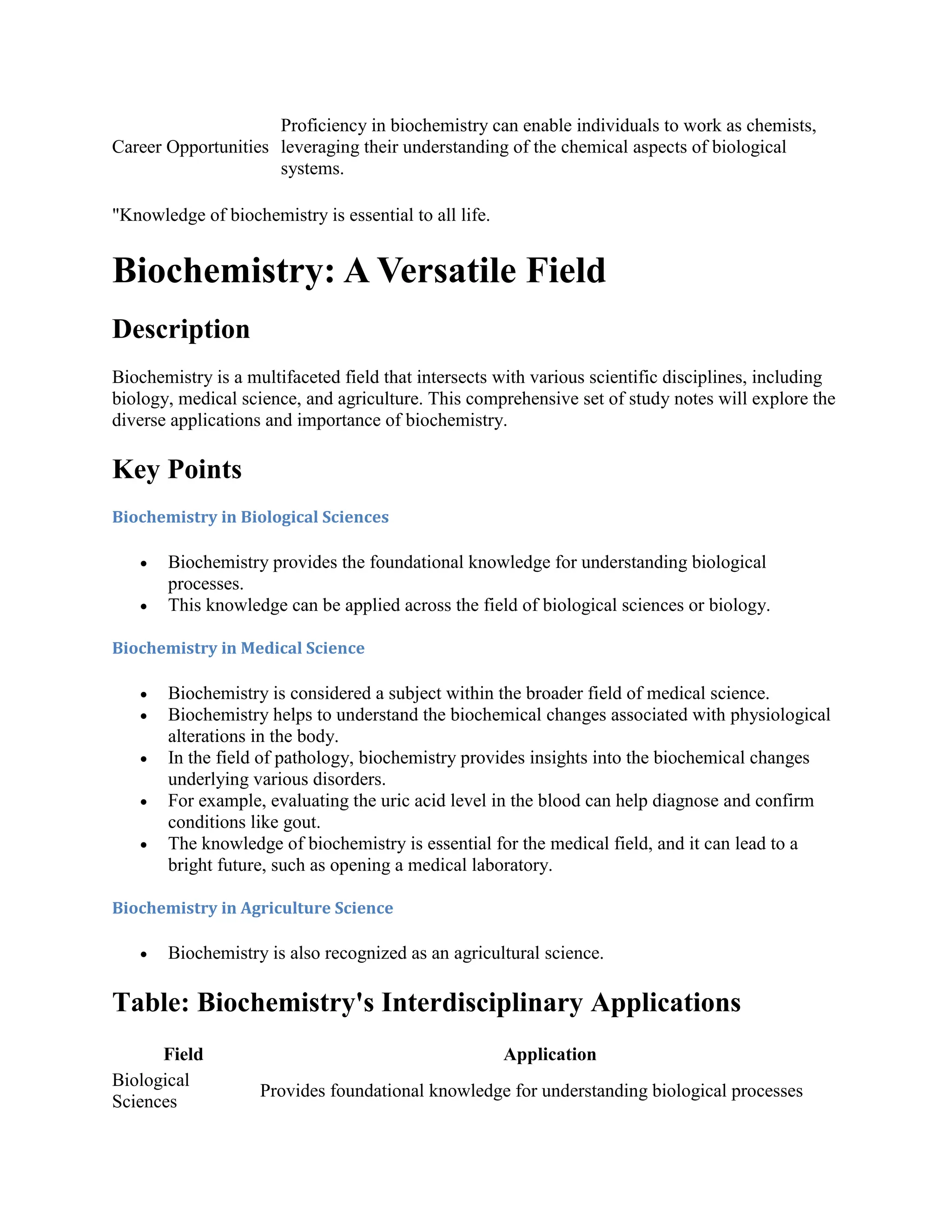
Career Opportunities
Proficiency in biochemistry can enable individuals to work as chemists,
leveraging their understanding of the chemical aspects of biological
systems.
"Knowledge of biochemistry is essential to all life.
Biochemistry: A Versatile Field
Description
Biochemistry is a multifaceted field that intersects with various scientific disciplines, including
biology, medical science, and agriculture. This comprehensive set of study notes will explore the
diverse applications and importance of biochemistry.
Key Points
Biochemistry in Biological Sciences
 Biochemistry provides the foundational knowledge for understanding biological
processes.
 This knowledge can be applied across the field of biological sciences or biology.
Biochemistry in Medical Science
 Biochemistry is considered a subject within the broader field of medical science.
 Biochemistry helps to understand the biochemical changes associated with physiological
alterations in the body.
 In the field of pathology, biochemistry provides insights into the biochemical changes
underlying various disorders.
 For example, evaluating the uric acid level in the blood can help diagnose and confirm
conditions like gout.
 The knowledge of biochemistry is essential for the medical field, and it can lead to a
bright future, such as opening a medical laboratory.
Biochemistry in Agriculture Science
 Biochemistry is also recognized as an agricultural science.
Table: Biochemistry's Interdisciplinary Applications
Field Application
Biological
Sciences
Provides foundational knowledge for understanding biological processes
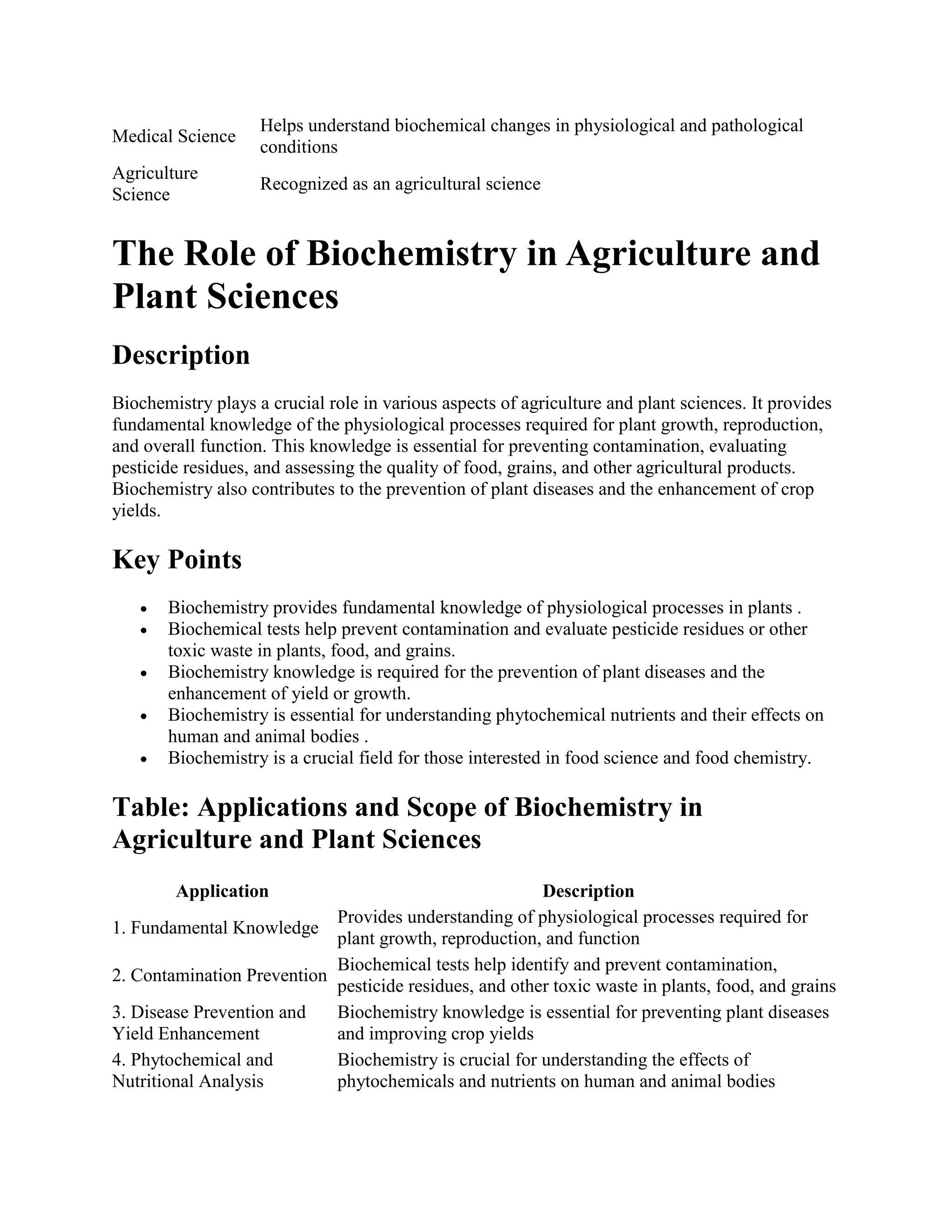
Medical Science
Helps understand biochemical changes in physiological and pathological
conditions
Agriculture
Science
Recognized as an agricultural science
The Role of Biochemistry in Agriculture and
Plant Sciences
Description
Biochemistry plays a crucial role in various aspects of agriculture and plant sciences. It provides
fundamental knowledge of the physiological processes required for plant growth, reproduction,
and overall function. This knowledge is essential for preventing contamination, evaluating
pesticide residues, and assessing the quality of food, grains, and other agricultural products.
Biochemistry also contributes to the prevention of plant diseases and the enhancement of crop
yields.
Key Points
 Biochemistry provides fundamental knowledge of physiological processes in plants .
 Biochemical tests help prevent contamination and evaluate pesticide residues or other
toxic waste in plants, food, and grains.
 Biochemistry knowledge is required for the prevention of plant diseases and the
enhancement of yield or growth.
 Biochemistry is essential for understanding phytochemical nutrients and their effects on
human and animal bodies .
 Biochemistry is a crucial field for those interested in food science and food chemistry.
Table: Applications and Scope of Biochemistry in
Agriculture and Plant Sciences
Application Description
1. Fundamental Knowledge
Provides understanding of physiological processes required for
plant growth, reproduction, and function
2. Contamination Prevention
Biochemical tests help identify and prevent contamination,
pesticide residues, and other toxic waste in plants, food, and grains
3. Disease Prevention and
Yield Enhancement
Biochemistry knowledge is essential for preventing plant diseases
and improving crop yields
4. Phytochemical and
Nutritional Analysis
Biochemistry is crucial for understanding the effects of
phytochemicals and nutrients on human and animal bodies
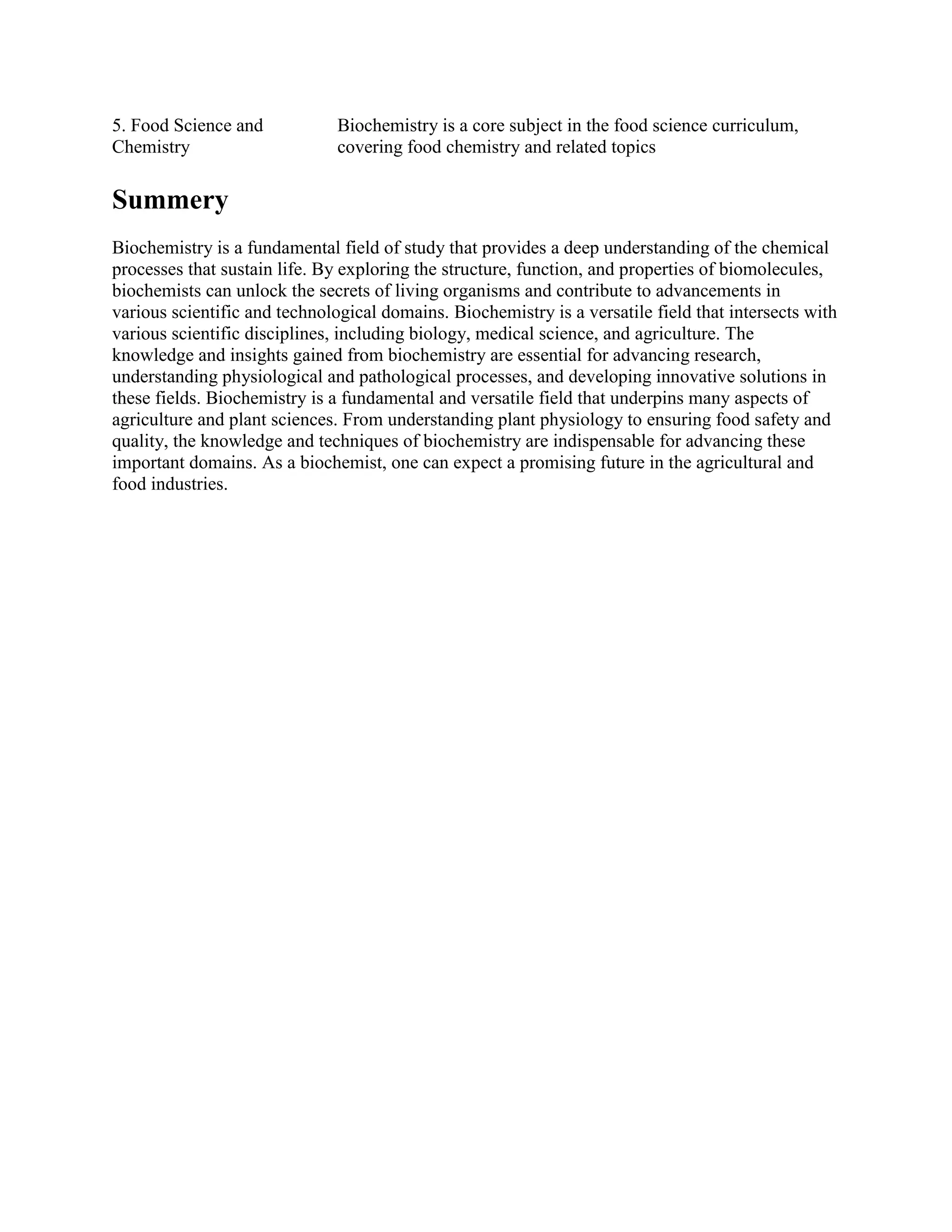
5. Food Science and
Chemistry
Biochemistry is a core subject in the food science curriculum,
covering food chemistry and related topics
Summery
Biochemistry is a fundamental field of study that provides a deep understanding of the chemical
processes that sustain life. By exploring the structure, function, and properties of biomolecules,
biochemists can unlock the secrets of living organisms and contribute to advancements in
various scientific and technological domains. Biochemistry is a versatile field that intersects with
various scientific disciplines, including biology, medical science, and agriculture. The
knowledge and insights gained from biochemistry are essential for advancing research,
understanding physiological and pathological processes, and developing innovative solutions in
these fields. Biochemistry is a fundamental and versatile field that underpins many aspects of
agriculture and plant sciences. From understanding plant physiology to ensuring food safety and
quality, the knowledge and techniques of biochemistry are indispensable for advancing these
important domains. As a biochemist, one can expect a promising future in the agricultural and
food industries.

Introduction to Biochemistry and its importance

  • 1.
    Introduction to Biochemistry Definitionof Biochemistry Biochemistry is the branch of science that deals with the study of the chemical nature of life. It is the study of the chemical processes that occur in living organisms, including the study of the structure, function, and properties of biomolecules. Key Points:  Biochemistry is the study of the chemical or chemistry of living things.  It involves the study of the structure, functions, and properties of biomolecules.  Biochemistry examines the genetic materials and their biochemical transformations. What Does Biochemistry Study? Biochemistry studies the following:  The structure of biomolecules  The biochemical properties, including chemical and physical properties, of biomolecules  Genetic materials and their biochemical transformations Importance of Biochemistry Biochemistry is important because it helps us understand the fundamental processes that occur in living organisms. By studying the chemical nature of life, we can gain insights into the mechanisms that drive biological processes, which can lead to advancements in fields such as medicine, agriculture, and biotechnology. Key Definitions of Biochemistry 1. Biochemistry is the branch of science that deals with the study of the chemical nature of life. 2. Biochemistry is the study of the chemical or chemistry of living things. 3. Biochemistry is the study of the structure, functions, and properties of biomolecules. Table of Biomolecules Studied in Biochemistry Biomolecule Examples Carbohydrates Glucose, Starch, Cellulose Lipids Fats, Oils, Phospholipids Proteins Enzymes, Antibodies, Structural Proteins
  • 2.
    Nucleic Acids DNA,RNA The History and Fundamentals of Biochemistry The Origins of Biochemistry Biochemistry is the study of how carbon, nitrogen, oxygen, sulfur, phosphate, and a few metals combine to create complex organisms like ourselves. The knowledge of biochemistry began in the 16th century, with several key developments:  The discovery of the first enzyme, known as amylase, is considered by some to be the birth of biochemistry.  Others argue that Edward Buchner's work on alcohol fermentation marked the beginning of the field.  The term "biochemistry" was coined in 1903 by German chemist Carl Neuberg. Significant Advancements in Biochemistry Major advancements in biochemistry occurred in the 19th and 20th centuries:  In 1828, Friedrich Wöhler published a paper on the synthesis of urea, proving that organic compounds can be created artificially without cells.  The advent of biochemical techniques, such as the elucidation of the structure of DNA and genes, led to significant progress in the field. Key Figures and Discoveries Several important figures and discoveries have shaped the field of biochemistry:  In 1828, Friedrich Wöhler published a paper on the synthesis of urea, proving that organic compounds can be created artificially without cells.  The term "biochemistry" was coined in 1903 by German chemist Carl Neuberg. The Importance of Biochemistry Biochemistry is the answer to understanding how life is possible. By studying the interactions of carbon, nitrogen, oxygen, sulfur, phosphate, and a few metals, we can gain insight into the complex organisms that make up our world, including ourselves. Key Concepts Importance Carbon, nitrogen, oxygen, These elements combine to create complex organisms.
  • 3.
    sulfur, phosphate, andmetals Enzymes The discovery of the first enzyme, amylase, is considered by some to be the birth of biochemistry. Organic compound synthesis Wöhler's work on the synthesis of urea proved that organic compounds can be created artificially without cells. Biochemical techniques Advancements in techniques, such as the elucidation of DNA and gene structure, have led to significant progress in biochemistry. The Scope and Implications of Biochemistry Description Biochemistry is a multifaceted field that encompasses the chemical processes underlying biological systems. This subject serves as a fundamental component in various biological sciences, providing essential knowledge and applications across diverse domains. Key Points  Biochemistry is a chemical science, drawing upon the fundamental principles of chemistry to understand the structure and properties of biomolecules.  Biochemistry is a biological science, applying chemical knowledge to the study of biological processes at the cellular and molecular levels.  Biochemistry has multiple implications in all fields related to biological sciences, making it a crucial subject in the majority of biological science curricula.  Proficiency in biochemistry can also enable individuals to work as chemists, leveraging their understanding of the chemical aspects of biological systems.  Table: Scope of Biochemistry Scope Description Chemical Science Biochemistry is based on the fundamental knowledge of chemistry, including physical chemistry, organic chemistry, inorganic chemistry, and analytical chemistry. Biological Science Biochemistry is the application of chemistry to the study of biological processes at the cellular and molecular levels. Interdisciplinary Applications Biochemistry has implications in all fields related to biological sciences, making it a fundamental subject in the majority of biological science curricula.
  • 4.
    Career Opportunities Proficiency inbiochemistry can enable individuals to work as chemists, leveraging their understanding of the chemical aspects of biological systems. "Knowledge of biochemistry is essential to all life. Biochemistry: A Versatile Field Description Biochemistry is a multifaceted field that intersects with various scientific disciplines, including biology, medical science, and agriculture. This comprehensive set of study notes will explore the diverse applications and importance of biochemistry. Key Points Biochemistry in Biological Sciences  Biochemistry provides the foundational knowledge for understanding biological processes.  This knowledge can be applied across the field of biological sciences or biology. Biochemistry in Medical Science  Biochemistry is considered a subject within the broader field of medical science.  Biochemistry helps to understand the biochemical changes associated with physiological alterations in the body.  In the field of pathology, biochemistry provides insights into the biochemical changes underlying various disorders.  For example, evaluating the uric acid level in the blood can help diagnose and confirm conditions like gout.  The knowledge of biochemistry is essential for the medical field, and it can lead to a bright future, such as opening a medical laboratory. Biochemistry in Agriculture Science  Biochemistry is also recognized as an agricultural science. Table: Biochemistry's Interdisciplinary Applications Field Application Biological Sciences Provides foundational knowledge for understanding biological processes
  • 5.
    Medical Science Helps understandbiochemical changes in physiological and pathological conditions Agriculture Science Recognized as an agricultural science The Role of Biochemistry in Agriculture and Plant Sciences Description Biochemistry plays a crucial role in various aspects of agriculture and plant sciences. It provides fundamental knowledge of the physiological processes required for plant growth, reproduction, and overall function. This knowledge is essential for preventing contamination, evaluating pesticide residues, and assessing the quality of food, grains, and other agricultural products. Biochemistry also contributes to the prevention of plant diseases and the enhancement of crop yields. Key Points  Biochemistry provides fundamental knowledge of physiological processes in plants .  Biochemical tests help prevent contamination and evaluate pesticide residues or other toxic waste in plants, food, and grains.  Biochemistry knowledge is required for the prevention of plant diseases and the enhancement of yield or growth.  Biochemistry is essential for understanding phytochemical nutrients and their effects on human and animal bodies .  Biochemistry is a crucial field for those interested in food science and food chemistry. Table: Applications and Scope of Biochemistry in Agriculture and Plant Sciences Application Description 1. Fundamental Knowledge Provides understanding of physiological processes required for plant growth, reproduction, and function 2. Contamination Prevention Biochemical tests help identify and prevent contamination, pesticide residues, and other toxic waste in plants, food, and grains 3. Disease Prevention and Yield Enhancement Biochemistry knowledge is essential for preventing plant diseases and improving crop yields 4. Phytochemical and Nutritional Analysis Biochemistry is crucial for understanding the effects of phytochemicals and nutrients on human and animal bodies
  • 6.
    5. Food Scienceand Chemistry Biochemistry is a core subject in the food science curriculum, covering food chemistry and related topics Summery Biochemistry is a fundamental field of study that provides a deep understanding of the chemical processes that sustain life. By exploring the structure, function, and properties of biomolecules, biochemists can unlock the secrets of living organisms and contribute to advancements in various scientific and technological domains. Biochemistry is a versatile field that intersects with various scientific disciplines, including biology, medical science, and agriculture. The knowledge and insights gained from biochemistry are essential for advancing research, understanding physiological and pathological processes, and developing innovative solutions in these fields. Biochemistry is a fundamental and versatile field that underpins many aspects of agriculture and plant sciences. From understanding plant physiology to ensuring food safety and quality, the knowledge and techniques of biochemistry are indispensable for advancing these important domains. As a biochemist, one can expect a promising future in the agricultural and food industries.