COURSE NO: ARCH 2101
COURSE TITLE: CONSTRUCTION II : FINISH MATERIALS
Lecture 4
PAINT
PAINT
TYPES OF PAINTS
There a lot of paints available in market which we are using frequently for protecting or
decorating different surfaces. Three factors
sunlight,
moisture &
heat affect
the durability of any materials which need to protect where the different types of paints are
being used.
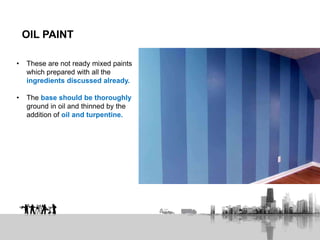
OIL PAINT
• These are not ready mixed paints
which prepared with all the
ingredients discussed already.
• The base should be thoroughly
ground in oil and thinned by the
addition of oil and turpentine.
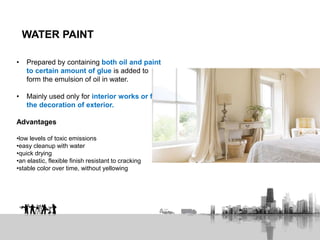
WATER PAINT
• Prepared by containing both oil and paint
to certain amount of glue is added to
form the emulsion of oil in water.
• Mainly used only for interior works or for
the decoration of exterior.
Advantages
•low levels of toxic emissions
•easy cleanup with water
•quick drying
•an elastic, flexible finish resistant to cracking
•stable color over time, without yellowing
ALUMINUM PAINTS
• Consists of very finely ground aluminum suspended in a medium of slow drying
oil varnish or sprit varnish.
• More expensive compared to other paintings and usually used for decorative
works.
• Protects iron and steels from corrosion far better than other paints.
• It can resist heat to great extent.
• Especially used for painting marine piers, oil tanks, hot water pipes etc.
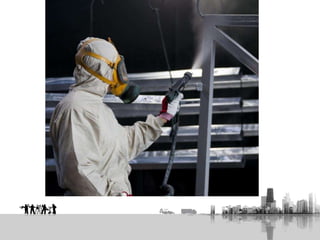
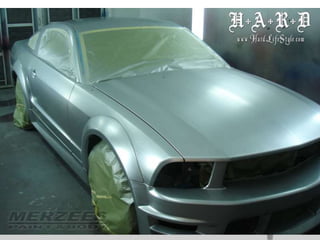
CELLULOSE PAINTS
• Cellulose paints differ from other paints in the process of drying which is affected
by evaporation of the solvent.
• Commonly termed as spray paints.
• They are made from nitro cotton, celluloid sheets, photographic films, etc.
• Posses great hardness, smoothness and can stand extremes to temperature.
• Mainly used for motor cars, aero planes and also for the decoration of
prefabricated fittings.
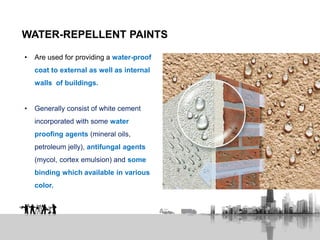
WATER-REPELLENT PAINTS
• Are used for providing a water-proof
coat to external as well as internal
walls of buildings.
• Generally consist of white cement
incorporated with some water
proofing agents (mineral oils,
petroleum jelly), antifungal agents
(mycol, cortex emulsion) and some
binding which available in various
color.
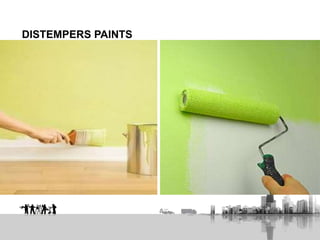
DISTEMPERS PAINTS
• It is a form of water paint which contains water and oil as its thinning agents.
• Glue, starch of resin are used as base together with a pigment to suit the
desired color.
• Generally used in interior for decoration.
Distempers are two types:
• Oil bound distempers which are generally available in the form of pastes which
are thinned by water before used.
• Ordinary distempers available in the form of powder and they are to be mixed
with water before use.
DISTEMPERS PAINTS
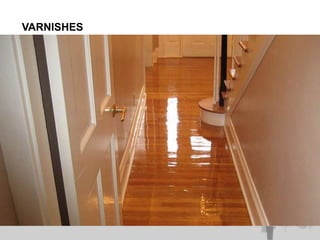
VARNISHES
• Varnishes do not contain any pigment.
• Transparent and translucent solid film after application in a thin layer.
• Varnishes consist of melted resin dissolved in hot linseed oil, turpentine.
• Varnishes dry quickly and tough coating or film which protects the surface of
materials to be protected.
• This also brighten the painted surfaces and protected from atmospheric
action.
Varnishes are two different types:
• Oil varnishes: oil varnishes dry as the result of chemical reactions induced by
oxidation .
• Spirit varnishes: this types solely through the evaporation of volatile solvents
from the film.
VARNISHES
SPECIAL COATING
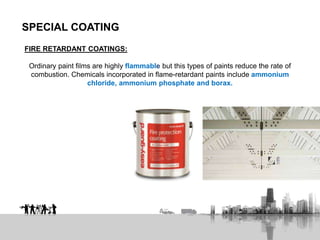
FIRE RETARDANT COATINGS:
Ordinary paint films are highly flammable but this types of paints reduce the rate of
combustion. Chemicals incorporated in flame-retardant paints include ammonium
chloride, ammonium phosphate and borax.
SPECIAL COATING
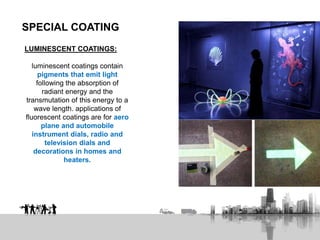
LUMINESCENT COATINGS:
luminescent coatings contain
pigments that emit light
following the absorption of
radiant energy and the
transmutation of this energy to a
wave length. applications of
fluorescent coatings are for aero
plane and automobile
instrument dials, radio and
television dials and
decorations in homes and
heaters.
SPECIAL COATING
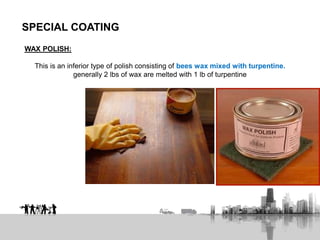
WAX POLISH:
This is an inferior type of polish consisting of bees wax mixed with turpentine.
generally 2 lbs of wax are melted with 1 lb of turpentine
SPECIAL COATING
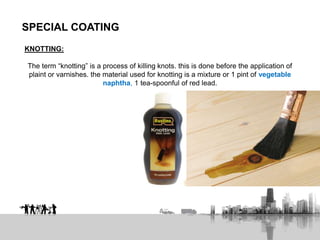
KNOTTING:
The term “knotting” is a process of killing knots. this is done before the application of
plaint or varnishes. the material used for knotting is a mixture or 1 pint of vegetable
naphtha, 1 tea-spoonful of red lead.
SPECIAL COATING
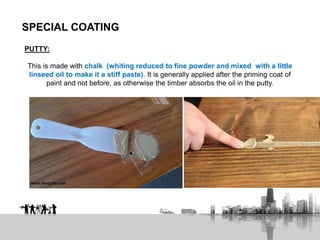
PUTTY:
This is made with chalk (whiting reduced to fine powder and mixed with a little
linseed oil to make it a stiff paste). It is generally applied after the priming coat of
paint and not before, as otherwise the timber absorbs the oil in the putty.
RECOMENDED REFERENCES
Aziz. M. A: Engineering Materials.
S.C. Rangwala: Engineering materials (Material science)

Lecture 04 paint

  • 1.
    COURSE NO: ARCH2101 COURSE TITLE: CONSTRUCTION II : FINISH MATERIALS Lecture 4 PAINT
  • 2.
  • 3.
    TYPES OF PAINTS Therea lot of paints available in market which we are using frequently for protecting or decorating different surfaces. Three factors sunlight, moisture & heat affect the durability of any materials which need to protect where the different types of paints are being used.
  • 4.
    OIL PAINT • Theseare not ready mixed paints which prepared with all the ingredients discussed already. • The base should be thoroughly ground in oil and thinned by the addition of oil and turpentine.
  • 5.
    WATER PAINT • Preparedby containing both oil and paint to certain amount of glue is added to form the emulsion of oil in water. • Mainly used only for interior works or for the decoration of exterior. Advantages •low levels of toxic emissions •easy cleanup with water •quick drying •an elastic, flexible finish resistant to cracking •stable color over time, without yellowing
  • 6.
    ALUMINUM PAINTS • Consistsof very finely ground aluminum suspended in a medium of slow drying oil varnish or sprit varnish. • More expensive compared to other paintings and usually used for decorative works. • Protects iron and steels from corrosion far better than other paints. • It can resist heat to great extent. • Especially used for painting marine piers, oil tanks, hot water pipes etc.
  • 8.
    CELLULOSE PAINTS • Cellulosepaints differ from other paints in the process of drying which is affected by evaporation of the solvent. • Commonly termed as spray paints. • They are made from nitro cotton, celluloid sheets, photographic films, etc. • Posses great hardness, smoothness and can stand extremes to temperature. • Mainly used for motor cars, aero planes and also for the decoration of prefabricated fittings.
  • 10.
    WATER-REPELLENT PAINTS • Areused for providing a water-proof coat to external as well as internal walls of buildings. • Generally consist of white cement incorporated with some water proofing agents (mineral oils, petroleum jelly), antifungal agents (mycol, cortex emulsion) and some binding which available in various color.
  • 11.
    DISTEMPERS PAINTS • Itis a form of water paint which contains water and oil as its thinning agents. • Glue, starch of resin are used as base together with a pigment to suit the desired color. • Generally used in interior for decoration. Distempers are two types: • Oil bound distempers which are generally available in the form of pastes which are thinned by water before used. • Ordinary distempers available in the form of powder and they are to be mixed with water before use.
  • 12.
  • 13.
    VARNISHES • Varnishes donot contain any pigment. • Transparent and translucent solid film after application in a thin layer. • Varnishes consist of melted resin dissolved in hot linseed oil, turpentine. • Varnishes dry quickly and tough coating or film which protects the surface of materials to be protected. • This also brighten the painted surfaces and protected from atmospheric action. Varnishes are two different types: • Oil varnishes: oil varnishes dry as the result of chemical reactions induced by oxidation . • Spirit varnishes: this types solely through the evaporation of volatile solvents from the film.
  • 14.
  • 15.
    SPECIAL COATING FIRE RETARDANTCOATINGS: Ordinary paint films are highly flammable but this types of paints reduce the rate of combustion. Chemicals incorporated in flame-retardant paints include ammonium chloride, ammonium phosphate and borax.
  • 16.
    SPECIAL COATING LUMINESCENT COATINGS: luminescentcoatings contain pigments that emit light following the absorption of radiant energy and the transmutation of this energy to a wave length. applications of fluorescent coatings are for aero plane and automobile instrument dials, radio and television dials and decorations in homes and heaters.
  • 17.
    SPECIAL COATING WAX POLISH: Thisis an inferior type of polish consisting of bees wax mixed with turpentine. generally 2 lbs of wax are melted with 1 lb of turpentine
  • 18.
    SPECIAL COATING KNOTTING: The term“knotting” is a process of killing knots. this is done before the application of plaint or varnishes. the material used for knotting is a mixture or 1 pint of vegetable naphtha, 1 tea-spoonful of red lead.
  • 19.
    SPECIAL COATING PUTTY: This ismade with chalk (whiting reduced to fine powder and mixed with a little linseed oil to make it a stiff paste). It is generally applied after the priming coat of paint and not before, as otherwise the timber absorbs the oil in the putty.
  • 20.
    RECOMENDED REFERENCES Aziz. M.A: Engineering Materials. S.C. Rangwala: Engineering materials (Material science)