BIO 14 YA
June 29, 2013
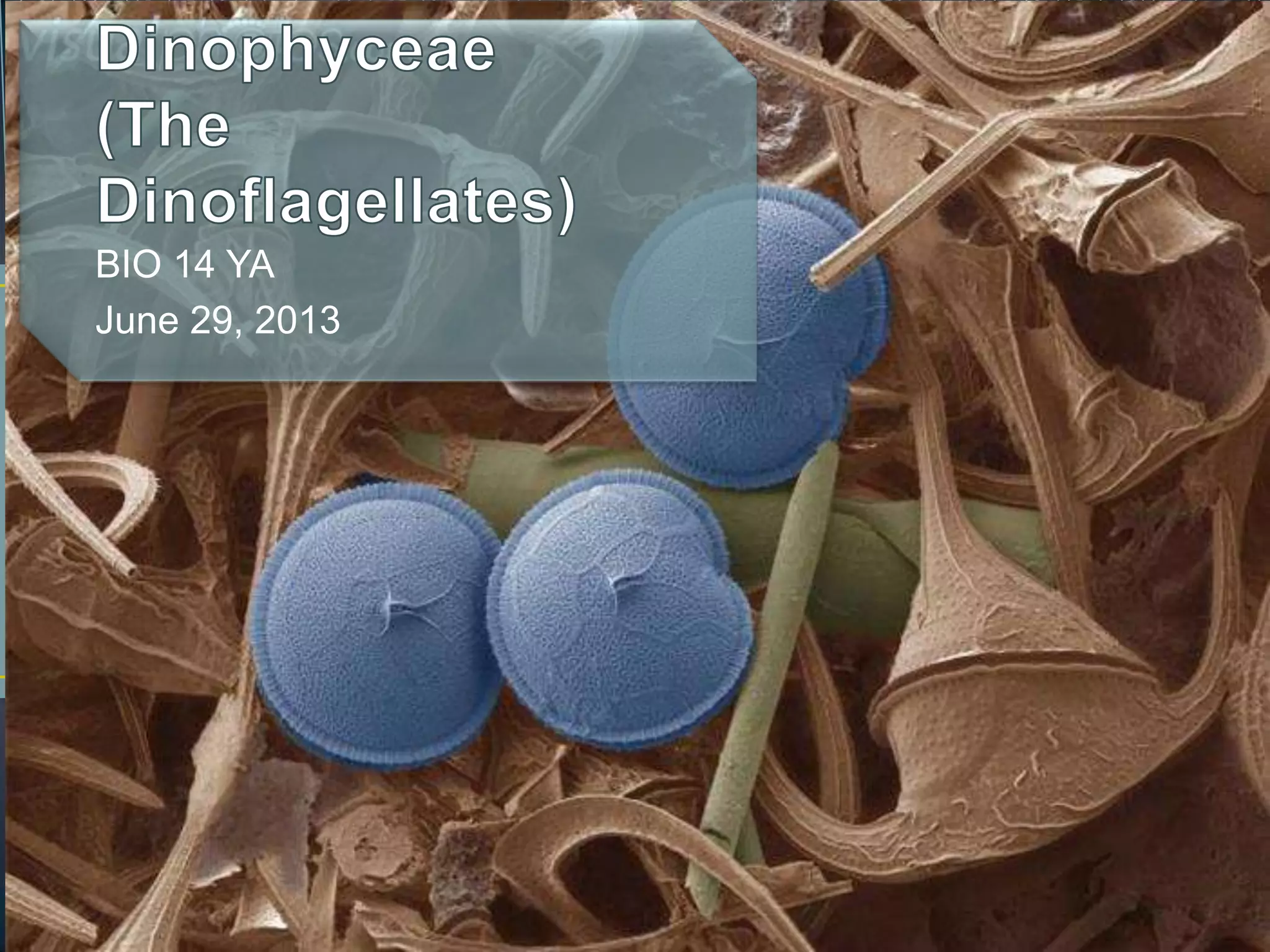
• Dinozoa or Pyrrophytes
• 90% are marine plankton
• ½ photosynthetic
• Unicellular or in aggregations
• symbiotic partners to sponges, corals, jellyfish
and flatworms
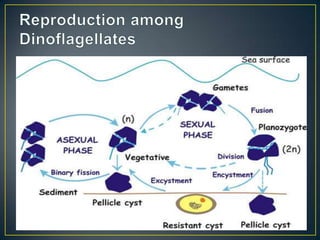
• primarily asexual, and reproduce by mitosis,
only a few species have been found to
reproduce sexually
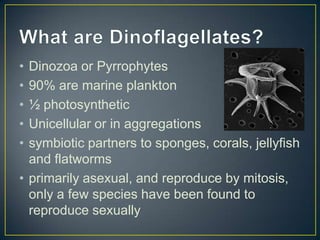
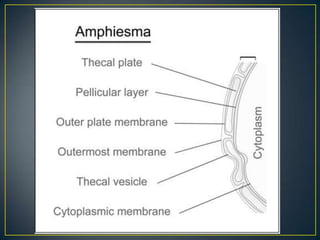
• Cell covering is
called Amphiesma
that often forms
plates
• Made up mainly of
cellulose
• Grouped into two:
• Armored/thecate
• Unarmored/athecate
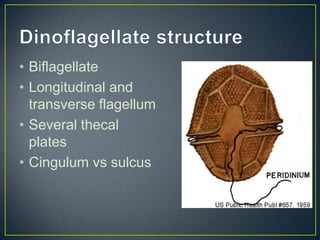
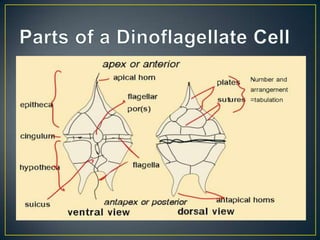
• Biflagellate
• Longitudinal and
transverse flagellum
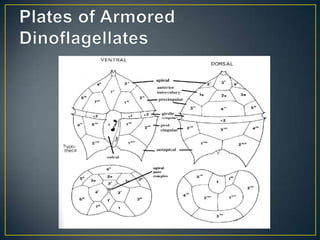
• Several thecal
plates
• Cingulum vs sulcus
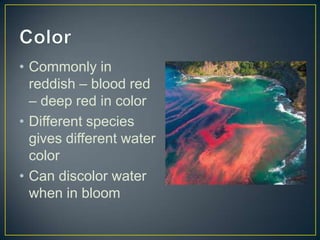
• Commonly in
reddish – blood red
– deep red in color
• Different species
gives different water
color
• Can discolor water
when in bloom
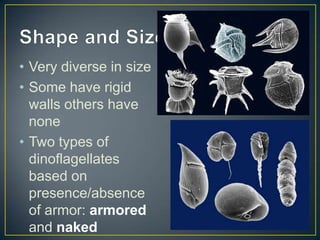
• Very diverse in size
• Some have rigid
walls others have
none
• Two types of
dinoflagellates
based on
presence/absence
of armor: armored
and naked
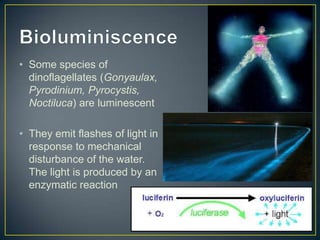
• Some species of
dinoflagellates (Gonyaulax,
Pyrodinium, Pyrocystis,
Noctiluca) are luminescent
• They emit flashes of light in
response to mechanical
disturbance of the water.
The light is produced by an
enzymatic reaction
• Most of them are found in oceans (very
few are freshwater).
• Planktonic, few are benthic and some
enter into symbiotic relationships.
• Autotrophic-Heterotrophic forms. Parasites
of invertebrates and fishes.
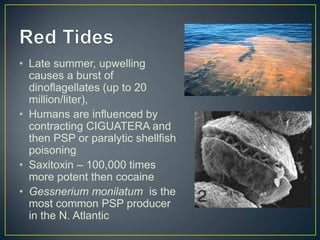
• Late summer, upwelling
causes a burst of
dinoflagellates (up to 20
million/liter),
• Humans are influenced by
contracting CIGUATERA and
then PSP or paralytic shellfish
poisoning
• Saxitoxin – 100,000 times
more potent then cocaine
• Gessnerium monilatum is the
most common PSP producer
in the N. Atlantic
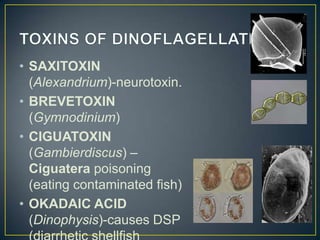
• SAXITOXIN
(Alexandrium)-neurotoxin.
• BREVETOXIN
(Gymnodinium)
• CIGUATOXIN
(Gambierdiscus) –
Ciguatera poisoning
(eating contaminated fish)
• OKADAIC ACID
(Dinophysis)-causes DSP
Triassic to Pleistocene dinoflagellate
zonations are correlated with:
1. Cretaceous to Tertiary planktonic
foraminiferal and calcareous nanofossil
zones
2. Jurassic and Cretaceous ammonite
zones
3. An absolute time scale and sequence
stratigraphy.
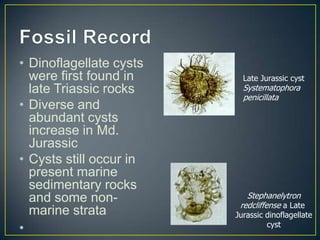
• Dinoflagellate cysts
were first found in
late Triassic rocks
• Diverse and
abundant cysts
increase in Md.
Jurassic
• Cysts still occur in
present marine
sedimentary rocks
and some non-
marine strata
•
Stephanelytron
redcliffense a Late
Jurassic dinoflagellate
cyst
Late Jurassic cyst
Systematophora
penicillata
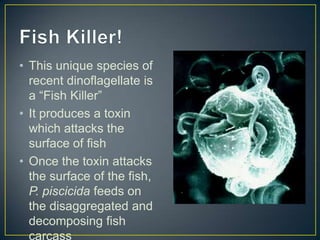
• This unique species of
recent dinoflagellate is
a “Fish Killer”
• It produces a toxin
which attacks the
surface of fish
• Once the toxin attacks
the surface of the fish,
P. piscicida feeds on
the disaggregated and
decomposing fish
carcass
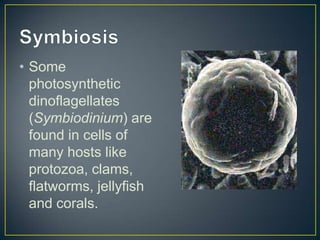
• Some
photosynthetic
dinoflagellates
(Symbiodinium) are
found in cells of
many hosts like
protozoa, clams,
flatworms, jellyfish
and corals.
Lec5 Dinophyceae

Lec5 Dinophyceae

  • 1.
  • 2.
    • Dinozoa orPyrrophytes • 90% are marine plankton • ½ photosynthetic • Unicellular or in aggregations • symbiotic partners to sponges, corals, jellyfish and flatworms • primarily asexual, and reproduce by mitosis, only a few species have been found to reproduce sexually
  • 3.
    • Cell coveringis called Amphiesma that often forms plates • Made up mainly of cellulose • Grouped into two: • Armored/thecate • Unarmored/athecate
  • 5.
    • Biflagellate • Longitudinaland transverse flagellum • Several thecal plates • Cingulum vs sulcus
  • 7.
    • Commonly in reddish– blood red – deep red in color • Different species gives different water color • Can discolor water when in bloom
  • 8.
    • Very diversein size • Some have rigid walls others have none • Two types of dinoflagellates based on presence/absence of armor: armored and naked
  • 11.
    • Some speciesof dinoflagellates (Gonyaulax, Pyrodinium, Pyrocystis, Noctiluca) are luminescent • They emit flashes of light in response to mechanical disturbance of the water. The light is produced by an enzymatic reaction
  • 13.
    • Most ofthem are found in oceans (very few are freshwater). • Planktonic, few are benthic and some enter into symbiotic relationships. • Autotrophic-Heterotrophic forms. Parasites of invertebrates and fishes.
  • 14.
    • Late summer,upwelling causes a burst of dinoflagellates (up to 20 million/liter), • Humans are influenced by contracting CIGUATERA and then PSP or paralytic shellfish poisoning • Saxitoxin – 100,000 times more potent then cocaine • Gessnerium monilatum is the most common PSP producer in the N. Atlantic
  • 15.
    • SAXITOXIN (Alexandrium)-neurotoxin. • BREVETOXIN (Gymnodinium) •CIGUATOXIN (Gambierdiscus) – Ciguatera poisoning (eating contaminated fish) • OKADAIC ACID (Dinophysis)-causes DSP
  • 16.
    Triassic to Pleistocenedinoflagellate zonations are correlated with: 1. Cretaceous to Tertiary planktonic foraminiferal and calcareous nanofossil zones 2. Jurassic and Cretaceous ammonite zones 3. An absolute time scale and sequence stratigraphy.
  • 17.
    • Dinoflagellate cysts werefirst found in late Triassic rocks • Diverse and abundant cysts increase in Md. Jurassic • Cysts still occur in present marine sedimentary rocks and some non- marine strata • Stephanelytron redcliffense a Late Jurassic dinoflagellate cyst Late Jurassic cyst Systematophora penicillata
  • 18.
    • This uniquespecies of recent dinoflagellate is a “Fish Killer” • It produces a toxin which attacks the surface of fish • Once the toxin attacks the surface of the fish, P. piscicida feeds on the disaggregated and decomposing fish carcass
  • 19.
    • Some photosynthetic dinoflagellates (Symbiodinium) are foundin cells of many hosts like protozoa, clams, flatworms, jellyfish and corals.