Learning While
Earning:
The New Normal
Anthony P. Carnevale, Nicole Smith, Michelle Melton and
Eric Price
October 28, 2015
Overview
•  Combining work with ongoing learning is the new
normal among college students.
•  More then 70 percent undergraduate and graduate
students work while enrolled in college.
•  One-third of working learners are 30 years old or
older.
Who are Working Learners?
We define working learners as students who are
simultaneously working while enrolled in postsecondary
education or training programs.
We categorize working learners into two groups:
1.  Young working learners (ages 16-29)
2.  Mature working learners (ages 30-54)
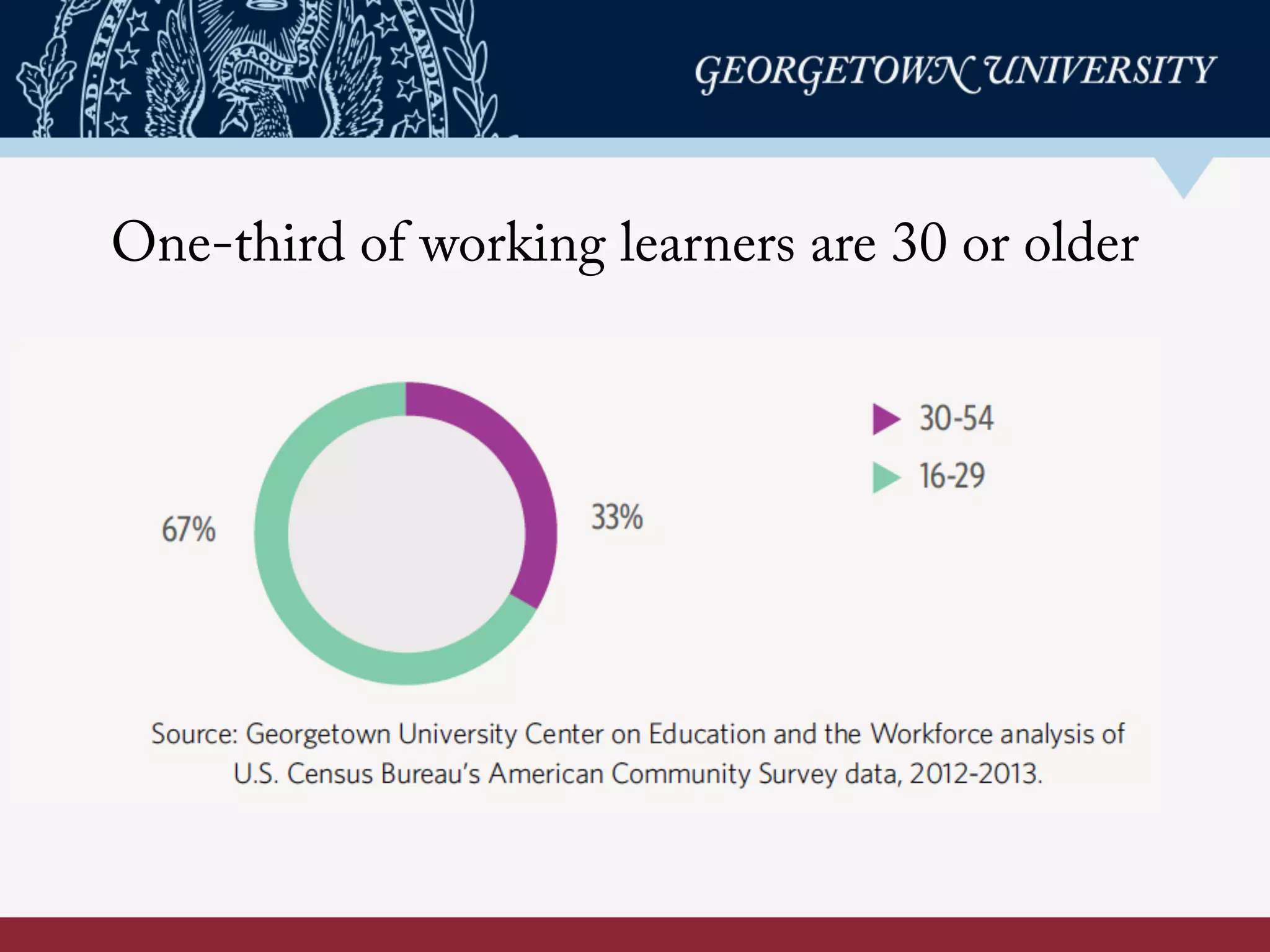
One-third of working learners are 30 or older
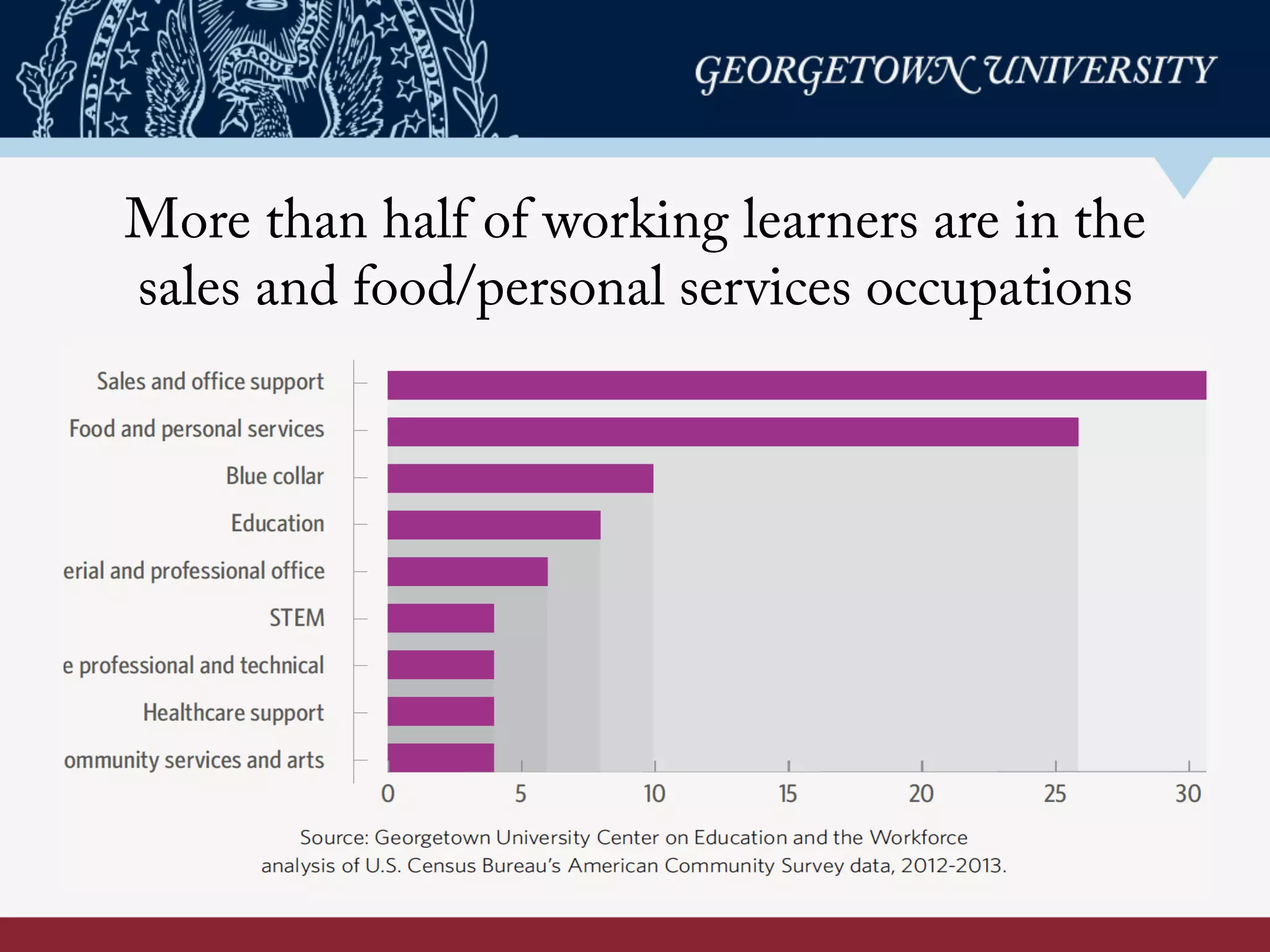
More than half of working learners are in the
sales and food/personal services occupations
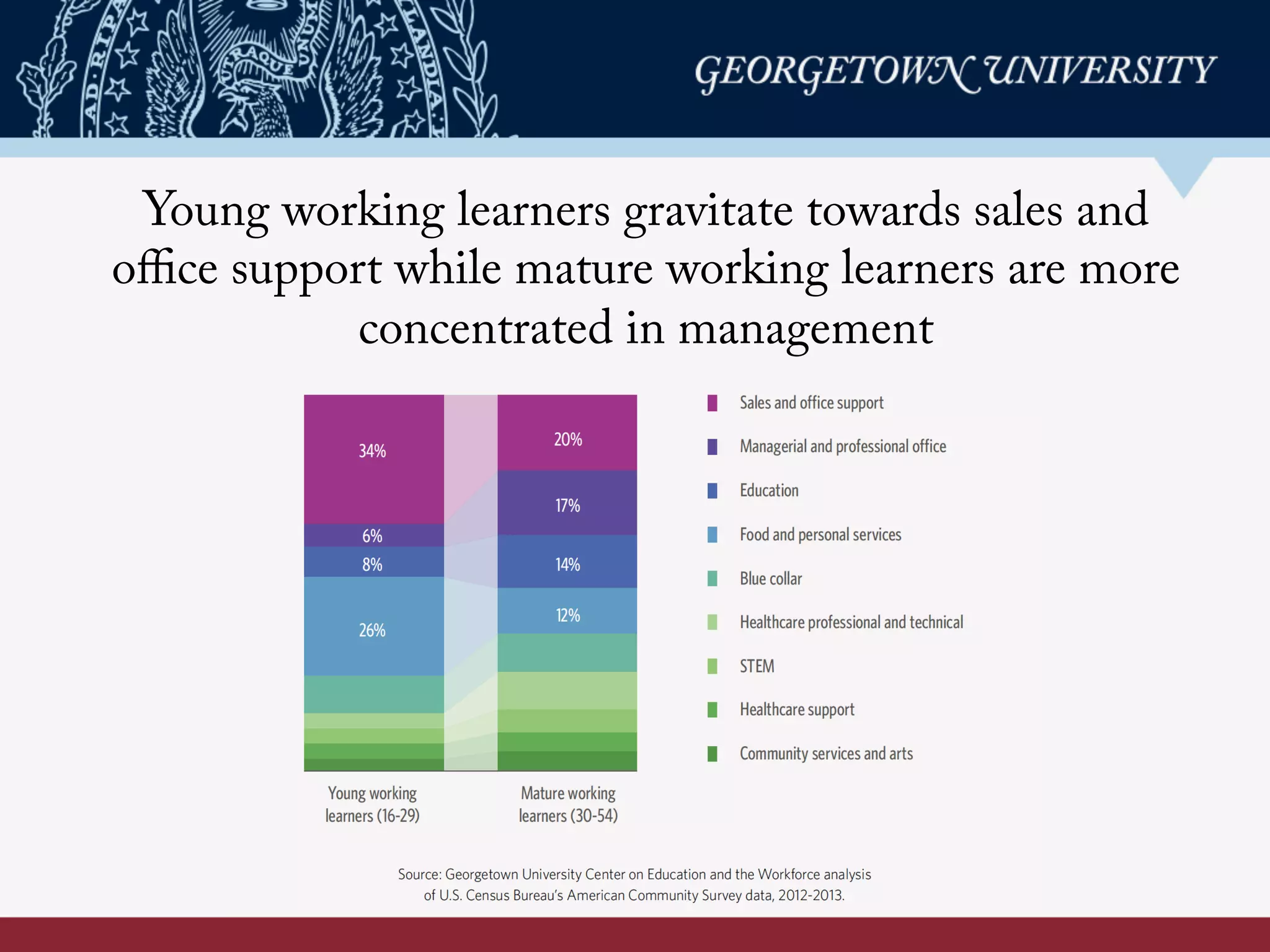
Young working learners gravitate towards sales and
office support while mature working learners are more
concentrated in management
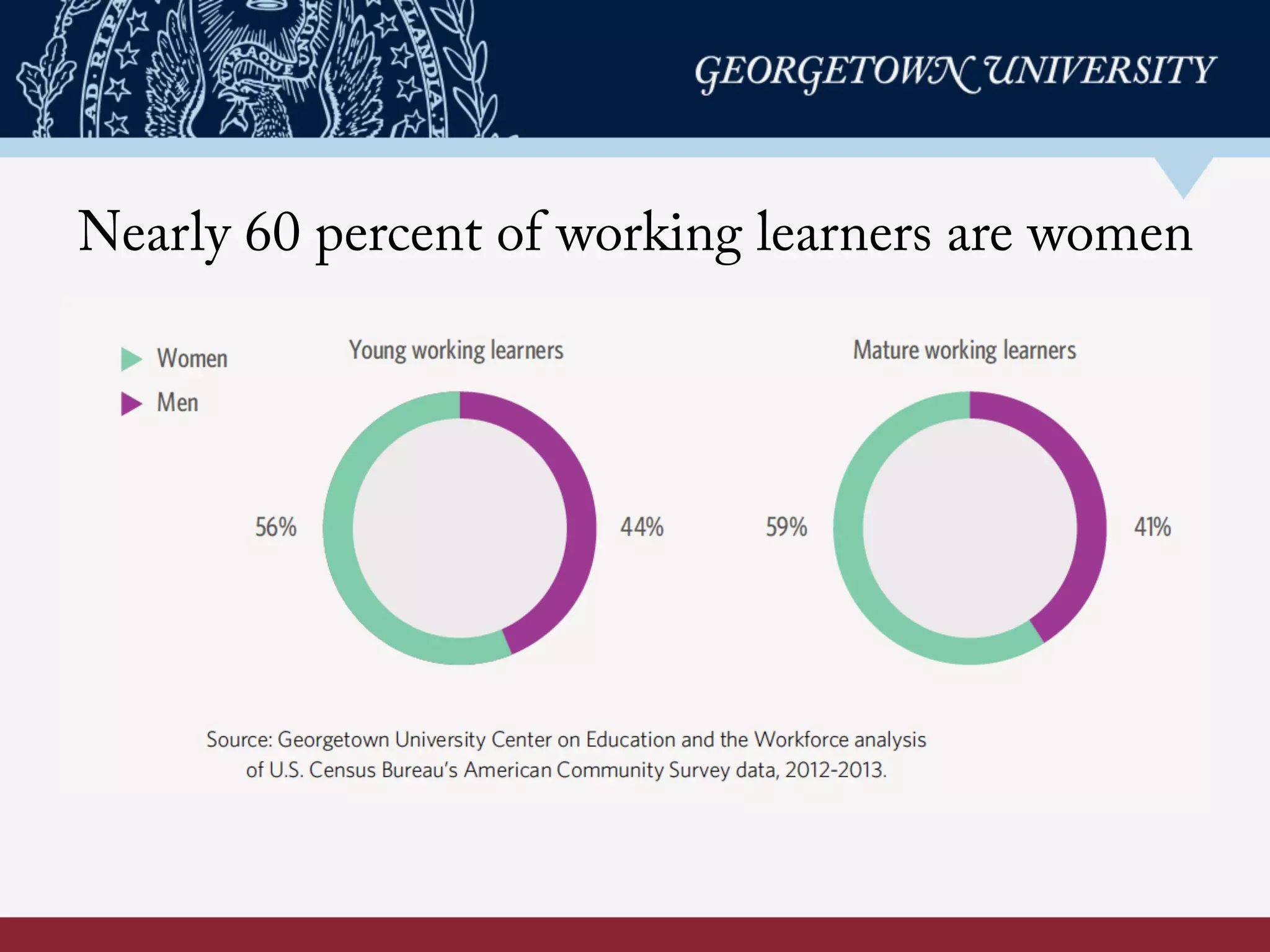
Nearly 60 percent of working learners are women
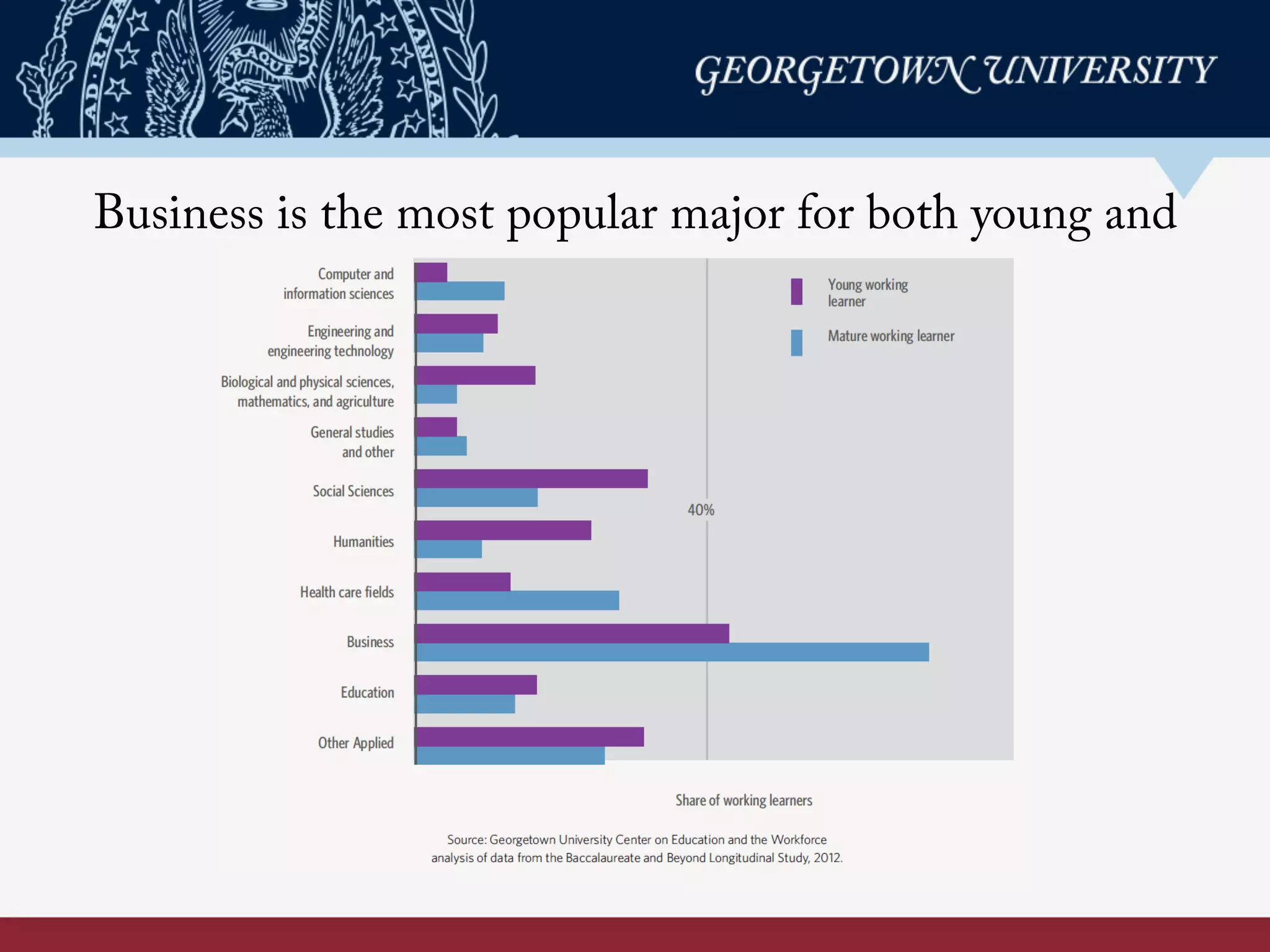
Business is the most popular major for both young and
mature working learners
More people are working full-time
while in college
•  Over 50 percent of mature working learners work at least 40
hours per week
•  About 40 percent of undergraduates and graduate students work
at least 30 hours per week
•  After completion of a Bachelor’s degree, young and mature
working learners work similar hours (majority 40-49 hours)
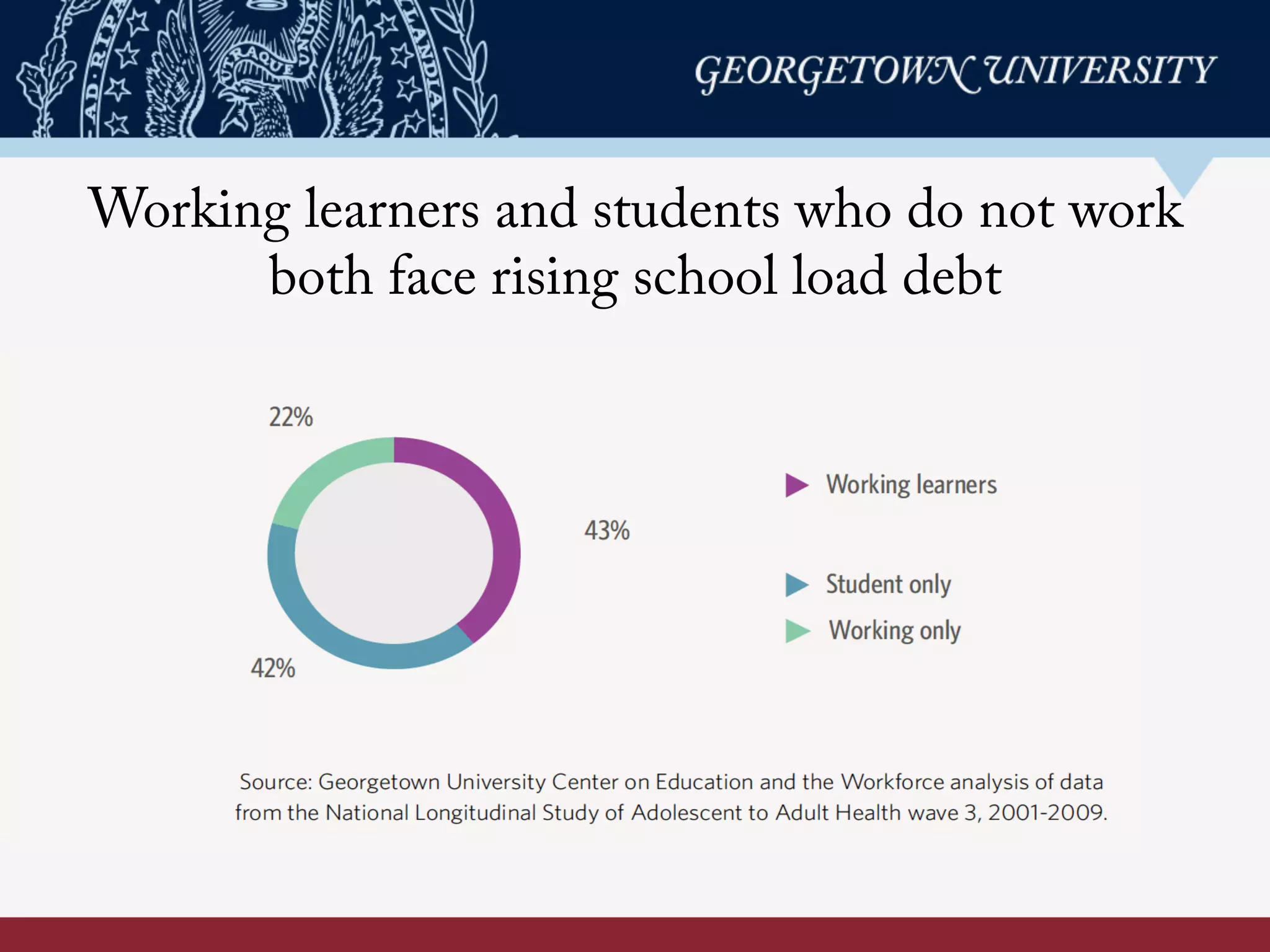
Working learners and students who do not work
both face rising school loan debt
Conclusion
•  Learning while earning is the new the normal for college
students both young and old.
•  After graduating, working learners have added to their resume
and are upwardly mobile and more likely to move into
managerial positions.
For more information:
Email Us | cewgeorgetown@georgetown.edu
Follow Us on Twitter | @GeorgetownCEW
Find us on Facebook | Facebook.com/GeorgetownCEW
See the full report at: cew.georgetown.edu/workinglearners


Learning While Earning: The New Normal

  • 1.
    Learning While Earning: The NewNormal Anthony P. Carnevale, Nicole Smith, Michelle Melton and Eric Price October 28, 2015
  • 2.
    Overview •  Combining workwith ongoing learning is the new normal among college students. •  More then 70 percent undergraduate and graduate students work while enrolled in college. •  One-third of working learners are 30 years old or older.
  • 3.
    Who are WorkingLearners? We define working learners as students who are simultaneously working while enrolled in postsecondary education or training programs. We categorize working learners into two groups: 1.  Young working learners (ages 16-29) 2.  Mature working learners (ages 30-54)
  • 4.
    One-third of workinglearners are 30 or older
  • 5.
    More than halfof working learners are in the sales and food/personal services occupations
  • 6.
    Young working learnersgravitate towards sales and office support while mature working learners are more concentrated in management
  • 7.
    Nearly 60 percentof working learners are women
  • 8.
    Business is themost popular major for both young and mature working learners
  • 9.
    More people areworking full-time while in college •  Over 50 percent of mature working learners work at least 40 hours per week •  About 40 percent of undergraduates and graduate students work at least 30 hours per week •  After completion of a Bachelor’s degree, young and mature working learners work similar hours (majority 40-49 hours)
  • 10.
    Working learners andstudents who do not work both face rising school loan debt
  • 11.
    Conclusion •  Learning whileearning is the new the normal for college students both young and old. •  After graduating, working learners have added to their resume and are upwardly mobile and more likely to move into managerial positions.
  • 12.
    For more information: EmailUs | cewgeorgetown@georgetown.edu Follow Us on Twitter | @GeorgetownCEW Find us on Facebook | Facebook.com/GeorgetownCEW See the full report at: cew.georgetown.edu/workinglearners