Learning & development during the
second half of 2014
by Toronto Training and HR
June 2014
CONTENTS
3-4 Introduction
5-6 Personality types
7-8 User design
9-10 Gamification
11-12 Project management
13-14 Listening
15-16 Cultural intelligence
17-18 Generational differences
19-20 Ways to unlock curiosity
21-24 Considerations for mobile learning
25-26 Rationale for mobile learning
27-28 Effectiveness of mobile learning
29-30 Mental models for mobile learning
31-32 Keys for user adoption of mobile learning
33-34 Successful virtual learning initiatives
35-36 Micro learning
37-38 Experiential learning styles
39-40 Build an active learning culture
41-42 Use pull learning to increase agility
43-44 Make e-learning effective
45-46 Forms of informal learning
47-48 Case studies
49-50 Conclusion, summary and questions
Page 2
Page 3
Introduction
Page 4
Introduction to Toronto Training
and HR
Toronto Training and HR is a specialist training and
human resources consultancy headed by Timothy Holden
10 years in banking
15 years in training and human resources
Freelance practitioner since 2006
The core services provided by Toronto Training and HR
are:
Training event design
Training event delivery
HR support with an emphasis on reducing
costs, saving time plus improving employee
engagement and morale
Services for job seekers
Page 5
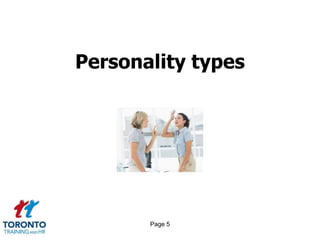
Personality types
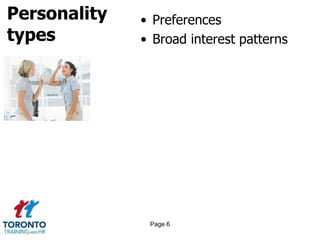
Personality
types
• Preferences
• Broad interest patterns
Page 6
Page 7
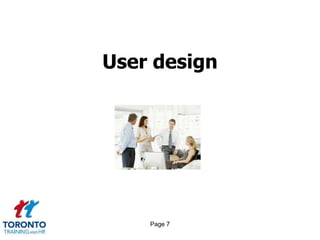
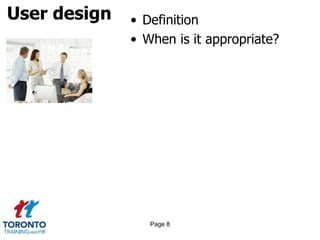
User design
User design • Definition
• When is it appropriate?
Page 8
Page 9
Gamification
Gamification
THREE PSYCHOLOGICAL
NEEDS
• Related
• Autonomous
• Competent
Page 10
Page 11
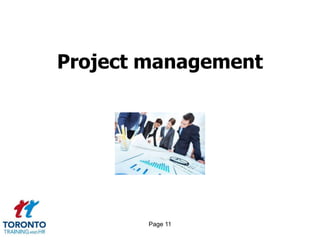
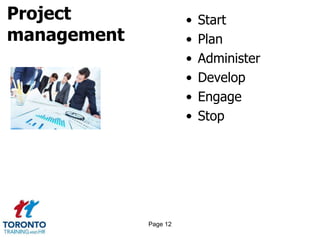
Project management
Project
management
• Start
• Plan
• Administer
• Develop
• Engage
• Stop
Page 12
Page 13
Listening
Listening • Attributes of active
listening
• Ways of improving one’s
listening skills
Page 14
Page 15
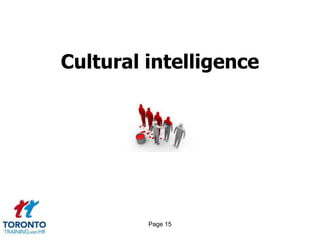
Cultural intelligence
Cultural
intelligence
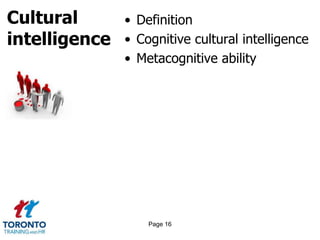
• Definition
• Cognitive cultural intelligence
• Metacognitive ability
Page 16
Page 17
Generational differences
Generational
differences
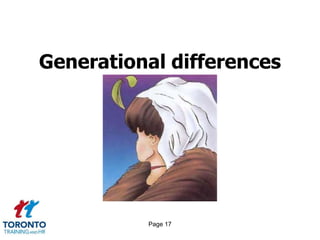
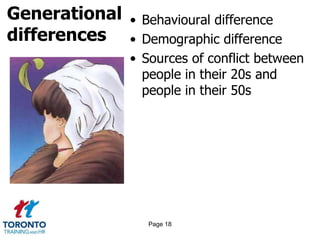
• Behavioural difference
• Demographic difference
• Sources of conflict between
people in their 20s and
people in their 50s
Page 18
Page 19
Ways to unlock curiosity
Ways to
unlock
curiosity
• Relinquish control
• Jettison judgement
• Expect surprises from
every party
• Gag the ‘fix it’ reflex
• Embrace ignorance
• Woo the cue
Page 20
Page 21
Considerations for mobile
learning
Considerations
for mobile
learning 1 of 3
• Is this individual a good
candidate for mobile
learning?
• Have you established
your objective?
• Remember that mobile
learning is not e-learning
on a mobile device
• Mobile learning is not
always the right choice
• Build in time for testing
Page 22
Considerations
for mobile
learning 2 of 3
• Don’t arbitrarily add bells
and whistles
• Is the information
credible, reliable and in
the right format for
accessibility?
• Is this a web or native
solution?
• Do your research
• Can your pilot be
measured and evaluated?
Page 23
Considerations
for mobile
learning 3 of 3
USER INTERFACE DESIGN
• Feedback
• Tasks relevance and
consistency
• Exploration and guidance
• Uniformity
• Efficiency of use
• Minimalist design
• Initial value
• Test on real devices
Page 24
Page 25
Rationale for mobile
learning
Rationale for
mobile
learning
• Disintermediation defence
• Distribution channel
• Financial rationale
• Effectiveness play
Page 26
Page 27
Effectiveness of mobile
learning
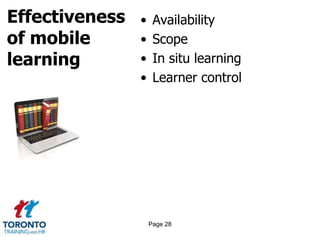
Effectiveness
of mobile
learning
• Availability
• Scope
• In situ learning
• Learner control
Page 28
Page 29
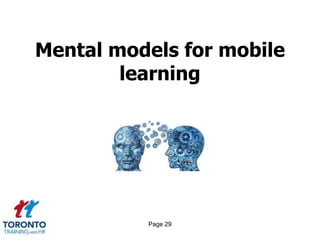
Mental models for mobile
learning
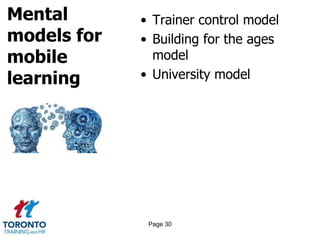
Mental
models for
mobile
learning
• Trainer control model
• Building for the ages
model
• University model
Page 30
Page 31
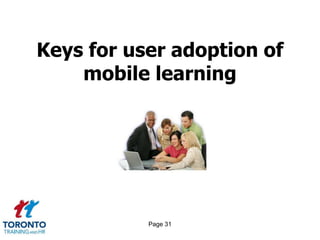
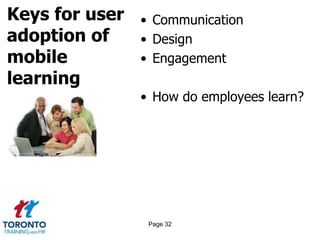
Keys for user adoption of
mobile learning
Keys for user
adoption of
mobile
learning
• Communication
• Design
• Engagement
• How do employees learn?
Page 32
Page 33
Successful virtual learning
initiatives
Successful
virtual
learning
initiatives
• Definition
• Setting the stage for success
• Prepare people
Page 34
Page 35
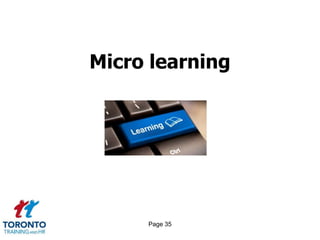
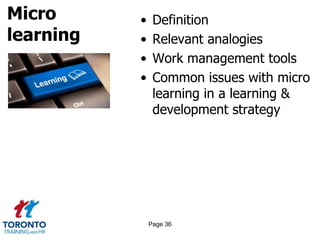
Micro learning
Micro
learning
• Definition
• Relevant analogies
• Work management tools
• Common issues with micro
learning in a learning &
development strategy
Page 36
Page 37
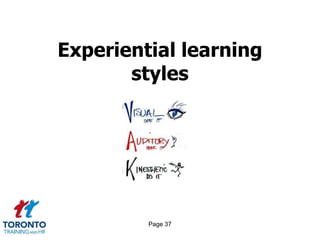
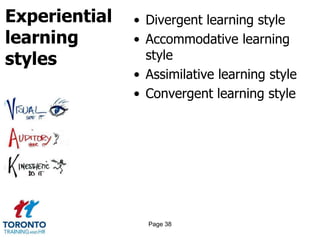
Experiential learning
styles
Experiential
learning
styles
• Divergent learning style
• Accommodative learning
style
• Assimilative learning style
• Convergent learning style
Page 38
Page 39
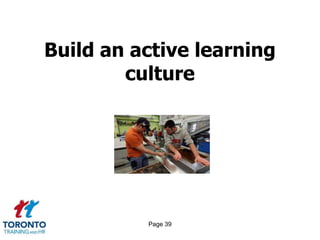
Build an active learning
culture
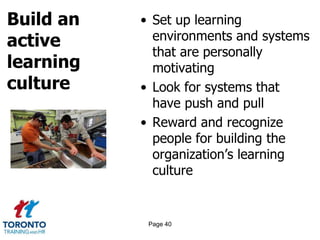
Build an
active
learning
culture
• Set up learning
environments and systems
that are personally
motivating
• Look for systems that
have push and pull
• Reward and recognize
people for building the
organization’s learning
culture
Page 40
Page 41
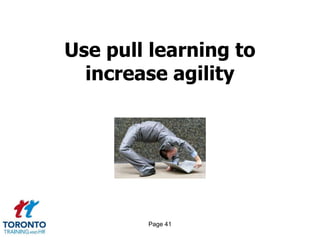
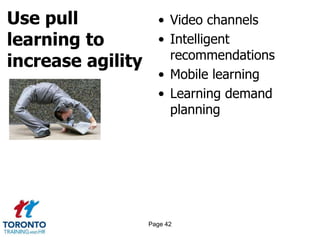
Use pull learning to
increase agility
Use pull
learning to
increase agility
• Video channels
• Intelligent
recommendations
• Mobile learning
• Learning demand
planning
Page 42
Page 43
Make e-learning effective
Make
e-learning
effective
• Multimedia
• Interactive
• Keeping things brief
• Tell a story
• Give a reward
Page 44
Page 45
Forms of informal learning
Forms of
informal
learning
• On-demand
• Social
• Embedded
Page 46
Page 47
Case studies
Case studies
Page 48
Page 49
Conclusion, summary and
questions
Page 50
Conclusion, summary and
questions
Conclusion
Summary
Videos
Questions

Learning & development June 2014