Download to read offline
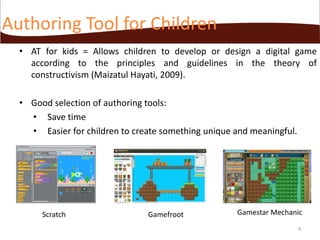
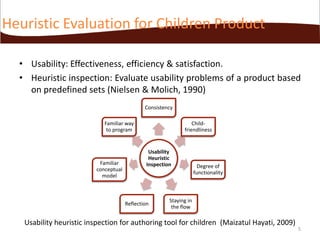
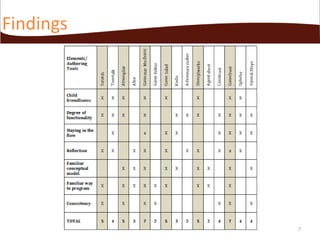
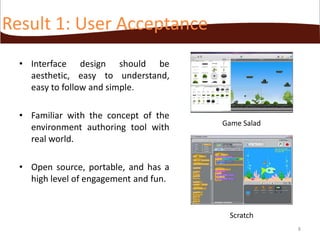
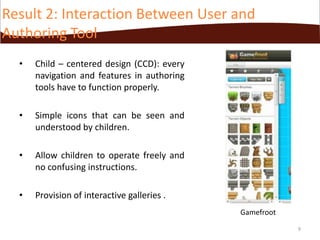
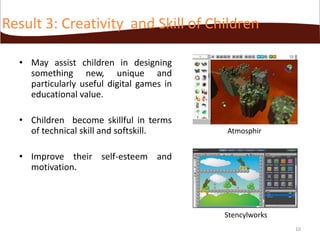


This document discusses a heuristic evaluation of authoring tools for children to create digital games. It presents the results of evaluations conducted with students and lecturers. The evaluations found that interfaces should be simple and intuitive for children to understand. Tools that use familiar concepts from the real world were preferred. Open source tools that are engaging and fun were seen as most suitable. Usability was improved when designs were child-centered without confusing instructions. The tools were found to help children develop technical and soft skills while improving creativity and self-esteem when creating unique and educational digital games.


