Learning and developing
by Toronto Training and HR
March 2014
CONTENTS
3-4 Introduction
5-6 Conducting a training needs analysis
7-8 Learning styles
9-10 Components of accelerated learning
11-12 Informal, on-the-job learning
13-14 Developing learning for all five moments
15-16 Six sources of support
17-18 Learning experience design
19-21 Use of video in learning
22-23 Action learning
24-25 Language learning
26-27 Use of case studies
28-29 Learner-centred discussions
30-31 Saving dollars on orientation programs
32-33 Onboarding
34-35 Is mobile learning right for your organization?
36-37 Prototypes for mobile learning
38-40 Mobile learning for sales
41-43 E-learning
44-48 Beyond North America
49-50 Conclusion, summary and questions
Page 2
Page 3
Introduction
Page 4
Introduction to Toronto Training
and HR
Toronto Training and HR is a specialist training and
human resources consultancy headed by Timothy Holden
10 years in banking
15 years in training and human resources
Freelance practitioner since 2006
The core services provided by Toronto Training and HR
are:
Training event design
Training event delivery
HR support with an emphasis on reducing
costs, saving time plus improving employee
engagement and morale
Services for job seekers
Page 5
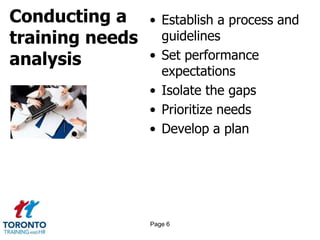
Conducting a training
needs analysis
Conducting a
training needs
analysis
• Establish a process and
guidelines
• Set performance
expectations
• Isolate the gaps
• Prioritize needs
• Develop a plan
Page 6
Page 7
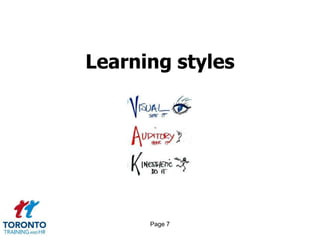
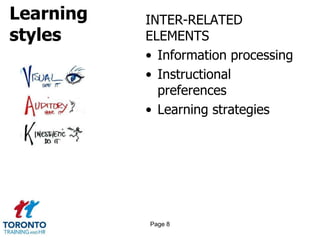
Learning styles
Learning
styles
INTER-RELATED
ELEMENTS
• Information processing
• Instructional
preferences
• Learning strategies
Page 8
Page 9
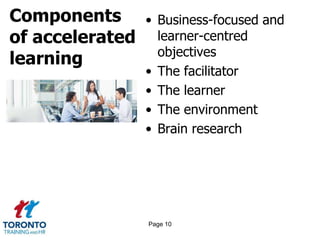
Components of
accelerated learning
Components
of accelerated
learning
• Business-focused and
learner-centred
objectives
• The facilitator
• The learner
• The environment
• Brain research
Page 10
Page 11
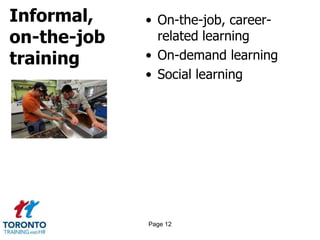
Informal, on-the-job
learning
Informal,
on-the-job
training
• On-the-job, career-
related learning
• On-demand learning
• Social learning
Page 12
Page 13
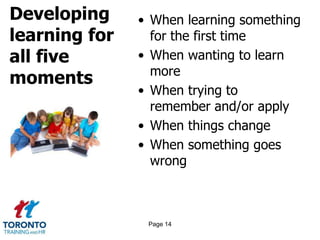
Developing learning for all
five moments
Developing
learning for
all five
moments
• When learning something
for the first time
• When wanting to learn
more
• When trying to
remember and/or apply
• When things change
• When something goes
wrong
Page 14
Page 15
Six sources of support
Six sources of
support
•Personal motivation
•Personal ability
•Social motivation
•Social ability
•Structural
motivation
•Structural ability
Page 16
Page 17
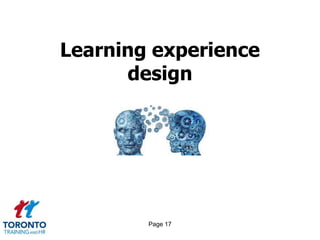
Learning experience
design
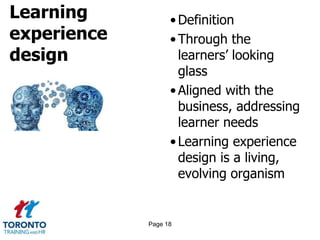
Learning
experience
design
•Definition
•Through the
learners’ looking
glass
•Aligned with the
business, addressing
learner needs
•Learning experience
design is a living,
evolving organism
Page 18
Page 19
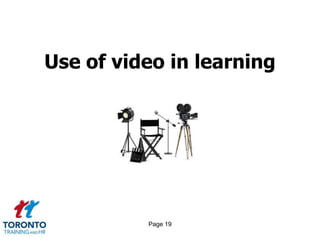
Use of video in learning
Use of video
in learning
1 of 2
WHEN TO USE IT
• Kick-off
• Representing soft skills
• Illustrating complex
processes
• Documenting evidence
• Testimonials
• Too many locations
Page 20
Use of video
in learning
2 of 2
BENEFITS
• Cost reduction
• Consistency
• Correctness
• Capture
• Clarity
• Control
Page 21
Page 22
Action learning
Action
learning
• What does it involve?
• Components
• Key behaviours
• Program development
• Executive involvement
• Completion of the
program
• Pay-off
Page 23
Page 24
Language learning
Language
learning
• Building the case for
language learning
• Steps to consider when
implementing language
learning
Page 25
Page 26
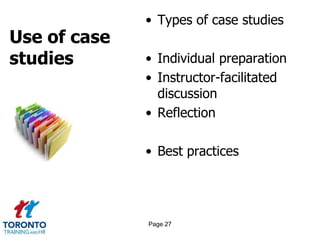
Use of case studies
Use of case
studies
• Types of case studies
• Individual preparation
• Instructor-facilitated
discussion
• Reflection
• Best practices
Page 27
Page 28
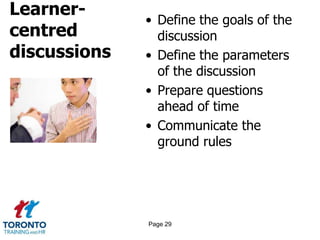
Learner-centred
discussions
Learner-
centred
discussions
• Define the goals of the
discussion
• Define the parameters

of the discussion
• Prepare questions
ahead of time
• Communicate the
ground rules
Page 29
Page 30
Saving dollars on
orientation programs
Saving dollars
on orientation
programs
•Choose a mentor
•Demonstrate the
procedure
•Have a return
demonstration
•Be available to
answer questions
Page 31
Page 32
Onboarding
Onboarding BEST PRACTICES
• Create a centralized
experience-and make it
fun
• Communicate before
they get there
• It’s never too early to
recognize
Page 33
Page 34
Is mobile learning right for
your organization?
Is mobile
learning right
for your
organization?
• Questions to ask
• Rationale for mobile
learning
• Considerations
Page 35
Page 36
Prototypes for mobile
learning
Prototypes for
mobile
learning
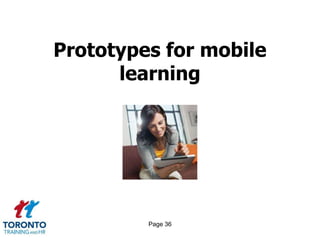
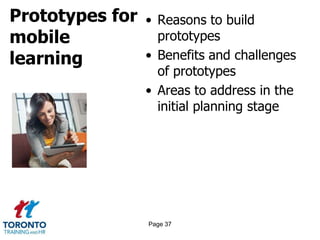
• Reasons to build
prototypes
• Benefits and challenges
of prototypes
• Areas to address in the
initial planning stage
Page 37
Page 38
Mobile learning for sales
Mobile
learning for
sales 1 of 2
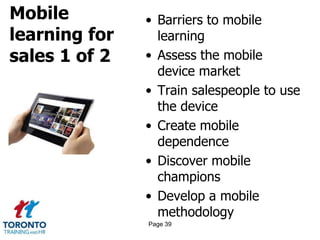
• Barriers to mobile
learning
• Assess the mobile
device market
• Train salespeople to use
the device
• Create mobile
dependence
• Discover mobile
champions
• Develop a mobile
methodology
Page 39
Mobile
learning for
sales 2 of 2
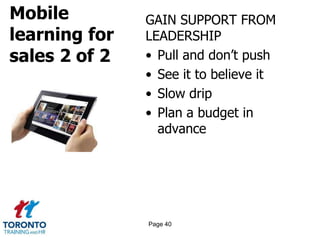
GAIN SUPPORT FROM
LEADERSHIP
• Pull and don’t push
• See it to believe it
• Slow drip
• Plan a budget in
advance
Page 40
Page 41
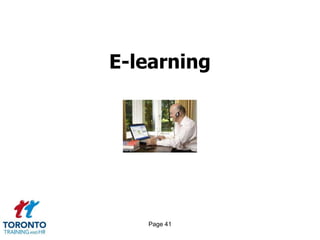
E-learning
E-learning
1 of 2
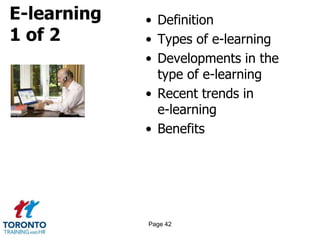
• Definition
• Types of e-learning
• Developments in the
type of e-learning
• Recent trends in
e-learning
• Benefits
Page 42
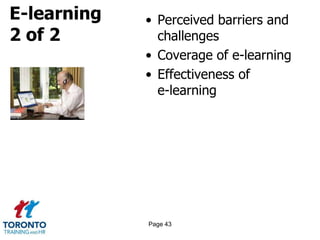
E-learning
2 of 2
• Perceived barriers and
challenges
• Coverage of e-learning
• Effectiveness of
e-learning
Page 43
Page 44
Beyond North America
Beyond North
America 1 of 4
ASIA
• Assess competence and
long-term commitment
• Conduct cultural and
human diligence as part
of the instructional
learning design process
• Involve a sponsor,
client and end user in
learning design
• Blend media and
methodologies
Page 45
Beyond North
America 2 of 4
LATIN AMERICA
• Build the program and
include the support of
senior executives
• Design content with
feedback from people
with different
backgrounds
• Blend tech with touch
• Provide effective
systems, procedures,
equipment
Page 46
Beyond North
America 3 of 4
LATIN AMERICA (CONT.)
• Provide effective
systems, procedures,
equipment, resources
and conditions that
allow learners to apply
what they learn
• Create a knowledge
management system
that preserves the
know-how of essential
functions
Page 47
Beyond North
America 4 of 4
EUROPE
• Just in time, just
enough
• Autonomy and
cohesion
• Blurring of boundaries
• Key challenges in
management
development
• The future learning
organization
Page 48
Page 49
Conclusion, summary and
questions
Page 50
Conclusion, summary and
questions
Conclusion
Summary
Videos
Questions

Learning & Development March 2014