All you wanted to know about
diversity, equality and inclusion
by Toronto Training and HR
December 2015
CONTENTS
3-4 Introduction
5-6 Definitions
7-8 The business case for diversity
9-10 Key benefits of improving diversity
11-12 Taking action over diversity
13-15 Culture and diversity
16-17 Hidden biases and diversity
18-19 Challenges in making diversity a priority
20-21 Measuring diversity
22-24 Common pitfalls in diversity training
23-24 A stakeholder engagement culture and change
25-26 Gender bias
27-28 Evolving the HR management process for gender diversity
29-30 Initiatives to improve gender diversity
31-34 What the best employers do to boost gender diversity
35-37 An age diverse workforce
38-39 Diversity in the Canadian mining industry
40-41 An Australian approach to recruit and retain a diverse workforce
42-43 Encouraging inclusion
44-45 Modelling inclusion
46-47 Organizational inclusive behaviours
48-49 A toolkit for inclusion
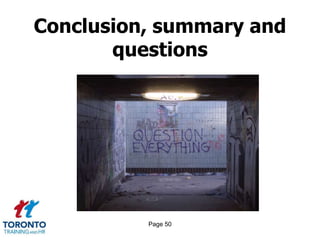
50-51 Conclusion, summary and questions
Page 2
Page 3
Introduction
Page 4
Introduction to Toronto Training
and HR
Toronto Training and HR is a specialist training and
human resources consultancy headed by Timothy Holden
10 years in banking
15 years in training and human resources
Freelance practitioner since 2006
The core services provided by Toronto Training and HR
are:
Training event design
Training event delivery
HR support with an emphasis on reducing
costs, saving time plus improving employee
engagement and morale
Services for job seekers
Page 5
Definitions
Definitions • Diversity
• Inclusion
• Equality
• Employment equity
• Ethnicity
Page 6
Page 7
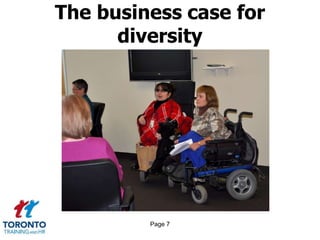
The business case for
diversity
The business
case for
diversity
• People issues
• Market competitiveness
• Corporate reputation
Page 8
Page 9
Key benefits of improving
diversity
Key benefits
of improving
diversity
• Engaged employee and
volunteers
• Reflective community
voice
• Economic resilience
• Enhanced innovation
and services
Page 10
Page 11
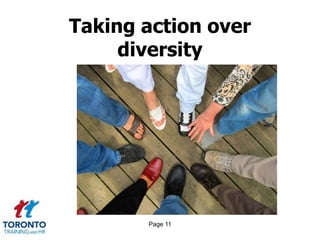
Taking action over
diversity
Taking action
over
diversity
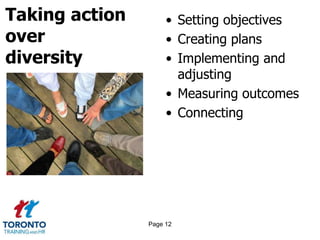
• Setting objectives
• Creating plans
• Implementing and
adjusting
• Measuring outcomes
• Connecting
Page 12
Page 13
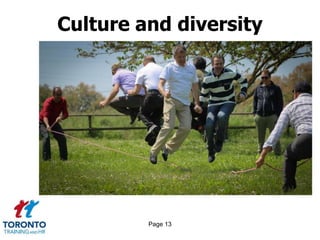
Culture and diversity
Culture and
diversity
1 of 2
• Cultural competence
• Put on one’s cultural
lens
• Ask questions to learn
more
• Reflect on your own
reactions
• Adjust your behaviour
Page 14
Culture and
diversity
2 of 2
Cultural differences
• High/low hierarchy
values
• Indirect/direct
communication styles
• Group/individual focus
Page 15
Page 16
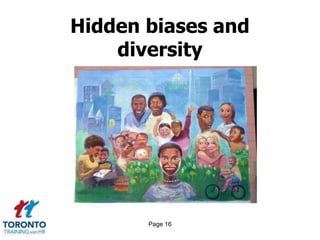
Hidden biases and
diversity
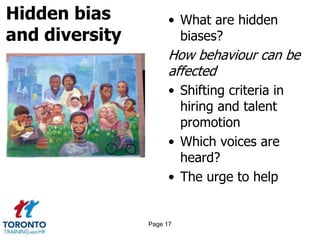
Hidden bias
and diversity
• What are hidden
biases?
How behaviour can be
affected
• Shifting criteria in
hiring and talent
promotion
• Which voices are
heard?
• The urge to help
Page 17
Page 18
Challenges in making
diversity a priority
Challenges in
making
diversity a
priority
• Organizational
capacity
• Community profile
• Defining the value of
diversity
• Language
• Risk
Page 19
Page 20
Measuring diversity
Measuring
diversity
• Externally-focused
measures
• Internally-focused
measures
Page 21
Page 22
Common pitfalls in diversity
training
Common pitfalls
in diversity
training 1 of 2
• Too little focus on the
impact of emotions
• Failure to engage white
males
• Lack of a compelling
business case
• Compliance-driven
• Too much focus on
helping whites
understand the
challenges of others
Page 23
Common pitfalls
in diversity
training 2 of 2
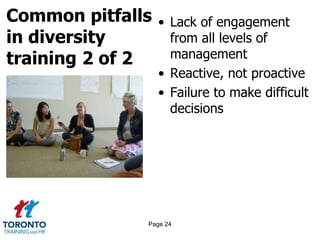
• Lack of engagement
from all levels of
management
• Reactive, not proactive
• Failure to make difficult
decisions
Page 24
Page 25
Gender bias
Gender bias
• Design
• Techniques
• Management
Page 26
Page 27
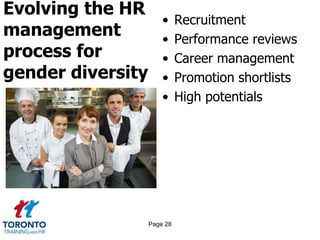
Evolving the HR
management process for
gender diversity
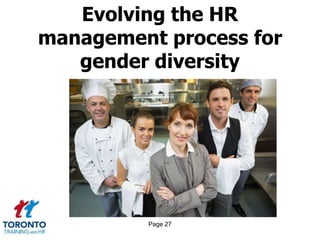
Evolving the HR
management
process for
gender diversity
• Recruitment
• Performance reviews
• Career management
• Promotion shortlists
• High potentials
Page 28
Page 29
Initiatives to improve
gender diversity
Initiatives to
improve
gender
diversity
• Build female networks
• Provide more flexible
working
• Make it easier for women
to take career breaks
• Help them achieve work-
life balance
• Ensure that women have
the same career
development
opportunities as men
Page 30
Page 31
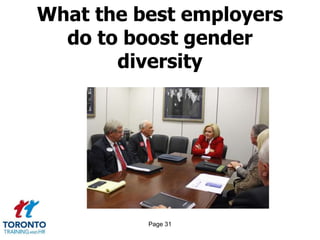
What the best employers
do to boost gender
diversity
What the best
employers do
to boost
gender
diversity 1 of 3
• Examine the purpose
• Tear up the role rule
book
• Break down hierarchy
• Deliver what
employees value
• Fish differently
• Welcome diversity
• Listen carefully
• Measure and transform
culture
Page 32
What the best
employers do
to boost
gender
diversity 2 of 3
• Examine management
styles
• Rethink career paths
• Learn from the bottom
up
• Redesign roles and
recognition
• Make everyone a hero
• Learn from the bottom
up
Page 33
What the best
employers do
to boost
gender
diversity 3 of 3
• Create transparency by
implementing gender
diversity KPIs
• Implement measures
to facilitate the work-
life balance
Page 34
Page 35
An age-diverse workforce
An age-diverse
workforce 1 of 2
• Benefits
• Challenges
• Reasons for not seeing
an increased interest
among mature
employees
• Reasons for seeing an
increased interest in
working later among
mature employees
• Attitudes towards
training and
developing mature
employees
Page 36
An age-diverse
workforce 2 of 2
• Ways in which
organizations support
the extension of
working life
• Health and wellbeing
provisions to support
extending working life
• Provisions to support
dependant care
responsibilities
• Activities to access
skilled and diverse
workers of all ages
Page 37
Page 38
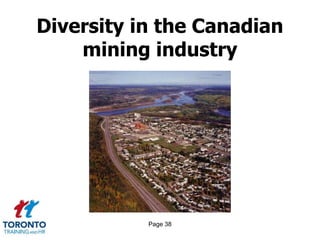
Diversity in the Canadian
mining industry
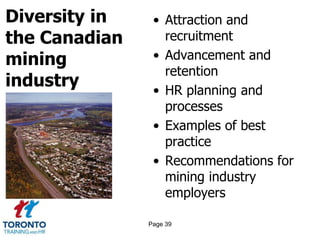
Diversity in
the Canadian
mining
industry
• Attraction and
recruitment
• Advancement and
retention
• HR planning and
processes
• Examples of best
practice
• Recommendations for
mining industry
employers
Page 39
Page 40
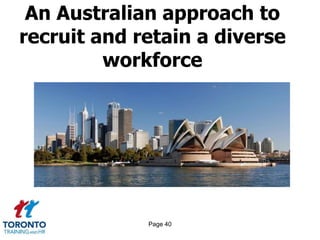
An Australian approach to
recruit and retain a diverse
workforce
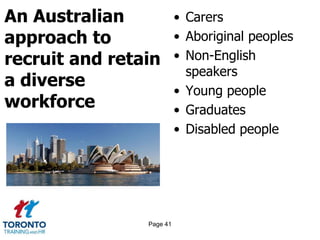
An Australian
approach to
recruit and retain
a diverse
workforce
• Carers
• Aboriginal peoples
• Non-English
speakers
• Young people
• Graduates
• Disabled people
Page 41
Page 42
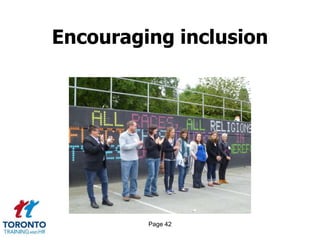
Encouraging inclusion
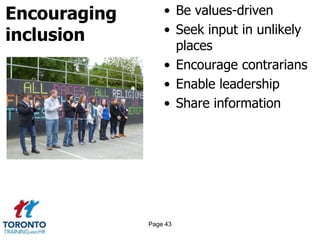
Encouraging
inclusion
• Be values-driven
• Seek input in unlikely
places
• Encourage contrarians
• Enable leadership
• Share information
Page 43
Page 44
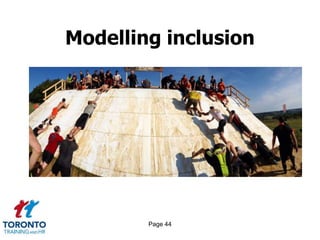
Modelling inclusion
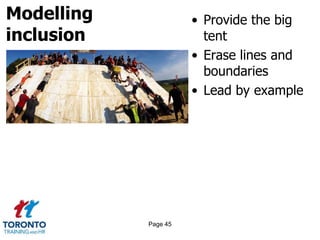
Modelling
inclusion
• Provide the big
tent
• Erase lines and
boundaries
• Lead by example
Page 45
Page 46
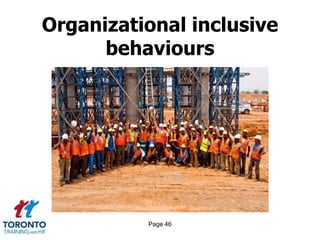
Organizational inclusive
behaviours
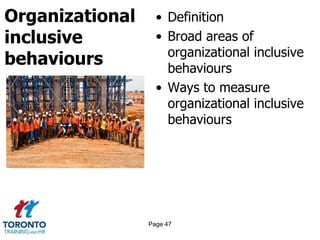
Organizational
inclusive
behaviours
• Definition
• Broad areas of
organizational inclusive
behaviours
• Ways to measure
organizational inclusive
behaviours
Page 47
Page 48
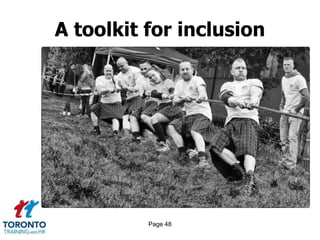
A toolkit for inclusion
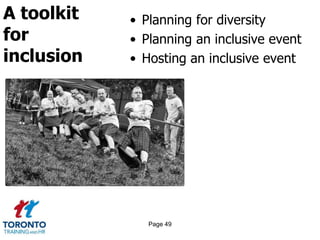
A toolkit
for
inclusion
• Planning for diversity
• Planning an inclusive event
• Hosting an inclusive event
Page 49
Page 50
Conclusion, summary and
questions
Page 51
Conclusion, summary and
questions
Conclusion
Summary
Videos
Questions

Diversity, inclusion and equality December 2015