Getting the culture rightby Toronto Training and HR June 2011
	3-4 Introduction to Toronto 	Training and HR	5-6	Questions to ask	7-8	Drill A	9-11	Changing the culture	12-13	Assessing cultural fit14-15	Retaining key people16-17	Culture in smaller employers	18-19	Different types of company culture20-22	Atmosphere of blameless error	23-24	Developing a sustainable organizational 			culture	25-26	Elements critical to company culture	27-28	Generating a positive corporate culture29-31	Building a winning culture32-33	Strong cultures34-35	Great places to work36-42	Gaps between what employees seek and 		experience43-44	Drill B45-48	Case studies49-50	Conclusion and questionsContents
Page 3Introduction
Page 4Introduction to Toronto Training and HRToronto Training and HRis a specialist training and human resources consultancy headed by Timothy Holden 10 years in banking10 years in training and human resourcesFreelance practitioner since 2006The core services provided by Toronto Training and HR are:Training course design
Training course delivery-  Reducing costsSaving time
Improving employee engagement & morale
Services for job seekersPage 5Questions to ask
Page 6Questions to askWhat is culture?What is the current organizational culture?Where does the culture need to be for the survival and growth of the organization?How do we move from the present to the desired culture?
Page 7Drill A
Page 8Drill A
Page 9Changing the culture
Page 10Changing the culture 1 of 2Don't waste excessive time and money trying tochange culture by taking a 'scattergun' approach- trying to change everything when some areasare perfectly okay is foolishUnderstand the functional and dysfunctionalparts of the cultureFind out where they exist within the organization - is it in one subculture or across all subcultures?Be focused - this will make it more cost-effective and money will not be expended unnecessarily
Page 11Changing the culture 2 of 2STEPS TO BE TAKENAssess the current culture(s) in categorical detail(e.g. leadership, communications) across anddown the organizationDefine the gaps between the current and thedesired culture categoriesCreate plans that target only the areas of theorganization and the categories of culture thatneed to be improved and changed
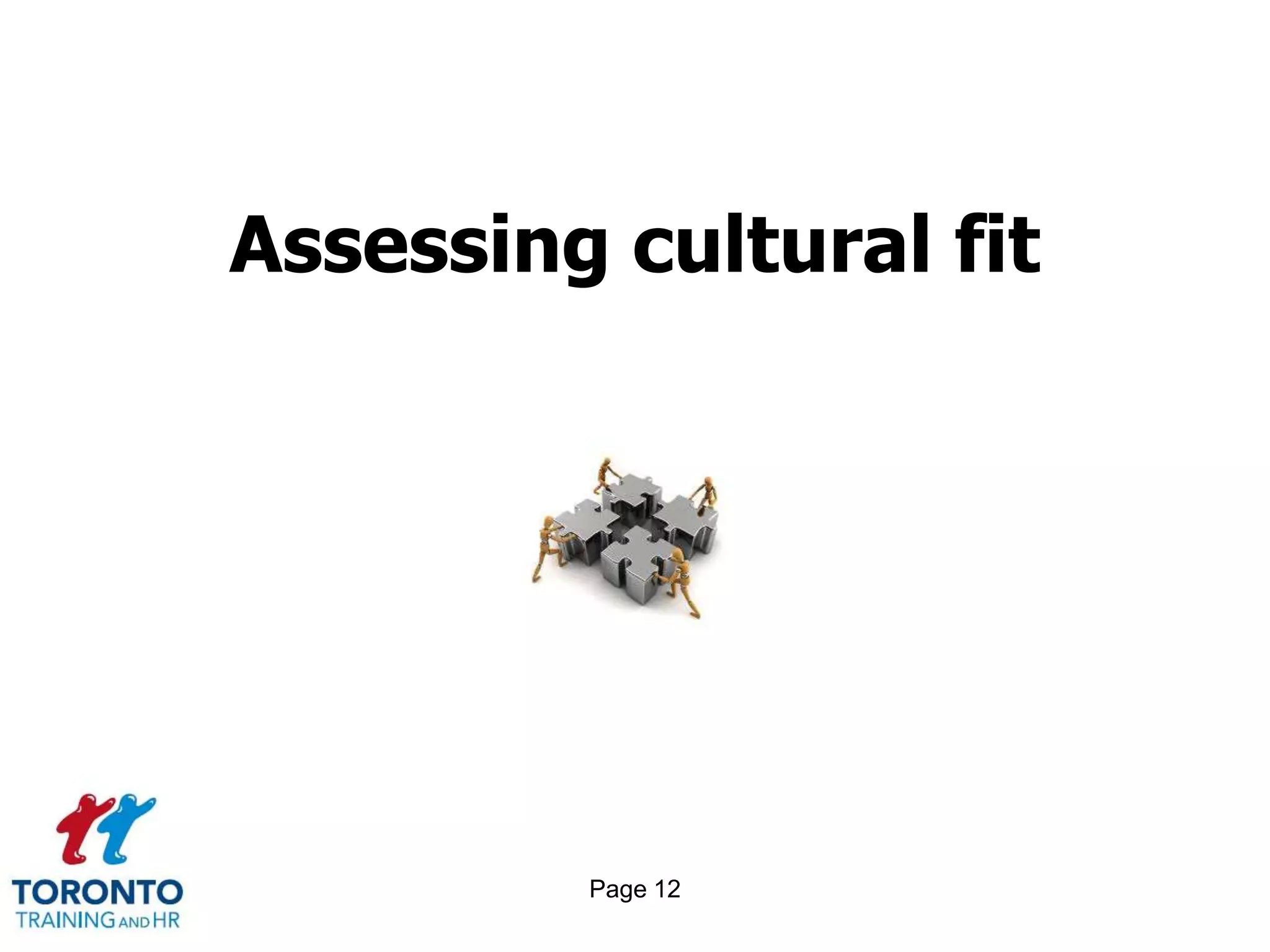
Page 12Assessing cultural fit
Page 13Assessing cultural fitPre-interviewObserve everythingQuestion everythingPost interview
Page 14Retaining key people
Page 15Retaining key peopleIMPORTANCE OF CULTURESocializersAchieversProtectionistsMaterialistsTrue believers
Page 16Culture in smaller employers
Page 17Culture in smaller employersCommunicate!Job descriptionsRegular performance evaluationRegular team meetingsOpportunities for professional developmentResponsibilityTeam buildingCoach, mentor, succession planningMake work-life balance part of your corporate cultureHave a HR Policy (and use it)
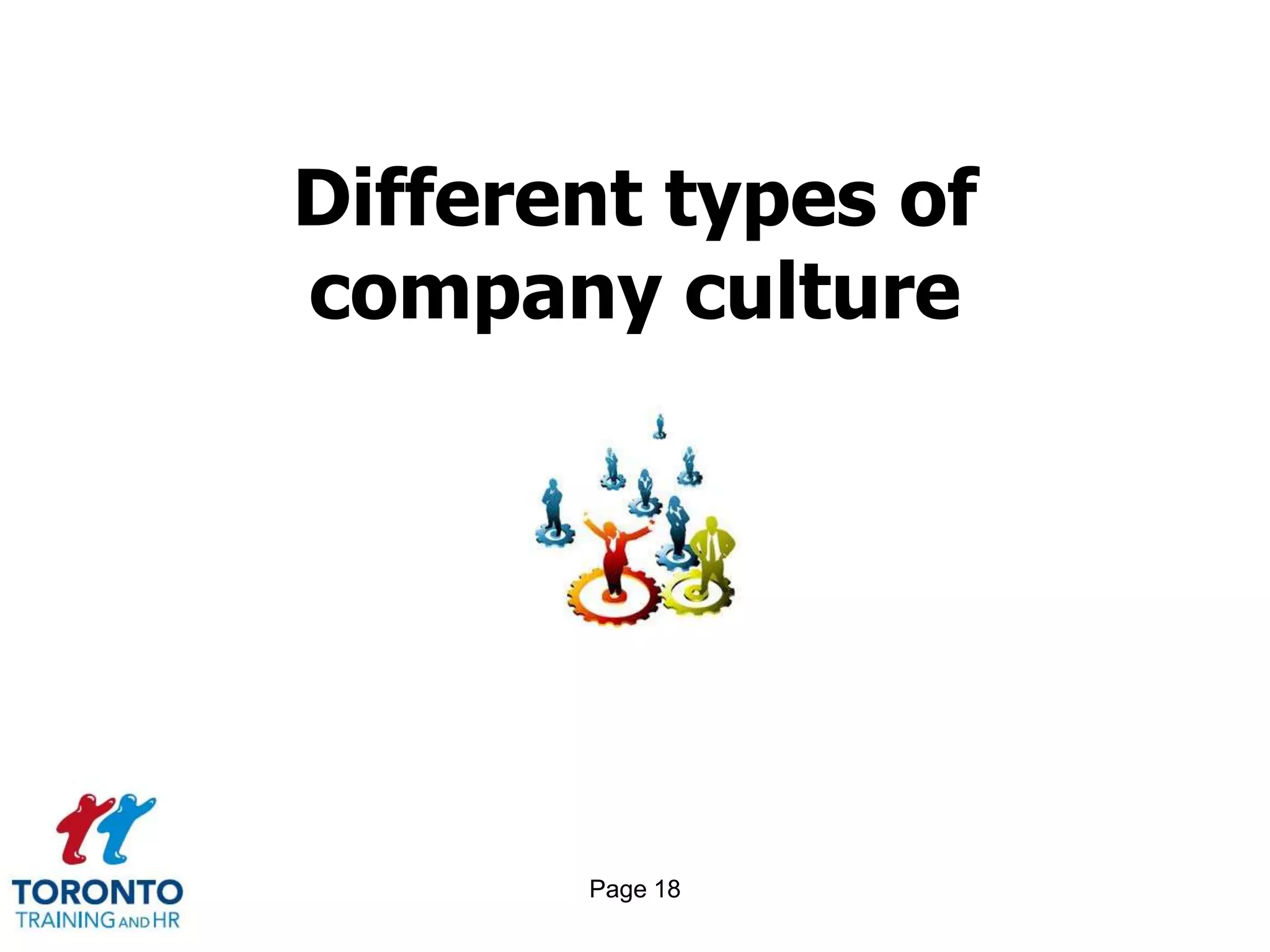
Page 18Different types of company culture
Page 19Different types of company cultureAll hands-on-deck cultureProcess cultureWork-hard/play-hard cultureTough-guy macho culture
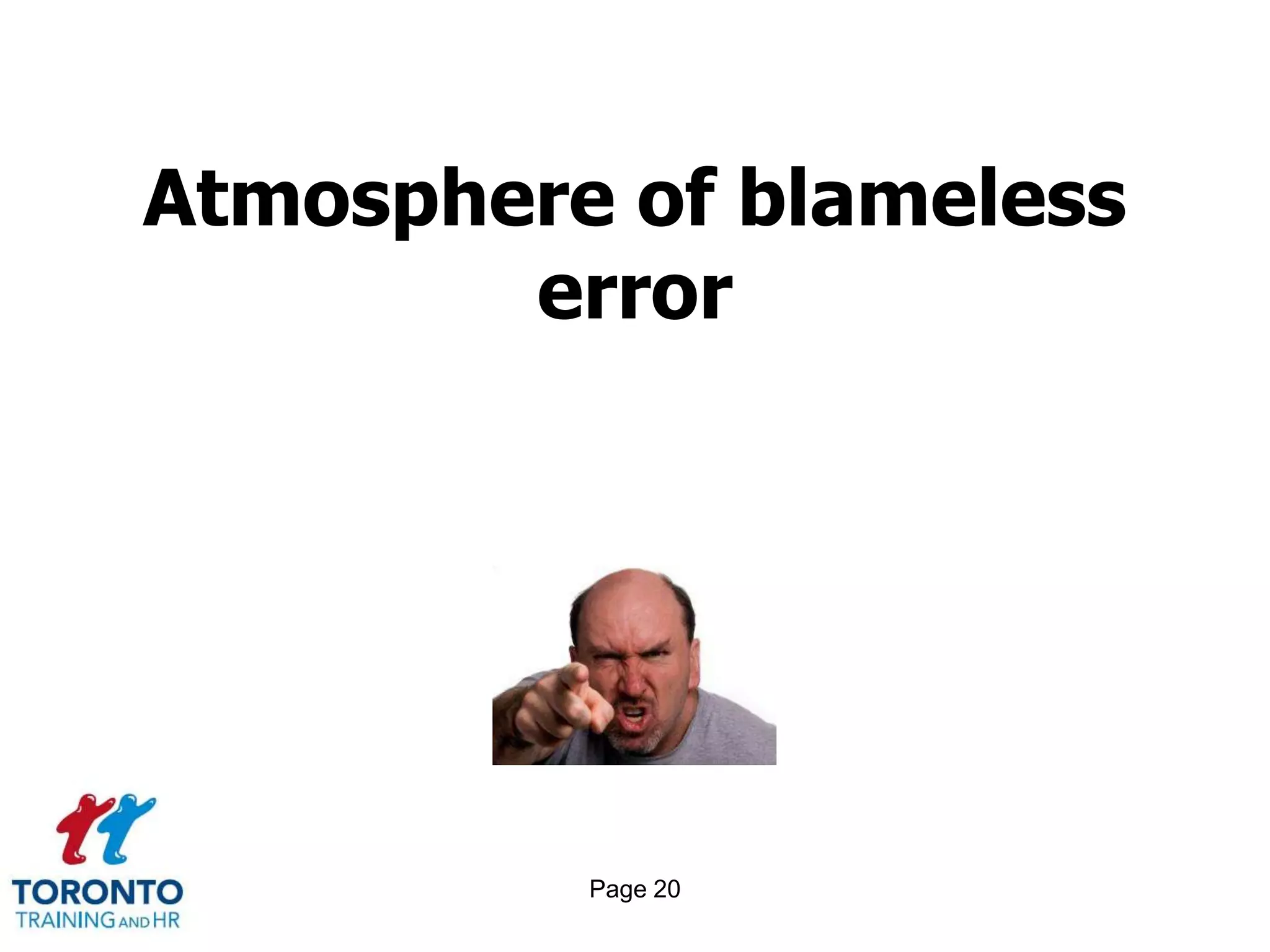
Page 20Atmosphere of blameless error
Page 21Atmosphere of blameless error 1 of 2	Motivating through errorsCapitalizing on errorsLearning from errors
Page 22Atmosphere of blameless error 2 of 2	CREATING AN ATMOSPHERE OF BLAMELESS ERRORStay objectiveDetermine what happenedAsk for suggestionsUse employee suggestionsAgree on the suggestion togetherFollow up
Page 23Developing a sustainable organizational culture
Page 24Developing a sustainable organizational cultureUnderstand the context in which the change is happeningUnderstand who is involved in the process and to what extentIdentify key structural and behavioural factors to ensure they are consistent with the culture aspired toBe aware of different people’s responses to change, leading to action when appropriatePromote authentic leadership
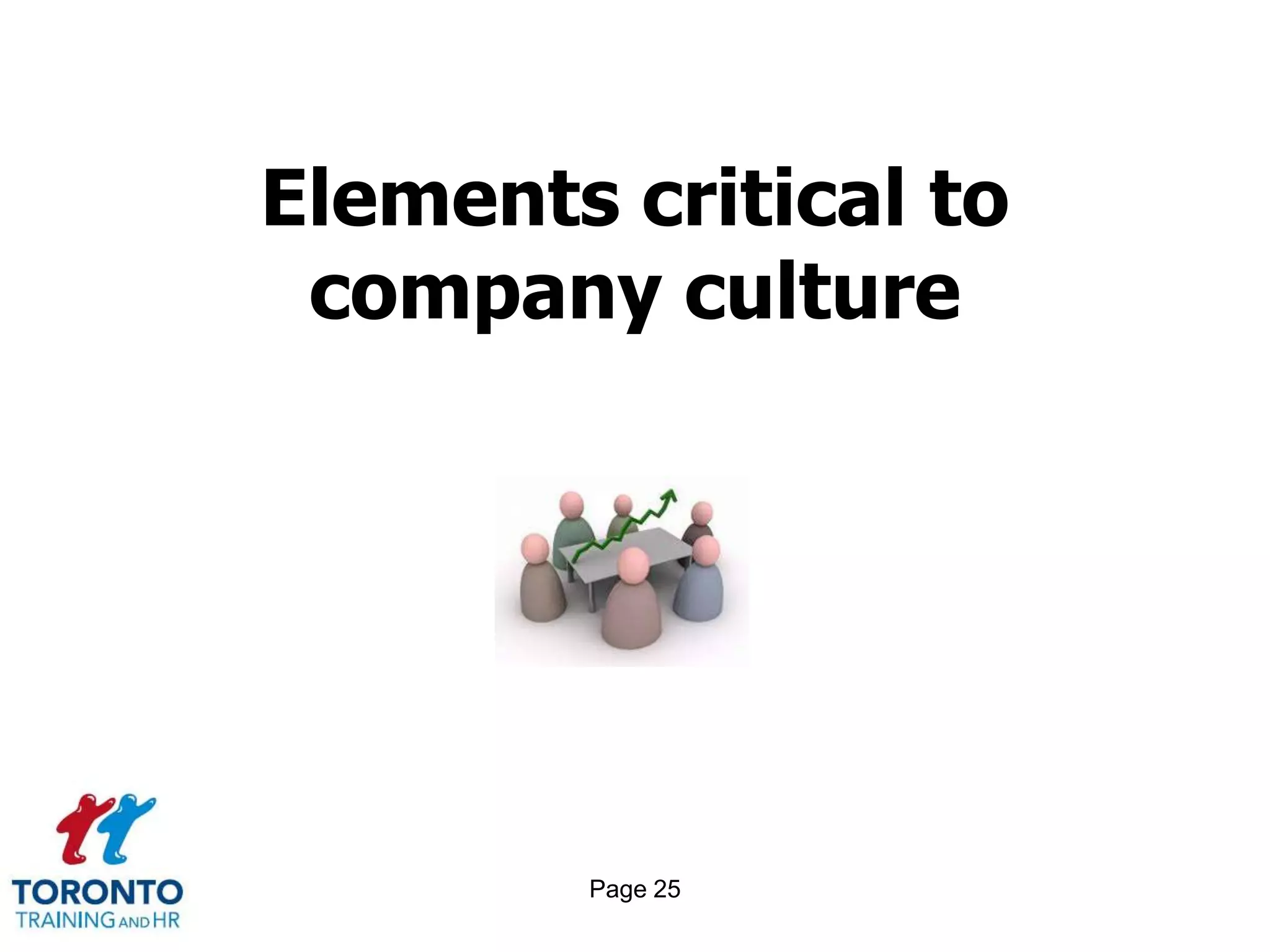
Page 25Elements critical to company culture
Page 26Elements critical to company cultureEmployee attitudesEffective managementStrong trust relationshipsCustomer focusHigh accountability standardsCommitment to training and developmentCompensation and reward programsSupport for innovation and new ideasUseful resources, technology and toolsEmphasis on recruiting and retaining outstanding employees
Page 27Generating a positive corporate culture
Page 28Generating a positive corporate cultureMake customer satisfaction a way of lifeDo not play favourites-treat everyone fairlyMake employee development a major objectiveAllow employees to have a voice in major changesPromote cooperation between organizational subunitsBase employee salary and promotions on performanceSet individual goals that are realistic for each employeeAlways respect employees and take time to give encouragement
Page 29Building a winning culture
Page 30Building a winning culture 1 of 2Define 3-4 guiding principles that define who you are as an organizationUse the principles to guide every business discussion and decision going forwardBuild the principles into all your people performance and management systems
Page 31Building a winning culture 2 of 2Create a 2-3 day leadership development experience that reinforces the behavioursandvalues consistent with the principles, and insist all senior leaders attendExpect resistance, but stay the course with passion and patience-changing culture means changing people, and that takes time
Page 32Strong cultures
Page 33Strong culturesORGANIZATIONS TEND TO FOCUS ON:Building employee morale through incentive and training programsClearly defining values through mission and vision statementsPutting strong leaders in place that set the tone and empower othersEncouraging better relationships with both employees and customers
Page 34Great places to work
Page 35Great places to workTrustPrideCamaraderieNature of relationships
Page 36Gaps between what employees seek and experience
Page 37Gaps between what employees seek and experience 1 of 6Managing talentEnsuring understandingAdmitting mistakesDisplaying consistencyContextualising successDeciding implementation momentHandling dilemmasPacing control
Page 38Gaps between what employees seek and experience 2 of 6BEHAVIOURSExercising self disciplineListening to ideasEnsuring understandingQuestioning selfAdmitting mistakesReceiving feedbackResponding to objections
Page 39Gaps between what employees seek and experience 3 of 6BEHAVIOURSExercising ethical disciplineDisplaying consistencyDemonstrating moralityTransmitting organizational valuesSecuring behaviourContextualizing successEncouraging transparency
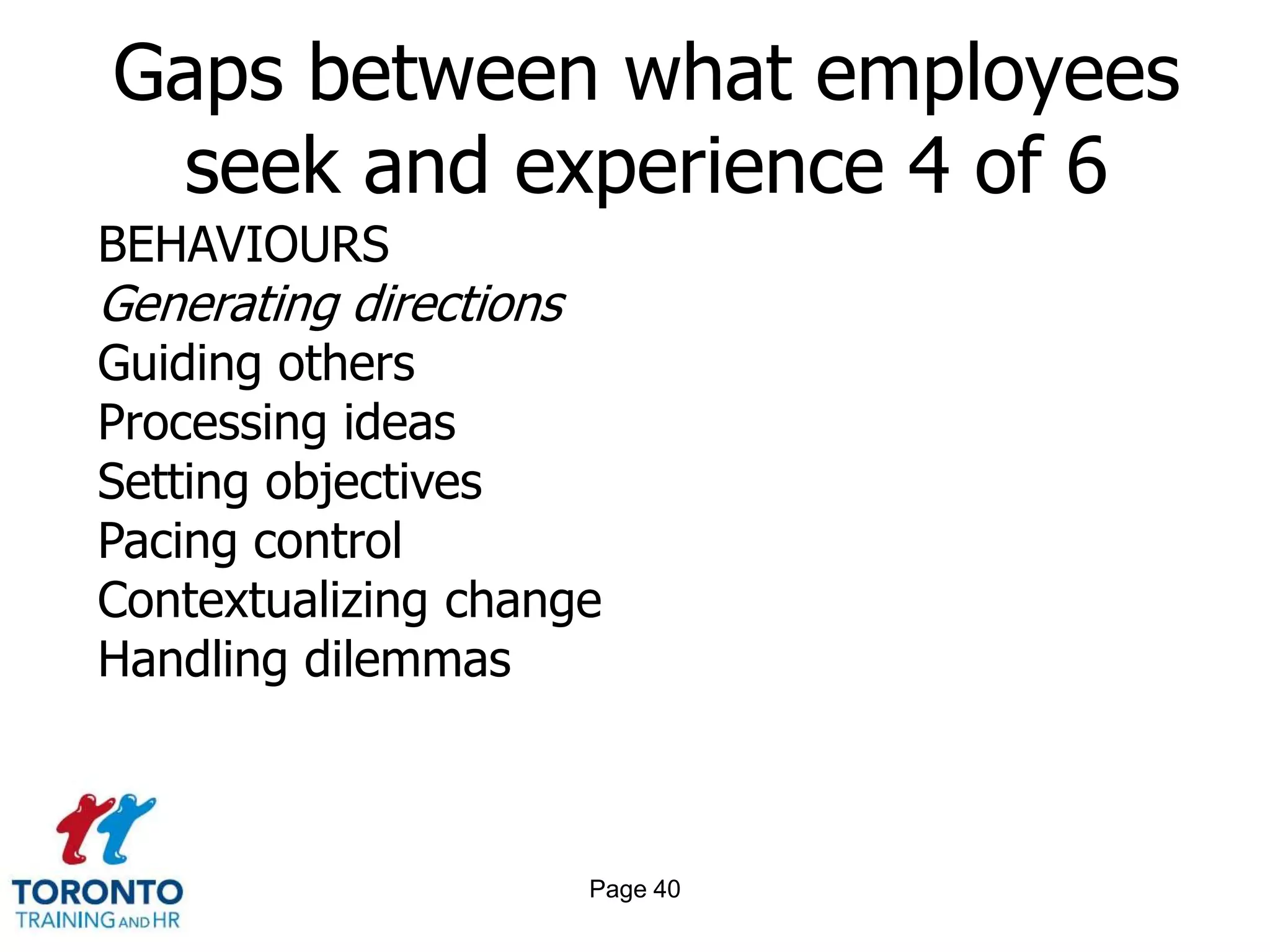
Page 40Gaps between what employees seek and experience 4 of 6BEHAVIOURSGenerating directionsGuiding othersProcessing ideasSetting objectivesPacing controlContextualizing changeHandling dilemmas
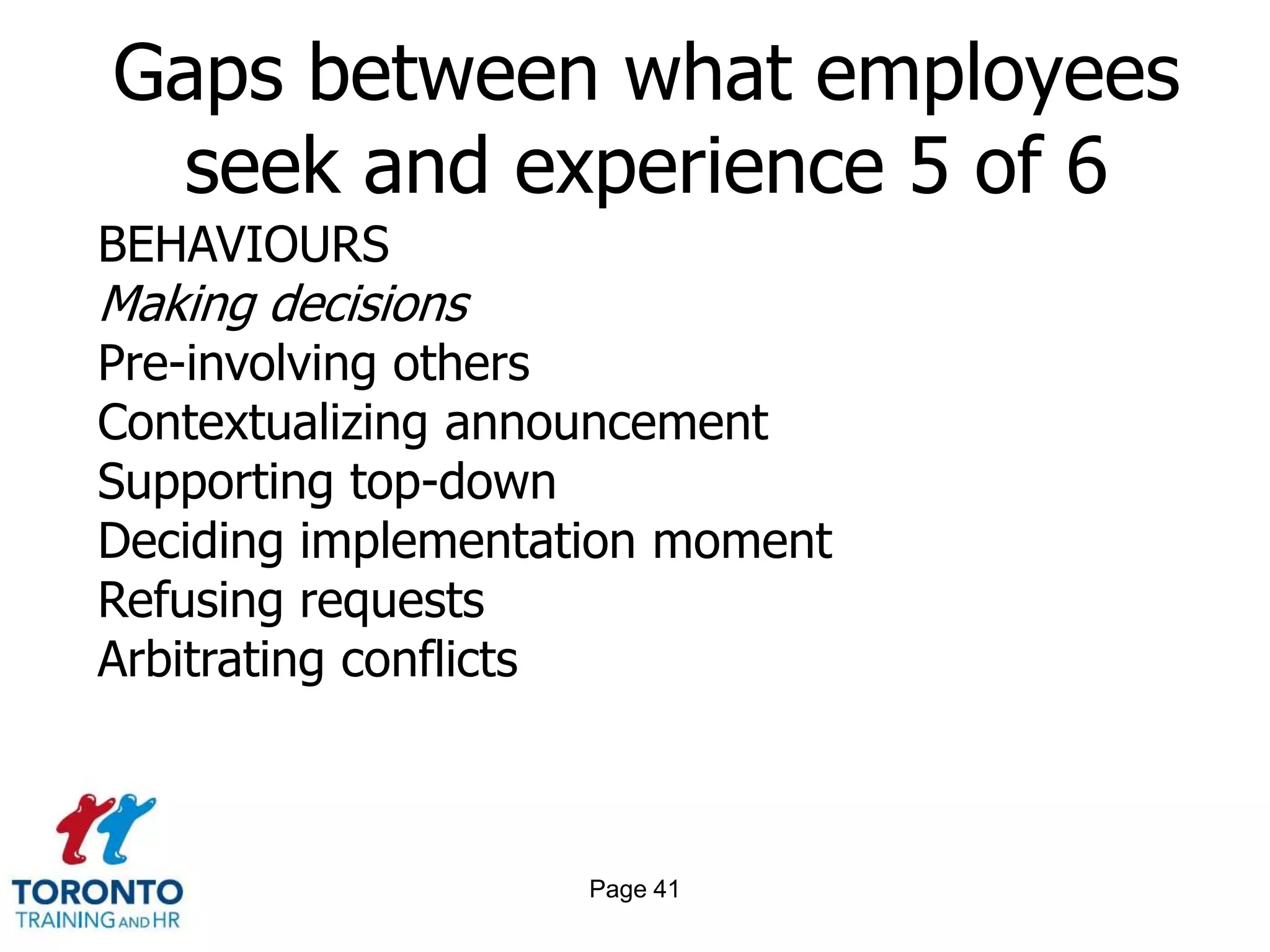
Page 41Gaps between what employees seek and experience 5 of 6BEHAVIOURSMaking decisionsPre-involving othersContextualizing announcementSupporting top-downDeciding implementation momentRefusing requestsArbitrating conflicts
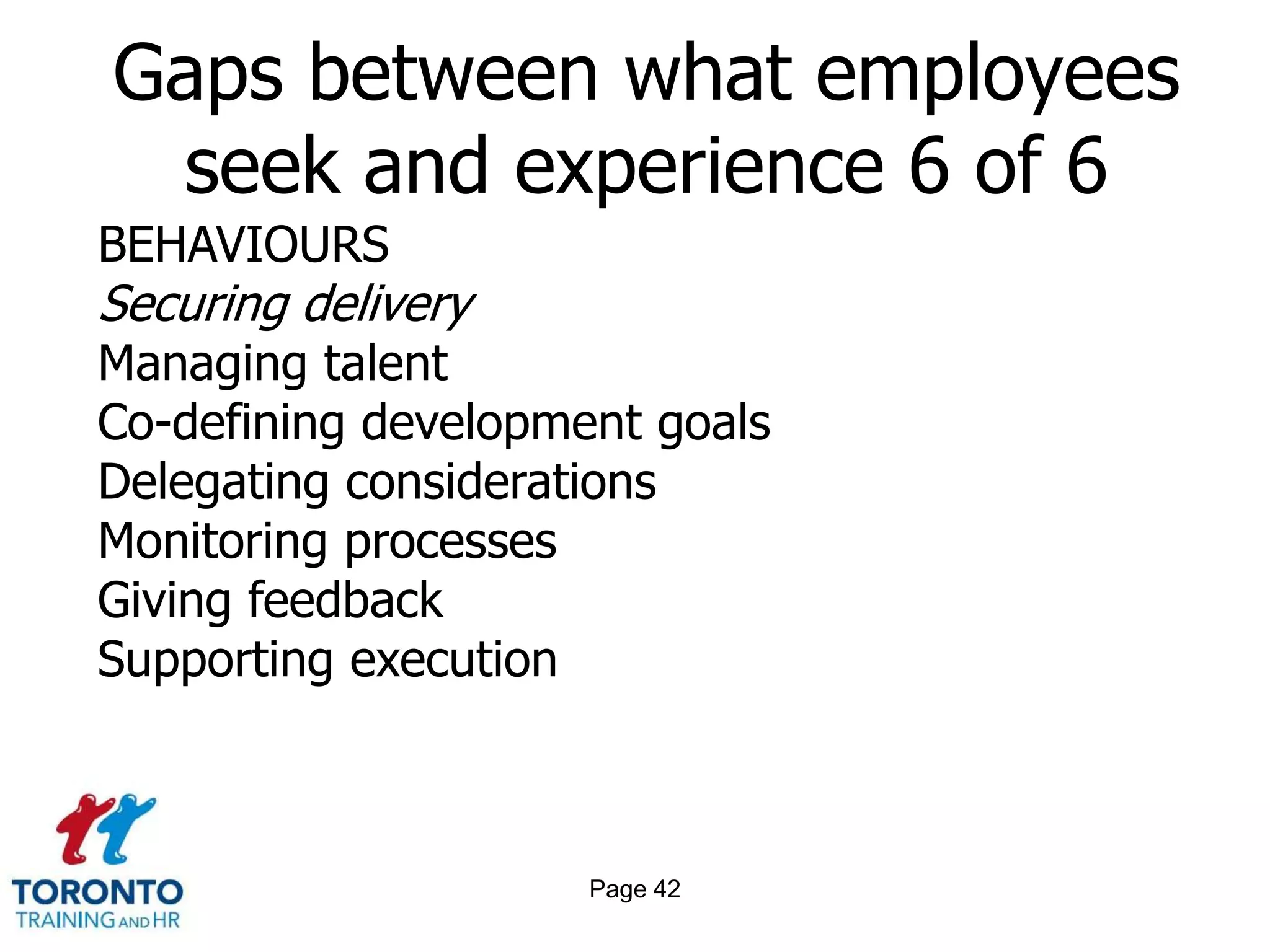
Page 42Gaps between what employees seek and experience 6 of 6BEHAVIOURSSecuring deliveryManaging talentCo-defining development goalsDelegating considerationsMonitoring processesGiving feedbackSupporting execution
Page 43Drill B
Page 44Drill B
Page 45Case study A
Page 46Case study A
Page 47Case study B
Page 48Case study B

Getting the culture right June 2011

  • 1.
    Getting the culturerightby Toronto Training and HR June 2011
  • 2.
    3-4 Introduction toToronto Training and HR 5-6 Questions to ask 7-8 Drill A 9-11 Changing the culture 12-13 Assessing cultural fit14-15 Retaining key people16-17 Culture in smaller employers 18-19 Different types of company culture20-22 Atmosphere of blameless error 23-24 Developing a sustainable organizational culture 25-26 Elements critical to company culture 27-28 Generating a positive corporate culture29-31 Building a winning culture32-33 Strong cultures34-35 Great places to work36-42 Gaps between what employees seek and experience43-44 Drill B45-48 Case studies49-50 Conclusion and questionsContents
  • 3.
  • 4.
    Page 4Introduction toToronto Training and HRToronto Training and HRis a specialist training and human resources consultancy headed by Timothy Holden 10 years in banking10 years in training and human resourcesFreelance practitioner since 2006The core services provided by Toronto Training and HR are:Training course design
  • 5.
    Training course delivery- Reducing costsSaving time
  • 6.
  • 7.
    Services for jobseekersPage 5Questions to ask
  • 8.
    Page 6Questions toaskWhat is culture?What is the current organizational culture?Where does the culture need to be for the survival and growth of the organization?How do we move from the present to the desired culture?
  • 9.
  • 10.
  • 11.
  • 12.
    Page 10Changing theculture 1 of 2Don't waste excessive time and money trying tochange culture by taking a 'scattergun' approach- trying to change everything when some areasare perfectly okay is foolishUnderstand the functional and dysfunctionalparts of the cultureFind out where they exist within the organization - is it in one subculture or across all subcultures?Be focused - this will make it more cost-effective and money will not be expended unnecessarily
  • 13.
    Page 11Changing theculture 2 of 2STEPS TO BE TAKENAssess the current culture(s) in categorical detail(e.g. leadership, communications) across anddown the organizationDefine the gaps between the current and thedesired culture categoriesCreate plans that target only the areas of theorganization and the categories of culture thatneed to be improved and changed
  • 14.
  • 15.
    Page 13Assessing culturalfitPre-interviewObserve everythingQuestion everythingPost interview
  • 16.
  • 17.
    Page 15Retaining keypeopleIMPORTANCE OF CULTURESocializersAchieversProtectionistsMaterialistsTrue believers
  • 18.
    Page 16Culture insmaller employers
  • 19.
    Page 17Culture insmaller employersCommunicate!Job descriptionsRegular performance evaluationRegular team meetingsOpportunities for professional developmentResponsibilityTeam buildingCoach, mentor, succession planningMake work-life balance part of your corporate cultureHave a HR Policy (and use it)
  • 20.
    Page 18Different typesof company culture
  • 21.
    Page 19Different typesof company cultureAll hands-on-deck cultureProcess cultureWork-hard/play-hard cultureTough-guy macho culture
  • 22.
    Page 20Atmosphere ofblameless error
  • 23.
    Page 21Atmosphere ofblameless error 1 of 2 Motivating through errorsCapitalizing on errorsLearning from errors
  • 24.
    Page 22Atmosphere ofblameless error 2 of 2 CREATING AN ATMOSPHERE OF BLAMELESS ERRORStay objectiveDetermine what happenedAsk for suggestionsUse employee suggestionsAgree on the suggestion togetherFollow up
  • 25.
    Page 23Developing asustainable organizational culture
  • 26.
    Page 24Developing asustainable organizational cultureUnderstand the context in which the change is happeningUnderstand who is involved in the process and to what extentIdentify key structural and behavioural factors to ensure they are consistent with the culture aspired toBe aware of different people’s responses to change, leading to action when appropriatePromote authentic leadership
  • 27.
    Page 25Elements criticalto company culture
  • 28.
    Page 26Elements criticalto company cultureEmployee attitudesEffective managementStrong trust relationshipsCustomer focusHigh accountability standardsCommitment to training and developmentCompensation and reward programsSupport for innovation and new ideasUseful resources, technology and toolsEmphasis on recruiting and retaining outstanding employees
  • 29.
    Page 27Generating apositive corporate culture
  • 30.
    Page 28Generating apositive corporate cultureMake customer satisfaction a way of lifeDo not play favourites-treat everyone fairlyMake employee development a major objectiveAllow employees to have a voice in major changesPromote cooperation between organizational subunitsBase employee salary and promotions on performanceSet individual goals that are realistic for each employeeAlways respect employees and take time to give encouragement
  • 31.
    Page 29Building awinning culture
  • 32.
    Page 30Building awinning culture 1 of 2Define 3-4 guiding principles that define who you are as an organizationUse the principles to guide every business discussion and decision going forwardBuild the principles into all your people performance and management systems
  • 33.
    Page 31Building awinning culture 2 of 2Create a 2-3 day leadership development experience that reinforces the behavioursandvalues consistent with the principles, and insist all senior leaders attendExpect resistance, but stay the course with passion and patience-changing culture means changing people, and that takes time
  • 34.
  • 35.
    Page 33Strong culturesORGANIZATIONSTEND TO FOCUS ON:Building employee morale through incentive and training programsClearly defining values through mission and vision statementsPutting strong leaders in place that set the tone and empower othersEncouraging better relationships with both employees and customers
  • 36.
  • 37.
    Page 35Great placesto workTrustPrideCamaraderieNature of relationships
  • 38.
    Page 36Gaps betweenwhat employees seek and experience
  • 39.
    Page 37Gaps betweenwhat employees seek and experience 1 of 6Managing talentEnsuring understandingAdmitting mistakesDisplaying consistencyContextualising successDeciding implementation momentHandling dilemmasPacing control
  • 40.
    Page 38Gaps betweenwhat employees seek and experience 2 of 6BEHAVIOURSExercising self disciplineListening to ideasEnsuring understandingQuestioning selfAdmitting mistakesReceiving feedbackResponding to objections
  • 41.
    Page 39Gaps betweenwhat employees seek and experience 3 of 6BEHAVIOURSExercising ethical disciplineDisplaying consistencyDemonstrating moralityTransmitting organizational valuesSecuring behaviourContextualizing successEncouraging transparency
  • 42.
    Page 40Gaps betweenwhat employees seek and experience 4 of 6BEHAVIOURSGenerating directionsGuiding othersProcessing ideasSetting objectivesPacing controlContextualizing changeHandling dilemmas
  • 43.
    Page 41Gaps betweenwhat employees seek and experience 5 of 6BEHAVIOURSMaking decisionsPre-involving othersContextualizing announcementSupporting top-downDeciding implementation momentRefusing requestsArbitrating conflicts
  • 44.
    Page 42Gaps betweenwhat employees seek and experience 6 of 6BEHAVIOURSSecuring deliveryManaging talentCo-defining development goalsDelegating considerationsMonitoring processesGiving feedbackSupporting execution
  • 45.
  • 46.
  • 47.
  • 48.
  • 49.
  • 50.
  • 51.
  • 52.