Downloaded 50 times


![Snyder et al., 2014
Giftedness Beliefs & Self-Handicapping
Success
I can see you’ve done really well on these problems and you got [#]
correct. That’s really great and right in line with the other
participants we’ve had in the gifted study.
Failure
It looks like you had some trouble with these problems. You didn’t get
any correct…usually our gifted participants get at least three of
these questions right. I don’t really know if the gifted label actually
applies now but let’s just move on to the next gifted task.](https://image.slidesharecdn.com/week6-finalpdf-150225135826-conversion-gate02/75/SOC-463-663-Social-Psych-of-Education-Attributions-Beliefs-70-2048.jpg)


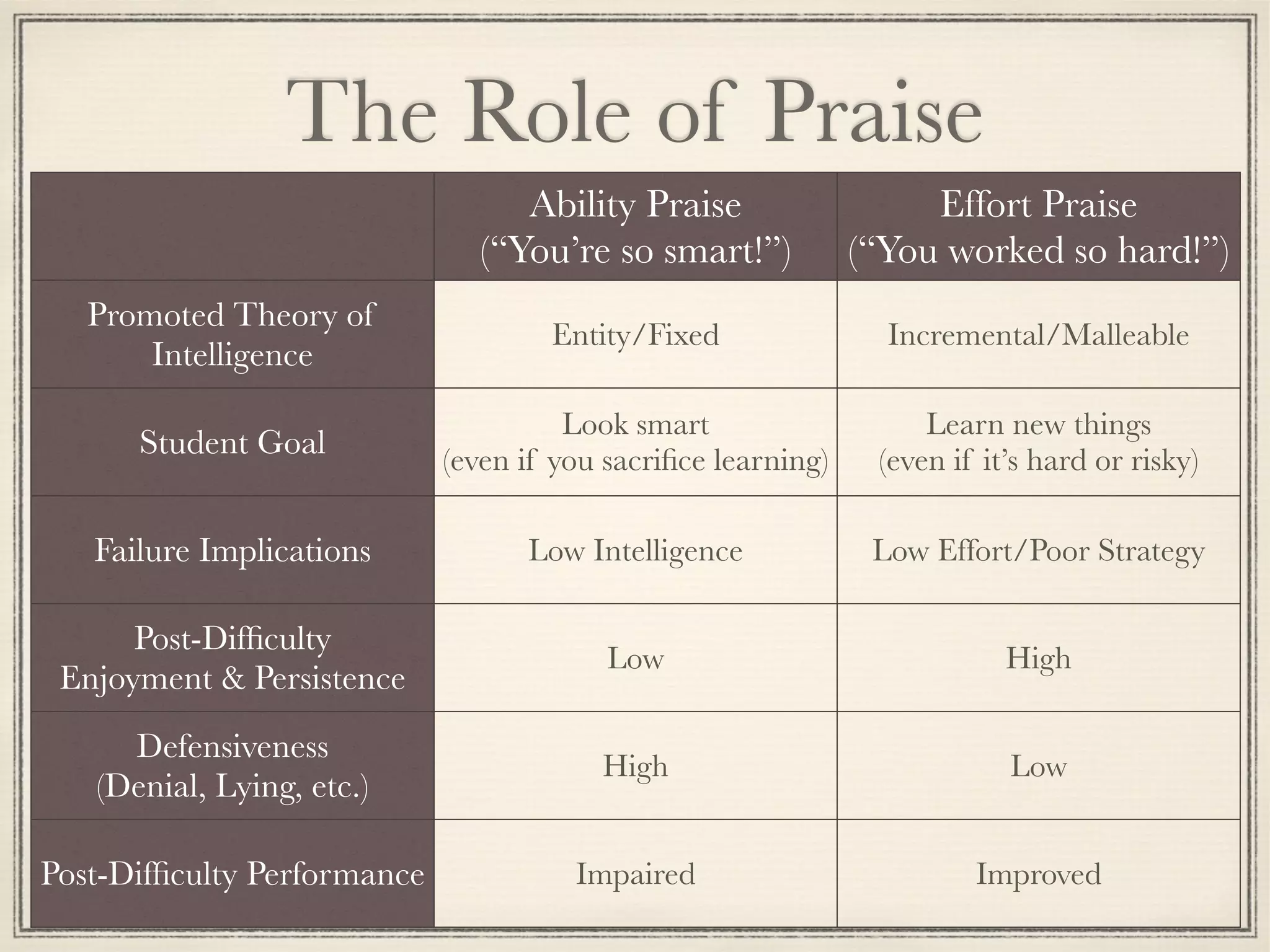


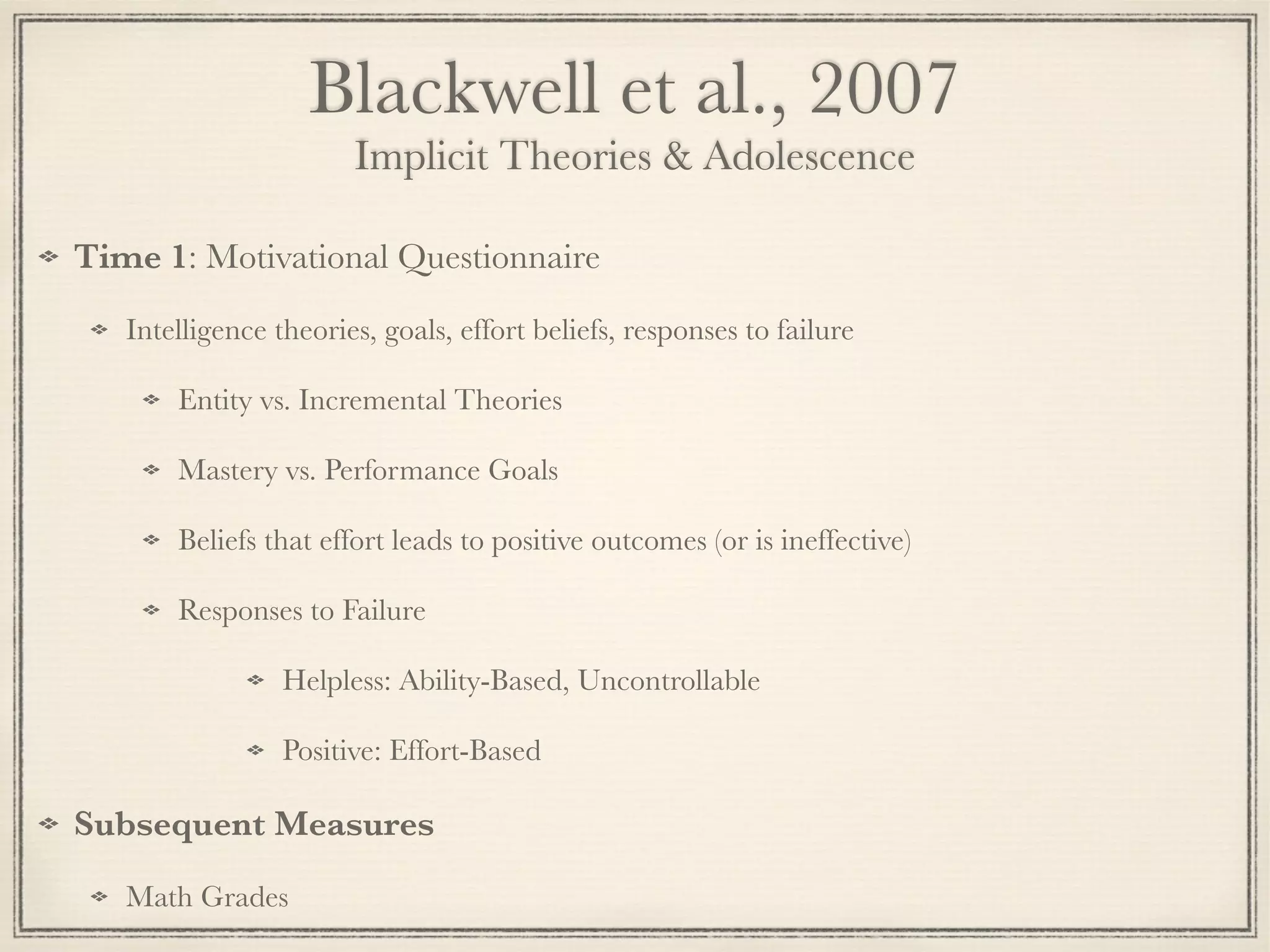


This document discusses attributions and beliefs about intelligence. It begins by introducing attribution theory, which examines how people explain the causes of events. Key aspects of attributions include locus (internal vs. external), stability (stable vs. unstable), and controllability. Implicit theories, also known as naive theories, are beliefs about whether qualities like intelligence are fixed or can develop over time. Research shows these beliefs influence responses to failure, effort, and performance. An entity theory views intelligence as fixed while an incremental theory sees it as malleable. Studies demonstrate beliefs shape resilience and motivation after setbacks.


