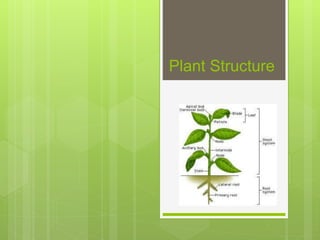

Plant Structure
6 Volunteers please!
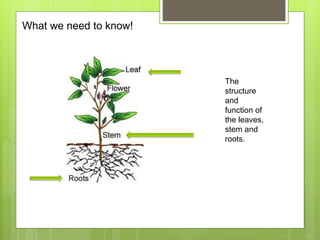
What we need to know!
The
structure
and
function of
the leaves,
stem and
roots.
Discuss with the
person next to you..
Functions of each
part of the plant
Leaf
Stem
Roots
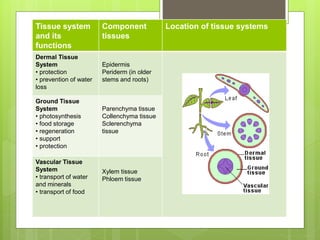
Tissue system
and its
functions
Component
tissues
Location of tissue systems
Dermal Tissue
System
• protection
• prevention of water
loss
Epidermis
Periderm (in older
stems and roots)
Ground Tissue
System
• photosynthesis
• food storage
• regeneration
• support
• protection
Parenchyma tissue
Collenchyma tissue
Sclerenchyma
tissue
Vascular Tissue
System
• transport of water
and minerals
• transport of food
Xylem tissue
Phloem tissue
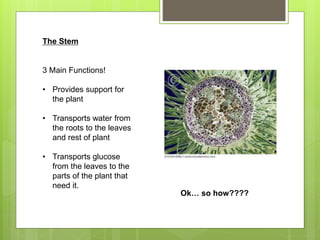
The Stem
3 Main Functions!
• Provides support for
the plant
• Transports water from
the roots to the leaves
and rest of plant
• Transports glucose
from the leaves to the
parts of the plant that
need it.
Ok… so how????
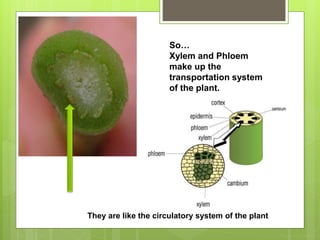
So…
Xylem and Phloem
make up the
transportation system
of the plant.
They are like the circulatory system of the plant
The xylem of a plant is the system of tubes and transport
cells that circulates water and dissolved minerals.
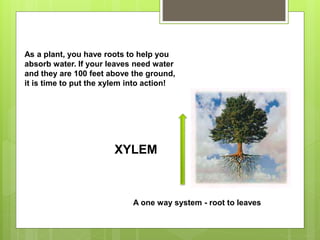
As a plant, you have roots to help you
absorb water. If your leaves need water
and they are 100 feet above the ground,
it is time to put the xylem into action!
A one way system - root to leaves
XYLEM
Xylem is made of vessels
that are connected end to end
for the maximum speed to
move water around. They
also have a secondary
function of support.
When someone cuts an old
tree down, they reveal a set
of rings. Those rings are the
remains of old xylem tissue,
one ring for every year the
tree was alive
Enter phloem.
The phloem cells
are laid out end-
to-end throughout
the entire plant,
transporting the
sugars and other
molecules created
by the plant.
Phloem is always
alive.
PHLOEM FUN!!
What is the best way to think about
phloem? Think about sap coming out of a
tree. That dripping sap usually comes from
the phloem.
Phloem
2 way
process!
Roots to
shoots to
leaves
and back
again
So how does the stem have a role in photosynthesis??
2 Minutes to discuss with person next to you
The Roots
• Hold plant in position
• Absorb water and
minerals from the
soil
• Have specialised
cells to increase
surface area for
water intake
Function
Carrots are one giant root!!
Radish Plant
Root hairs
Fragile parts of
cells that grow
from the main
root
They massively
increase the
surface area
for absorption
1. Root Hairs:
increase
surface area
for water &
mineral
absorption
2. Meristem:
region where
new cells are
produced
1. Root Cap:
protects tip of
growing root
The Structure of a Root
Root
Hairs
Meristem
Root
Cap
Xylem
Phloem
Root Types
2. Tap Roots –larger
central root reaches
deep water sources
underground
Ex. Trees, Carrots, &
Dandelions
1. Fibrous Roots:
Branching roots hold soil in
place to prevent soil erosion
Eg. Grasses
So what role to roots play in photosynthesis??
2 mins to discuss!
Leaves!
1. Main
photosynthetic
organ
2. Broad, flat
surface
increases
surface area
for light
absorption
Leaf Functions!
3.Have systems to
prevent water loss
• Stomata open
in day but
close at night
or when hot to
conserve water
• waxy cuticle on
surface
4. System of gas
exchange
• Allow CO2 in
and O2 out of
leaf
Leaf Functions!
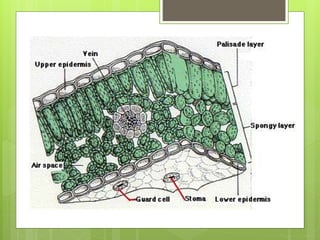
Greener on top
CO2 gets in here
Leaf Structure
Most of the
chlorophyll
CO2
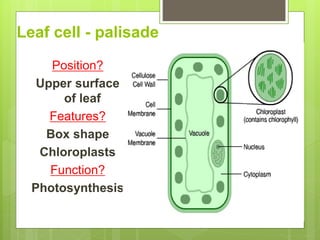
Leaf cell - palisade
Position?
Upper surface
of leaf
Features?
Box shape
Chloroplasts
Function?
Photosynthesis
Most of the
chlorophyll
CO2
Gas exchange
 Leaves are designed to allow carbon
dioxide to get to the main chlorophyll layer
at the top of the leaf
 They have small holes called stomata on
the under surface
 Each hole is open & closed by 2 guard
cells
Stoma position
Stoma is a small hole
Its size is controlled by 2 guard cells
closed open
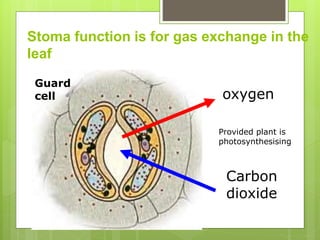
Stoma function is for gas exchange in the
leaf
Carbon
dioxide
oxygen
Guard
cell
Provided plant is
photosynthesising
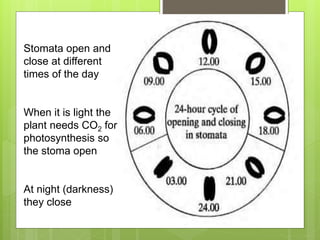
Stomata open and
close at different
times of the day
When it is light the
plant needs CO2 for
photosynthesis so
the stoma open
At night (darkness)
they close
So we’ve said the stoma allows for gas
exhange i.e. CO2 in and O2 out..
How does this happen??
What is diffusion???
So thinking about photosynthesis..
How does CO2 enter the leaf by diffusion and
how does O2 leave by diffusion??
HOMEWORK
Construct a poster of a NZ native plant. Label with plant
parts and the functions of them relating to
photosynthesis – make them pretty!!

Plant Structure

  • 1.
  • 2.
  • 3.
    What we needto know! The structure and function of the leaves, stem and roots.
  • 4.
    Discuss with the personnext to you.. Functions of each part of the plant Leaf Stem Roots
  • 5.
    Tissue system and its functions Component tissues Locationof tissue systems Dermal Tissue System • protection • prevention of water loss Epidermis Periderm (in older stems and roots) Ground Tissue System • photosynthesis • food storage • regeneration • support • protection Parenchyma tissue Collenchyma tissue Sclerenchyma tissue Vascular Tissue System • transport of water and minerals • transport of food Xylem tissue Phloem tissue
  • 6.
    The Stem 3 MainFunctions! • Provides support for the plant • Transports water from the roots to the leaves and rest of plant • Transports glucose from the leaves to the parts of the plant that need it. Ok… so how????
  • 7.
    So… Xylem and Phloem makeup the transportation system of the plant. They are like the circulatory system of the plant
  • 8.
    The xylem ofa plant is the system of tubes and transport cells that circulates water and dissolved minerals.
  • 9.
    As a plant,you have roots to help you absorb water. If your leaves need water and they are 100 feet above the ground, it is time to put the xylem into action! A one way system - root to leaves XYLEM
  • 10.
    Xylem is madeof vessels that are connected end to end for the maximum speed to move water around. They also have a secondary function of support. When someone cuts an old tree down, they reveal a set of rings. Those rings are the remains of old xylem tissue, one ring for every year the tree was alive
  • 11.
    Enter phloem. The phloemcells are laid out end- to-end throughout the entire plant, transporting the sugars and other molecules created by the plant. Phloem is always alive. PHLOEM FUN!! What is the best way to think about phloem? Think about sap coming out of a tree. That dripping sap usually comes from the phloem.
  • 12.
    Phloem 2 way process! Roots to shootsto leaves and back again
  • 13.
    So how doesthe stem have a role in photosynthesis?? 2 Minutes to discuss with person next to you
  • 14.
    The Roots • Holdplant in position • Absorb water and minerals from the soil • Have specialised cells to increase surface area for water intake Function
  • 15.
    Carrots are onegiant root!!
  • 16.
    Radish Plant Root hairs Fragileparts of cells that grow from the main root They massively increase the surface area for absorption
  • 17.
    1. Root Hairs: increase surfacearea for water & mineral absorption 2. Meristem: region where new cells are produced 1. Root Cap: protects tip of growing root The Structure of a Root Root Hairs Meristem Root Cap Xylem Phloem
  • 18.
    Root Types 2. TapRoots –larger central root reaches deep water sources underground Ex. Trees, Carrots, & Dandelions 1. Fibrous Roots: Branching roots hold soil in place to prevent soil erosion Eg. Grasses
  • 19.
    So what roleto roots play in photosynthesis?? 2 mins to discuss!
  • 20.
  • 21.
    1. Main photosynthetic organ 2. Broad,flat surface increases surface area for light absorption Leaf Functions!
  • 22.
    3.Have systems to preventwater loss • Stomata open in day but close at night or when hot to conserve water • waxy cuticle on surface 4. System of gas exchange • Allow CO2 in and O2 out of leaf Leaf Functions!
  • 23.
    Greener on top CO2gets in here Leaf Structure
  • 24.
  • 25.
    Leaf cell -palisade Position? Upper surface of leaf Features? Box shape Chloroplasts Function? Photosynthesis
  • 26.
  • 27.
    Gas exchange  Leavesare designed to allow carbon dioxide to get to the main chlorophyll layer at the top of the leaf  They have small holes called stomata on the under surface  Each hole is open & closed by 2 guard cells
  • 28.
  • 29.
    Stoma is asmall hole Its size is controlled by 2 guard cells closed open
  • 30.
    Stoma function isfor gas exchange in the leaf Carbon dioxide oxygen Guard cell Provided plant is photosynthesising
  • 31.
    Stomata open and closeat different times of the day When it is light the plant needs CO2 for photosynthesis so the stoma open At night (darkness) they close
  • 32.
    So we’ve saidthe stoma allows for gas exhange i.e. CO2 in and O2 out.. How does this happen??
  • 33.
  • 34.
    So thinking aboutphotosynthesis.. How does CO2 enter the leaf by diffusion and how does O2 leave by diffusion??
  • 35.
    HOMEWORK Construct a posterof a NZ native plant. Label with plant parts and the functions of them relating to photosynthesis – make them pretty!!