LeavesLeaves
By Bhuvan
structure and function
LeavesLeaves
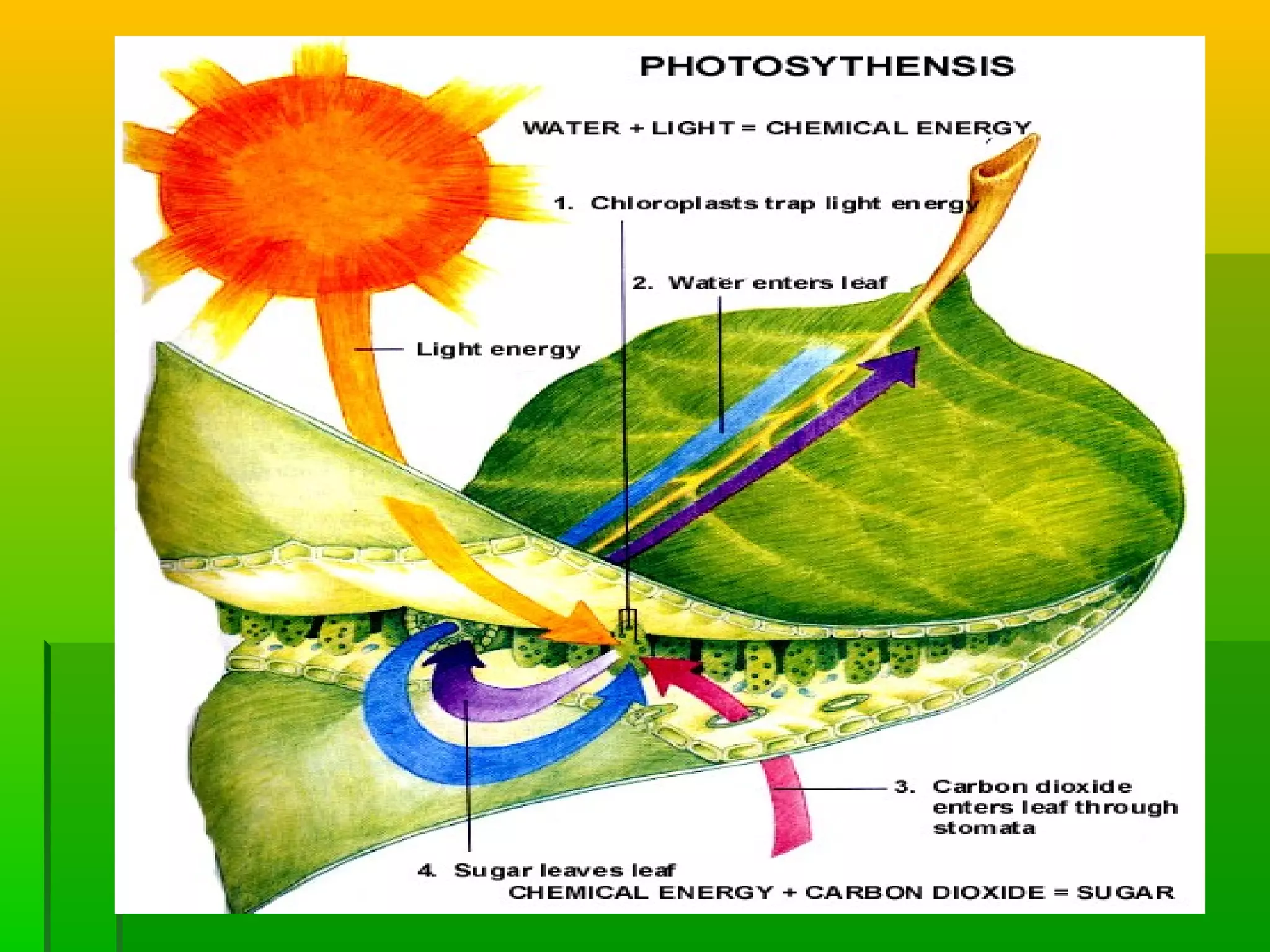
Function of leavesFunction of leaves
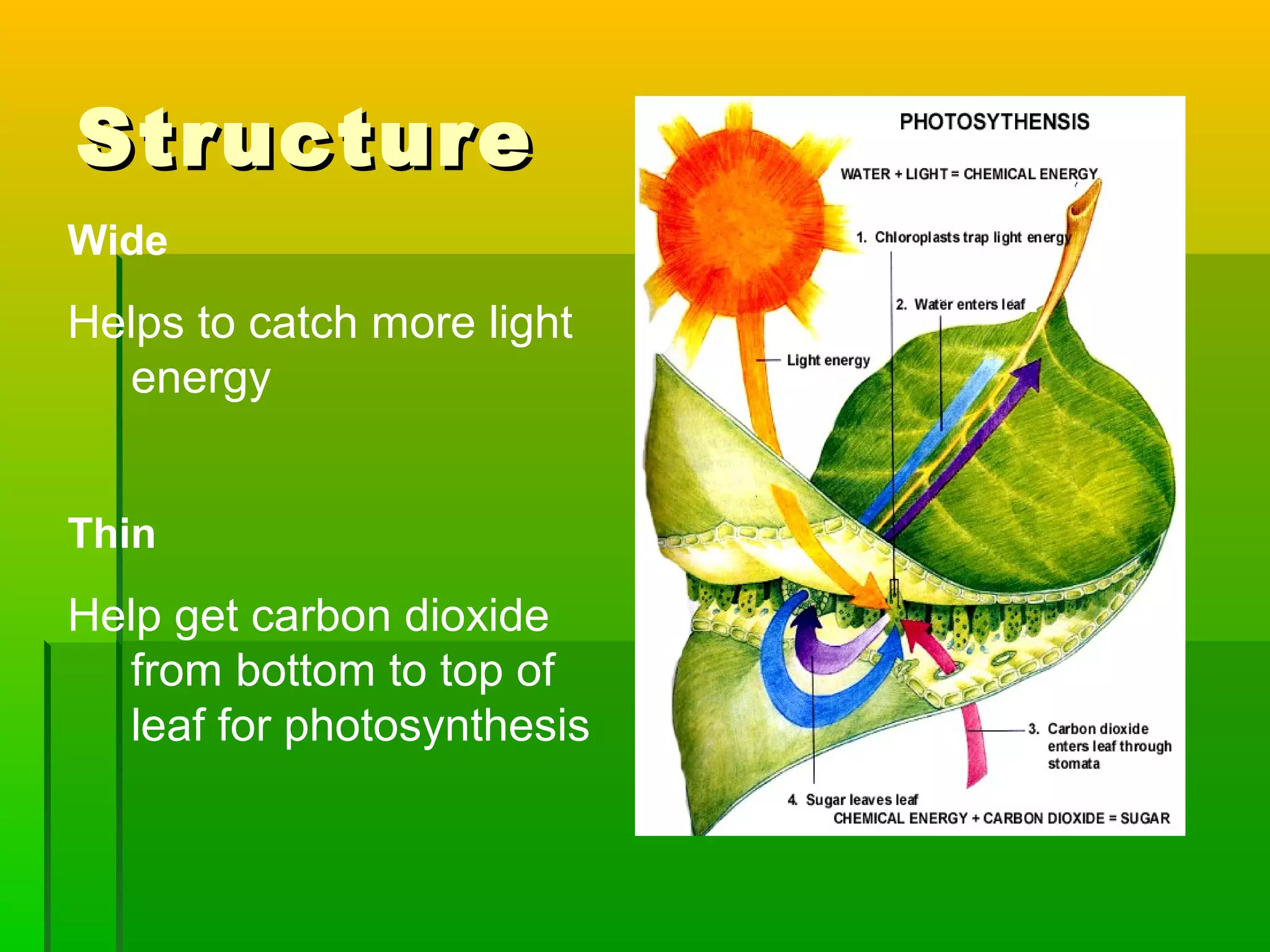
 Trap light energy for photosynthesisTrap light energy for photosynthesis
Producing sugar from photosynthesisProducing sugar from photosynthesis
 Exchange of gases –Exchange of gases –
oxygen and carbon dioxideoxygen and carbon dioxide
StructureStructure
Wide
Helps to catch more light
energy
Thin
Help get carbon dioxide
from bottom to top of
leaf for photosynthesis
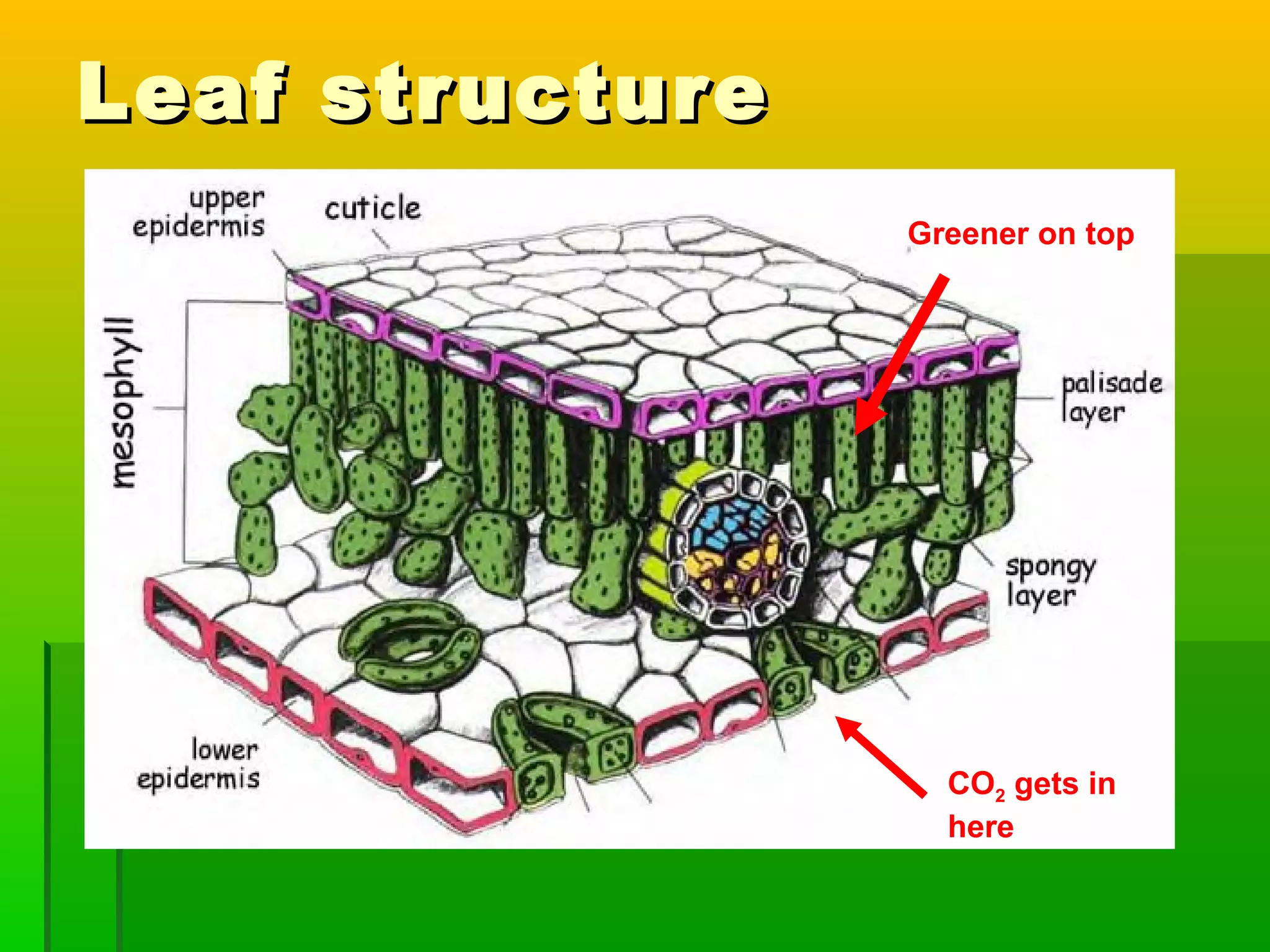
Leaf structureLeaf structure
Greener on top
CO2 gets in
here
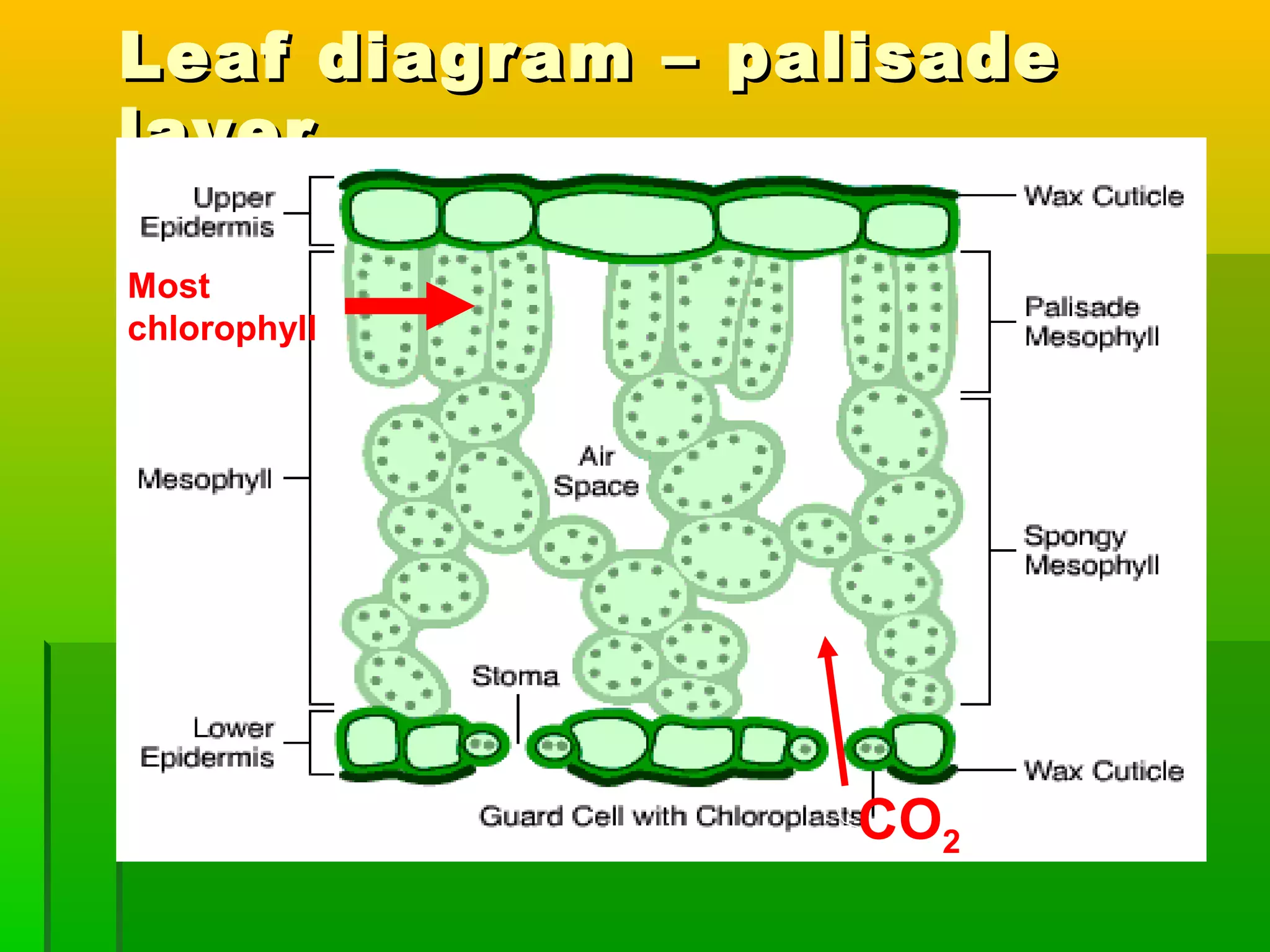
Leaf diagram – palisadeLeaf diagram – palisade
layerlayer
CO2
Most
chlorophyll
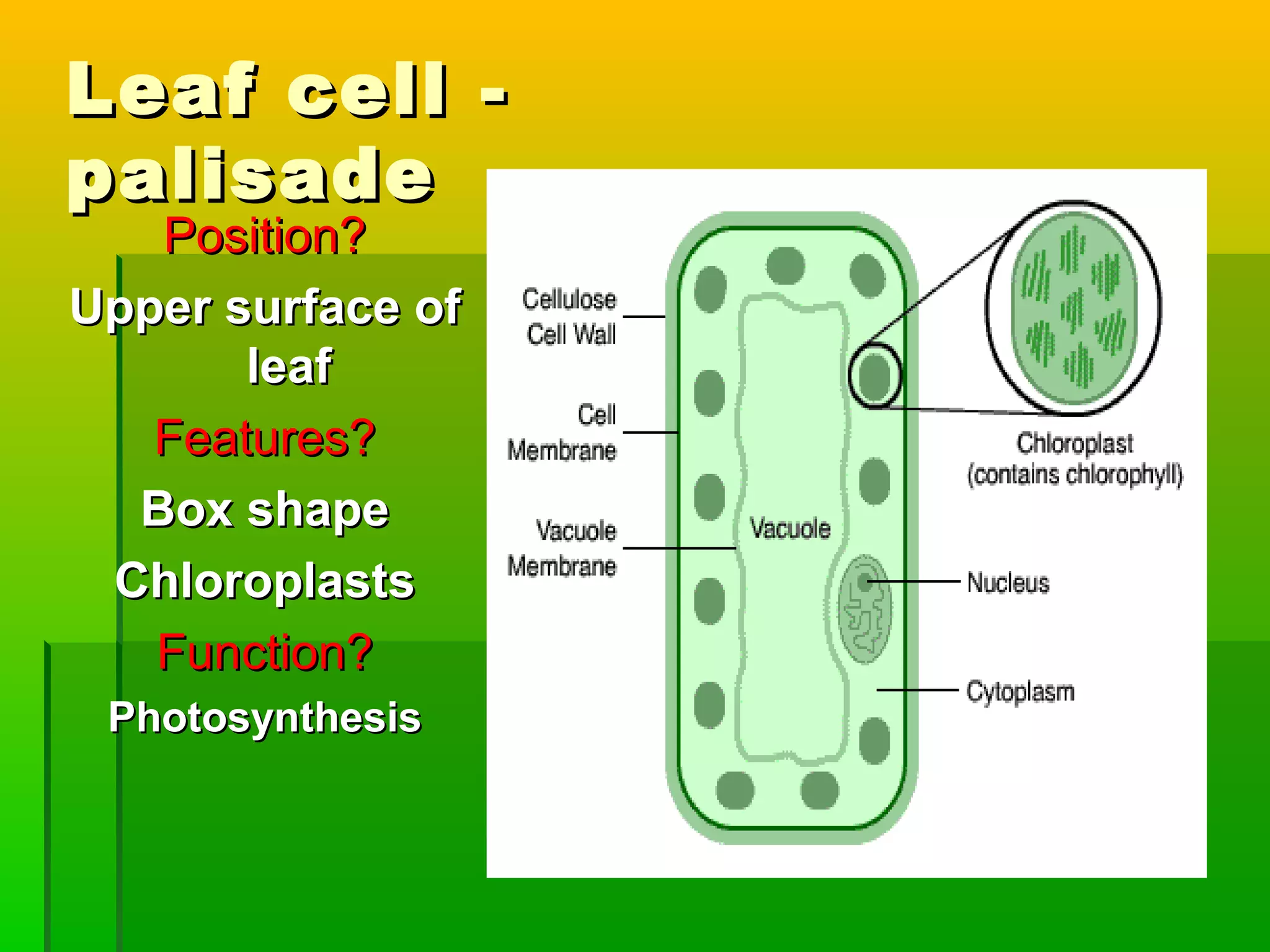
Leaf cell -Leaf cell -
palisadepalisade
Position?Position?
Upper surface ofUpper surface of
leafleaf
Features?Features?
Box shapeBox shape
ChloroplastsChloroplasts
Function?Function?
PhotosynthesisPhotosynthesis
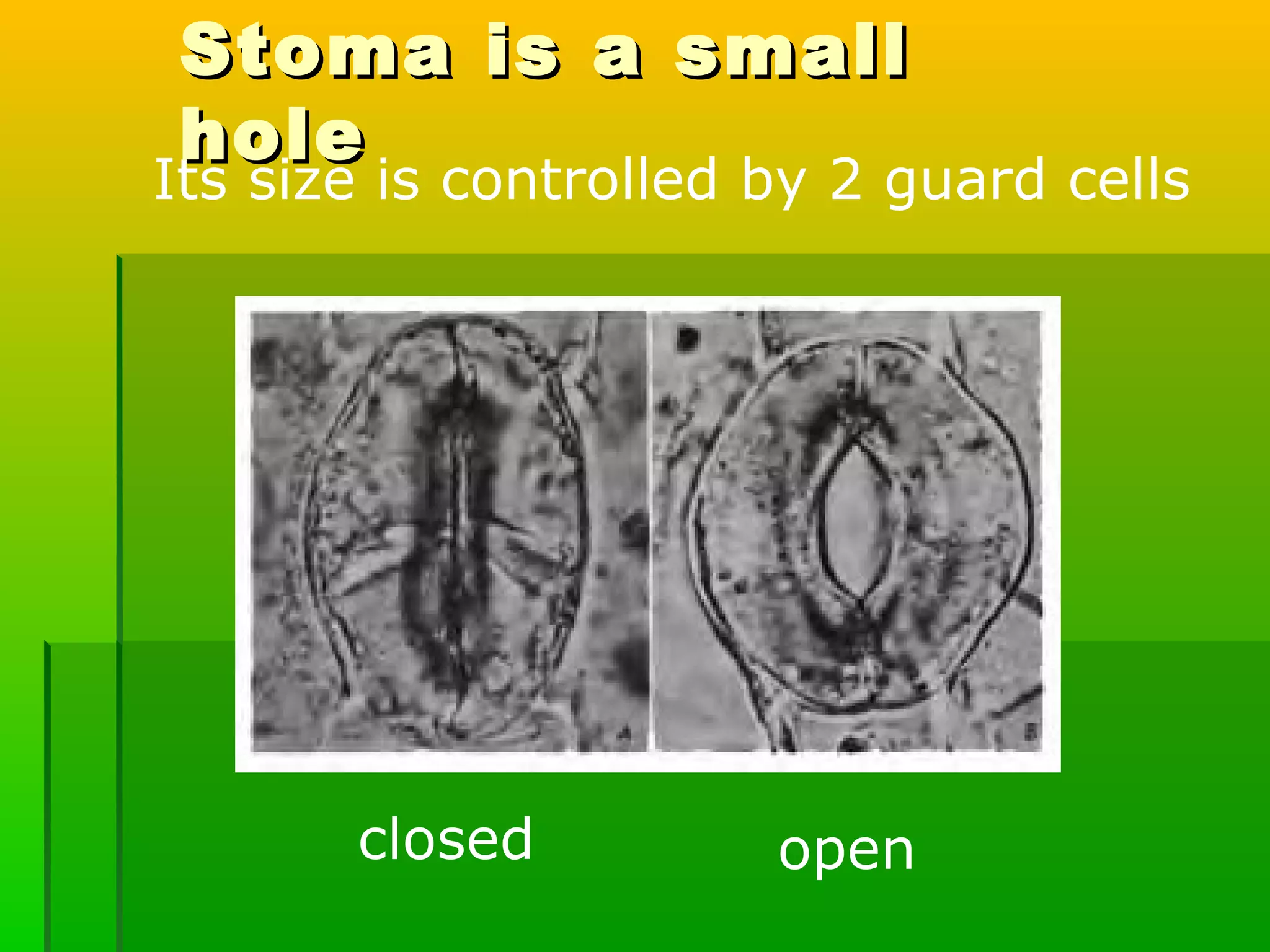
Stoma is a smallStoma is a small
holehole
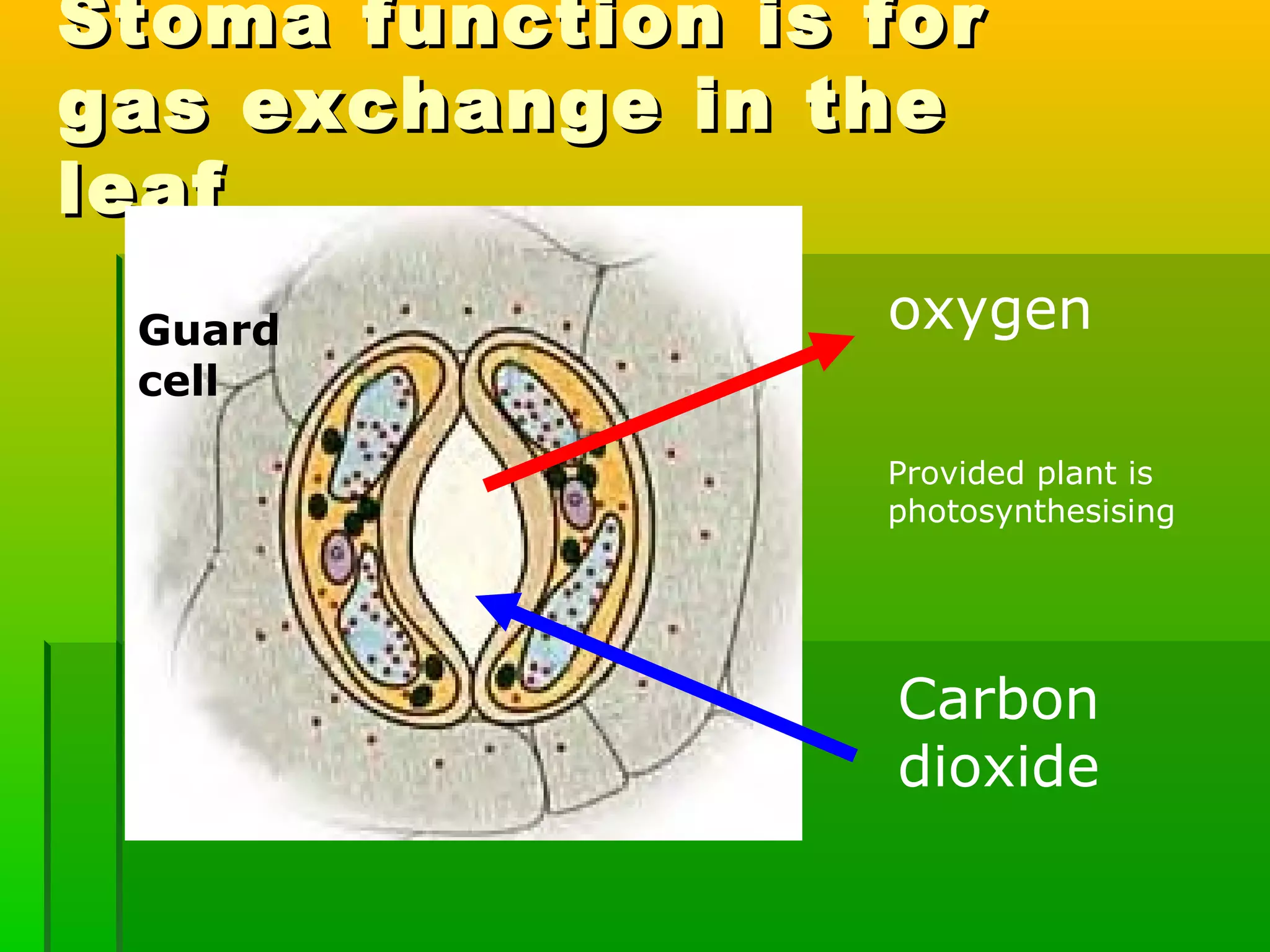
Its size is controlled by 2 guard cells
closed open
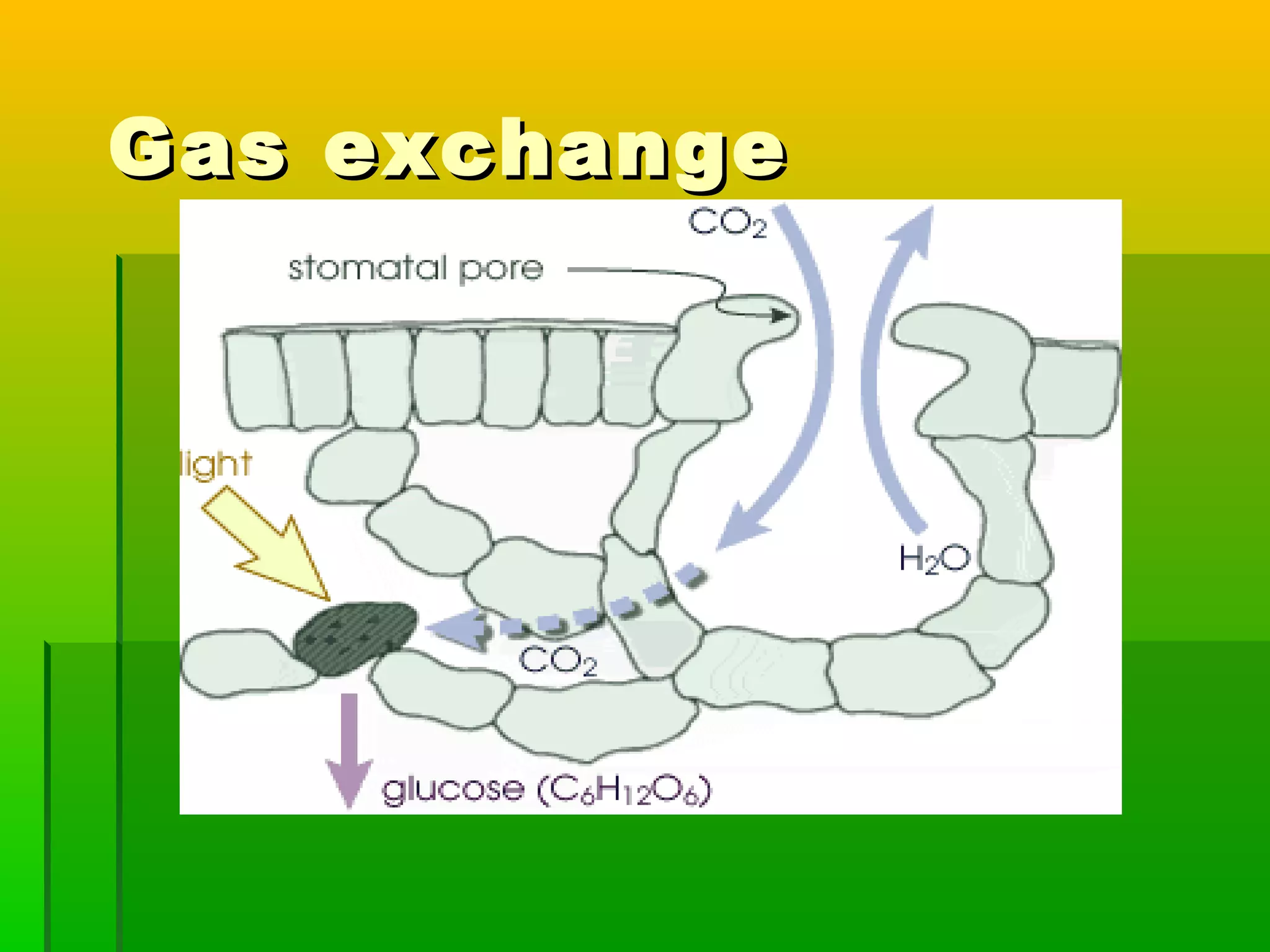
Gas exchangeGas exchange
 Leaves are designed to allow carbonLeaves are designed to allow carbon
dioxide to get to the main chlorophylldioxide to get to the main chlorophyll
layer at the top of the leaflayer at the top of the leaf
 They have small holes called stomata onThey have small holes called stomata on
the under surfacethe under surface
 Each hole is open & closed by 2 guardEach hole is open & closed by 2 guard
cellscells
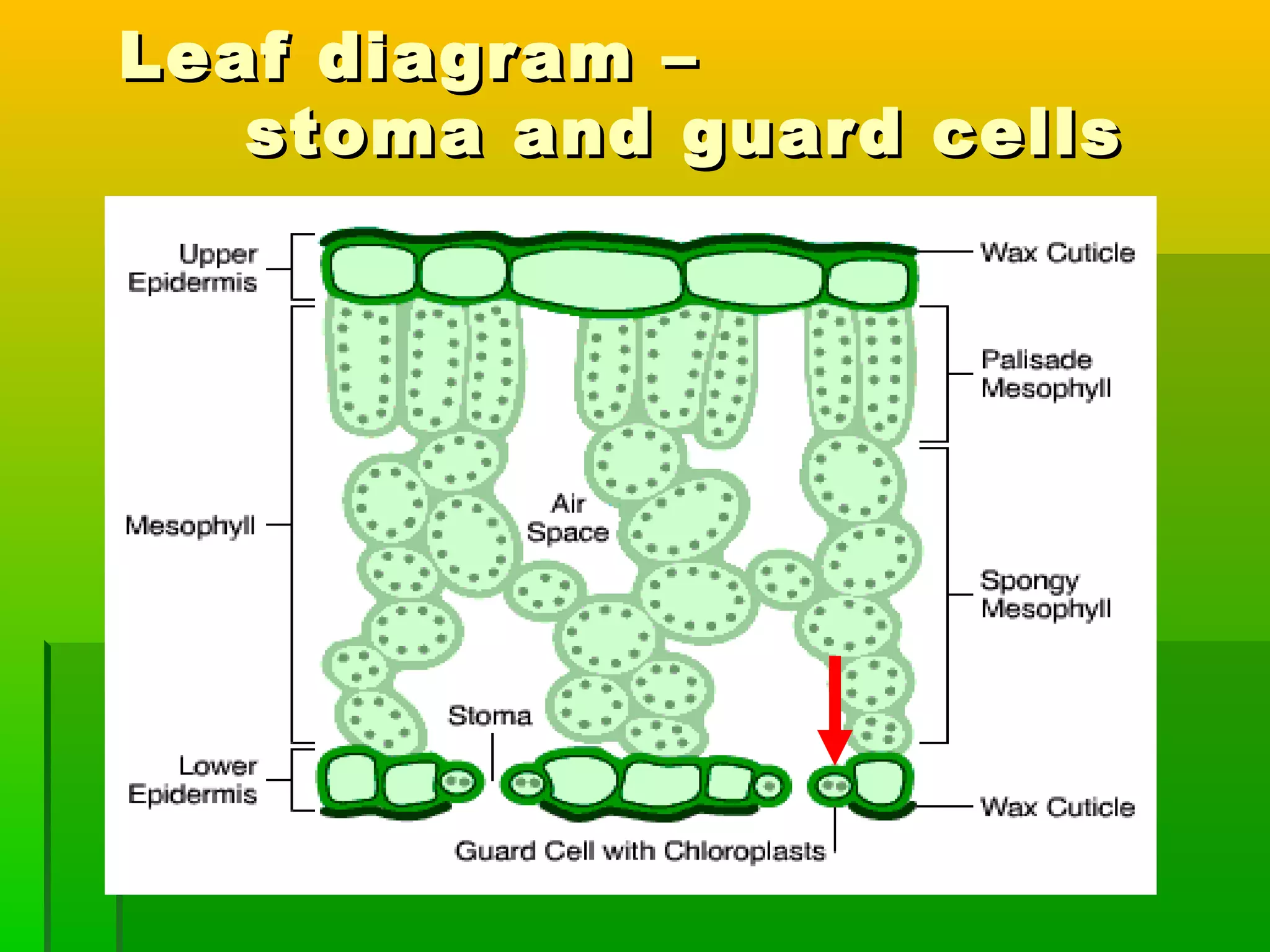
Leaf diagram –Leaf diagram –
stoma and guard cellsstoma and guard cells
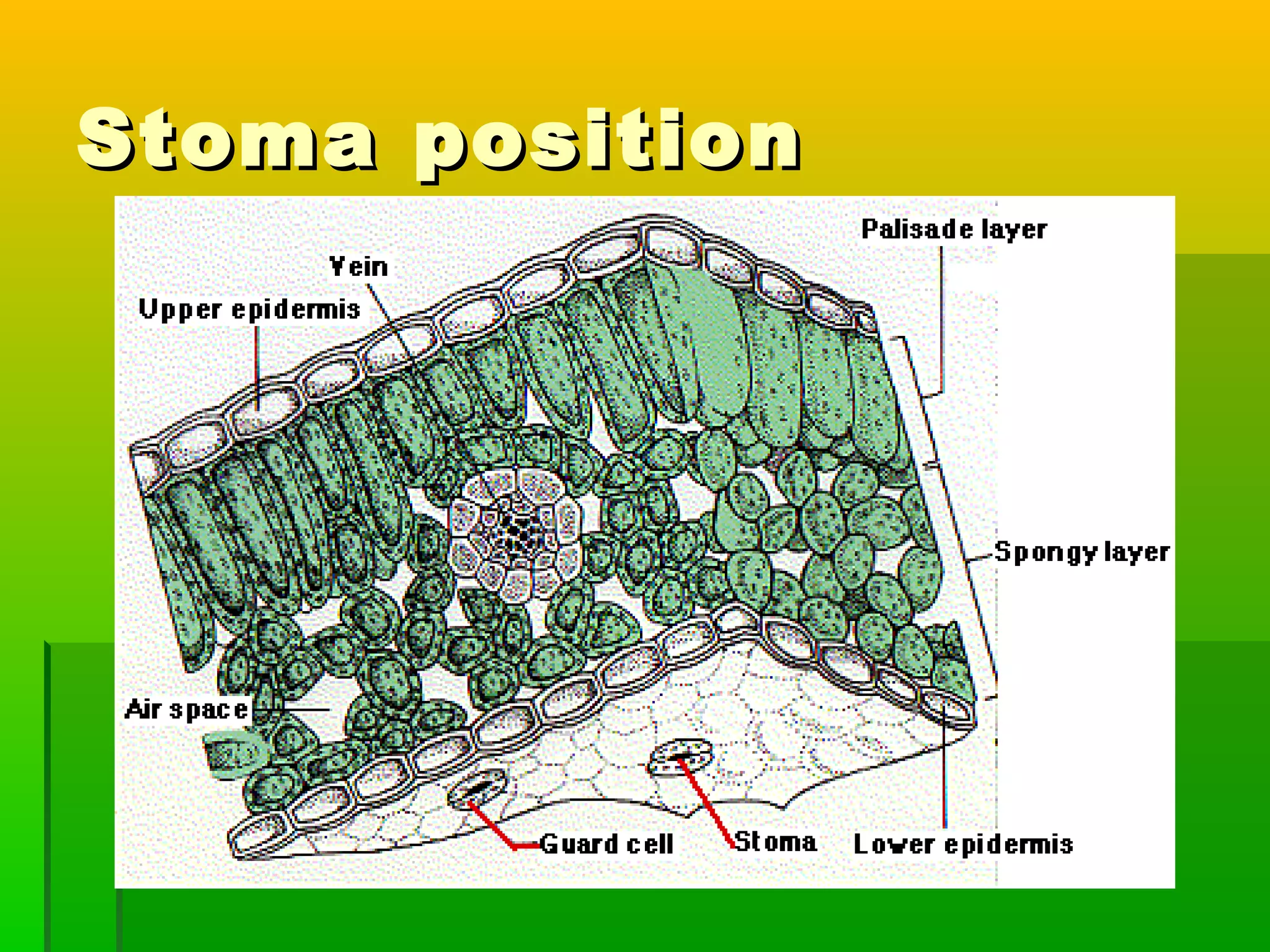
Stoma positionStoma position
Stoma function is forStoma function is for
gas exchange in thegas exchange in the
leafleaf
Carbon
dioxide
oxygenGuard
cell
Provided plant is
photosynthesising
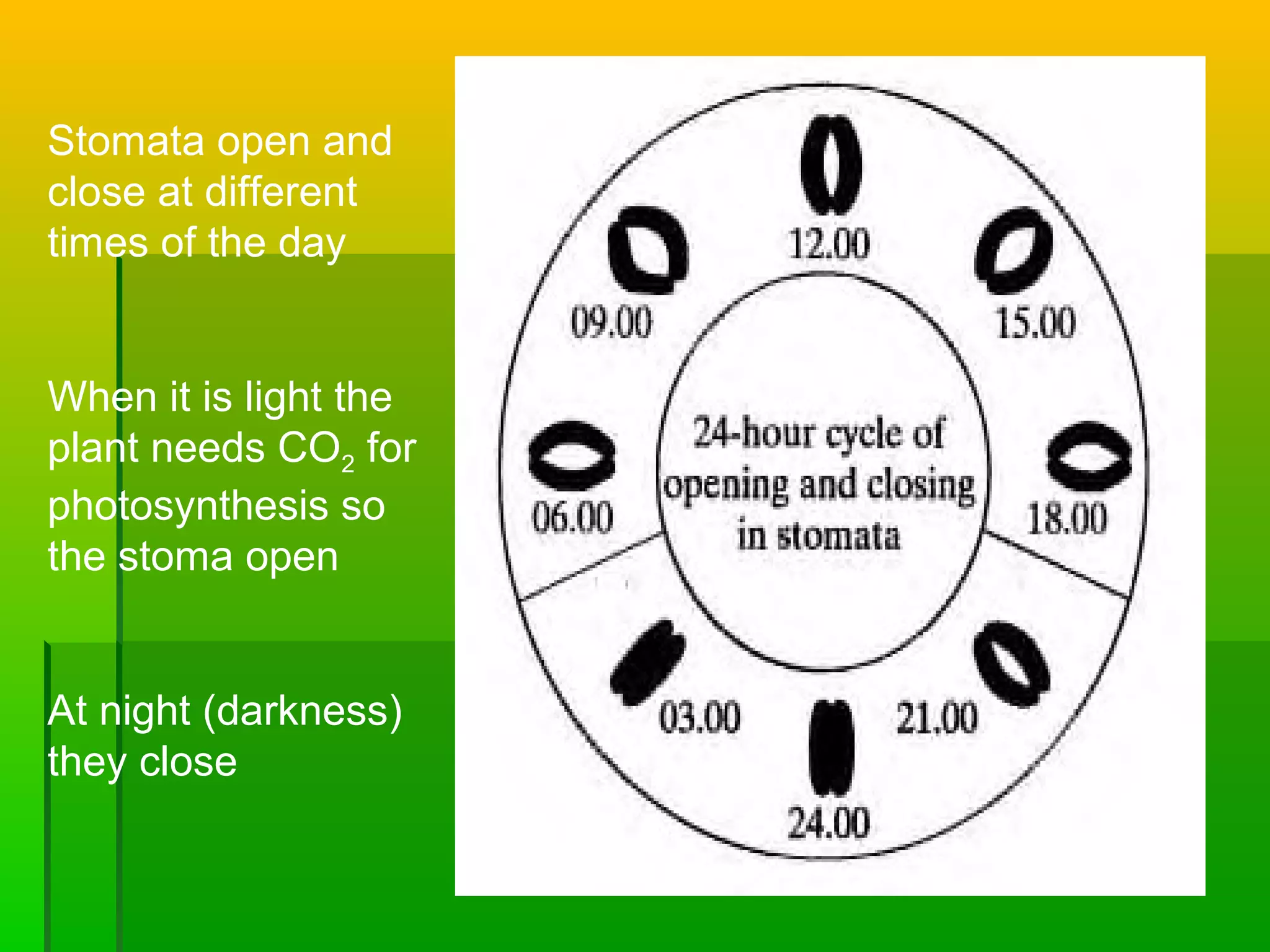
Stomata open and
close at different
times of the day
When it is light the
plant needs CO2 for
photosynthesis so
the stoma open
At night (darkness)
they close
Gas exchangeGas exchange
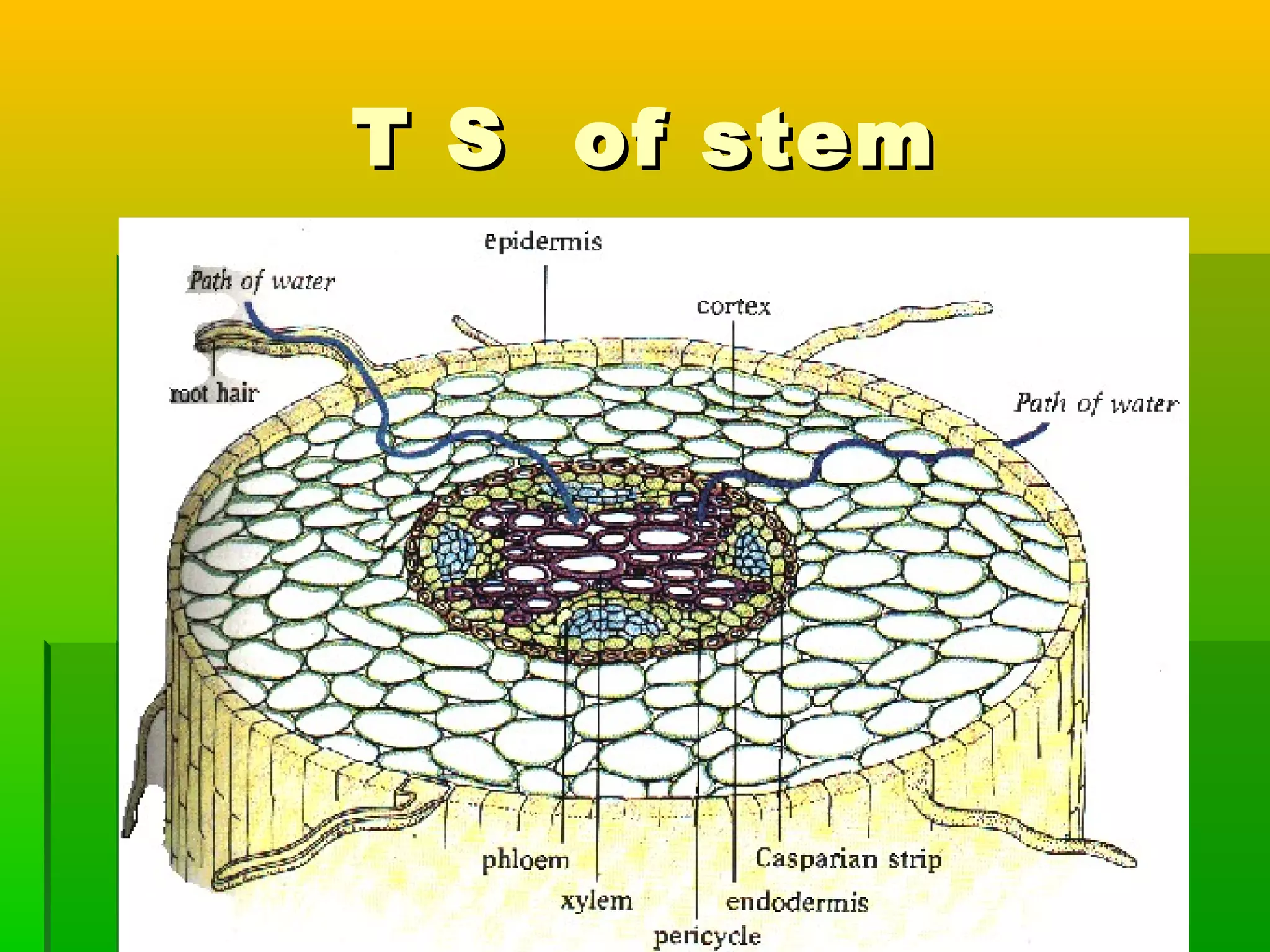
T S of stemT S of stem
The End

Structure and Function of Leaves

  • 1.
  • 2.
  • 3.
    Function of leavesFunctionof leaves  Trap light energy for photosynthesisTrap light energy for photosynthesis Producing sugar from photosynthesisProducing sugar from photosynthesis  Exchange of gases –Exchange of gases – oxygen and carbon dioxideoxygen and carbon dioxide
  • 5.
    StructureStructure Wide Helps to catchmore light energy Thin Help get carbon dioxide from bottom to top of leaf for photosynthesis
  • 6.
    Leaf structureLeaf structure Greeneron top CO2 gets in here
  • 7.
    Leaf diagram –palisadeLeaf diagram – palisade layerlayer CO2 Most chlorophyll
  • 8.
    Leaf cell -Leafcell - palisadepalisade Position?Position? Upper surface ofUpper surface of leafleaf Features?Features? Box shapeBox shape ChloroplastsChloroplasts Function?Function? PhotosynthesisPhotosynthesis
  • 9.
    Stoma is asmallStoma is a small holehole Its size is controlled by 2 guard cells closed open
  • 10.
    Gas exchangeGas exchange Leaves are designed to allow carbonLeaves are designed to allow carbon dioxide to get to the main chlorophylldioxide to get to the main chlorophyll layer at the top of the leaflayer at the top of the leaf  They have small holes called stomata onThey have small holes called stomata on the under surfacethe under surface  Each hole is open & closed by 2 guardEach hole is open & closed by 2 guard cellscells
  • 11.
    Leaf diagram –Leafdiagram – stoma and guard cellsstoma and guard cells
  • 12.
  • 13.
    Stoma function isforStoma function is for gas exchange in thegas exchange in the leafleaf Carbon dioxide oxygenGuard cell Provided plant is photosynthesising
  • 14.
    Stomata open and closeat different times of the day When it is light the plant needs CO2 for photosynthesis so the stoma open At night (darkness) they close
  • 15.
  • 16.
    T S ofstemT S of stem
  • 17.

Editor's Notes

  • #3 Ask students to collect leaves and bring them to the class. Show them different leaves including simple and compound leaves. Let them touch and feel the texture. The teacher could also discuss venation.
  • #7 Teachers can supplement this by showing the students the onion peel under a microscope.
  • #8 Have a discussion with the students on the density of chlorophyll leading to photosynthesis.