Security in the Cloud: 
Xen, KVM, Containers 
Or, Surviving and the Zombie Apocalypse
“Some people make the mistake of thinking of containers as a 
better and faster way of running virtual machines. From a security 
point of view, containers are much weaker.” 
–Dan Walsh (Mr. SELinux)
“There's contentions all over the place that containers are not 
actually as secure as hypervisors. This is not really true. Parallels 
and Virtuozo, we've been running secure containers for at least 10 
years.” 
–James Bottomley, Linux Maintainer and Parallels CTO
“Virtual Machines might be more secure today, but containers are 
definitely catching up.” 
–Jerome Petazzoni, Senior Software Engineer at Docker
“You are absolutely deluded, if not stupid, if you think that a 
worldwide collection of software engineers who can't write 
operating systems or applications without security holes, can then 
turn around and suddenly write virtualization layers without 
security holes.” 
–Theo de Raadt, OpenBSD project lead
"Some people make the mistake of thinking of containers as a better and faster 
way of running virtual machines. From a security point of view, containers are 
much weaker." -Dan Walsh 
"There's contentions all over the place that containers are not actually as secure 
as hypervisors. This is not really true. Parallels and Virtuozo, we've been running 
secure containers for at least 10 years.” -James Bottomley 
"Virtual Machines might be more secure today, but containers are definitely 
catching up." -Jerome Petazzoni 
"You are absolutely deluded, if not stupid, if you think that a worldwide collection 
of software engineers who can't write operating systems or applications without 
security holes, can then turn around and suddenly write virtualization layers 
without security holes." -Theo de Raadt
Who am I?
What I’m going to talk about
Security and Risk
Vulnerabilities and Exploits
A vulnerability is a mistake.
Configuration vulnerabilities
Software vulnerabilities
Intel SYSRET
Zombie Apocalypse.
Every window is an opportunity 
to make a mistake
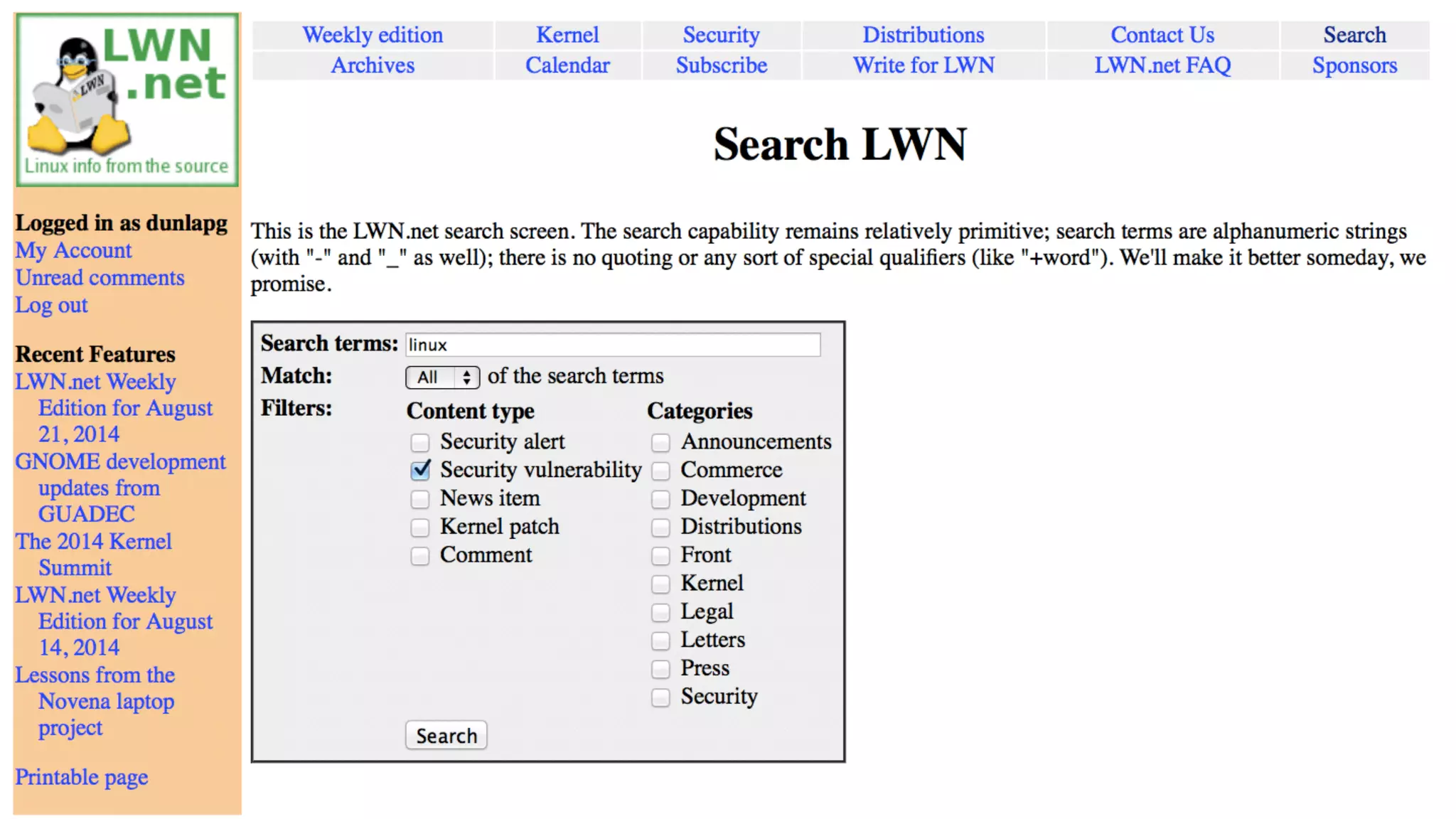
Every element of every interface is 
an opportunity to make a mistake
But does this really matter?
Would this affect a system 
configured reasonably for security?
Xen: Access to HV memory 
>5TiB during migration
Xen: Unsecured PV console 
parameters
Xen: 1 year, 1-4 known 
vulnerabilities
KVM: Escalation in vhost
KVM: PUSHA instruction 
emulation
KVM: vcpu hypercall boundary 
check
KVM: vlapic shared page 
crossing a page boundary
KVM: 1 year, 4 solid 
vulnerabilities
qemu: VMWare emulated device
qemu: virtio-net mac address 
update
qemu: 1 year, 2 known 
vulnerabilities
Linux: ping
Linux: tty race condition
Linux: ptrace and SYSRET
Linux: AIO, arbitrary read of 
kernel memory
Linux: Futex not checking if two 
pointers were different (2)
Linux: AMD math coprocessor
Linux: 2 months, 6 vulnerabilities
Hypervisors: 
Low (but not zero) risk
General-purpose containers: 
Not so good
Application-specific containers 
+ seccomp2?
Questions?

LCNA14: Security in the Cloud: Containers, KVM, and Xen - George Dunlap, Citrix Systems UK Ltd