FSI 203 TREE NURSERY TECHNOLOGY (0+2)
PROPAGATION METHODS -LAYERING
COURSE TEACHER
Dr.M.Sivaprakash Ph.D.,
Associate professor(Forestry)
SUBMITTED BY
G.Rohith(2023007056)
V.Rohith(2023007057)
LAYERING
• Layering is a vegetative propagation technique
where the stem or branch of a plant is manipulated
to promote root development while still attached to
the parent plant. Once roots are established, the
new plant can be detached from the parent and
planted.
• Layering may be enhanced by wounding one side of
the stem or by bending it very sharply. The rooting
medium should always provide aeration and a
constant supply of moisture.
NATURAL LAYERING
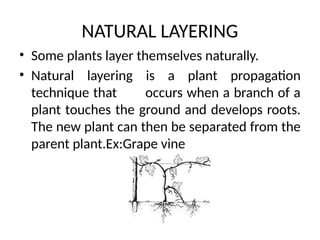
• Some plants layer themselves naturally.
• Natural layering is a plant propagation
technique that occurs when a branch of a
plant touches the ground and develops roots.
The new plant can then be separated from the
parent plant.Ex:Grape vine
Types of layering:
• Tip layering,
• Simple layering,
• Compound(Serpentine)
layering,
• Mound(Stool) layering,
• Air layering.
TIP LAYERING
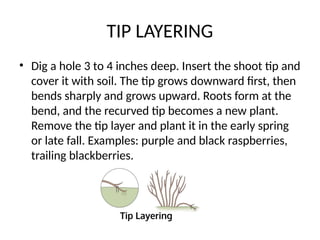
• Dig a hole 3 to 4 inches deep. Insert the shoot tip and
cover it with soil. The tip grows downward first, then
bends sharply and grows upward. Roots form at the
bend, and the recurved tip becomes a new plant.
Remove the tip layer and plant it in the early spring
or late fall. Examples: purple and black raspberries,
trailing blackberries.
SIMPLE LAYERING
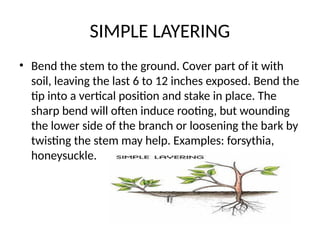
• Bend the stem to the ground. Cover part of it with
soil, leaving the last 6 to 12 inches exposed. Bend the
tip into a vertical position and stake in place. The
sharp bend will often induce rooting, but wounding
the lower side of the branch or loosening the bark by
twisting the stem may help. Examples: forsythia,
honeysuckle.
COMPOUND LAYERING
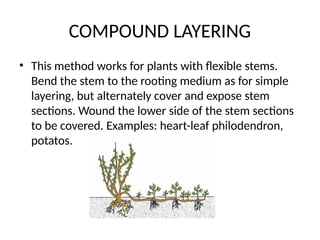
• This method works for plants with flexible stems.
Bend the stem to the rooting medium as for simple
layering, but alternately cover and expose stem
sections. Wound the lower side of the stem sections
to be covered. Examples: heart-leaf philodendron,
potatos.
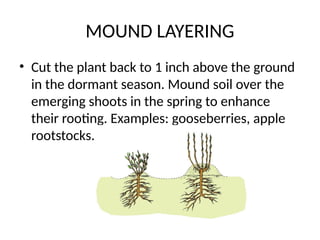
MOUND LAYERING
• Cut the plant back to 1 inch above the ground
in the dormant season. Mound soil over the
emerging shoots in the spring to enhance
their rooting. Examples: gooseberries, apple
rootstocks.
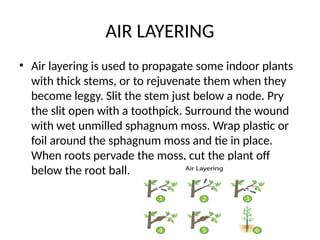
AIR LAYERING
• Air layering is used to propagate some indoor plants
with thick stems, or to rejuvenate them when they
become leggy. Slit the stem just below a node. Pry
the slit open with a toothpick. Surround the wound
with wet unmilled sphagnum moss. Wrap plastic or
foil around the sphagnum moss and tie in place.
When roots pervade the moss, cut the plant off
below the root ball.
CHEMICALS USED FOR ROOT GROWTH
o Indole-3-butyric acid.,
o Napththalene acetic acid,
o Indole-3-acetic acid,
o Ethylene,
o Cytokinins,
o Rootone,
o Clonex.
ADVANTAGES
• Cheaper method.
• Natural method.
• Quick root development.
• Minimal equipments.
• Reduced transplant shock.
• Increased plant vigour.
• Reduce water stress.
• Prevent carbohydrates shortage.
DISADVANTAGES
• Time consuming.
• Labour intensive.
• Sensitive to extreme conditions.
• Susceptible to pest and disease.
• Limited root length.
• Higher mortality rate.
MCQ Questions
1.Which method tip of the shoot is cover with soil
a)Tip layering b) simple layering
c) Compound layering d)Mound layering
2.Which plant naturally layering occurs
a) Grapes b)Apple c) Jasmine d) Gooseberry
3.Layering may be enhanced by .........of stem
a) Wounding and Bending
b) Treating hormone
c) Cutting the stem
d) Cutting the root
4.The flexible stem is used in which type of layering
method....
a) Compound layering
b) Tip layering
c) Air layering
d) Simple layering
5.Which method the root is allow to form in the stem
without contacting ground by fit the soil in wound
area of stem....
a) Stool layering b) Air layering
c) Compound layering d) Natural layering
QUESTIONS:
1.What is natural layering ?
2.List some chemicals used to promote rooting in
layering .
3.Why sphangum moss used in air layering to cover
the wound stem/branch ?
THANK YOU

FSI 203 TREE NURSERY TECHNOLOGY(0+2).pptx

  • 1.
    FSI 203 TREENURSERY TECHNOLOGY (0+2) PROPAGATION METHODS -LAYERING COURSE TEACHER Dr.M.Sivaprakash Ph.D., Associate professor(Forestry) SUBMITTED BY G.Rohith(2023007056) V.Rohith(2023007057)
  • 2.
    LAYERING • Layering isa vegetative propagation technique where the stem or branch of a plant is manipulated to promote root development while still attached to the parent plant. Once roots are established, the new plant can be detached from the parent and planted. • Layering may be enhanced by wounding one side of the stem or by bending it very sharply. The rooting medium should always provide aeration and a constant supply of moisture.
  • 3.
    NATURAL LAYERING • Someplants layer themselves naturally. • Natural layering is a plant propagation technique that occurs when a branch of a plant touches the ground and develops roots. The new plant can then be separated from the parent plant.Ex:Grape vine
  • 4.
    Types of layering: •Tip layering, • Simple layering, • Compound(Serpentine) layering, • Mound(Stool) layering, • Air layering.
  • 5.
    TIP LAYERING • Diga hole 3 to 4 inches deep. Insert the shoot tip and cover it with soil. The tip grows downward first, then bends sharply and grows upward. Roots form at the bend, and the recurved tip becomes a new plant. Remove the tip layer and plant it in the early spring or late fall. Examples: purple and black raspberries, trailing blackberries.
  • 6.
    SIMPLE LAYERING • Bendthe stem to the ground. Cover part of it with soil, leaving the last 6 to 12 inches exposed. Bend the tip into a vertical position and stake in place. The sharp bend will often induce rooting, but wounding the lower side of the branch or loosening the bark by twisting the stem may help. Examples: forsythia, honeysuckle.
  • 7.
    COMPOUND LAYERING • Thismethod works for plants with flexible stems. Bend the stem to the rooting medium as for simple layering, but alternately cover and expose stem sections. Wound the lower side of the stem sections to be covered. Examples: heart-leaf philodendron, potatos.
  • 8.
    MOUND LAYERING • Cutthe plant back to 1 inch above the ground in the dormant season. Mound soil over the emerging shoots in the spring to enhance their rooting. Examples: gooseberries, apple rootstocks.
  • 9.
    AIR LAYERING • Airlayering is used to propagate some indoor plants with thick stems, or to rejuvenate them when they become leggy. Slit the stem just below a node. Pry the slit open with a toothpick. Surround the wound with wet unmilled sphagnum moss. Wrap plastic or foil around the sphagnum moss and tie in place. When roots pervade the moss, cut the plant off below the root ball.
  • 10.
    CHEMICALS USED FORROOT GROWTH o Indole-3-butyric acid., o Napththalene acetic acid, o Indole-3-acetic acid, o Ethylene, o Cytokinins, o Rootone, o Clonex.
  • 11.
    ADVANTAGES • Cheaper method. •Natural method. • Quick root development. • Minimal equipments. • Reduced transplant shock. • Increased plant vigour. • Reduce water stress. • Prevent carbohydrates shortage.
  • 12.
    DISADVANTAGES • Time consuming. •Labour intensive. • Sensitive to extreme conditions. • Susceptible to pest and disease. • Limited root length. • Higher mortality rate.
  • 13.
    MCQ Questions 1.Which methodtip of the shoot is cover with soil a)Tip layering b) simple layering c) Compound layering d)Mound layering 2.Which plant naturally layering occurs a) Grapes b)Apple c) Jasmine d) Gooseberry 3.Layering may be enhanced by .........of stem a) Wounding and Bending b) Treating hormone c) Cutting the stem d) Cutting the root
  • 14.
    4.The flexible stemis used in which type of layering method.... a) Compound layering b) Tip layering c) Air layering d) Simple layering 5.Which method the root is allow to form in the stem without contacting ground by fit the soil in wound area of stem.... a) Stool layering b) Air layering c) Compound layering d) Natural layering
  • 15.
    QUESTIONS: 1.What is naturallayering ? 2.List some chemicals used to promote rooting in layering . 3.Why sphangum moss used in air layering to cover the wound stem/branch ?
  • 16.