“Technology aiding pedagogy in
Language Teaching”
www.ecoleglobal.com
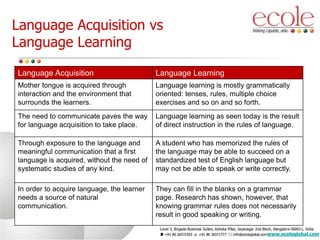
Language Acquisition vs
Language Learning
Language Acquisition Language Learning
Mother tongue is acquired through
interaction and the environment that
surrounds the learners.
Language learning is mostly grammatically
oriented: tenses, rules, multiple choice
exercises and so on and so forth.
The need to communicate paves the way
for language acquisition to take place.
Language learning as seen today is the result
of direct instruction in the rules of language.
Through exposure to the language and
meaningful communication that a first
language is acquired, without the need of
systematic studies of any kind.
A student who has memorized the rules of
the language may be able to succeed on a
standardized test of English language but
may not be able to speak or write correctly.
In order to acquire language, the learner
needs a source of natural
communication.
They can fill in the blanks on a grammar
page. Research has shown, however, that
knowing grammar rules does not necessarily
result in good speaking or writing.
www.ecoleglobal.com
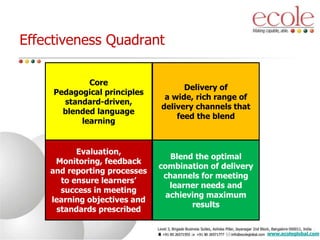
Core
Pedagogical principles
standard-driven,
blended language
learning
Delivery of
a wide, rich range of
delivery channels that
feed the blend
Evaluation,
Monitoring, feedback
and reporting processes
to ensure learners’
success in meeting
learning objectives and
standards prescribed
Blend the optimal
combination of delivery
channels for meeting
learner needs and
achieving maximum
results
Effectiveness Quadrant
www.ecoleglobal.com
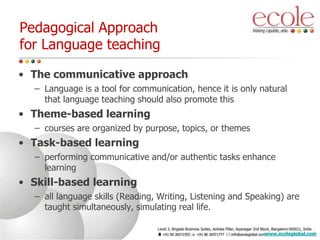
• The communicative approach
– Language is a tool for communication, hence it is only natural
that language teaching should also promote this
• Theme-based learning
– courses are organized by purpose, topics, or themes
• Task-based learning
– performing communicative and/or authentic tasks enhance
learning
• Skill-based learning
– all language skills (Reading, Writing, Listening and Speaking) are
taught simultaneously, simulating real life.
Pedagogical Approach
for Language teaching
www.ecoleglobal.com
Technological aids for Pedagogy
• Blended learning – combining online and offline
materials provides more convenience, flexibility, and
stimulation – for teachers and students
• Adaptability – courses are created for specific
audiences and purposes, and allow for modification to
further suit specific needs
• Contextualized learning – allows for a more natural
and effective learning experience
www.ecoleglobal.com
• The teacher can make use of standard curriculum and
integrate them with powerful and contextual listening as
well as voice based activities
• The teacher can also use a variety of teaching content
that exists outside the text book e.g. CD’s, Internet etc
• This form of learning supports a modular structure which
allows the teacher to expand study according to the
teaching needs
Blended learning-
Teacher intervention
www.ecoleglobal.com
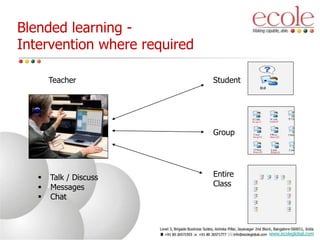
Teacher Student
Group
Entire
Class
 Talk / Discuss
 Messages
 Chat
Blended learning -
Intervention where required
www.ecoleglobal.com
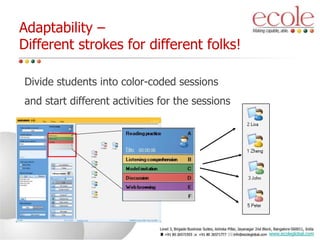
Divide students into color-coded sessions
and start different activities for the sessions
Adaptability –
Different strokes for different folks!
www.ecoleglobal.com
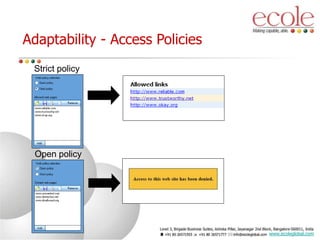
Adaptability - Access Policies
Strict policy
Open policy
www.ecoleglobal.com
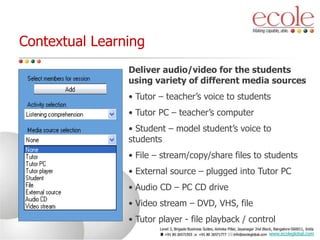
Contextual Learning
Deliver audio/video for the students
using variety of different media sources
• Tutor – teacher’s voice to students
• Tutor PC – teacher’s computer
• Student – model student’s voice to
students
• File – stream/copy/share files to students
• External source – plugged into Tutor PC
• Audio CD – PC CD drive
• Video stream – DVD, VHS, file
• Tutor player - file playback / control
www.ecoleglobal.com
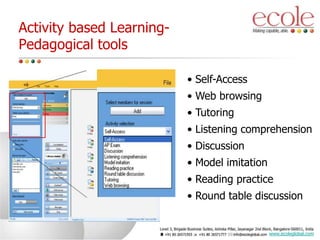
• Self-Access
• Web browsing
• Tutoring
• Listening comprehension
• Discussion
• Model imitation
• Reading practice
• Round table discussion
Activity based Learning-
Pedagogical tools
www.ecoleglobal.com
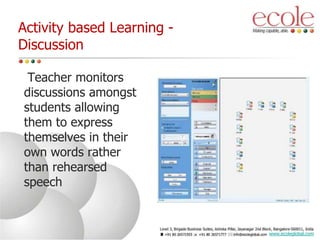
Activity based Learning -
Discussion
Teacher monitors
discussions amongst
students allowing
them to express
themselves in their
own words rather
than rehearsed
speech
www.ecoleglobal.com
Activity based Learning-
Reading Practice
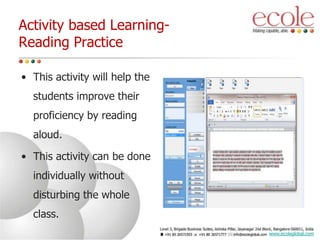
• This activity will help the
students improve their
proficiency by reading
aloud.
• This activity can be done
individually without
disturbing the whole
class.
www.ecoleglobal.com
Activity based learning-
Model imitation
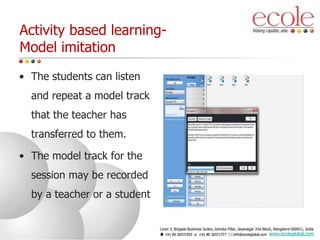
• The students can listen
and repeat a model track
that the teacher has
transferred to them.
• The model track for the
session may be recorded
by a teacher or a student
www.ecoleglobal.com
Individualized Learning-
Sessions
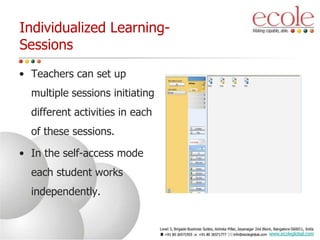
• Teachers can set up
multiple sessions initiating
different activities in each
of these sessions.
• In the self-access mode
each student works
independently.
www.ecoleglobal.com
Individualised Learning-
Playlists
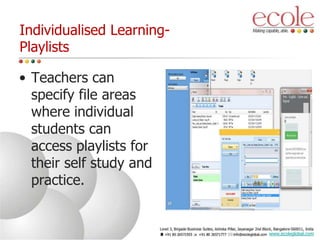
• Teachers can
specify file areas
where individual
students can
access playlists for
their self study and
practice.
www.ecoleglobal.com
Individualised Learning-
Recap
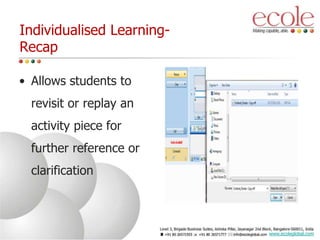
• Allows students to
revisit or replay an
activity piece for
further reference or
clarification
www.ecoleglobal.com
Assessment and feedback
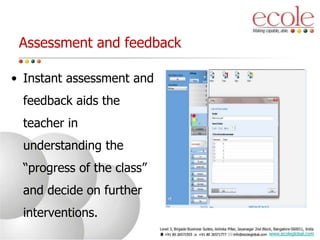
• Instant assessment and
feedback aids the
teacher in
understanding the
“progress of the class”
and decide on further
interventions.
www.ecoleglobal.com
Thank you !
You can reach us at info@ecoleglobal.com
Phone: +91 80 26571555
Website: www.ecoleglobal.com
www.ecoleglobal.com

The Ease Of Language Learning through Digital Language Lab

  • 1.
    “Technology aiding pedagogyin Language Teaching” www.ecoleglobal.com
  • 2.
    Language Acquisition vs LanguageLearning Language Acquisition Language Learning Mother tongue is acquired through interaction and the environment that surrounds the learners. Language learning is mostly grammatically oriented: tenses, rules, multiple choice exercises and so on and so forth. The need to communicate paves the way for language acquisition to take place. Language learning as seen today is the result of direct instruction in the rules of language. Through exposure to the language and meaningful communication that a first language is acquired, without the need of systematic studies of any kind. A student who has memorized the rules of the language may be able to succeed on a standardized test of English language but may not be able to speak or write correctly. In order to acquire language, the learner needs a source of natural communication. They can fill in the blanks on a grammar page. Research has shown, however, that knowing grammar rules does not necessarily result in good speaking or writing. www.ecoleglobal.com
  • 3.
    Core Pedagogical principles standard-driven, blended language learning Deliveryof a wide, rich range of delivery channels that feed the blend Evaluation, Monitoring, feedback and reporting processes to ensure learners’ success in meeting learning objectives and standards prescribed Blend the optimal combination of delivery channels for meeting learner needs and achieving maximum results Effectiveness Quadrant www.ecoleglobal.com
  • 4.
    • The communicativeapproach – Language is a tool for communication, hence it is only natural that language teaching should also promote this • Theme-based learning – courses are organized by purpose, topics, or themes • Task-based learning – performing communicative and/or authentic tasks enhance learning • Skill-based learning – all language skills (Reading, Writing, Listening and Speaking) are taught simultaneously, simulating real life. Pedagogical Approach for Language teaching www.ecoleglobal.com
  • 5.
    Technological aids forPedagogy • Blended learning – combining online and offline materials provides more convenience, flexibility, and stimulation – for teachers and students • Adaptability – courses are created for specific audiences and purposes, and allow for modification to further suit specific needs • Contextualized learning – allows for a more natural and effective learning experience www.ecoleglobal.com
  • 6.
    • The teachercan make use of standard curriculum and integrate them with powerful and contextual listening as well as voice based activities • The teacher can also use a variety of teaching content that exists outside the text book e.g. CD’s, Internet etc • This form of learning supports a modular structure which allows the teacher to expand study according to the teaching needs Blended learning- Teacher intervention www.ecoleglobal.com
  • 7.
    Teacher Student Group Entire Class  Talk/ Discuss  Messages  Chat Blended learning - Intervention where required www.ecoleglobal.com
  • 8.
    Divide students intocolor-coded sessions and start different activities for the sessions Adaptability – Different strokes for different folks! www.ecoleglobal.com
  • 9.
    Adaptability - AccessPolicies Strict policy Open policy www.ecoleglobal.com
  • 10.
    Contextual Learning Deliver audio/videofor the students using variety of different media sources • Tutor – teacher’s voice to students • Tutor PC – teacher’s computer • Student – model student’s voice to students • File – stream/copy/share files to students • External source – plugged into Tutor PC • Audio CD – PC CD drive • Video stream – DVD, VHS, file • Tutor player - file playback / control www.ecoleglobal.com
  • 11.
    • Self-Access • Webbrowsing • Tutoring • Listening comprehension • Discussion • Model imitation • Reading practice • Round table discussion Activity based Learning- Pedagogical tools www.ecoleglobal.com
  • 12.
    Activity based Learning- Discussion Teacher monitors discussions amongst students allowing them to express themselves in their own words rather than rehearsed speech www.ecoleglobal.com
  • 13.
    Activity based Learning- ReadingPractice • This activity will help the students improve their proficiency by reading aloud. • This activity can be done individually without disturbing the whole class. www.ecoleglobal.com
  • 14.
    Activity based learning- Modelimitation • The students can listen and repeat a model track that the teacher has transferred to them. • The model track for the session may be recorded by a teacher or a student www.ecoleglobal.com
  • 15.
    Individualized Learning- Sessions • Teacherscan set up multiple sessions initiating different activities in each of these sessions. • In the self-access mode each student works independently. www.ecoleglobal.com
  • 16.
    Individualised Learning- Playlists • Teacherscan specify file areas where individual students can access playlists for their self study and practice. www.ecoleglobal.com
  • 17.
    Individualised Learning- Recap • Allowsstudents to revisit or replay an activity piece for further reference or clarification www.ecoleglobal.com
  • 18.
    Assessment and feedback •Instant assessment and feedback aids the teacher in understanding the “progress of the class” and decide on further interventions. www.ecoleglobal.com
  • 19.
    Thank you ! Youcan reach us at info@ecoleglobal.com Phone: +91 80 26571555 Website: www.ecoleglobal.com www.ecoleglobal.com