Download to read offline


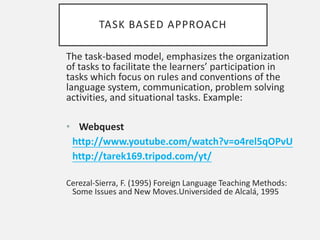


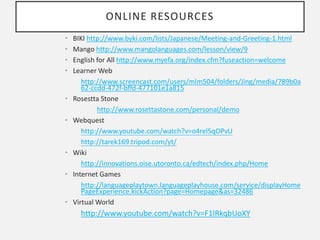


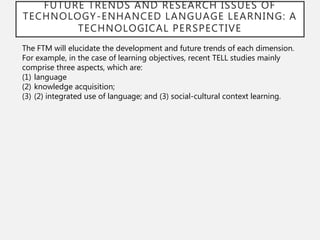





This document discusses the history and approaches to using technology in language learning, including behaviourist, audiolingual, cognitive, sociocognitive, constructivist, natural, and task-based approaches. It provides examples of technologies that have been used under each approach, such as language laboratories, teaching machines, software programs, and internet-based tools. The document also discusses current technologies like blogs, podcasts, and virtual worlds, as well as benefits of computer-assisted language learning such as increased motivation, collaboration, and feedback. It notes some criticisms around the role of technology in language education and trends toward open courseware and mobile learning.


