Language and Process of
Thinking
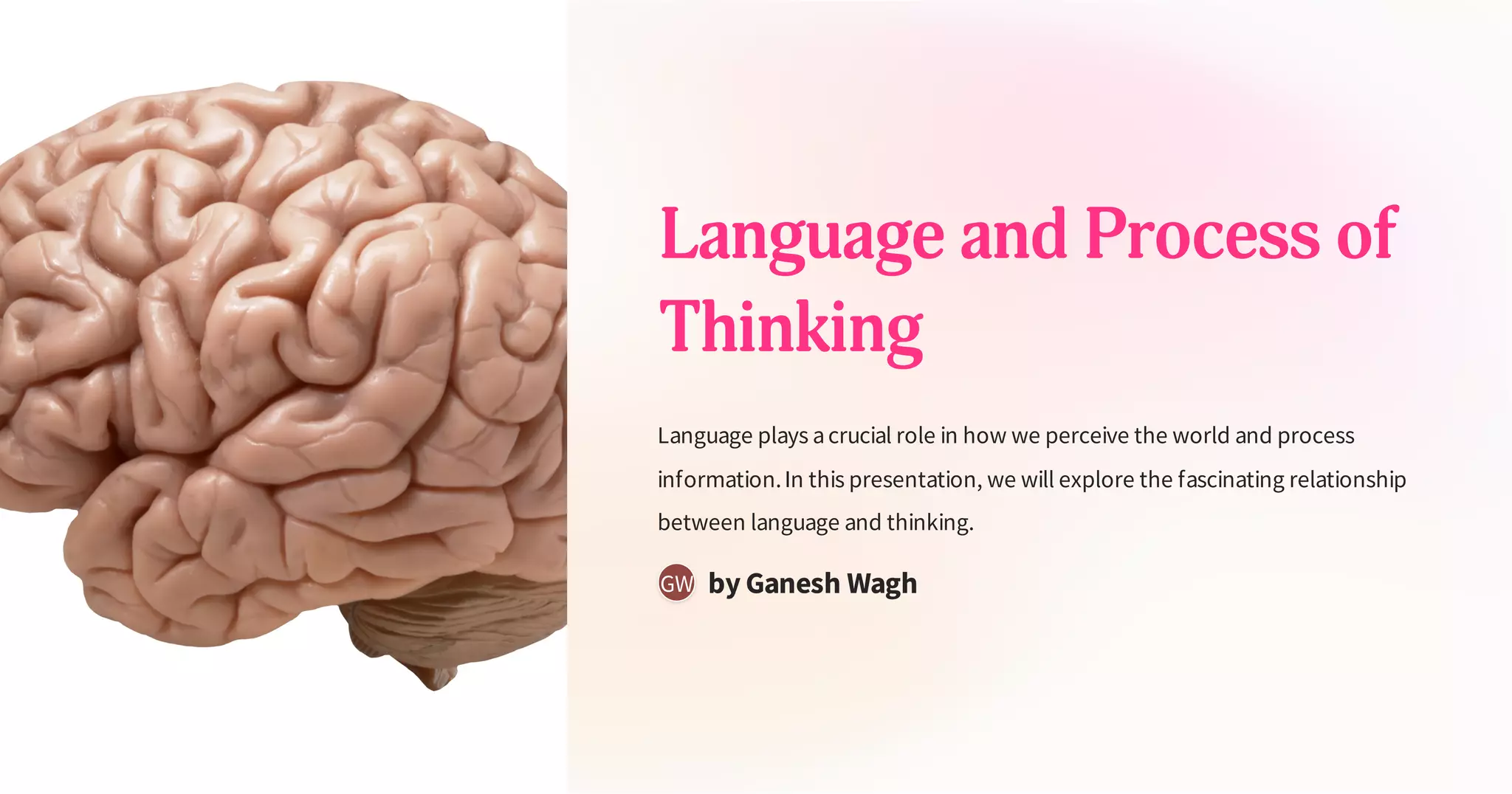
Language plays acrucial role in how we perceive the world and process
information.In this presentation, we will explore the fascinating relationship
between language and thinking.
by Ganesh Wagh
GW
Introduction to Language
What is Language?
Auniversal system of symbols
and signs that conveys
meaning.
Components of
Language
Phonetics, grammar, syntax,
and semantics.
The Importance of
Language
Allows us to communicate,
express our feelings and ideas,
and form relationships.
How Language Shapes Thinking
1 Linguistic Determinism
The ideathat language determines or limits the way we think and perceive the world around us.
2 Examples
Studies have shown that the way we talk about time, colors, and gender influence the way we
perceive them.
3 The Sapir-Whorf Hypothesis
The ideathat different languages create different cognitive categories and worldviews.
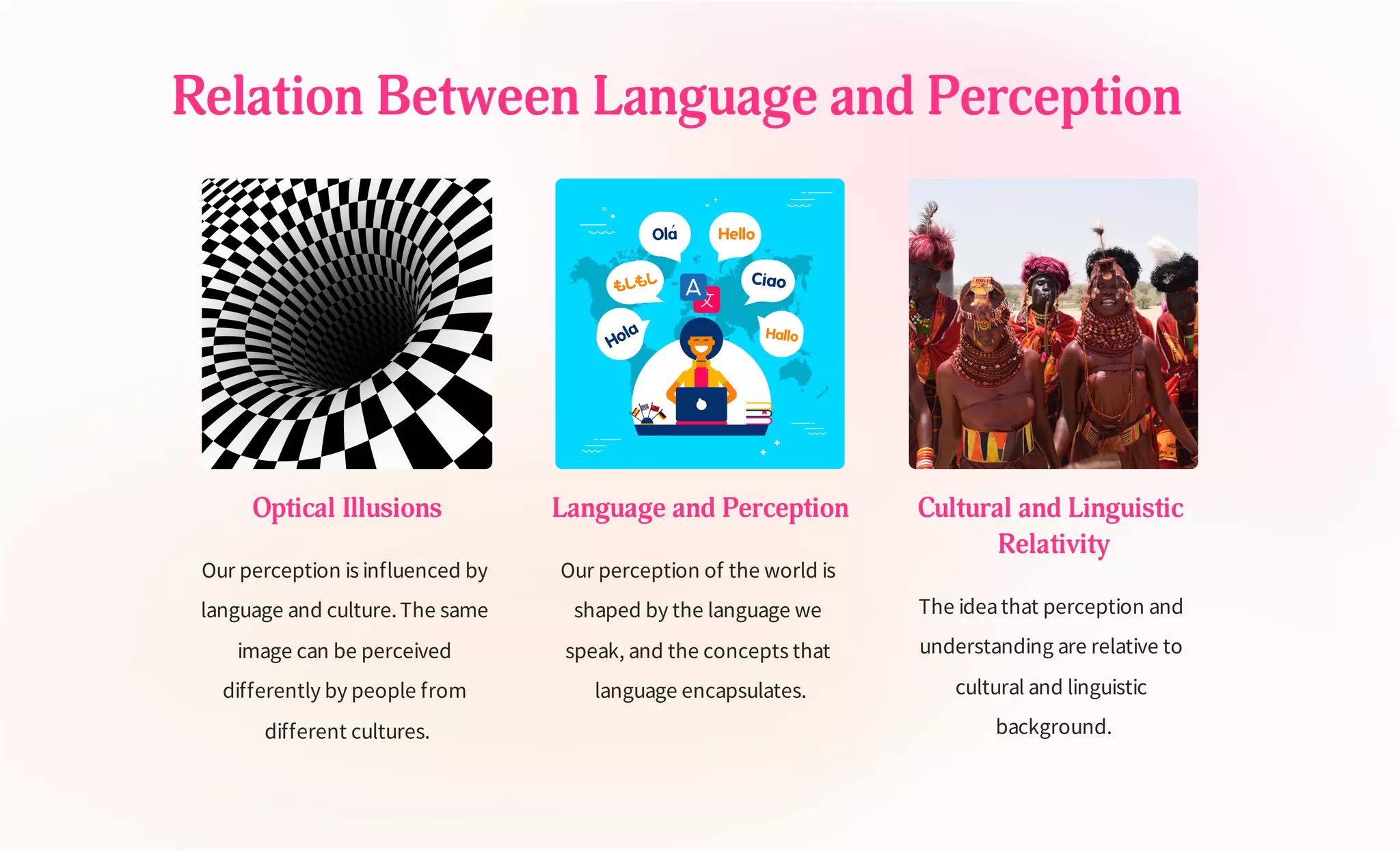
Relation Between Language and Perception
Optical Illusions
Our perception is influenced by
language and culture.The same
image can be perceived
differently by people from
different cultures.
Language and Perception
Our perception of the world is
shaped by the language we
speak, and the concepts that
language encapsulates.
Cultural and Linguistic
Relativity
The ideathat perception and
understanding are relative to
cultural and linguistic
background.
Cultural and Linguistic
Relativity
1 Cultural Differences
Language can shape cultural
values and beliefs, as well as
how individuals see
themselves and others.
2 Linguistic Relativity
How the language we speak
affects how we perceive and
think about the world around
us.
3 Examples
The differences between cultures that have many words for
describing snow versus those that don't, or those that have different
pronouns for gender versus those that don't.
How Language Affects Problem-Solving and
Decision-Making
1 Abstract vs. Concrete Language
Using abstract language can be difficult for
problem-solving, as it's harder to visualize
things.
2
Language and Decision-Making
People tend to make different judgments
based on the way the choices are presented
to them.
3 Limitations of Language
Language can also hinder decision-making,
as words often fail to capture the
complexity of our thoughts and emotions.
Language and Creativity
Language and Imagination
Many studies suggest that learning asecond language
can enhance creativity and imagination.
Play with Language
The use of metaphors, puns, and other linguistic
devices can foster creativity and develop new ways of
thinking.
Conclusion and Implications for Future
Research
The Future of
Linguistics
Advances in technology may
help us better understand the
relationship between language
and thinking.
The Importance of
Multilingualism
Knowing multiple languages
can have various benefits and
enhance various aspects of our
life, including cognitive abilities
and creativity.
The Complexity of
Language and Thinking
The relationship between
language and thinking is
complex and multifaceted, and
we still have much to learn
about this fascinating topic.

Language and Process of Thinking.pdf

  • 1.
    Language and Processof Thinking Language plays acrucial role in how we perceive the world and process information.In this presentation, we will explore the fascinating relationship between language and thinking. by Ganesh Wagh GW
  • 2.
    Introduction to Language Whatis Language? Auniversal system of symbols and signs that conveys meaning. Components of Language Phonetics, grammar, syntax, and semantics. The Importance of Language Allows us to communicate, express our feelings and ideas, and form relationships.
  • 3.
    How Language ShapesThinking 1 Linguistic Determinism The ideathat language determines or limits the way we think and perceive the world around us. 2 Examples Studies have shown that the way we talk about time, colors, and gender influence the way we perceive them. 3 The Sapir-Whorf Hypothesis The ideathat different languages create different cognitive categories and worldviews.
  • 4.
    Relation Between Languageand Perception Optical Illusions Our perception is influenced by language and culture.The same image can be perceived differently by people from different cultures. Language and Perception Our perception of the world is shaped by the language we speak, and the concepts that language encapsulates. Cultural and Linguistic Relativity The ideathat perception and understanding are relative to cultural and linguistic background.
  • 5.
    Cultural and Linguistic Relativity 1Cultural Differences Language can shape cultural values and beliefs, as well as how individuals see themselves and others. 2 Linguistic Relativity How the language we speak affects how we perceive and think about the world around us. 3 Examples The differences between cultures that have many words for describing snow versus those that don't, or those that have different pronouns for gender versus those that don't.
  • 6.
    How Language AffectsProblem-Solving and Decision-Making 1 Abstract vs. Concrete Language Using abstract language can be difficult for problem-solving, as it's harder to visualize things. 2 Language and Decision-Making People tend to make different judgments based on the way the choices are presented to them. 3 Limitations of Language Language can also hinder decision-making, as words often fail to capture the complexity of our thoughts and emotions.
  • 7.
    Language and Creativity Languageand Imagination Many studies suggest that learning asecond language can enhance creativity and imagination. Play with Language The use of metaphors, puns, and other linguistic devices can foster creativity and develop new ways of thinking.
  • 8.
    Conclusion and Implicationsfor Future Research The Future of Linguistics Advances in technology may help us better understand the relationship between language and thinking. The Importance of Multilingualism Knowing multiple languages can have various benefits and enhance various aspects of our life, including cognitive abilities and creativity. The Complexity of Language and Thinking The relationship between language and thinking is complex and multifaceted, and we still have much to learn about this fascinating topic.