Harappa Civilization
Prof. Ganesh Wagh
Harappa Civilization
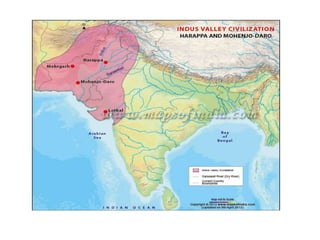
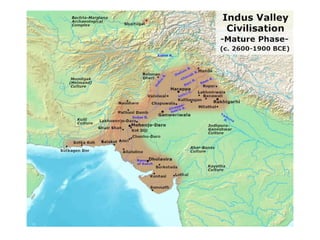
Archaeological excavation first began in 1921
CE at Harappa in the Punjab on the banks of
the river Ravi. That is how this civilization
came to be known as Harappan Civilization. It
is also known as Indus Civilization.
Characteristics of Harappa civilization
• Generally, the same characteristics are seen in
all the places of Harappan Civilization. These
include
• town planning,
• roads, construction of houses, drainage
system, seals, pots and toys and burial
• customs.
Housing and town
planning
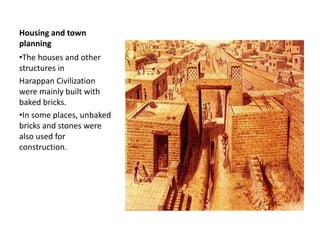
•The houses and other
structures in
Harappan Civilization
were mainly built with
baked bricks.
•In some places, unbaked
bricks and stones were
also used for
construction.
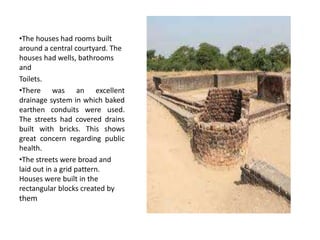
•The houses had rooms built
around a central courtyard. The
houses had wells, bathrooms
and
Toilets.
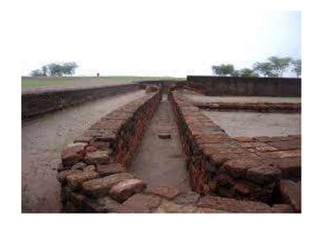
•There was an excellent
drainage system in which baked
earthen conduits were used.
The streets had covered drains
built with bricks. This shows
great concern regarding public
health.
•The streets were broad and
laid out in a grid pattern.
Houses were built in the
rectangular blocks created by
them
Seals and pots
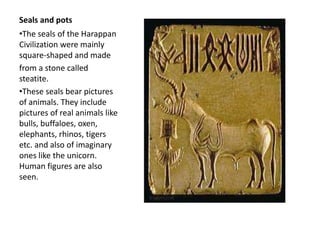
•The seals of the Harappan
Civilization were mainly
square-shaped and made
from a stone called
steatite.
•These seals bear pictures
of animals. They include
pictures of real animals like
bulls, buffaloes, oxen,
elephants, rhinos, tigers
etc. and also of imaginary
ones like the unicorn.
Human figures are also
seen.
• These seals were used as stamps
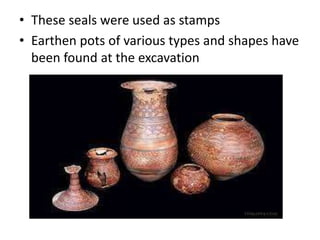
• Earthen pots of various types and shapes have
been found at the excavation
The Great Bath
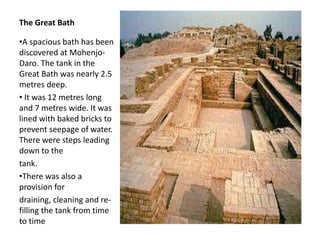
•A spacious bath has been
discovered at Mohenjo-
Daro. The tank in the
Great Bath was nearly 2.5
metres deep.
• It was 12 metres long
and 7 metres wide. It was
lined with baked bricks to
prevent seepage of water.
There were steps leading
down to the
tank.
•There was also a
provision for
draining, cleaning and re-
filling the tank from time
to time
Harappa Civilization

Harappa Civilization

  • 1.
  • 2.
    Harappa Civilization Archaeological excavationfirst began in 1921 CE at Harappa in the Punjab on the banks of the river Ravi. That is how this civilization came to be known as Harappan Civilization. It is also known as Indus Civilization.
  • 5.
    Characteristics of Harappacivilization • Generally, the same characteristics are seen in all the places of Harappan Civilization. These include • town planning, • roads, construction of houses, drainage system, seals, pots and toys and burial • customs.
  • 6.
    Housing and town planning •Thehouses and other structures in Harappan Civilization were mainly built with baked bricks. •In some places, unbaked bricks and stones were also used for construction.
  • 7.
    •The houses hadrooms built around a central courtyard. The houses had wells, bathrooms and Toilets. •There was an excellent drainage system in which baked earthen conduits were used. The streets had covered drains built with bricks. This shows great concern regarding public health. •The streets were broad and laid out in a grid pattern. Houses were built in the rectangular blocks created by them
  • 9.
    Seals and pots •Theseals of the Harappan Civilization were mainly square-shaped and made from a stone called steatite. •These seals bear pictures of animals. They include pictures of real animals like bulls, buffaloes, oxen, elephants, rhinos, tigers etc. and also of imaginary ones like the unicorn. Human figures are also seen.
  • 10.
    • These sealswere used as stamps • Earthen pots of various types and shapes have been found at the excavation
  • 11.
    The Great Bath •Aspacious bath has been discovered at Mohenjo- Daro. The tank in the Great Bath was nearly 2.5 metres deep. • It was 12 metres long and 7 metres wide. It was lined with baked bricks to prevent seepage of water. There were steps leading down to the tank. •There was also a provision for draining, cleaning and re- filling the tank from time to time