Language and Mind
BLAISE PASCAL
 Imagination is the most powerful force in human
beings, and one of our chief sources of error.
 “Man is but a reed, the weakest nature; yet he is
a thinking reed”.
 Pascal’s Wager – betting that God does not exist
risks losing a great deal (infinite happiness in
Heaven), while only gaining a little (a finite sense of
independence in this world)—but betting that God
exists risks little while gaining a great deal. It is more
rational, on this basis, to believe in God.
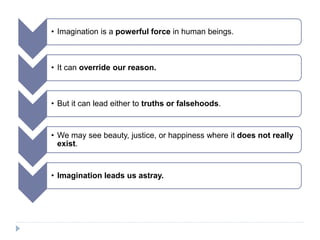
• Imagination is a powerful force in human beings.
• It can override our reason.
• But it can lead either to truths or falsehoods.
• We may see beauty, justice, or happiness where it does not really
exist.
• Imagination leads us astray.
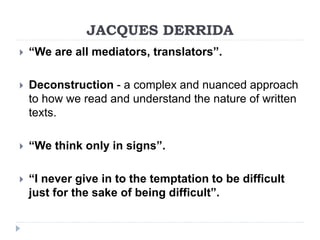
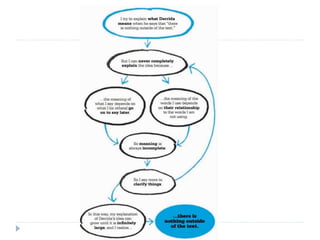
JACQUES DERRIDA
 “We are all mediators, translators”.
 Deconstruction - a complex and nuanced approach
to how we read and understand the nature of written
texts.
 “We think only in signs”.
 “I never give in to the temptation to be difficult
just for the sake of being difficult”.
NOAM CHOMSKY
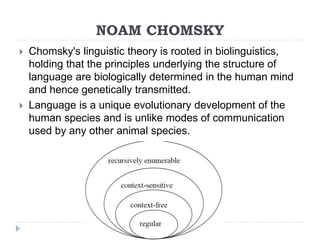
 Chomsky's linguistic theory is rooted in biolinguistics,
holding that the principles underlying the structure of
language are biologically determined in the human mind
and hence genetically transmitted.
 Language is a unique evolutionary development of the
human species and is unlike modes of communication
used by any other animal species.
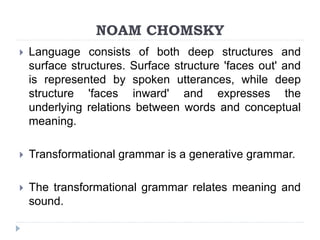
 Language consists of both deep structures and
surface structures. Surface structure 'faces out' and
is represented by spoken utterances, while deep
structure 'faces inward' and expresses the
underlying relations between words and conceptual
meaning.
 Transformational grammar is a generative grammar.
 The transformational grammar relates meaning and
sound.
NOAM CHOMSKY
JOHN SEARLE
 Starting with behaviorism, much of modern philosophy
has tried to deny the existence of consciousness, with
little success.
 Consciousness is a real subjective experience, caused
by the physical processes of the brain.
 Any value judgment is epistemically subjective.
 Where consciousness is concerned, the existence of the
appearance is the reality.
 "Chinese room“ .
David Chalmers
 Hard problem of consciousness – “why does
the feeling which accompanies awareness of
sensory information exist at all?”
 “Philosophical zombie” - hypothetical being that
from the outside is indistinguishable from a normal
human being but lacks conscious experience, qualia,
or sentience.

Language and mind

  • 1.
  • 2.
    BLAISE PASCAL  Imaginationis the most powerful force in human beings, and one of our chief sources of error.  “Man is but a reed, the weakest nature; yet he is a thinking reed”.  Pascal’s Wager – betting that God does not exist risks losing a great deal (infinite happiness in Heaven), while only gaining a little (a finite sense of independence in this world)—but betting that God exists risks little while gaining a great deal. It is more rational, on this basis, to believe in God.
  • 3.
    • Imagination isa powerful force in human beings. • It can override our reason. • But it can lead either to truths or falsehoods. • We may see beauty, justice, or happiness where it does not really exist. • Imagination leads us astray.
  • 4.
    JACQUES DERRIDA  “Weare all mediators, translators”.  Deconstruction - a complex and nuanced approach to how we read and understand the nature of written texts.  “We think only in signs”.  “I never give in to the temptation to be difficult just for the sake of being difficult”.
  • 6.
    NOAM CHOMSKY  Chomsky'slinguistic theory is rooted in biolinguistics, holding that the principles underlying the structure of language are biologically determined in the human mind and hence genetically transmitted.  Language is a unique evolutionary development of the human species and is unlike modes of communication used by any other animal species.
  • 7.
     Language consistsof both deep structures and surface structures. Surface structure 'faces out' and is represented by spoken utterances, while deep structure 'faces inward' and expresses the underlying relations between words and conceptual meaning.  Transformational grammar is a generative grammar.  The transformational grammar relates meaning and sound. NOAM CHOMSKY
  • 8.
    JOHN SEARLE  Startingwith behaviorism, much of modern philosophy has tried to deny the existence of consciousness, with little success.  Consciousness is a real subjective experience, caused by the physical processes of the brain.  Any value judgment is epistemically subjective.  Where consciousness is concerned, the existence of the appearance is the reality.  "Chinese room“ .
  • 9.
    David Chalmers  Hardproblem of consciousness – “why does the feeling which accompanies awareness of sensory information exist at all?”  “Philosophical zombie” - hypothetical being that from the outside is indistinguishable from a normal human being but lacks conscious experience, qualia, or sentience.