Biology and Geology. 4 ESO
IES Antonio Gala
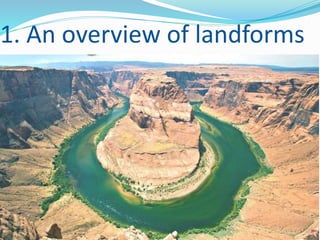
1. An overview of landforms
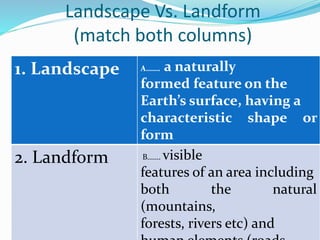
Landscape Vs. Landform
(match both columns)
1. Landscape A……. a naturally
formed feature on the
Earth’s surface, having a
characteristic shape or
form
2. Landform B……. visible
features of an area including
both the natural
(mountains,
forests, rivers etc) and
.
Landforms of varying sizes and shapes,
when taken together, are referred to as a
landscape
The landforms have relationships with each
other, which means they form distinctive
groupings in these different landscapes.
Some landforms are extensive (dune fields)
and others are small (group of rocks)
Geomorphology examines landforms,
concentrated on the surface of the
lithosphere, and the processes producing
them.
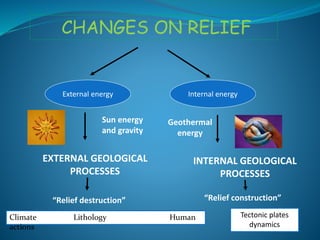
CHANGES ON RELIEF
External energy Internal energy
Sun energy
and gravity
EXTERNAL GEOLOGICAL
PROCESSES
“Relief destruction”
Geothermal
energy
INTERNAL GEOLOGICAL
PROCESSES
“Relief construction”
Climate Lithology Human
actions
Tectonic plates
dynamics
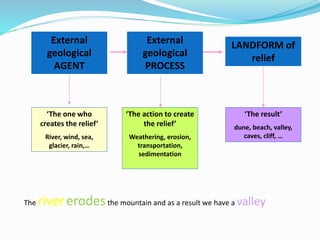
External
geological
AGENT
External
geological
PROCESS
LANDFORM of
relief
‘The one who
creates the relief’
River, wind, sea,
glacier, rain,…
‘The action to create
the relief’
Weathering, erosion,
transportation,
sedimentation
‘The result’
dune, beach, valley,
caves, cliff, …
The rivererodesthe mountain and as a result we have a valley
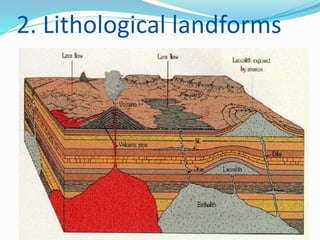
2. Lithological landforms
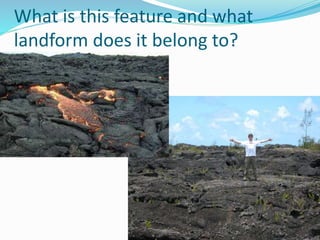
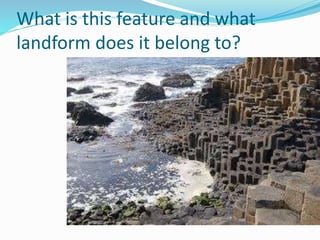
What is this feature and what
landform does it belong to?
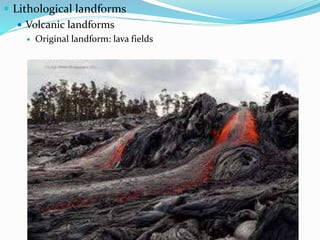
 Lithological landforms
 Volcanic landforms
 Original landform: lava fields
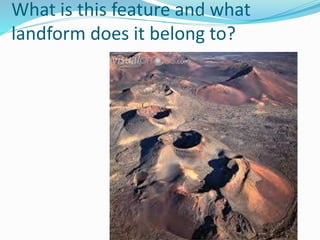
What is this feature and what
landform does it belong to?
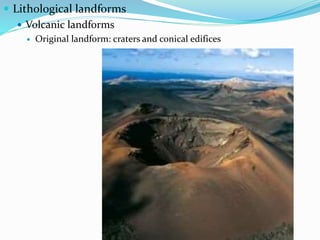
 Lithological landforms
 Volcanic landforms
 Original landform: craters and conical edifices
What is this feature and what
landform does it belong to?
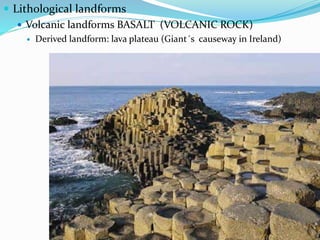
 Lithological landforms
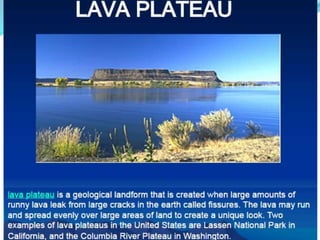
 Volcanic landforms BASALT (VOLCANIC ROCK)
 Derived landform: lava plateau (Giant´s causeway in Ireland)
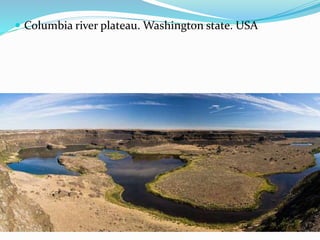
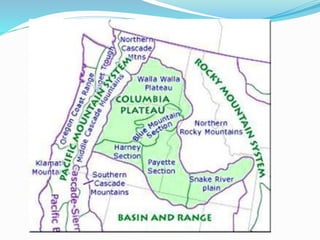
 Columbia river plateau. Washington state. USA
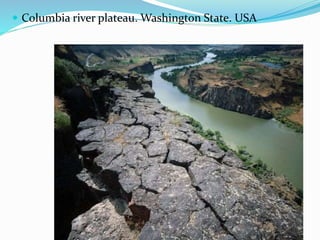
 Columbia river plateau. Washington State. USA
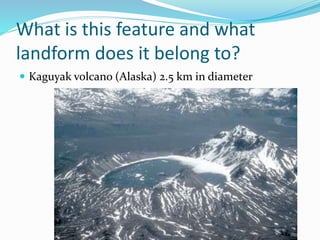
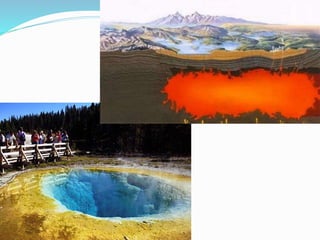
What is this feature and what
landform does it belong to?
 Kaguyak volcano (Alaska) 2.5 km in diameter
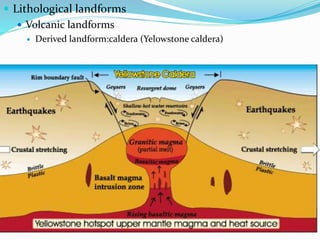
 Lithological landforms
 Volcanic landforms
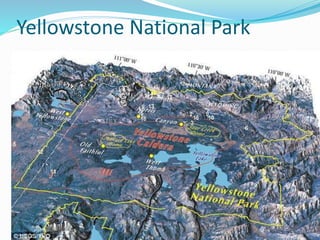
 Derived landform:caldera (Yelowstone caldera)
Yellowstone National Park
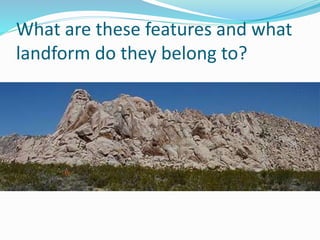
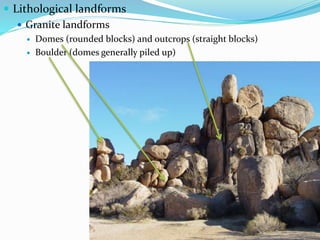
What are these features and what
landform do they belong to?
 Lithological landforms
 Granite landforms
 Domes (rounded blocks) and outcrops (straight blocks)
 Boulder (domes generally piled up)
Process of weathering in granite
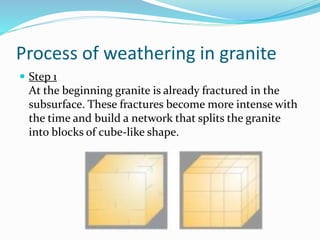
 Step 1
At the beginning granite is already fractured in the
subsurface. These fractures become more intense with
the time and build a network that splits the granite
into blocks of cube-like shape.
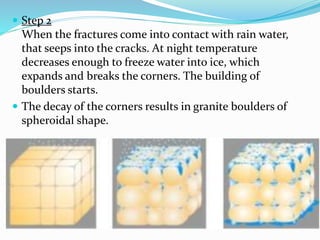
 Step 2
When the fractures come into contact with rain water,
that seeps into the cracks. At night temperature
decreases enough to freeze water into ice, which
expands and breaks the corners. The building of
boulders starts.
 The decay of the corners results in granite boulders of
spheroidal shape.
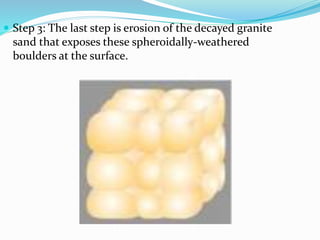
 Step 3: The last step is erosion of the decayed granite
sand that exposes these spheroidally-weathered
boulders at the surface.
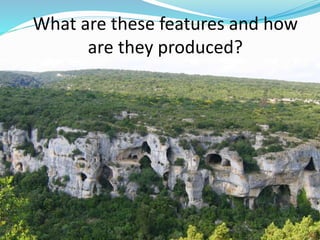
What are these features and how
are they produced?
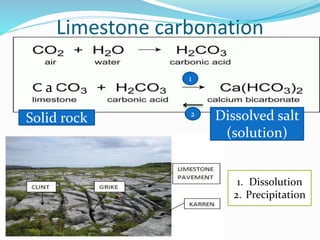
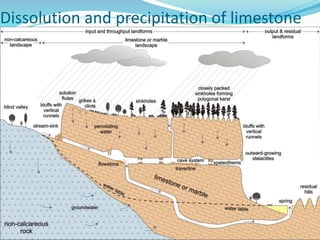
Limestone carbonation
a
Solid rock Dissolved salt
(solution)
1
2
1. Dissolution
2. Precipitation
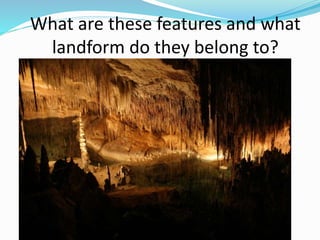
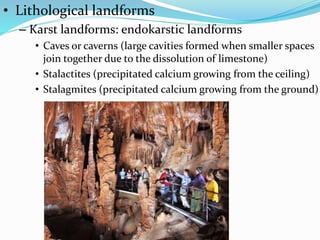
What are these features and what
landform do they belong to?
• Lithological landforms
– Karst landforms: endokarstic landforms
• Caves or caverns (large cavities formed when smaller spaces
join together due to the dissolution of limestone)
• Stalactites (precipitated calcium growing from the ceiling)
• Stalagmites (precipitated calcium growing from the ground)
Dissolution and precipitation of limestone
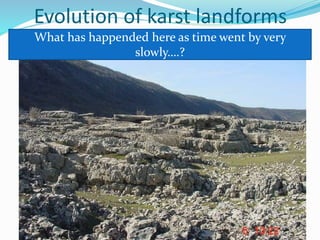
Evolution of karst landforms
What has happended here as time went by very
slowly….?
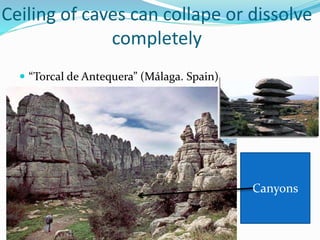
Ceiling of caves can collape or dissolve
completely
 “Torcal de Antequera” (Málaga. Spain)
Canyons
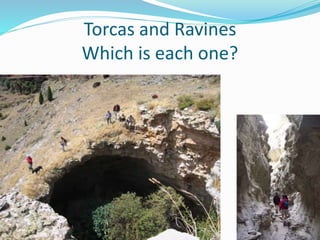
Torcas and Ravines
Which is each one?
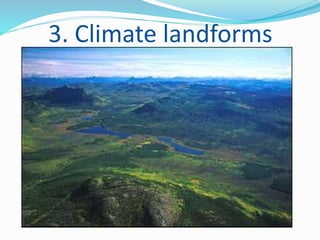
3. Climate landforms
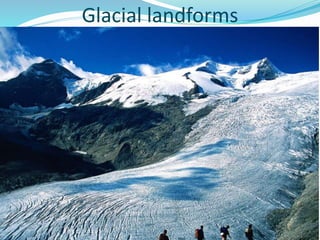
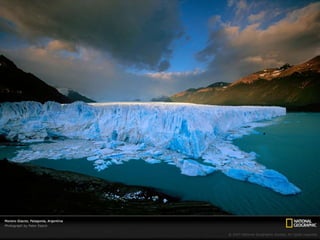
Glacial landforms
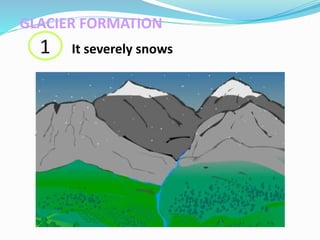
GLACIER FORMATION
1 It severely snows
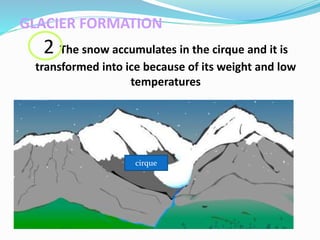
GLACIER FORMATION
2 The snow accumulates in the cirque and it is
transformed into ice because of its weight and low
temperatures
cirque
GLACIER FORMATION
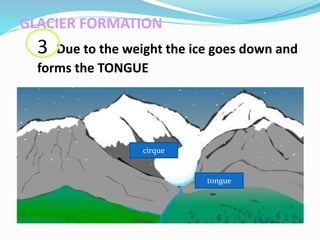
3 Due to the weight the ice goes down and
forms the TONGUE
tongue
cirque
GLACIER FORMATIION
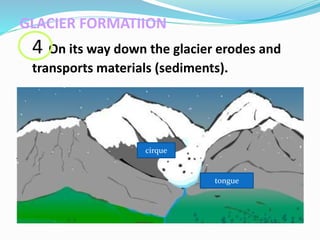
4 On its way down the glacier erodes and
transports materials (sediments).
cirque
tongue
GLACIER FORMATION
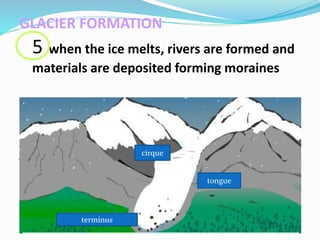
5 when the ice melts, rivers are formed and
materials are deposited forming moraines
cirque
tongue
terminus
GLACIER FORMATION
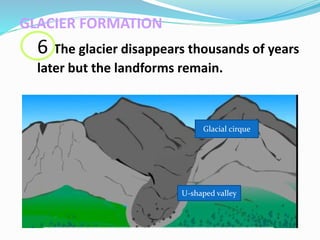
6 The glacier disappears thousands of years
later but the landforms remain.
cirqueGlacial cirque
U-shaped valley
Task
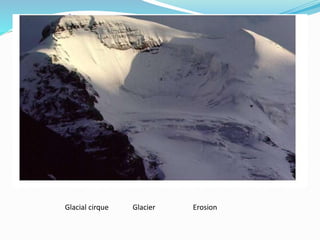
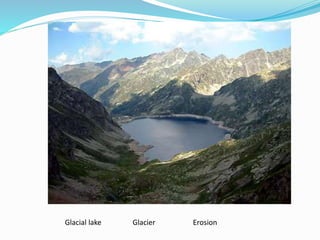
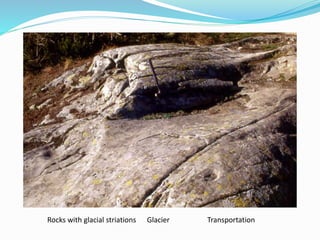
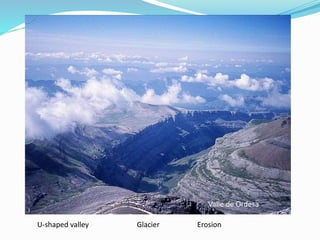
 Write the name of the landform, agent and process of
the following photos.
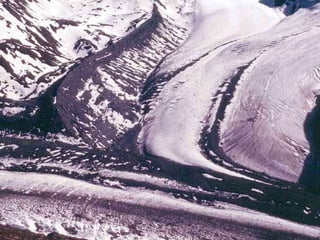
Glacial cirque Glacier Erosion
Glacial lake Glacier Erosion
Rocks with glacial striations Glacier Transportation
Valle de Ordesa
U-shaped valley Glacier Erosion
Till /Morrains Glacier Sedimentation
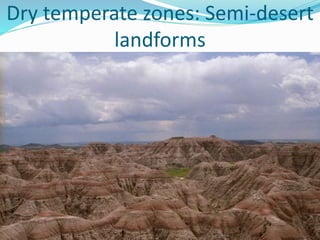
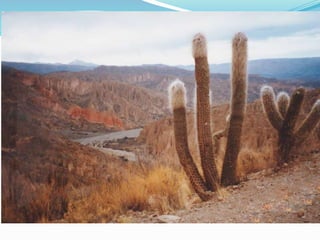
Dry temperate zones: Semi-desert
landforms
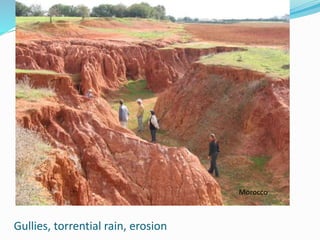
Gullies, torrential rain, erosion
Morocco
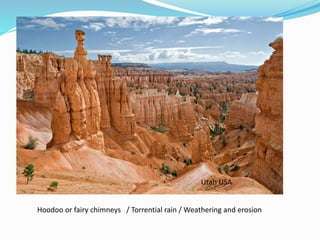
Utah USA
Hoodoo or fairy chimneys / Torrential rain / Weathering and erosion
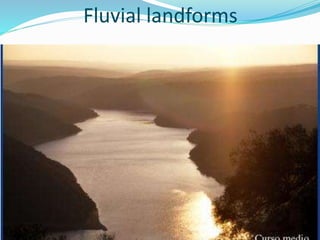
Fluvial landforms
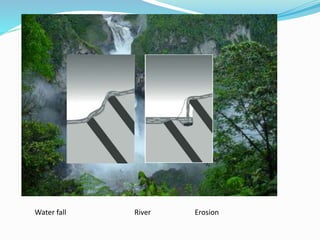
Water fall River Erosion
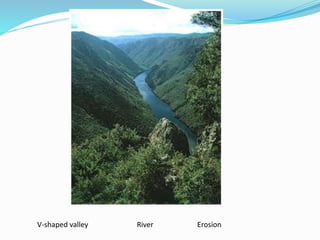
V-shaped valley River Erosion
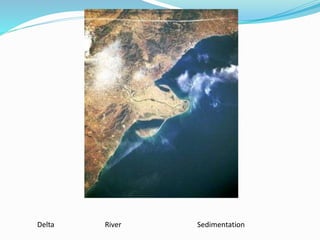
Delta River Sedimentation
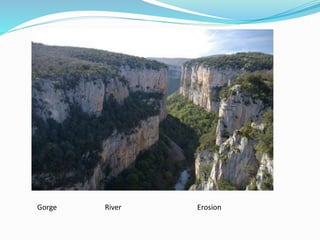
Gorge River Erosion
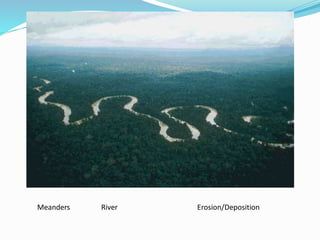
Meanders River Erosion/Deposition
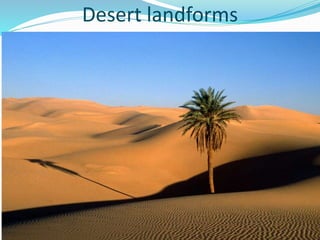
Desert landforms
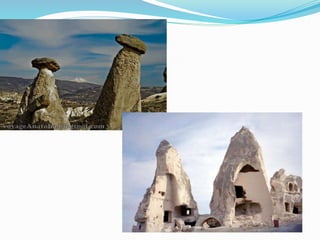
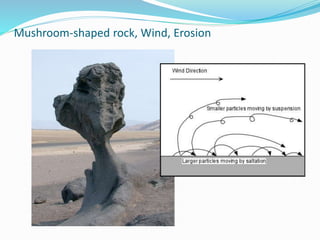
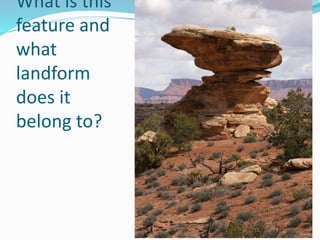
Mushroom-shaped rock, Wind, Erosion
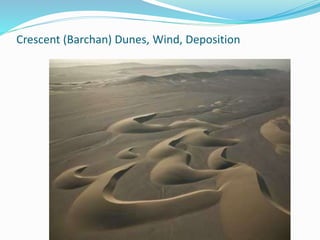
Crescent (Barchan) Dunes, Wind, Deposition
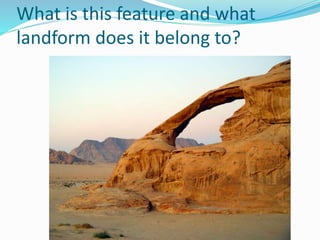
What is this feature and what
landform does it belong to?
What is this
feature and
what
landform
does it
belong to?
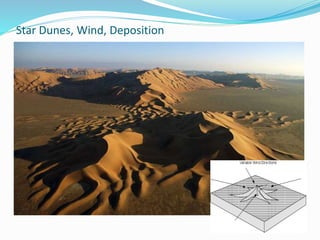
Star Dunes, Wind, Deposition
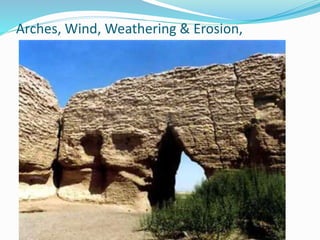
Arches, Wind, Weathering & Erosion,
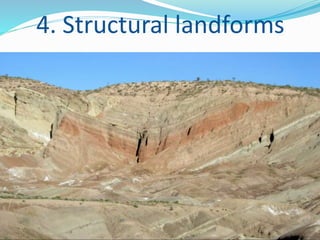
4. Structural landforms
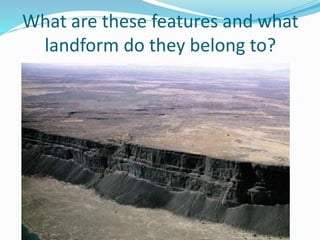
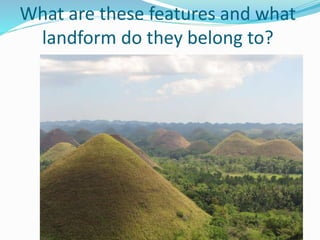
What are these features and what
landform do they belong to?
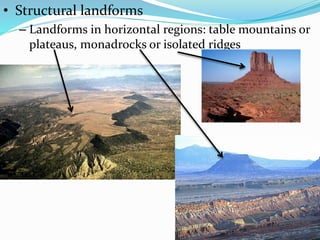
• Structural landforms
– Landforms in horizontal regions: table mountains or
plateaus, monadrocks or isolated ridges
What are these features and what
landform do they belong to?
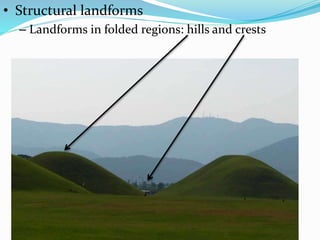
• Structural landforms
– Landforms in folded regions: hills and crests
What are these features and what
landform do they belong to?
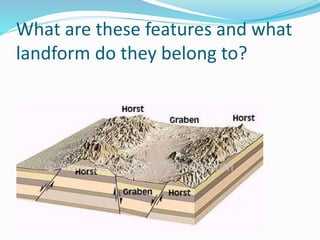
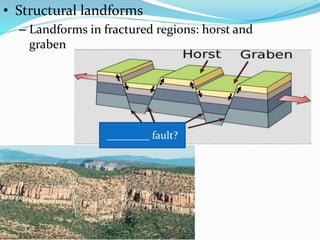
• Structural landforms
– Landforms in fractured regions: horst and
graben
________ fault?
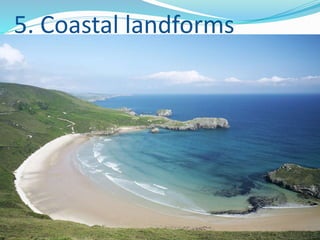
5. Coastal landforms
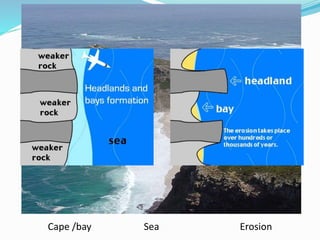
Cape /bay Sea Erosion
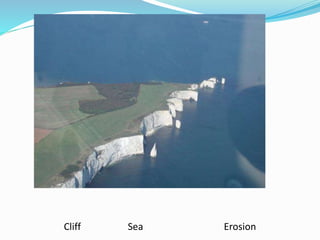
Cliff Sea Erosion
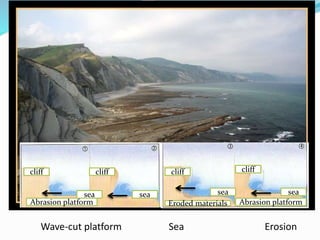
Wave-cut platform Sea Erosion
Zumaia, Euskadi
cliff cliff cliff cliff
seaseasea sea
Eroded materials Abrasion platformAbrasion platform
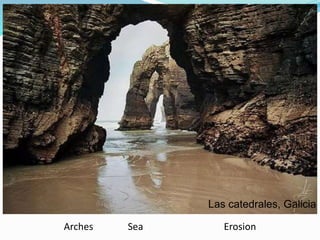
Las catedrales, Galicia
Arches Sea Erosion
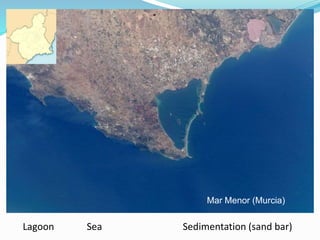
Mar Menor (Murcia)
Lagoon Sea Sedimentation (sand bar)
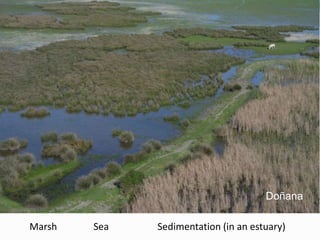
Doñana
Marsh Sea Sedimentation (in an estuary)
Landforms unit 11

Landforms unit 11