LAN, WAN, MAN
LAN(Local Area Network)
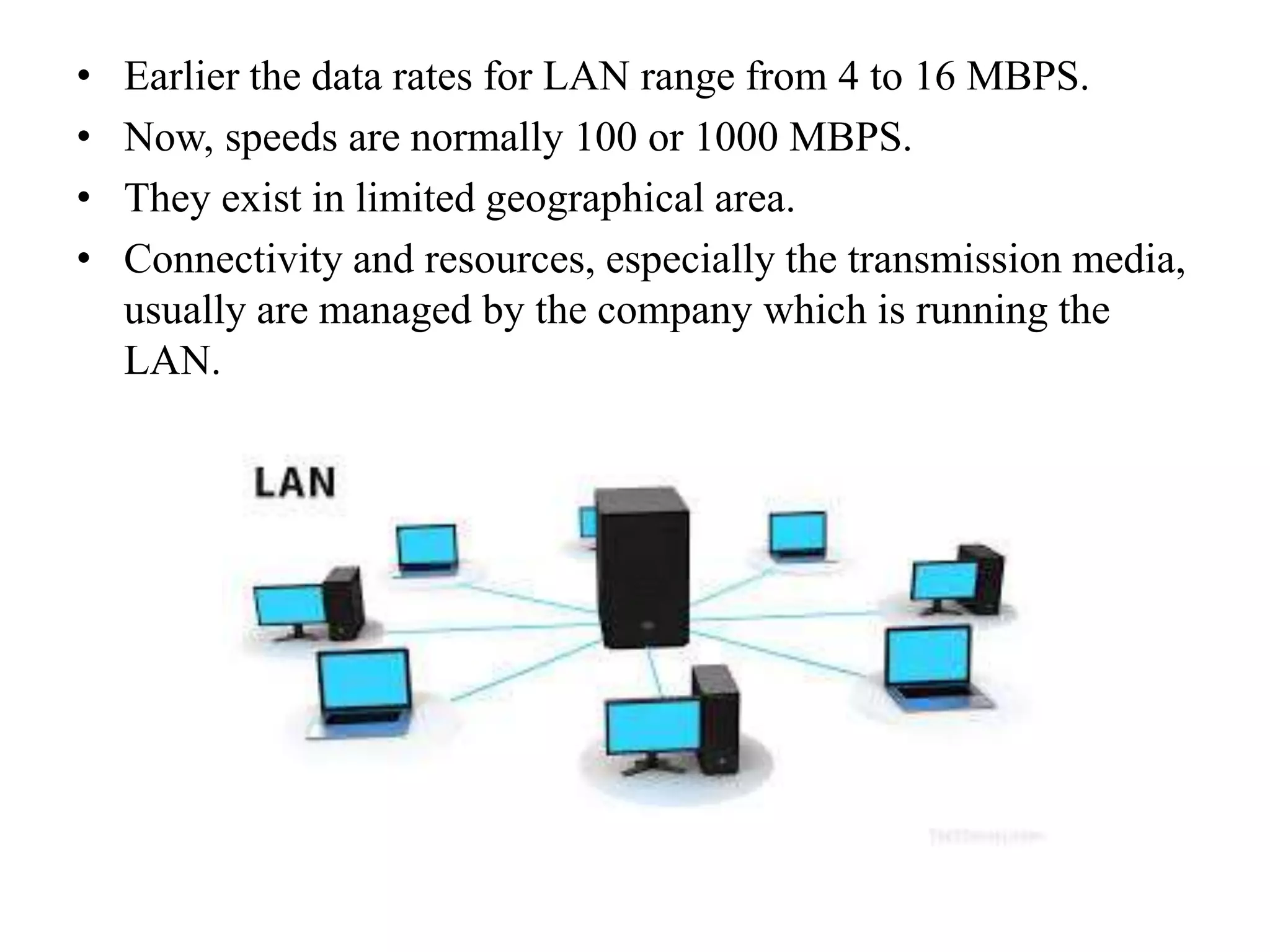
• It is privately-owned network within single building or
campus of up to a few kilometres in size.
• They are widely used to connect computers and workstations
in company offices and factories to share resources and
exchange information.
• LANs are easy to design and troubleshoot.
• In LAN, all the machines are connected to a single cable.
• Different types of topologies such as Bus, Ring, Star and Tree
are used.
• Earlier the data rates for LAN range from 4 to 16 MBPS.
• Now, speeds are normally 100 or 1000 MBPS.
• They exist in limited geographical area.
• Connectivity and resources, especially the transmission media,
usually are managed by the company which is running the
LAN.
WAN(Wide Area Network)
• WAN, spans a large area, often a country or continent.
• It contains a large collection of machines intended for running
user programs. These machines are knows as Hosts.
• These hosts are connected by a communication subnet.
• In most WAN, the subnet consists of two distinct components:
transmission lines and switching elements.
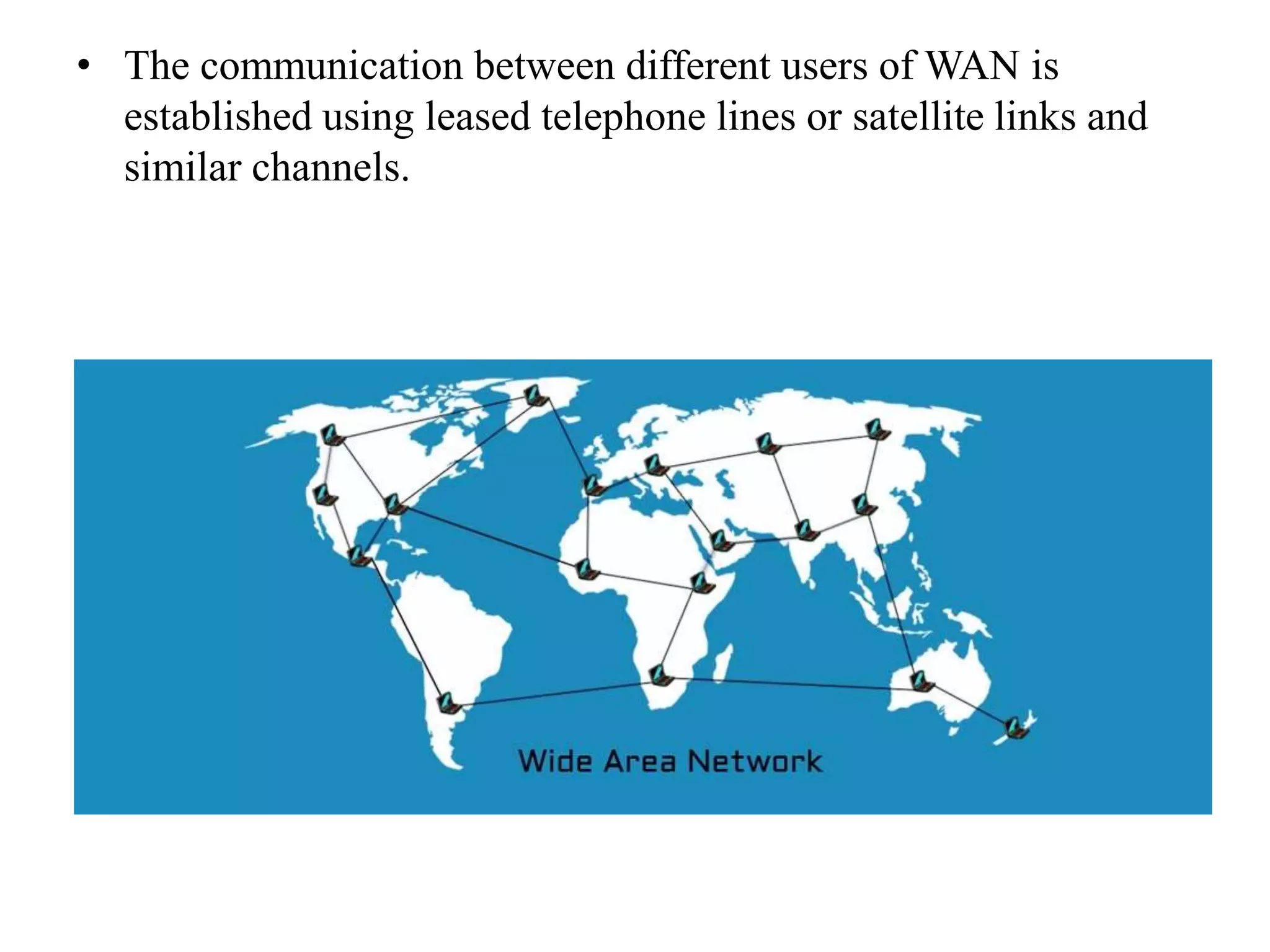
• The communication between different users of WAN is
established using leased telephone lines or satellite links and
similar channels.
MAN(Metropolitan Area network)
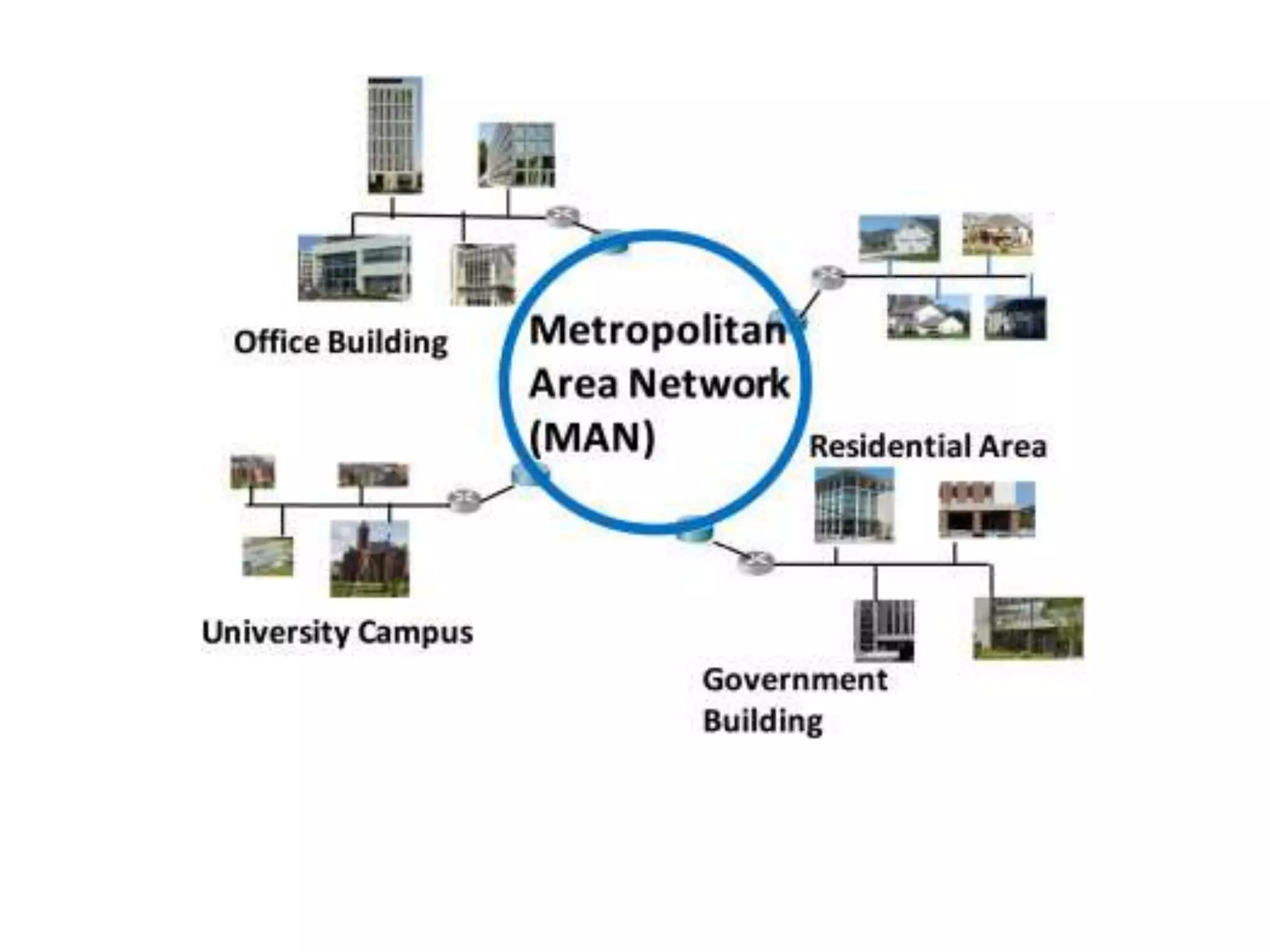
• MAN covers a city. The best known example of MAN is the
cable television network available in many cities.
• A MAN is basically a larger version of a LAN and normally
uses similar technology.
• It covers a large geographical area and may serve as an
ISP(Internet Service Provider).
• It is costly and may or may not be owned by single
organization.
Thank You

LAN, WAN, MAN

  • 1.
  • 2.
    LAN(Local Area Network) •It is privately-owned network within single building or campus of up to a few kilometres in size. • They are widely used to connect computers and workstations in company offices and factories to share resources and exchange information. • LANs are easy to design and troubleshoot. • In LAN, all the machines are connected to a single cable. • Different types of topologies such as Bus, Ring, Star and Tree are used.
  • 3.
    • Earlier thedata rates for LAN range from 4 to 16 MBPS. • Now, speeds are normally 100 or 1000 MBPS. • They exist in limited geographical area. • Connectivity and resources, especially the transmission media, usually are managed by the company which is running the LAN.
  • 4.
    WAN(Wide Area Network) •WAN, spans a large area, often a country or continent. • It contains a large collection of machines intended for running user programs. These machines are knows as Hosts. • These hosts are connected by a communication subnet. • In most WAN, the subnet consists of two distinct components: transmission lines and switching elements.
  • 5.
    • The communicationbetween different users of WAN is established using leased telephone lines or satellite links and similar channels.
  • 6.
    MAN(Metropolitan Area network) •MAN covers a city. The best known example of MAN is the cable television network available in many cities. • A MAN is basically a larger version of a LAN and normally uses similar technology. • It covers a large geographical area and may serve as an ISP(Internet Service Provider). • It is costly and may or may not be owned by single organization.
  • 8.