UNIT 2
Safety Measures in clinical
microbiology
Presented By
Megha Shridhar
INTRODUCTION
Laboratory is a building or room equipped for
conducting scientific research or for teaching
practical science.
• Safety is the state of being certain that adverse
effects will not be caused by some agent under
defined conditions.
• Lab safety is to make certain that no any
adverse effect will be cause by any of potential
hazard or agent in the laboratory.
Why it necessary and why does it
matter?
In the microbiological laboratory there are many
hazards, however, most problems and accidents
can be prevented by following the rules, being
prepared for lab, and by thinking about What to
do and what not to do in Lab.
• Make sure to read the laboratory exercise before
class and plan your work
Microbiological Safety
Procedures
Microbiological Procedures for safety has
been divided into three main sections:
• Good laboratory practice,
• Aseptic techniques,
• Clean up.
Good Lab Practice
Personal Habits:
• Do not eat, drink, smoke, or apply cosmetics in the laboratory.
• Never put anything in your mouth.
• Use pipette aids when appropriate.
• Never pipette by mouth.
• Wash your hands thoroughly with soap and water before leaving
the laboratory and any time they become contaminated with
culture material.
• Disinfect your lab bench before you start,
• if you spill culture, and before you leave the lab, disposing used
items properly. Labeling: Label all cultures and solutions properly
with your name or initials, date, course / lab section, and
experiment information.
• The experiment information may include the composition of the
solution, identity of the culture, or the experiment number.
Biosafety Guidelines:
Use the proper precautions when dealing with
microorganisms and body fluids.
Biosafety levels are determined by the National
Institutes of Health and the Centers for Disease
Control.
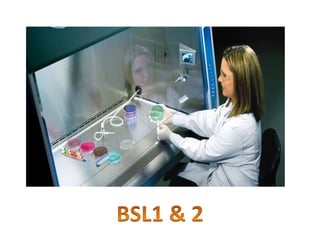
Biosafety Level 1- is suitable for work involving well-
characterized agents not known to consistently cause
disease in healthy adult humans, and of minimal
potential hazard to laboratory personnel and the
environment.
Biosafety Level 2 - is similar to Biosafety Level 1 and is
suitable for work involving agents of moderate
potential hazard to personnel and the environment.
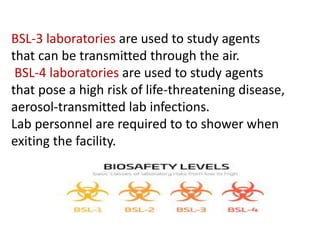
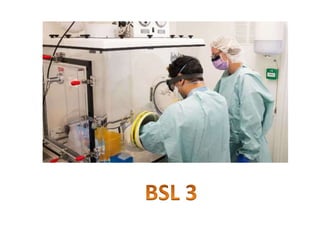
BSL-3 laboratories are used to study agents
that can be transmitted through the air.
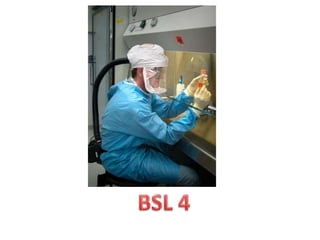
BSL-4 laboratories are used to study agents
that pose a high risk of life-threatening disease,
aerosol-transmitted lab infections.
Lab personnel are required to to shower when
exiting the facility.
Aseptic Techniques
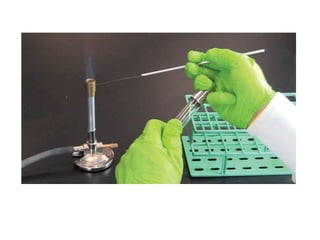
Aseptic techniques help ensure that only one
type of microorganism is present in a
container (pure culture).
These methods also ensure that the
microorganisms do not escape from the
container, contaminating the laboratory, and
possibly causing disease.
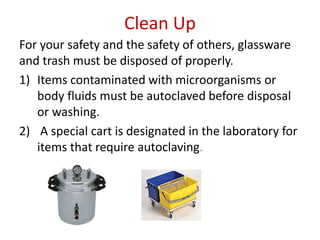
Clean Up
For your safety and the safety of others, glassware
and trash must be disposed of properly.
1) Items contaminated with microorganisms or
body fluids must be autoclaved before disposal
or washing.
2) A special cart is designated in the laboratory for
items that require autoclaving.
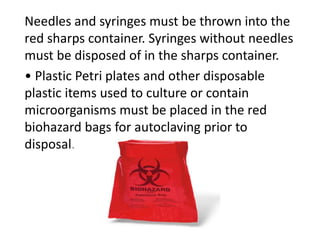
Needles and syringes must be thrown into the
red sharps container. Syringes without needles
must be disposed of in the sharps container.
• Plastic Petri plates and other disposable
plastic items used to culture or contain
microorganisms must be placed in the red
biohazard bags for autoclaving prior to
disposal.
• Chemicals must be disposed of properly.
• Some chemicals must be placed in special
containers for disposal to prevent
environmental contamination.
• Never pick up broken glass with your hands; use
a broom.
• Disposable glass items that are not
contaminated with culture must be placed in the
broken glass container - even when they are not
broken.
• Paper towels should be thrown in the ordinary
trash, unless they are contaminated with
culture.
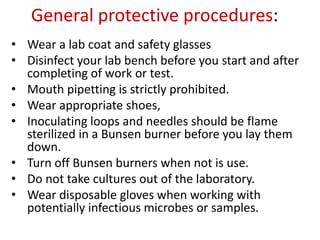
General protective procedures:
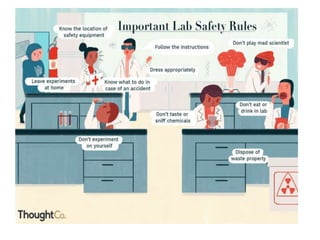
• Wear a lab coat and safety glasses
• Disinfect your lab bench before you start and after
completing of work or test.
• Mouth pipetting is strictly prohibited.
• Wear appropriate shoes,
• Inoculating loops and needles should be flame
sterilized in a Bunsen burner before you lay them
down.
• Turn off Bunsen burners when not is use.
• Do not take cultures out of the laboratory.
• Wear disposable gloves when working with
potentially infectious microbes or samples.
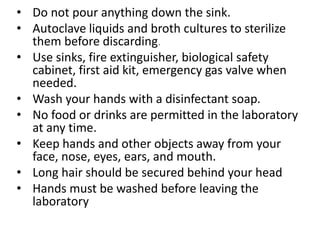
• Do not pour anything down the sink.
• Autoclave liquids and broth cultures to sterilize
them before discarding.
• Use sinks, fire extinguisher, biological safety
cabinet, first aid kit, emergency gas valve when
needed.
• Wash your hands with a disinfectant soap.
• No food or drinks are permitted in the laboratory
at any time.
• Keep hands and other objects away from your
face, nose, eyes, ears, and mouth.
• Long hair should be secured behind your head
• Hands must be washed before leaving the
laboratory

Safety measures, short and accurate ppt

  • 1.
    UNIT 2 Safety Measuresin clinical microbiology Presented By Megha Shridhar
  • 2.
    INTRODUCTION Laboratory is abuilding or room equipped for conducting scientific research or for teaching practical science. • Safety is the state of being certain that adverse effects will not be caused by some agent under defined conditions. • Lab safety is to make certain that no any adverse effect will be cause by any of potential hazard or agent in the laboratory.
  • 4.
    Why it necessaryand why does it matter? In the microbiological laboratory there are many hazards, however, most problems and accidents can be prevented by following the rules, being prepared for lab, and by thinking about What to do and what not to do in Lab. • Make sure to read the laboratory exercise before class and plan your work
  • 5.
    Microbiological Safety Procedures Microbiological Proceduresfor safety has been divided into three main sections: • Good laboratory practice, • Aseptic techniques, • Clean up.
  • 6.
    Good Lab Practice PersonalHabits: • Do not eat, drink, smoke, or apply cosmetics in the laboratory. • Never put anything in your mouth. • Use pipette aids when appropriate. • Never pipette by mouth. • Wash your hands thoroughly with soap and water before leaving the laboratory and any time they become contaminated with culture material. • Disinfect your lab bench before you start, • if you spill culture, and before you leave the lab, disposing used items properly. Labeling: Label all cultures and solutions properly with your name or initials, date, course / lab section, and experiment information. • The experiment information may include the composition of the solution, identity of the culture, or the experiment number.
  • 7.
    Biosafety Guidelines: Use theproper precautions when dealing with microorganisms and body fluids. Biosafety levels are determined by the National Institutes of Health and the Centers for Disease Control. Biosafety Level 1- is suitable for work involving well- characterized agents not known to consistently cause disease in healthy adult humans, and of minimal potential hazard to laboratory personnel and the environment. Biosafety Level 2 - is similar to Biosafety Level 1 and is suitable for work involving agents of moderate potential hazard to personnel and the environment.
  • 9.
    BSL-3 laboratories areused to study agents that can be transmitted through the air. BSL-4 laboratories are used to study agents that pose a high risk of life-threatening disease, aerosol-transmitted lab infections. Lab personnel are required to to shower when exiting the facility.
  • 12.
    Aseptic Techniques Aseptic techniqueshelp ensure that only one type of microorganism is present in a container (pure culture). These methods also ensure that the microorganisms do not escape from the container, contaminating the laboratory, and possibly causing disease.
  • 14.
    Clean Up For yoursafety and the safety of others, glassware and trash must be disposed of properly. 1) Items contaminated with microorganisms or body fluids must be autoclaved before disposal or washing. 2) A special cart is designated in the laboratory for items that require autoclaving.
  • 15.
    Needles and syringesmust be thrown into the red sharps container. Syringes without needles must be disposed of in the sharps container. • Plastic Petri plates and other disposable plastic items used to culture or contain microorganisms must be placed in the red biohazard bags for autoclaving prior to disposal.
  • 16.
    • Chemicals mustbe disposed of properly. • Some chemicals must be placed in special containers for disposal to prevent environmental contamination. • Never pick up broken glass with your hands; use a broom. • Disposable glass items that are not contaminated with culture must be placed in the broken glass container - even when they are not broken. • Paper towels should be thrown in the ordinary trash, unless they are contaminated with culture.
  • 17.
    General protective procedures: •Wear a lab coat and safety glasses • Disinfect your lab bench before you start and after completing of work or test. • Mouth pipetting is strictly prohibited. • Wear appropriate shoes, • Inoculating loops and needles should be flame sterilized in a Bunsen burner before you lay them down. • Turn off Bunsen burners when not is use. • Do not take cultures out of the laboratory. • Wear disposable gloves when working with potentially infectious microbes or samples.
  • 18.
    • Do notpour anything down the sink. • Autoclave liquids and broth cultures to sterilize them before discarding. • Use sinks, fire extinguisher, biological safety cabinet, first aid kit, emergency gas valve when needed. • Wash your hands with a disinfectant soap. • No food or drinks are permitted in the laboratory at any time. • Keep hands and other objects away from your face, nose, eyes, ears, and mouth. • Long hair should be secured behind your head • Hands must be washed before leaving the laboratory