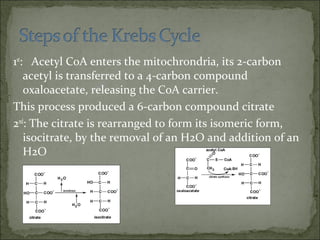
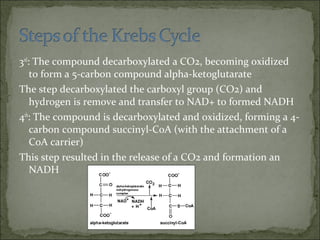
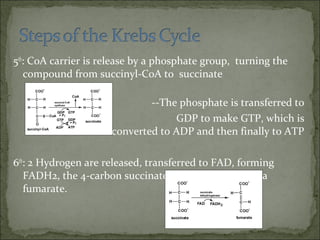
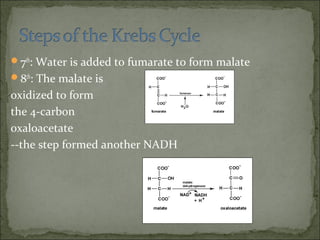
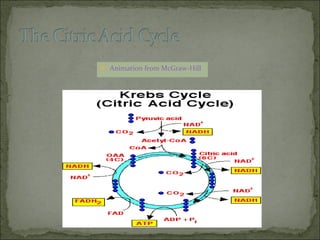
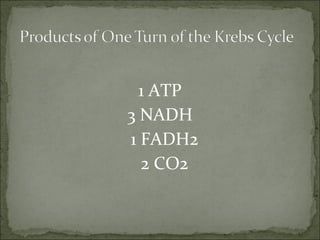
The Krebs cycle, also known as the citric acid cycle or tricarboxylic acid cycle, is a series of chemical reactions that occurs within the mitochondria of cells to break down pyruvic acid from glycolysis into carbon dioxide. It was discovered by Hans Adolf Krebs in the 1930s and completes the oxidation of organic molecules. The cycle involves 8 steps where pyruvic acid is converted into acetyl CoA which enters the Krebs cycle. As compounds go through decarboxylation and oxidation reactions, electrons are transferred to create ATP, NADH, FADH2, and CO2.