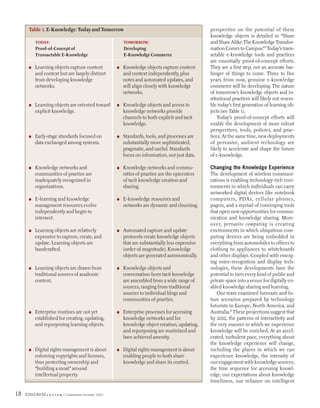
The document discusses how e-knowledge, through the fusion of e-learning and knowledge management enabled by networking, will transform knowledge sharing in higher education. It argues that while current learning objects focus mainly on explicit knowledge, emerging knowledge networks and objects will provide access to both explicit and tacit knowledge, captured through automated processes at lower costs. This transition will support the development of e-knowledge commerce and dramatically change the knowledge experience in institutions of higher education.